Everyone wants a whiter smile. Whether you’re posing for photos, heading into a job interview, or just want to feel more confident, bright teeth matter.
But between expensive dentist treatments and questionable store-bought strips, it’s no surprise people are turning to natural methods.
The good news? You don’t need bleach or blue-light gadgets to see a real difference.
You just need consistency, patience, and ingredients that you might already have in your kitchen.
Luckily, there are several natural methods for whitening teeth that are both safe and effective. Continue reading to learn more
Reviewed’s editors independently select recommendations. If you make a purchase through the provided links, we may earn a commission from the transaction, along with our publishing partners.
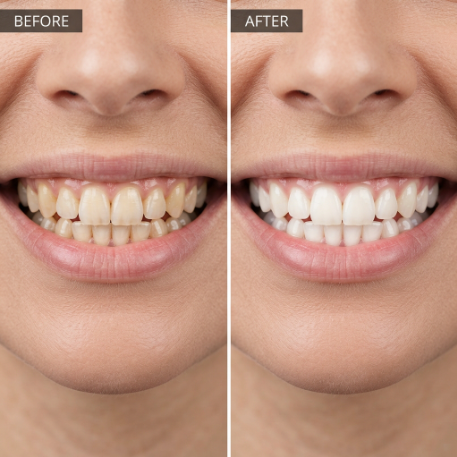
Quick Answer: What Works Best for Teeth Whitening at Home?
For most people, a sensible at-home routine looks like this:
- Brush twice daily with fluoride toothpaste.
- Clean between the teeth every day.
- Use whitening toothpaste for mild surface stains.
- Consider hydrogen-peroxide whitening strips for more noticeable results.
- Ask a dentist about custom trays if you have sensitivity, dental restorations, or difficult discoloration.
- Use only one whitening treatment at a time.
Hydrogen peroxide and carbamide peroxide are commonly used in teeth-whitening treatments.
Whitening toothpaste primarily removes surface stains, while peroxide-based products can lighten the color of natural teeth more noticeably.
However, whitening cannot change the color of crowns, veneers, implants, bonding, or tooth-colored fillings.
| Whitening method | Best for | What to expect | Main caution |
|---|---|---|---|
| Whitening toothpaste | Mild coffee, tea, and food stains | Gradual surface-stain removal | Limited effect on deep discoloration |
| Whitening strips | More visible at-home whitening | Results over several applications | May cause temporary sensitivity |
| Hydrogen-peroxide gel | Natural teeth with general staining | Varies by formula and concentration | Keep away from gums and follow directions |
| Baking-soda toothpaste | Surface discoloration | Mild polishing and stain removal | Avoid aggressive homemade scrubs |
| Whitening kit | Convenient home treatment | Depends on active ingredients | Ignore exaggerated “instant” claims |
| Dentist-provided trays | Stronger, controlled whitening | More even and noticeable results | Requires professional assessment |
| Better oral hygiene | Plaque and stain prevention | Cleaner-looking teeth | Does not bleach natural tooth color |
| Coconut oil | Optional oral-care ritual | No proven bleaching effect | Must not replace brushing and flossing |
| Lemon or vinegar | Not recommended | Unreliable whitening | Acids may erode enamel |
Why Do Teeth Become Yellow or Stained?
Before buying a teeth whitener, identify what may be causing the discoloration.
A product that removes coffee stains may not help a tooth that has become darker because of trauma, medication, decay, or natural enamel changes.
Coffee, tea, and food stains
Coffee, black tea, red wine, cola, dark berries, and strongly colored sauces can leave pigments on the outer surface of the enamel.
These external stains may respond to:
- Professional cleaning
- Whitening toothpaste
- Whitening strips
- Better plaque control
- Reducing repeated exposure to staining drinks
Read our complete guide to stained teeth to understand the difference between external and internal discoloration.
Coffee drinkers may also find our focused guide on how to remove coffee stains from teeth helpful.
Plaque and tartar buildup
Plaque can make teeth appear dull or yellow, particularly around the gumline and between the teeth.
When plaque hardens into tartar, ordinary brushing cannot remove it completely. Scraping tartar with metal tools, fingernails, or household objects can damage your gums and tooth surfaces.
Read how to remove tartar from teeth safely before attempting any home treatment.
Smoking and tobacco use
Smoking and other tobacco products can leave stubborn yellow or brown stains.
Whitening may improve some surface discoloration, but it does not address the wider effects tobacco can have on the gums and mouth.
Natural tooth color
Healthy teeth are not always bright white.
The dentin beneath your enamel has a naturally yellow tone. People with thinner or more translucent enamel may see more of this color, even when their teeth are healthy and clean.
Aging
Over time, enamel may become thinner while years of exposure to coffee, tea, food, and tobacco add more external staining.
That combination can make teeth look increasingly yellow with age.
Medication, tooth injury, or dental conditions
Discoloration may also develop inside a tooth because of:
- Certain medications
- An old dental injury
- Tooth-development conditions
- Decay
- Damage to the nerve
- Excessive fluoride exposure during tooth development
A single tooth that becomes gray, brown, or noticeably darker should be examined by a dentist. Whitening the outside may not address the underlying cause.
Surface Stains and Deep Discoloration Are Not the Same
This distinction can save you from buying products that are unlikely to work.
Surface stains
Surface stains sit on the outside of the enamel.
They may respond to:
- Whitening toothpaste
- Professional cleaning
- Whitening strips
- Peroxide-based gels
- Improved brushing and flossing
Deep discoloration
Deep, or intrinsic, discoloration develops within the tooth.
It may be related to:
- Natural tooth structure
- Aging
- Medication
- Dental trauma
- Tooth development
- An internal dental problem
Whitening toothpaste mainly polishes away external stains. Peroxide-based whitening products can affect both external and some internal discoloration, although results vary by person and stain type.
Can You Whiten Teeth Naturally?
Natural habits can help teeth look cleaner and reduce future staining, but most kitchen remedies cannot significantly bleach the natural color of your teeth.
They may help by:
- Reducing plaque
- Removing limited surface buildup
- Preventing new stains
- Improving brushing habits
- Supporting a healthier daily routine
They cannot:
- Repair cavities
- Regrow lost enamel
- Treat infections
- Whiten crowns or fillings
- Guarantee immediate results
- Permanently whiten teeth
For a complete comparison, read our planned guide to teeth-whitening remedies that may help and those to avoid.
1. Begin With Better Oral Hygiene
Before adding a whitening treatment, make sure plaque and tartar are not responsible for the dull appearance.
A practical daily routine includes:
- Brushing every morning and evening
- Brushing for approximately two minutes
- Using fluoride toothpaste
- Cleaning between the teeth daily
- Replacing a worn toothbrush or brush head
- Applying gentle pressure
- Attending routine dental examinations and cleanings
Do not brush harder to try to whiten faster. Aggressive brushing may irritate your gums and contribute to tooth wear.
Our teeth-brushing guide explains proper technique, while these oral-hygiene tips cover the broader daily routine.
Recommended electric toothbrushes
An electric toothbrush can be useful if you struggle to brush thoroughly or tend to rush.
Simple everyday option:
See Oral-B Pro 1000 electric toothbrush options on Amazon
Sonic toothbrush option:
See Philips Sonicare 4100 toothbrush options on Amazon
Choose a soft-bristled brush head and avoid pressing hard against your gums.
2. Try Whitening Toothpaste for Surface Stains
Whitening toothpaste is usually the easiest product to introduce into your normal routine.
Depending on the formula, it may contain:
- Polishing agents
- Silica abrasives
- Baking soda
- Enzymes
- Small quantities of peroxide
- Sensitivity-control ingredients
- Tartar-control ingredients
Whitening toothpaste primarily removes stains from the outer surface of teeth. It is better suited to gradual improvement than dramatic color change.
The ADA notes that toothpaste may contain ingredients intended to reduce sensitivity, control tartar, protect against erosion, or cosmetically whiten teeth.
Whitening toothpaste may suit you if:
- Your stains mainly come from coffee or tea.
- You want gradual improvement.
- You prefer an easy daily option.
- You are maintaining previous whitening results.
- You are not ready to try strips or trays.
Amazon whitening-toothpaste options
For everyday surface stains:
See Crest 3D White toothpaste options on Amazon
For a baking-soda toothpaste:
See Arm & Hammer Advance White toothpaste on Amazon
For sensitive teeth:
See Sensodyne Pronamel Gentle Whitening options on Amazon
Avoid using several abrasive toothpastes and whitening powders together. More abrasion does not automatically produce better results.
This is the practical direction the article needs. I would keep the baking soda, peroxide, coconut oil, whitening trays, and stain-prevention sections—but adjust two claims:
- A homemade equal-parts 3% hydrogen peroxide rinse should not be described as automatically safe. ADA guidance supports properly formulated peroxide mouthrinses, typically around 1.5%–2% hydrogen peroxide, but also warns against DIY peroxide swishing and daily peroxide rinsing. (American Dental Association)
- Coconut oil pulling should not be said to reliably reduce plaque, bacteria, or yellowing. Evidence for whitening and broader dental benefits remains limited, though it may be presented as an optional traditional practice that must not replace brushing and flossing. (American Dental Association)
Here is the safer, more useful wording for the article:
3. Practical Teeth-Whitening Remedies to Try at Home
Home remedies are most useful for mild surface stains caused by coffee, tea, tobacco, plaque, and dark-colored foods. They are less likely to change discoloration that develops inside the tooth.
Choose one method at a time. Combining several abrasive or peroxide-based treatments can increase sensitivity and gum irritation.
Baking Soda and Water
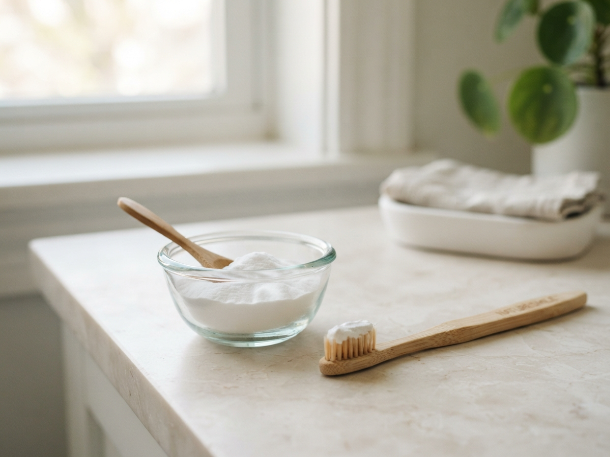
Baking soda is mildly abrasive, which means it may help polish away some stains sitting on the outside of the enamel.
What you need
- 1 teaspoon of baking soda
- Approximately 2 teaspoons of water
- A soft-bristled toothbrush
How to use it
Mix the baking soda and water until they form a thin paste.
Place a small amount on a soft-bristled toothbrush and brush very gently. Avoid pressing hard or repeatedly scrubbing one area.
Rinse your mouth thoroughly afterward and continue using fluoride toothpaste as part of your normal brushing routine.
Use this homemade paste sparingly rather than every day. A properly formulated fluoride toothpaste containing baking soda is the more predictable option for regular use.
How it may help
Baking soda may help remove:
- Coffee stains
- Tea stains
- Mild tobacco stains
- Surface plaque
- External discoloration
It does not bleach deep stains or change the color of crowns, veneers, fillings, or implants.
Avoid this method if:
- Your teeth are already highly sensitive.
- You have exposed roots.
- Your gums are bleeding or inflamed.
- You have untreated cavities or cracked teeth.
- Brushing causes pain.
Never combine baking soda with lemon juice or apple cider vinegar. The acids can soften enamel while the baking soda adds abrasion.
Learn more in our complete guide to using baking soda for teeth whitening.
Amazon option:
See baking-soda whitening toothpaste on Amazon
Hydrogen Peroxide Whitening Products
Hydrogen peroxide is one of the most effective ingredients used in over-the-counter and professional teeth-whitening products.
It works differently from baking soda. Instead of simply polishing the tooth surface, peroxide breaks down darker-colored stain molecules, helping natural teeth appear lighter.
The safer option
Choose a mouthrinse, strip, gel, or tray specifically formulated for oral whitening.
Whitening mouthrinses may contain approximately 1.5%–2% hydrogen peroxide. Whitening strips and gels may use different concentrations and treatment times, so follow the directions on the exact product you purchase.
Do not assume that mixing bottled 3% hydrogen peroxide with water creates a suitable whitening mouthwash for everyone. Homemade solutions do not provide the same controlled formulation, gum protection, or dosing instructions as an established oral-care product.
How to use a whitening rinse
When using a commercial peroxide whitening rinse:
- Measure only the amount stated on the label.
- Swish for the recommended time.
- Spit it out completely.
- Do not swallow it.
- Do not use it more frequently than instructed.
- Stop if your gums burn or your teeth become significantly sensitive.
Whitening rinses generally work more slowly than strips or trays because the peroxide remains against the teeth for a shorter period.
How hydrogen peroxide may help
A properly formulated peroxide product may help with:
- General yellowing
- Coffee and tea stains
- Surface and some deeper discoloration
- Maintaining previous whitening results
Avoid peroxide whitening if:
- You have untreated cavities.
- Your gums are bleeding or inflamed.
- You have cracked teeth.
- You have severe sensitivity.
- One tooth has suddenly become dark.
- You cannot avoid swallowing the rinse.
- A dentist has advised you not to whiten.
Never use industrial peroxide, concentrated peroxide, or household cleaning products in your mouth.
Read our detailed guide to hydrogen peroxide for teeth whitening.
Amazon options:
See hydrogen-peroxide whitening mouthwash on Amazon
See hydrogen-peroxide whitening strips on Amazon
See teeth-whitening gels on Amazon
Coconut Oil Pulling
Coconut oil pulling is a traditional practice that involves swishing edible coconut oil around the mouth before spitting it out.
Some people enjoy the fresh, clean feeling it creates. However, coconut oil does not contain peroxide and has not been reliably shown to bleach natural teeth.
What you need
- 1 tablespoon of edible coconut oil
- A cup or lined trash bin
How to try it
Place the coconut oil in your mouth and swish it gently.
You do not need to swish forcefully. Stop if your jaw becomes tired or the oil makes you feel nauseated.
Spit the oil into the trash rather than the sink because it can cool, harden, and contribute to plumbing blockages.
Rinse your mouth and continue with your usual fluoride toothpaste and flossing routine.
What to expect
Oil pulling should be considered an optional oral-care ritual, not a proven whitening treatment.
It may help loosen food debris, but it should not be relied on to:
- Bleach teeth
- Treat cavities
- Reverse gum disease
- Replace brushing
- Replace flossing
- Remove hardened tartar
Read more about how to whiten teeth with coconut oil.
Amazon option:
See organic virgin coconut oil on Amazon
Dentist-Supplied Whitening Trays
For the most predictable and controlled results, consider custom-fitted whitening trays supplied by a dentist.
A dentist can first check for:
- Cavities
- Cracked teeth
- Gum inflammation
- Exposed roots
- Loose fillings
- Crowns or veneers
- Uneven discoloration
Custom trays fit more closely around the teeth, helping distribute the whitening gel more evenly and limiting unnecessary contact with the gums.
This option may be especially useful when over-the-counter products have not worked or when your teeth are already sensitive.
Compare the methods in our planned guide to teeth-whitening treatment options.
4. Consider Properly Formulated Whitening Strips
Whitening strips are thin, flexible pieces of material coated with whitening gel. You place them over the visible surfaces of your teeth for the time stated on the package.
Many whitening strips use hydrogen peroxide.
Clinical evidence supports the effectiveness of whitening strips, although temporary sensitivity and gum irritation can occur.
Whitening strips may suit you if:
- Whitening toothpaste has not produced enough improvement.
- You want a more noticeable at-home result.
- Your teeth are relatively straight.
- You can follow a treatment schedule consistently.
- Your teeth and gums are otherwise healthy.
They may be less suitable if:
- You already have significant sensitivity.
- Your teeth are crowded or overlapping.
- You have untreated cavities.
- Your gums bleed or feel inflamed.
- You have several visible crowns, veneers, or fillings.
- You are currently wearing traditional braces.
How to use whitening strips correctly
- Read the complete directions.
- Apply the strips only for the stated time.
- Position them carefully to reduce gum contact.
- Do not double the treatment.
- Do not sleep in them unless the instructions specifically allow it.
- Avoid combining them with other strong whitening products.
- Pause if sensitivity becomes uncomfortable.
Read our detailed guide on how to use teeth-whitening strips.
Amazon strip options
Compare teeth-whitening strips on Amazon
See whitening strips for sensitive teeth on Amazon
Check the active ingredients, treatment length, and sensitivity warnings before choosing.
5. Compare Teeth-Whitening Kits Carefully
A home teeth-whitening kit may include:
- Whitening strips
- Gel-filled trays
- Whitening pens
- LED mouthpieces
- Syringes of whitening gel
- Moldable trays
- Shade guides
The light included with some kits may look impressive, but the whitening gel and its active ingredients usually do the main work.
Do not choose a kit based only on claims such as:
- Instant whitening
- Professional results in minutes
- Permanent white teeth
- No sensitivity for anyone
- Complete enamel rebuilding
- Guaranteed results
Instead, check:
- The active ingredient
- Whether the concentration is stated
- The recommended treatment time
- How gum contact is limited
- Whether it is intended for natural teeth
- Sensitivity warnings
- The manufacturer’s directions
Read our guides to teeth-whitening kits and teeth-whitening products before choosing one.
Amazon whitening-kit options
Compare teeth-whitening kits on Amazon
See carbamide-peroxide whitening kits on Amazon
See teeth-whitening pens on Amazon
A simpler product with clear directions may be a better choice than a complicated kit with multiple treatments.
6. Ask About Dentist-Supervised Home Whitening
A dentist may provide custom trays and whitening gel for you to use at home.
The trays are made to fit your teeth more closely than many universal store-bought trays. The dentist can also examine your mouth before treatment and check for:
- Cavities
- Gum inflammation
- Cracks
- Exposed roots
- Loose restorations
- Uneven discoloration
- Existing sensitivity
This option may suit you if:
- Over-the-counter products have not helped.
- You want stronger or more even results.
- Your teeth are sensitive.
- You have crowns, veneers, or fillings.
- One area is darker than the rest.
- You are unsure what caused the discoloration.
The NHS describes dentist-provided whitening as a custom-tray treatment that is commonly used at home over approximately two to six weeks. It also lists sensitivity, sore gums, and temporary white gum patches among possible side effects.
Our planned guide to teeth-whitening treatment options will compare home and professional approaches in more detail.
Popular Teeth-Whitening Remedies to Avoid
Many viral Pinterest remedies promise quick results, but some may weaken enamel or irritate the gums.
Lemon juice
Lemon juice is highly acidic.
Repeated acid exposure may soften and erode enamel. As enamel becomes thinner, more yellow dentin can show through, potentially making teeth look more yellow over time.
Do not mix lemon juice with baking soda or scrub it onto teeth.
Apple cider vinegar
Apple cider vinegar is also acidic.
Diluting it does not automatically make repeated tooth exposure safe. It is not a dependable whitening treatment.
Strawberry paste
Strawberries contain both acids and sugar.
Eating strawberries is different from leaving mashed fruit on your teeth as a whitening mask. Do not assume a pleasant-tasting remedy is harmless to enamel.
Banana peels
There is no strong evidence that rubbing banana peels on teeth creates meaningful whitening.
Minerals in the peel do not bleach enamel.
Activated charcoal
Charcoal may make teeth feel polished, but evidence for dependable, safe whitening is limited.
Abrasive charcoal products may wear enamel. As enamel becomes thinner, the naturally yellow dentin underneath may become more visible.
Salt scrubs
Salt does not bleach teeth.
Coarse salt can irritate gums and unnecessarily abrade tooth surfaces.
Household bleach
Never put household bleach in your mouth.
Cleaning bleach is not a dental product and may cause serious chemical injury.
Homemade chemical strips
Do not create whitening strips using household chemicals or high-concentration peroxide.
Use a properly formulated product with clear directions instead.
Which Whitening Option Fits Your Stain?
Mostly coffee or tea stains
Start with:
- Better brushing
- Whitening toothpaste
- Professional cleaning when needed
- Properly formulated whitening strips
Also read how to remove coffee stains from teeth.
Yellow teeth despite regular brushing
Possible causes include:
- Natural tooth color
- Thin enamel
- Aging
- Tartar
- Deep discoloration
- Medication
- Previous dental trauma
Read how to get rid of yellow teeth for a more focused explanation.
One dark tooth
Do not repeatedly apply whitening gel to it without finding out why it is darker.
A single dark tooth may need dental treatment, particularly after an injury or when pain is present.
Visible tartar
Arrange a professional cleaning rather than trying to scrape it away.
Sensitive teeth
Choose a gentler method and address unexplained sensitivity before treatment.
Crowns, veneers, or fillings
Whitening products do not change the color of most restorations. Whitening the surrounding natural teeth may make the color difference more noticeable.
Teeth Whitening for Sensitive Teeth
Temporary sensitivity is one of the most common teeth-whitening side effects.
You may notice discomfort from:
- Cold water
- Cold air
- Hot drinks
- Sweet foods
- Brushing
- Pressure on a particular tooth
Sensitivity may be more likely if you:
- Already have sensitive teeth.
- Use hydrogen-peroxide products too frequently.
- Leave whitening products on too long.
- Combine multiple whitening methods.
- Have exposed roots.
- Have decay or a cracked tooth.
- Allow whitening gel to touch your gums.
A gentler approach
- Use toothpaste formulated for sensitivity.
- Choose a lower-intensity treatment.
- Follow the exact application time.
- Avoid combining products.
- Take rest days when the directions allow.
- Stop if discomfort becomes significant.
- Ask a dentist about persistent pain.
Read our complete guide to teeth whitening for sensitive teeth and our related article on home remedies for tooth sensitivity.
Amazon options for sensitive teeth
See sensitive-teeth whitening toothpaste on Amazon
See gentle whitening strips for sensitive teeth on Amazon
Do not use a product simply because its title says “gentle.” Check the ingredients and directions.
Can You Whiten Teeth With Braces?
Teeth whitening with traditional braces can produce uneven results.
Brackets cover part of each tooth. A whitening product may lighten only the exposed enamel, leaving a color difference when the brackets are removed.
During orthodontic treatment, concentrate on:
- Brushing carefully around brackets
- Using interdental brushes
- Cleaning along the gumline
- Limiting staining beverages
- Attending routine cleanings
- Following your orthodontist’s instructions
Clear aligners create a different situation, but do not place whitening gel inside an aligner unless your dentist or orthodontist confirms that the product and tray are suitable.
Our planned guide to teeth whitening with braces will explain whitening with metal braces, clear aligners, and after braces are removed.
You may also find these existing articles useful:
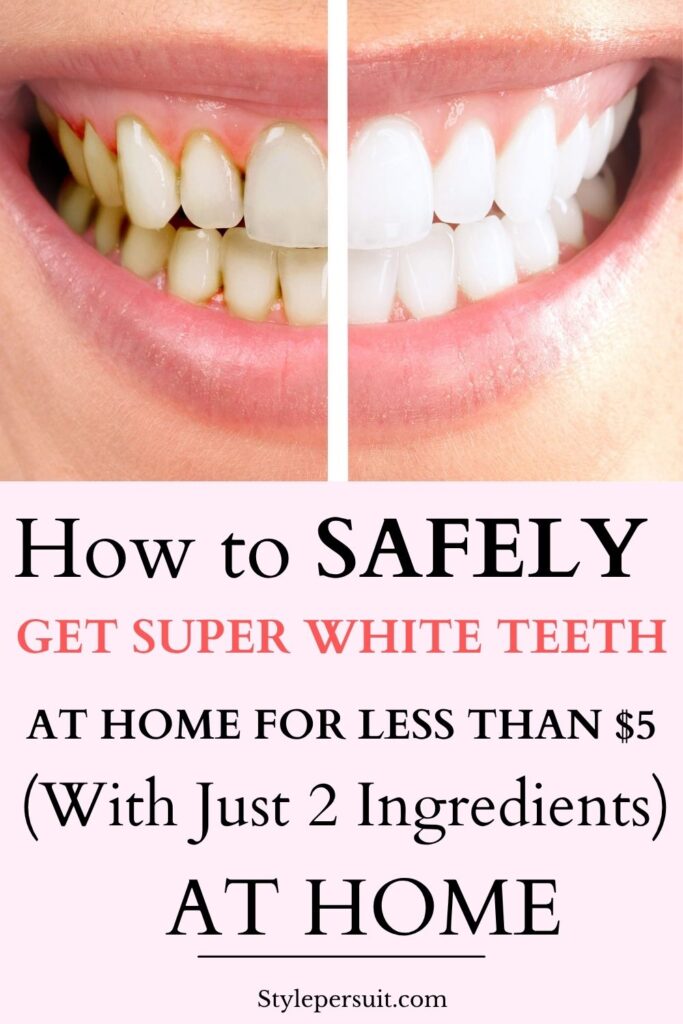
Teeth Whitening Before and After: What Results Are Realistic?
Whitening results differ from person to person.
Your final result may depend on:
- Your natural tooth color
- The type of stain
- How deeply the tooth is discolored
- The active whitening ingredient
- Product strength
- Treatment length
- How consistently you follow the routine
- Your age
- Smoking
- Coffee and tea consumption
- Existing dental restorations
Whitening toothpaste
Expect gradual improvement in mild surface stains rather than a major change in tooth shade.
Hydrogen-peroxide strips
These may create a more visible difference after several applications. Results depend on the formula and how consistently you use it.
Home whitening trays
These may provide broader coverage than strips, although fit and ingredient strength vary.
Dentist-supervised whitening
Dentist-provided trays or in-office treatment may offer faster or more controlled results. The NHS describes professional whitening as the safest route and notes that natural teeth—but not crowns, implants, or dentures—can be lightened.
Our planned article on teeth-whitening before-and-after results will compare realistic results by method.
How Long Does Teeth Whitening Take?
The answer depends on the treatment.
| Method | General timeline | Likely improvement |
|---|---|---|
| Better oral hygiene | Days to weeks | Cleaner appearance and reduced plaque |
| Whitening toothpaste | Several weeks | Mild surface-stain reduction |
| Whitening strips | Several applications to a few weeks | More noticeable whitening |
| Home whitening trays | Days to several weeks | Broader color change |
| In-office whitening | Usually faster | Professional whitening under supervision |
Do not leave hydrogen-peroxide strips or gels on longer than directed in an attempt to speed up results.
Longer exposure may increase sensitivity and gum irritation without creating a better final shade.
How Long Do Teeth-Whitening Results Last?
Teeth whitening is not permanent.
Results may fade because of:
- Coffee
- Tea
- Red wine
- Tobacco
- Dark-colored foods
- Plaque buildup
- Natural aging
You may help maintain a brighter appearance by:
- Brushing twice daily
- Cleaning between the teeth
- Rinsing after dark beverages
- Avoiding tobacco
- Attending professional cleanings
- Following directions for occasional touch-ups
Do not use peroxide-based treatments continuously simply because the result begins to fade.
How to Prevent New Tooth Stains
Rinse after dark drinks
Rinsing with water can reduce the amount of pigment left around your teeth.
Avoid slowly sipping staining beverages
Sipping coffee or tea for several hours repeatedly exposes teeth to pigments.
Use a straw for suitable cold drinks
A straw may reduce direct contact between some beverages and the front teeth.
Wait before brushing after acidic drinks
Acidic drinks can temporarily soften enamel. Rinse with water rather than brushing immediately.
Stop using tobacco
Tobacco stains teeth and can harm your gums and oral tissues.
Clean between your teeth
A toothbrush cannot reach every space. Floss or another interdental cleaner can help reduce buildup between teeth.
Drink water regularly
Water helps wash away food particles and supports normal saliva flow.
Attend professional cleanings
A dental hygienist can remove tartar and some stains that brushing cannot remove.
Follow these oral-hygiene tips and learn more about gum care.
A Simple At-Home Whitening Routine
You do not need to use peroxide, charcoal, baking soda, vinegar, and fruit acids in the same week.
Using several treatments at once can make it difficult to identify what is causing irritation.
Every morning
- Brush for two minutes with fluoride toothpaste.
- Use a soft-bristled brush.
- Rinse with water after coffee or tea.
Every evening
- Clean between the teeth.
- Brush again with fluoride toothpaste.
- Avoid eating immediately afterward.
During whitening treatment
Choose one properly formulated product:
- Whitening toothpaste
- Hydrogen-peroxide whitening strips
- A reputable whitening kit
- A dentist-provided tray
Follow the directions exactly.
On rest days
Continue ordinary brushing and interdental cleaning.
Do not replace your whitening treatment with:
- Lemon juice
- Apple cider vinegar
- Charcoal powder
- Salt scrubs
- Strawberry paste
- Extra peroxide rinses
12 Teeth-Whitening Mistakes to Avoid
- Whitening without checking for cavities.
- Ignoring bleeding or swollen gums.
- Using concentrated hydrogen peroxide.
- Leaving whitening strips on too long.
- Applying whitening gel more often than directed.
- Combining several whitening treatments.
- Scrubbing teeth with coarse powders.
- Applying lemon juice or vinegar.
- Expecting crowns and fillings to whiten.
- Continuing treatment despite persistent pain.
- Believing edited before-and-after images.
- Expecting permanent results.
Read our planned guide to teeth-whitening mistakes before beginning a new treatment.
When Should You See a Dentist?
Arrange a dental examination before whitening if you have:
- Toothache
- Cavities
- Cracked teeth
- Broken fillings
- Bleeding gums
- Swollen gums
- Severe sensitivity
- Exposed roots
- A darkened single tooth
- White, brown, or black spots
- Significant tartar buildup
- Recent dental trauma
- Visible crowns, veneers, or bonding
A dentist can check whether your discoloration is cosmetic or linked to a condition requiring treatment.
Professional assessment is particularly helpful before using stronger hydrogen-peroxide or carbamide-peroxide products.
Teeth-Whitening FAQs
What is the safest way to whiten teeth at home?
Begin with good oral hygiene and a reputable fluoride whitening toothpaste for mild surface stains. For more noticeable results, consider a properly formulated hydrogen-peroxide strip or a dentist-provided tray.
Follow the directions and use one whitening treatment at a time.
Does hydrogen peroxide whiten teeth?
Yes. Hydrogen peroxide is a commonly used active ingredient in whitening strips, gels, and professional treatments. It can break down colored compounds and lighten natural teeth.
Use a product specifically formulated for dental whitening rather than experimenting with concentrated or industrial peroxide.
Can I rinse with hydrogen peroxide every day?
Do not make a homemade peroxide rinse part of your daily routine unless a dental professional has specifically advised it.
A formulated whitening product has a defined concentration, exposure time, and treatment schedule. Follow those instructions instead.
Can I mix hydrogen peroxide and baking soda?
Do not create strong homemade peroxide-and-baking-soda mixtures.
Both ingredients may appear in properly formulated dental products, but an improvised mixture may be too abrasive, spread onto the gums, or be used at an inappropriate concentration.
What whitens teeth fastest?
Professional dental whitening usually produces faster results than whitening toothpaste and many at-home treatments.
Hydrogen-peroxide strips or gels may create visible at-home results, but the timeline varies by product and person.
Can baking soda whiten teeth?
Baking soda may remove limited external stains, especially when included in a formulated toothpaste.
It does not reliably bleach deep discoloration or change the color of restorations.
Does coconut oil whiten teeth?
Coconut oil has not been shown to bleach natural tooth color.
Oil pulling should not replace brushing with fluoride toothpaste, interdental cleaning, or established whitening products.
Can yellow teeth become white?
Surface stains may respond to cleaning and whitening. Teeth that appear yellow because of natural dentin, thin enamel, medication, or deep discoloration may respond differently.
Why are my teeth yellow even though I brush?
Possible causes include natural tooth color, thin enamel, aging, tartar buildup, medication, deep staining, or previous dental trauma.
Brushing removes plaque but does not necessarily change the internal color of teeth.
Can apple cider vinegar whiten teeth?
Apple cider vinegar is acidic and may contribute to enamel erosion. It is not recommended as a routine whitening treatment.
Does activated charcoal whiten teeth?
Evidence for dependable and safe charcoal whitening is limited. Abrasive charcoal powders may contribute to enamel wear.
Can salt whiten teeth?
Salt does not bleach teeth. Coarse salt may irritate gums and unnecessarily abrade enamel.
Can you whiten sensitive teeth?
Some people with sensitive teeth can whiten carefully with gentler products, shorter treatment periods, or professional guidance.
Address unexplained sensitivity before whitening, particularly when it affects one tooth.
Can you whiten teeth with braces?
Traditional braces may lead to uneven whitening because brackets cover part of each tooth.
Ask your orthodontist whether to wait until treatment is complete.
Do teeth-whitening products whiten crowns and fillings?
No. Whitening products lighten natural tooth structure but generally do not change crowns, veneers, bonding, implants, dentures, or tooth-colored fillings.
Is there a natural way to whiten teeth instantly?
No safe natural method can reliably produce dramatic whitening within a few minutes.
Be cautious of remedies promising permanent or instant results using ordinary kitchen ingredients.
Final Takeaway
The best teeth-whitening-at-home routine is usually straightforward.
Start with fluoride toothpaste, proper brushing, daily cleaning between the teeth, and professional cleaning when tartar is present. Whitening toothpaste may help mild surface stains, while properly formulated hydrogen-peroxide strips, gels, and trays may create a more noticeable change.
Baking-soda toothpaste may help polish away external staining, but coconut oil has no proven bleaching effect. Lemon juice, apple cider vinegar, household bleach, charcoal powders, and aggressive scrubbing should not form part of your routine.
Choose one appropriate whitening method, follow the instructions, and allow enough time for gradual results. When pain, cavities, gum problems, severe sensitivity, or a darkened single tooth are present, see a dentist before trying to whiten.
A whiter smile is appealing, but protecting the health of your teeth and gums matters more.
If you found these tips helpful, consider sharing this post on Pinterest!