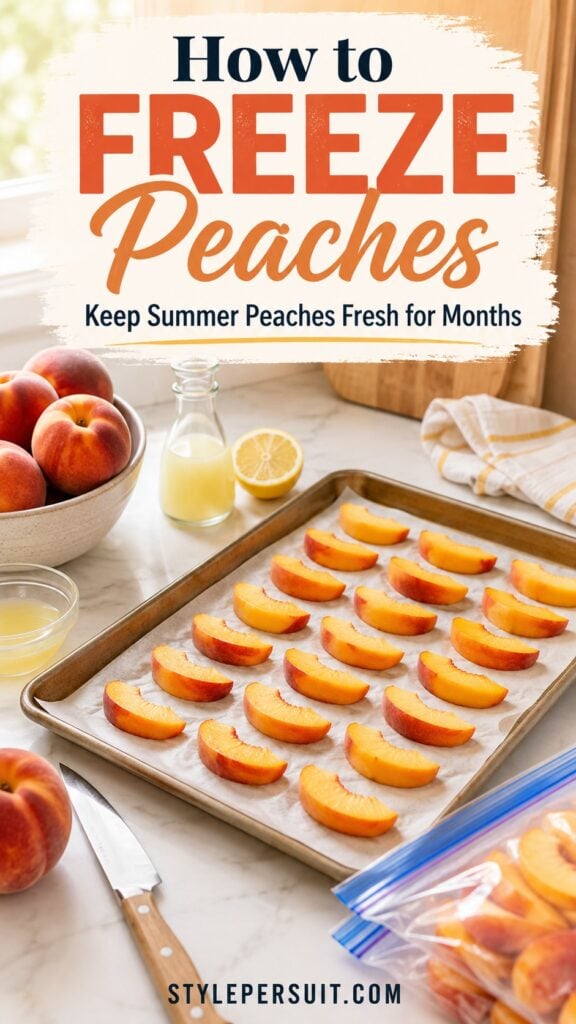
Peaches have a very short “perfect” moment.
One day they’re firm and sitting politely on the counter. The next day they smell like summer, feel soft near the stem, and practically beg to be eaten over the sink. Then, somehow, you blink and they’re bruised, wrinkly, and attracting fruit flies.
That’s where freezing saves the day.
Learning how to freeze peaches is one of those simple kitchen skills that feels small at first, but later you’ll be so glad you did it.
Frozen peaches are perfect for smoothies, cobblers, pies, crisps, oatmeal, yogurt bowls, sauces, jams, baby food, and quick desserts when fresh peaches are out of season.
And honestly, there’s something lovely about pulling a bag of golden peach slices from the freezer in the middle of a cold month. It’s like stealing a little piece of summer and hiding it away for later.
The best part? You don’t need canning jars, fancy equipment, or a whole afternoon. You only need ripe peaches, a knife, freezer bags, and a simple trick to keep them from turning brown.
Let me explain.
First, Pick the Right Peaches
Not every peach is worth freezing.
That sounds a little dramatic, but it’s true. Freezing doesn’t magically improve fruit. It locks in what you already have. So if your peaches are sweet, fragrant, and juicy, your frozen peaches will taste much better later.
If they’re hard, bland, or mealy, the freezer won’t fix them.
Choose peaches that are:
- Ripe but not mushy
- Fragrant near the stem
- Slightly soft when gently pressed
- Free from deep bruises or mold
- Sweet enough to enjoy fresh
Use ripe fruit of good eating quality for the best preserved peach products. That’s a simple rule, but it matters. Good peaches freeze better, taste better, and give you better results later.
If your peaches are still firm, let them sit on the counter for a day or two. Once they smell peachy and give slightly under your thumb, they’re ready.
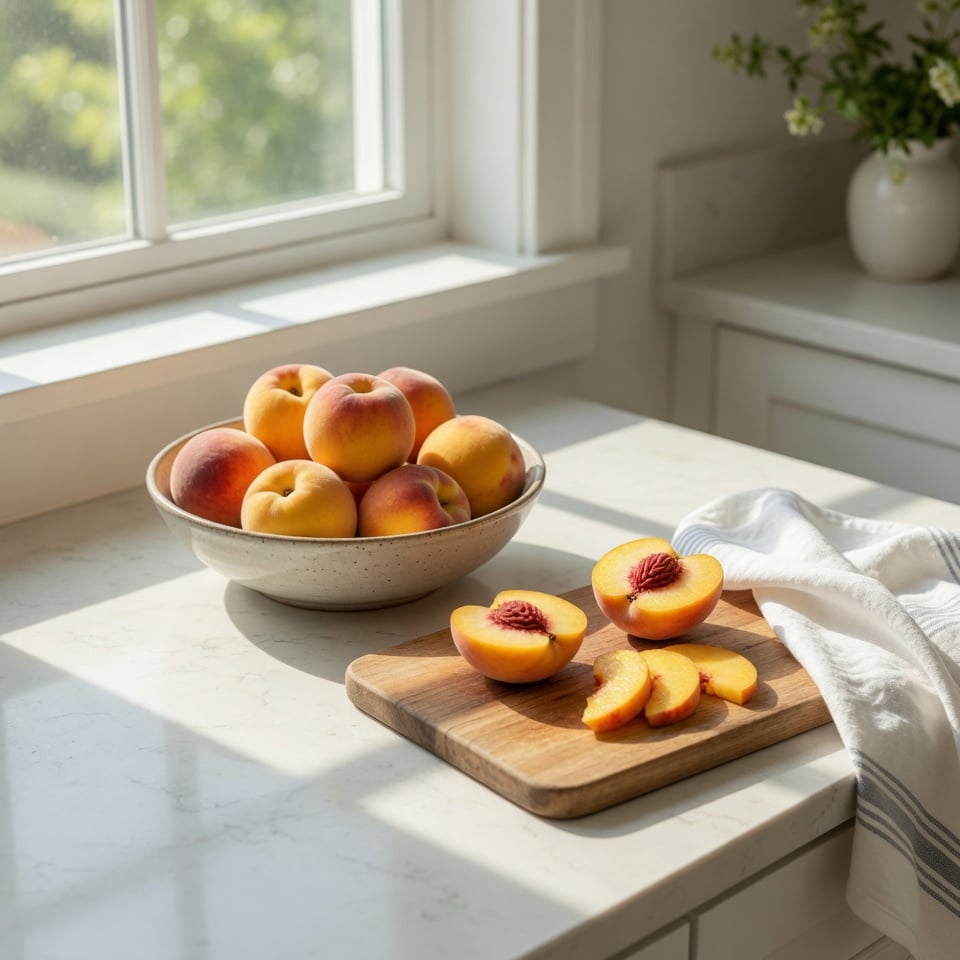
Do You Have to Peel Peaches Before Freezing?
You don’t have to, but most people prefer peeled peaches for pies, cobblers, sauces, and smoothies.
Peach skins can become a little tough after freezing. They may also separate from the fruit when thawed, which can feel odd in softer recipes. That said, if you’re using frozen peaches mainly for smoothies, you can absolutely leave the skins on. The blender won’t complain.
Here’s the easy way to decide:
Peel them if you want:
- Peach pie
- Peach cobbler
- Peach crisp
- Peach sauce
- Peach jam
- Baby food
- Smooth-looking desserts
Leave the skins on if you want:
- Smoothies
- Quick oatmeal topping
- Blended sauces
- No-fuss freezer prep
You know what? If you’re tired, leave the skins on. A homemade freezer stash doesn’t need to be perfect. It just needs to be useful.
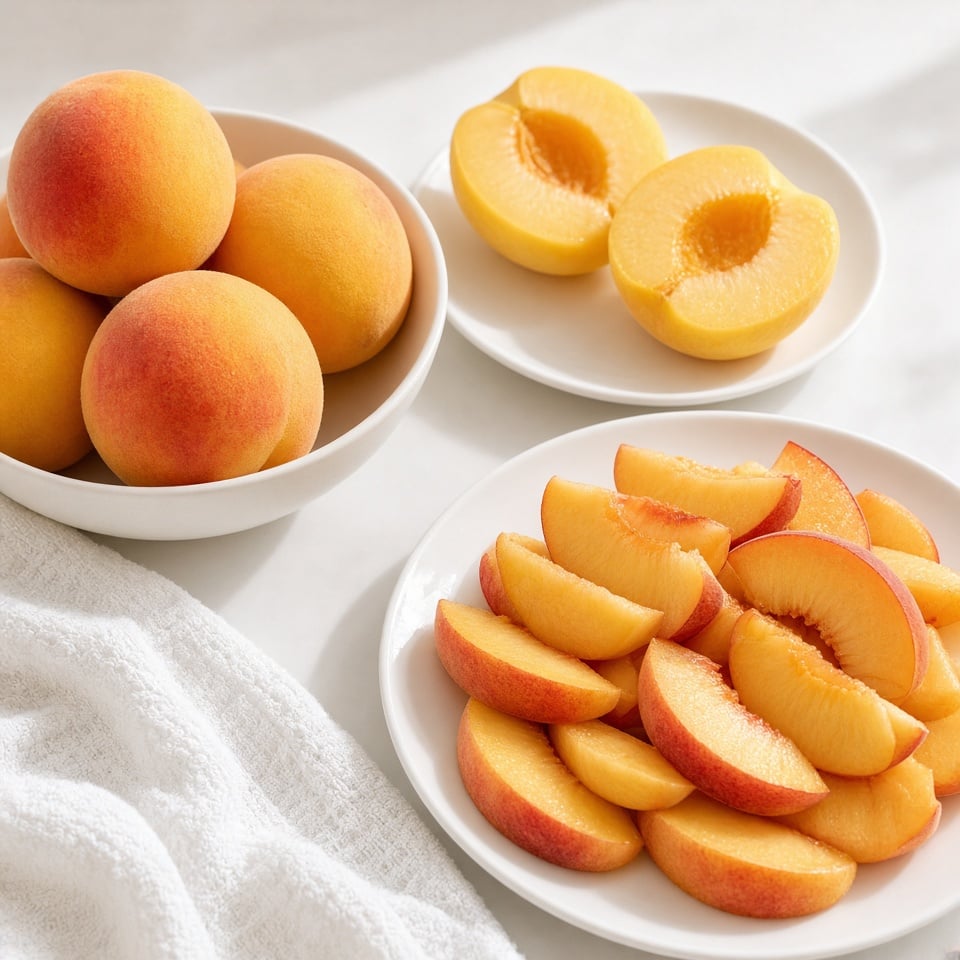
The Easiest Way to Peel Peaches
Peeling peaches with a knife works, but it can waste fruit and make the peaches slippery. The easiest method is blanching.
Blanching sounds like a chef word, but it’s just a quick dip in hot water followed by cold water.
How to peel peaches fast:
Bring a pot of water to a gentle boil.
Cut a small “X” on the bottom of each peach.
Drop peaches into boiling water for about 30 seconds.
Move them into a bowl of ice water.
Let them cool for a minute.
Rub or slip the skins off with your fingers.
That’s it.
Some peaches peel more easily than others. Very ripe peaches usually let go of their skins quickly. Firmer peaches may need a little help from a paring knife.
How to Keep Frozen Peaches From Turning Brown
Peaches turn brown because of oxidation. Once you cut them, the exposed fruit reacts with air. It’s the same thing that happens to apples and bananas.
The fix is simple: treat the peaches before freezing.
The most reliable option is ascorbic acid, which is vitamin C. The National Center for Home Food Preservation gives a tested method for sliced peaches: dissolve 1/4 teaspoon ascorbic acid in 3 tablespoons cold water for each quart of fruit, then sprinkle it over the peaches before adding sugar. (Home Food Preservation)
But if you don’t have ascorbic acid, lemon juice can help too. It may not protect the color quite as strongly, but it’s easy and most kitchens already have it.
Easy anti-browning options:
Use ascorbic acid powder.
Use a fruit-fresh produce protector.
Use lemon juice.
Use a light sugar mixture.
Pack peaches in syrup.
For a casual home freezer method, lemon juice works well enough for many people. For the prettiest peaches, especially if you’re freezing a big batch, ascorbic acid is the better choice.
Basic Supplies You’ll Need
You don’t need much. Freezing peaches is a low-drama kitchen project.
Gather:
- Fresh ripe peaches
- Sharp knife
- Cutting board
- Large bowl
- Lemon juice or ascorbic acid
- Baking sheet
- Parchment paper
- Freezer bags or freezer-safe containers
- Marker for labeling
- Optional: sugar or syrup
A baking sheet is helpful if you want peach slices to freeze separately instead of clumping together. This is called flash freezing. It’s perfect if you want to grab one handful at a time for smoothies or oatmeal.
Helpful Freezer Supplies
Freezer Bags
👉 Check Price on Amazon
Parchment Paper
👉 Check Price on Amazon
Fruit Fresh Produce Protector
👉 Check Price on Amazon
Glass Freezer Containers
👉 Check Price on Amazon
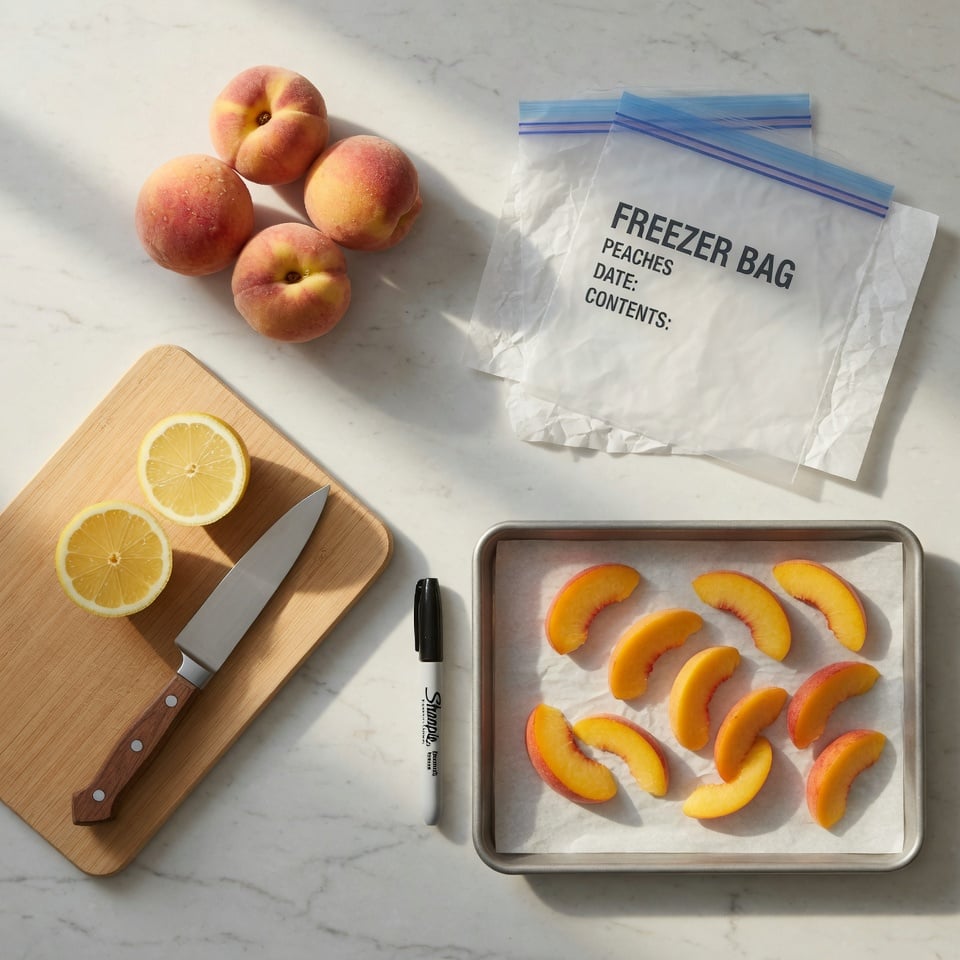
How to Freeze Peaches Step by Step
This is the simple method most home cooks will use.
It works for smoothies, baking, sauces, and everyday freezer storage.
Step 1: Wash the Peaches
Rinse the peaches under cool running water.
Rub gently with your hands to remove any dirt or fuzz. Don’t soak them for a long time. Just wash, dry, and move on.
Step 2: Peel Them, If You Want
Use the blanching method if you want skinless peaches.
If you’re short on time, skip this step. There’s no kitchen police standing in the corner.
Step 3: Slice the Peaches
Cut each peach in half and remove the pit.
Then slice into wedges. Thick slices work well for cobblers and pies. Smaller chunks are better for smoothies.
Try to keep the pieces close in size so they freeze evenly.
Step 4: Treat for Browning
Toss the peach slices with lemon juice or ascorbic acid mixture.
A simple lemon juice version:
Use about 1 tablespoon lemon juice for every 3 to 4 peaches.
Gently toss so the slices are lightly coated.
Step 5: Flash Freeze
Line a baking sheet with parchment paper.
Spread peach slices in one layer.
Keep the slices from touching too much.
Freeze for 2 to 4 hours, or until firm.
This step keeps the peaches loose instead of frozen into one giant peach brick.
Step 6: Pack and Label
Move frozen peach slices into freezer bags or containers.
Press out as much air as possible.
Label with the date.
Freeze.
That’s the whole process. Not fancy. Not fussy. Just peaches saved before they go bad.
The Best Way to Freeze Peaches Without Sugar
Freezing peaches without sugar is the easiest method. It’s also the most flexible because you can use the peaches later in sweet or savory recipes.
This method is best for:
- Smoothies
- Oatmeal
- Yogurt bowls
- Sauces
- Baby food
- Quick baking
- Low-sugar recipes
How to do it:
Peel and slice the peaches if desired.
Toss with lemon juice or ascorbic acid.
Flash freeze on a baking sheet.
Transfer to freezer bags.
Remove extra air and freeze.
The texture will be softer after thawing, but that’s normal. Frozen fruit never comes back exactly like fresh fruit. Think of frozen peaches like a great supporting actor.
They shine in recipes, not usually as crisp fresh slices.
How to Freeze Peaches With Sugar
Sugar pack peaches are a little old-school, but they work beautifully.
Sugar helps preserve flavor, color, and texture. It also creates a light syrup as the peaches sit, which makes them lovely for cobblers, shortcakes, ice cream topping, and sweet desserts.
Simple sugar pack method:
Use about 2/3 cup sugar for every quart of sliced peaches.
Treat peaches first with ascorbic acid or lemon juice.
Sprinkle sugar over the sliced peaches.
Stir gently until the sugar starts to dissolve.
Let sit for 10 to 15 minutes.
Pack into freezer containers.
Leave a little room at the top because the fruit will expand.
Freeze.
This method is sweet, yes. But for desserts? It’s delicious.
How to Freeze Peaches in Syrup
Syrup pack peaches are great when you want softer, sweeter peaches with better color and less freezer burn.
They’re especially good for desserts where you want that juicy peach texture.
Basic syrup idea:
Make a simple syrup with sugar and water.
Let it cool completely.
Pack sliced peaches into freezer containers.
Pour syrup over the fruit.
Leave headspace.
Seal and freeze.
Do not pour hot syrup over peaches before freezing. Let it cool first.
The National Center for Home Food Preservation includes syrup pack and sugar pack methods for freezing peaches and nectarines, which is helpful if you want more traditional freezer-preserving results.
Can You Freeze Whole Peaches?
Yes, you can freeze whole peaches, and it’s wonderfully lazy.
But there’s a catch.
Whole frozen peaches take up more space, freeze slower, and need thawing before you can peel or slice them. Still, if you have a lot of peaches and no time, whole freezing is better than letting them rot.
How to freeze whole peaches:
Wash and dry peaches well.
Place them on a baking sheet.
Freeze until solid.
Move them to freezer bags.
Label and freeze.
When you’re ready to use them, run a frozen peach under warm water for a few seconds. The skin often slips off easily. Then let it thaw slightly before slicing.
This method is best for smoothies, sauces, and cooked recipes.
How to Freeze Peach Puree
Peach puree is a lovely freezer staple.
Use it for smoothies, baby food, sauces, cocktails, yogurt, popsicles, and dessert toppings. It also takes up less space than peach slices.
How to make peach puree:
Peel and pit ripe peaches.
Blend until smooth.
Add a little lemon juice to help with browning.
Pour into freezer containers, silicone trays, or ice cube trays.
Freeze until solid.
Transfer cubes to freezer bags if using trays.
Peach cubes are especially handy. Toss a few into a smoothie or thaw them for a quick sauce.
How Long Do Frozen Peaches Last?
Frozen peaches taste best when used within 6 to 12 months.
They may still be safe after that if kept frozen, but the flavor and texture can fade. Freezer burn is the real enemy here. It dries out the fruit and gives it that tired freezer taste. Nobody wants peaches that taste like old ice.
To keep them fresher:
- Use freezer-safe bags or containers
- Remove as much air as possible
- Label the date
- Keep your freezer cold and steady
- Don’t thaw and refreeze repeatedly
A vacuum sealer is helpful if you freeze fruit often, but it’s not required.
How to Thaw Frozen Peaches
Thawing depends on how you plan to use them.
For smoothies, don’t thaw them at all. Use them frozen.
For baking, you can often use frozen peaches directly, especially for cobblers and crisps. You may need to add a few extra minutes of baking time.
For pie, some people prefer to thaw and drain the peaches first so the filling doesn’t become too watery.
For sauces, thaw in the fridge or warm gently in a saucepan.
Easy thawing methods:
Thaw in the refrigerator overnight.
Thaw on the counter for a short time if using soon.
Microwave briefly for quick sauces.
Cook from frozen for compotes and oatmeal.
Frozen peaches will release juice as they thaw. Save that juice. It’s full of flavor and can be used in sauces, smoothies, or dessert fillings.
Best Ways to Use Frozen Peaches
Frozen peaches are one of those freezer foods you’ll keep reaching for.
Use them in:
- Peach smoothies
- Peach cobbler
- Peach crisp
- Peach pie
- Peach muffins
- Overnight oats
- Yogurt bowls
- Pancake topping
- Waffle topping
- Peach sauce
- Peach jam
- Peach salsa
- Ice cream topping
- Chia pudding
- Popsicles
- Homemade baby food
A bag of frozen peaches can turn a plain breakfast into something sunny. Add them to oats with cinnamon and a little brown sugar, and suddenly breakfast feels like peach cobbler without the effort.
Common Mistakes When Freezing Peaches
Freezing peaches is easy, but a few tiny mistakes can make the results less exciting.
Freezing Overripe, Mushy Peaches
Soft peaches become even softer after freezing.
Use ripe peaches, not collapsing peaches.
Skipping the Anti-Browning Step
Peaches can darken in the freezer. Lemon juice or ascorbic acid helps keep the color prettier.
Freezing Slices in One Big Pile
They’ll stick together.
Flash freeze first if you want loose slices.
Leaving Too Much Air in the Bag
Air causes freezer burn.
Press it out before sealing.
Forgetting to Label the Bag
You think you’ll remember. You won’t.
Write the date.
Using Thin, Cheap Bags
Thin bags can tear or let air in.
Use freezer bags, not regular sandwich bags.
Thawing Too Much at Once
Only thaw what you need. Frozen peaches soften quickly once thawed.
Quick Recipe Card: How to Freeze Peaches
Ingredients
- 6 to 8 ripe peaches
- 1 to 2 tablespoons lemon juice, or ascorbic acid mixture
- Optional sugar, if making a sugar pack
Instructions
Wash peaches well.
Peel them if desired.
Slice and remove pits.
Toss slices with lemon juice or ascorbic acid mixture.
Spread slices on a parchment-lined baking sheet.
Freeze until firm.
Transfer to freezer bags or containers.
Press out extra air.
Label and freeze.
Use within 6 to 12 months for best flavor.
FAQs About Freezing Peaches
Can you freeze peaches with the skin on?
Yes. You can freeze peaches with the skin on, especially if you’ll use them in smoothies or blended recipes. For pies, cobblers, sauces, and desserts, peeled peaches usually give a smoother texture.
Do you need lemon juice to freeze peaches?
You don’t absolutely need it, but lemon juice helps slow browning. Ascorbic acid works even better if you want the brightest color.
Can you freeze peaches without blanching?
Yes. Blanching is only needed if you want to peel the peaches more easily. You can slice and freeze peaches without blanching.
Are frozen peaches mushy when thawed?
They can be softer than fresh peaches. That’s normal. Frozen peaches are best in smoothies, baking, sauces, and cooked recipes.
Can I freeze peaches for smoothies?
Yes, and this is one of the best uses. Slice them, treat with lemon juice if desired, flash freeze, then store in freezer bags.
Can I freeze peaches in mason jars?
You can use freezer-safe jars, but leave enough headspace because food expands as it freezes. Straight-sided jars are safer than jars with shoulders. Freezer bags are often easier for fruit slices.
Should I add sugar before freezing peaches?
You don’t have to. Sugar helps flavor, color, and texture, but unsweetened peaches are more flexible for smoothies and lower-sugar recipes.
How do you freeze peaches so they don’t stick together?
Spread the slices in a single layer on a parchment-lined baking sheet and freeze until firm before packing them into bags.
Final Thoughts
Freezing peaches is one of the easiest ways to save summer fruit before it goes soft on the counter.
The simplest method is to peel and slice ripe peaches, toss them with lemon juice or ascorbic acid, freeze them on a baking sheet, then pack them into freezer bags. That little flash-freezing step makes a big difference because the slices stay loose and easy to use.
For smoothies, freeze peaches without sugar. For cobblers and sweet desserts, try a sugar pack or syrup pack. For busy days, freeze them whole and deal with the peeling later.
No method has to be perfect. The main thing is this: when peach season gives you more fruit than you can eat, don’t let it go to waste. Freeze it.
Future you will be very happy.