
Are you looking for a cost-effective and natural way to enhance the brightness of your smile?
Everyone desires a bright and radiant smile. Teeth yellowing is a common issue caused by factors such as consuming coffee, tea, and certain foods, as well as poor oral hygiene.
Many commercial teeth whitening products are available on the market, but they can be expensive and may contain harsh chemicals.
However, nature has provided us with a natural and inexpensive solution, baking soda. we will explore the benefits, methods, and safety precautions of using baking soda for teeth whitening.
What is Baking Soda?
Baking soda, also known as sodium bicarbonate, is a white crystalline powder derived from a natural mineral called natron.
It has been used for centuries across various cultures for its versatile properties and it is famous for its ability to both brighten and cleanse.
Baking soda is non-toxic, inexpensive, and easily available, making it a popular household item.
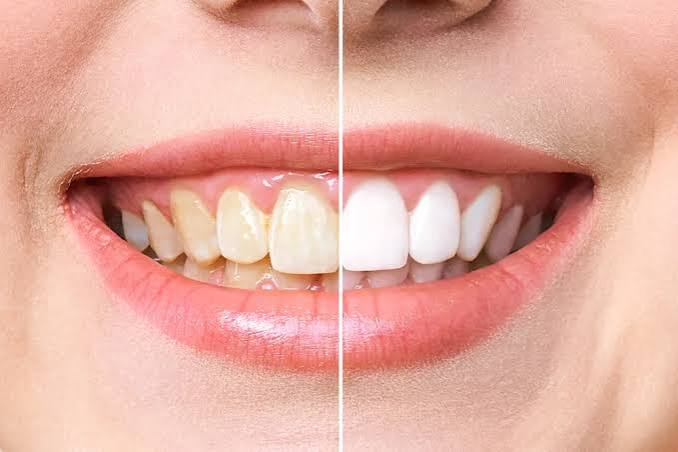
Benefits of Baking Soda for Teeth Whitening
Baking soda, or sodium bicarbonate, has been used for oral care for centuries. Its mild abrasive properties help remove surface stains, making it an effective teeth-whitening agent. Here are some key benefits:
Stain Removal: Baking soda’s gritty consistency helps to break down and remove built-up stains on the surface of the teeth, resulting in a brighter smile.
Neutralizes Acidity: Baking soda has a high pH level, which helps neutralize the acidity in the mouth. This prevents the growth of harmful bacteria that can lead to tooth decay and discoloration.
Antibacterial Properties: Baking soda possesses natural antibacterial properties, reducing the risk of gum disease and promoting overall oral health.
How Does Baking Soda Whiten Teeth?
Baking soda, also called sodium bicarbonate, works mainly as a mild abrasive.
When you brush, the particles help loosen and polish away colored deposits on the outside of the enamel. This differs from hydrogen peroxide, which chemically breaks down stain molecules and can produce a deeper whitening effect.
Research has found that formulated baking-soda toothpastes can remove external stains effectively, sometimes outperforming non-baking-soda toothpastes with greater abrasivity.
Baking soda may also help neutralize acids in the mouth, but it should not replace fluoride toothpaste. Fluoride remains important for cavity protection.
Quick Answer: Does Baking Soda Whiten Teeth?
Yes, baking soda may make teeth look whiter by polishing away external surface stains.
A review published in the Journal of the American Dental Association found that toothpastes containing baking soda were effective and generally safe for removing tooth stains.
The evidence applies most directly to properly formulated baking-soda toothpastes rather than every homemade mixture.
Baking soda is best for:
- Coffee and tea stains
- Mild tobacco discoloration
- Plaque-related dullness
- Surface stains from dark foods
It will not reliably whiten:
- Deep internal discoloration
- Crowns
- Veneers
- Fillings
- Dental implants
- A tooth darkened by injury or decay
Method 1: Baking Soda and Water Paste
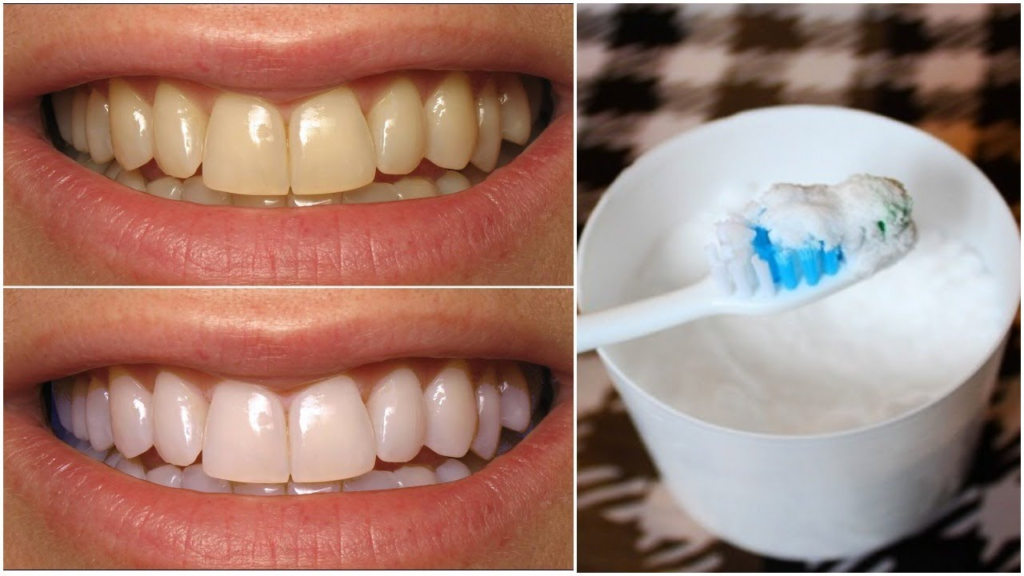
This is the simplest homemade method.
What you need
- 1 teaspoon baking soda
- Approximately 2 teaspoons water
- A soft-bristled toothbrush
- A small clean bowl
How to make the paste
Mix the baking soda and water until you have a smooth, thin paste.
The mixture should spread easily. Do not make it thick, gritty, or dry because a rough paste may encourage aggressive scrubbing.
How to use it
- Place a small amount of paste on a soft toothbrush.
- Brush gently using small circular movements.
- Concentrate on visible surface stains rather than scrubbing one spot repeatedly.
- Brush for no more than about one minute.
- Spit out the paste.
- Rinse your mouth and toothbrush thoroughly.
Use this method only occasionally rather than as your daily toothpaste.
Continue brushing twice daily with a regular fluoride toothpaste because plain baking soda does not provide the same cavity protection as a fluoride formula.
How often can you use it?
Limit a homemade baking-soda paste to approximately once or twice a week.
Stop using it if your teeth become more sensitive, your gums feel irritated, or brushing becomes uncomfortable.
Avoid this method if:
- You have untreated cavities.
- Your gums bleed frequently.
- You have exposed tooth roots.
- Your teeth are already highly sensitive.
- You have cracked or painful teeth.
- A dentist has warned you about enamel wear.
- You wear fixed braces and cannot clean the paste away thoroughly.
Method 2: Baking-Soda Whitening Toothpaste
For regular use, a formulated fluoride toothpaste containing baking soda is usually the more predictable choice.
Commercial toothpaste is designed with controlled:
- Abrasiveness
- Texture
- Ingredient balance
- Fluoride content
- Flavor
- Frequency instructions
A six-week clinical trial found that a toothpaste formulated with baking soda and peroxide significantly reduced external stains and improved measured tooth shade compared with the control toothpaste used in the study.
How to use it
Brush twice daily—or according to the product label—for about two minutes with a soft-bristled toothbrush.
Use gentle pressure and allow the toothpaste to do the work. Harder brushing does not create faster whitening.
Amazon options
See Arm & Hammer Advance White toothpaste on Amazon
Compare fluoride baking-soda toothpastes on Amazon
See baking-soda toothpaste for sensitive teeth on Amazon
Look for fluoride and follow the package directions. An ADA-Accepted toothpaste with a cavity-protection claim must contain fluoride.
Method 3: Baking Soda and Hydrogen Peroxide
Baking soda and hydrogen peroxide work in different ways:
- Baking soda mechanically polishes away some surface stains.
- Hydrogen peroxide chemically breaks down colored stain molecules.
Some commercial toothpastes combine both ingredients, and clinical research has found certain formulated baking-soda-and-peroxide toothpastes effective for reducing external stains.
However, that does not mean a strong homemade mixture should be used freely.
The safer option
Choose a commercially formulated fluoride toothpaste containing baking soda and peroxide, or use a dental whitening product with clear instructions.
This provides more predictable ingredient levels than mixing bottled peroxide in your kitchen.
Homemade paste caution
Some people mix a small amount of 3% hydrogen peroxide with baking soda to form a paste. The problem is that the final peroxide exposure, paste abrasiveness, gum contact, and amount used are difficult to control.
Do not use this combination if you have:
- Sensitive teeth
- Gum disease
- Bleeding gums
- Cavities
- Exposed roots
- Cracked teeth
- Mouth sores
- Visible enamel erosion
Never use peroxide stronger than an ordinary oral whitening product recommends, and never use industrial or concentrated peroxide.
Do not swallow the mixture or leave it sitting on your teeth.
For a full safety guide, read how hydrogen peroxide is used for teeth whitening.
Amazon options
See baking-soda-and-peroxide toothpaste on Amazon
Compare hydrogen-peroxide whitening strips on Amazon
4. Baking Soda + Coconut Oil
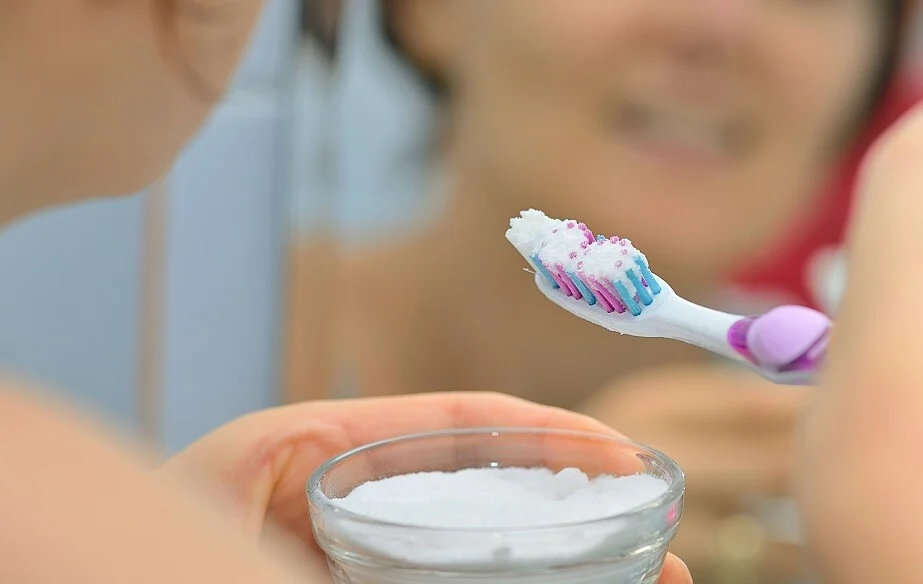
You’ll need:
- 1 teaspoon baking soda
- 1 teaspoon coconut oil (Coconut Oil Pulling Packets)
How to use:
Mix baking soda and coconut oil until creamy. You can brush with it like toothpaste or swish the mixture around your mouth for 5–10 minutes (“oil pulling”) before spitting into a trash can (not the sink, it can clog pipes).
Extra notes:
Coconut oil has a naturally smooth, rich texture that takes away the grittiness of baking soda, making this blend feel gentler.
The oil also has antimicrobial properties, which can help reduce bacteria in your mouth and freshen breath.
The taste is mild and slightly sweet, much more pleasant than plain baking soda.
If you’re someone with sensitive gums or who just doesn’t like the idea of peroxide, this is a cozy alternative.
It’s not an overnight whitening trick, but over a few weeks, you may notice stains softening and a cleaner overall feel after brushing.
Method 5 – Baking Soda Mouth Rinse
You’ll need:
- 1 cup warm water
- ½ teaspoon baking soda
- Optional: 1 drop peppermint oil for flavor
How to use:
Stir baking soda into warm water until fully dissolved. Swish the solution in your mouth for about 30 seconds, then spit it out.
Extra notes:
This is the gentlest way to use baking soda, no brushing involved. It works more like a pH-balancing rinse that freshens breath and creates an environment that’s less friendly for stain buildup.
You might not see dramatic whitening results from this alone, but it’s a great maintenance habit, especially if you’re a coffee or tea drinker.
Adding a drop of peppermint oil gives it that fresh-mouth feeling without the burn of alcohol-based mouthwash.g It’s also a good quick fix after eating acidic foods, helping protect your enamel between brushing sessions.
What Not to Mix With Baking Soda
This is where many natural whitening routines go wrong.
Lemon juice
Do not mix baking soda with lemon juice.
Lemon is acidic and may soften enamel. Scrubbing softened enamel with an abrasive paste can increase the risk of wear and sensitivity.
Apple cider vinegar
Apple cider vinegar is also acidic. It is not a safe ingredient to combine with baking soda for routine tooth whitening.
Salt
Salt does not bleach teeth. Adding coarse salt can make the paste rougher and may irritate your gums.
Activated charcoal
Combining two abrasive ingredients does not guarantee better whitening. Charcoal products also lack strong evidence for safe and meaningful tooth bleaching.
The ADA reports insufficient evidence that charcoal oral-care products provide measurable whitening with adequate safety.
Household bleach
Never put household bleach in your mouth or mix it with baking soda. Household cleaning products can cause serious chemical injury.
What Results Can You Expect?
Baking soda may produce gradual improvement when discoloration is mainly on the tooth surface.
You are more likely to notice a difference if your stains come from:
- Coffee
- Tea
- Cola
- Tobacco
- Dark sauces
- Plaque buildup
A formulated toothpaste may require several weeks of regular use. In one clinical trial, measurable stain and shade improvements were recorded after four and six weeks of twice-daily use.
Do not expect baking soda to create dramatically white teeth after one brushing.
It also cannot change your natural dentin color or correct deep discoloration caused by medication, trauma, or tooth development.
Read our guide to stained teeth and the different types of discoloration to determine whether your stains are likely to respond.
Is Baking Soda Safe for Enamel?
Baking soda itself has relatively low hardness compared with enamel and dentin. Reviews of formulated baking-soda toothpastes describe them as low-abrasive and within established safety limits.
Still, safety depends on how it is used.
Risk may increase when you:
- Brush with excessive pressure.
- Use a thick, dry paste.
- Apply it several times daily.
- Combine it with acids.
- Continue despite sensitivity.
- Stop using fluoride toothpaste.
- Scrub one stained area repeatedly.
A formulated toothpaste is usually better suited to daily use than plain baking soda.
Baking Soda for Sensitive Teeth
Baking soda is not automatically comfortable for sensitive teeth.
If cold drinks, sweet foods, or brushing already cause discomfort, begin with a toothpaste formulated for sensitivity rather than a homemade paste.
You may also need to address the underlying reason for the sensitivity, such as:
- Gum recession
- Exposed roots
- Cavities
- Enamel wear
- A cracked tooth
- Recent whitening treatment
Read our complete guide to teeth whitening for sensitive teeth and our related home remedies for tooth sensitivity.
How to Maintain Whiter Teeth
Baking soda will not prevent stains if your teeth are repeatedly exposed to highly pigmented drinks and poor plaque control.
To maintain results:
- Brush twice daily with fluoride toothpaste.
- Floss or clean between your teeth daily.
- Rinse with water after coffee or tea.
- Avoid slowly sipping dark drinks for hours.
- Stop smoking or using tobacco.
- Attend regular dental cleanings.
- Use a straw for suitable cold beverages.
- Do not whiten continuously.
For a complete daily routine, follow our oral-hygiene tips and teeth-brushing guide.
When to Skip Baking Soda and See a Dentist
Do not rely on baking soda when you have:
- A single dark tooth
- Tooth pain
- A visible cavity
- A cracked tooth
- Bleeding or swollen gums
- Hard tartar buildup
- Severe sensitivity
- White, brown, or black spots
- Discoloration after an injury
Whitening cannot treat these problems.
If tartar is making your teeth look yellow, read how to remove tartar from teeth and arrange a professional cleaning rather than scraping it at home.
Frequently Asked Questions
Can baking soda whiten teeth overnight?
No. Baking soda may gradually reduce surface staining, but it will not safely create dramatic whitening after one use.
Can I brush with baking soda every day?
A fluoride toothpaste formulated with baking soda may be suitable for daily use when used as directed. A homemade baking-soda paste is better limited to occasional use.
How long does baking soda take to whiten teeth?
Results depend on the type and severity of the stain. Formulated baking-soda toothpaste may require several weeks of consistent use to produce noticeable surface-stain improvement.
Can I mix baking soda with toothpaste?
You could create an unpredictable level of abrasiveness by adding loose baking soda to another toothpaste. A ready-made baking-soda fluoride toothpaste is the more controlled option.
Can I mix baking soda and hydrogen peroxide?
Commercial products may contain both ingredients. Homemade mixtures are less predictable and may irritate sensitive teeth or gums. A formulated peroxide whitening product is generally easier to use correctly.
Does baking soda remove yellow stains?
It may help when yellowing is caused by external stains or plaque. It is less likely to change yellowing caused by natural dentin, thin enamel, medication, or internal discoloration.
Can baking soda whiten crowns or fillings?
No. Baking soda and bleaching products do not change the color of crowns, veneers, bonding, implants, or tooth-colored fillings.
Does baking soda damage enamel?
Formulated baking-soda toothpastes are considered relatively low-abrasive. Problems are more likely when people scrub aggressively, overuse homemade paste, or combine baking soda with acids.
Final Takeaway
Baking soda can be a helpful option for mild surface stains, especially when used in a properly formulated fluoride toothpaste.
A homemade baking-soda-and-water paste may be used occasionally and gently, but it should not replace regular fluoride toothpaste. Avoid daily scrubbing and never mix baking soda with lemon juice, vinegar, household bleach, or other harsh ingredients.
For deeper whitening, a peroxide-based strip, gel, or dentist-supervised tray may produce more predictable results. Compare all your options in our main guide to teeth whitening at home.
Teeth Whiting at Home: How to Whiten Teeth Naturally – StylePersuit
Thursday 5th of December 2024
[…] Baking soda, or sodium bicarbonate, is a mild abrasive that can help remove surface stains from teeth. There are two ways to use baking soda for teeth whitening: […]
Teeth Whitening for Kids: Keeping their Smiles Bright and Healthy
Wednesday 19th of June 2024
[…] The Ultimate Guide: Using Baking Soda for Teeth Whitening […]
Braces Colors Ideas: How to Choose The Right Color Braces - StylePersuit
Thursday 13th of June 2024
[…] Read about: The Ultimate Guide: Using Baking Soda for Teeth Whitening […]
The Ultimate Guide to Teeth Whitening for Sensitive Teeth (5 Effective Ways)
Monday 25th of March 2024
[…] Learn how to get super white teeth with Baking soda […]
How to Whiten Teeth with Coconut Oil Fast and Easily
Monday 2nd of October 2023
[…] Learn how to get super white teeth with Baking soda […]