
Swimmer’s ear can make a child miserable.
One day they are happily swimming, splashing, and playing in the water. Then later, they start complaining that their ear feels itchy, full, sore, or painful when touched.
Swimmer’s ear is an infection or irritation of the outer ear canal. It often happens when water stays trapped in the ear after swimming or bathing, creating a damp place where germs can grow.
Children are more likely than adults to get swimmer’s ear, but it can happen to anyone. The CDC explains that swimmer’s ear can be treated with antibiotic ear drops and that keeping ears dry after swimming helps lower the risk.
The most important thing to know is this: true swimmer’s ear is usually an infection, not just water in the ear.
Home care can help with comfort and prevention, but children with ear pain should be checked by a healthcare provider, especially if the pain is strong, there is drainage, hearing changes, fever, swelling, or symptoms last more than a day or two.
Below are five safe, practical swimmer’s ear remedies and comfort tips for kids, plus what not to put in your child’s ear.
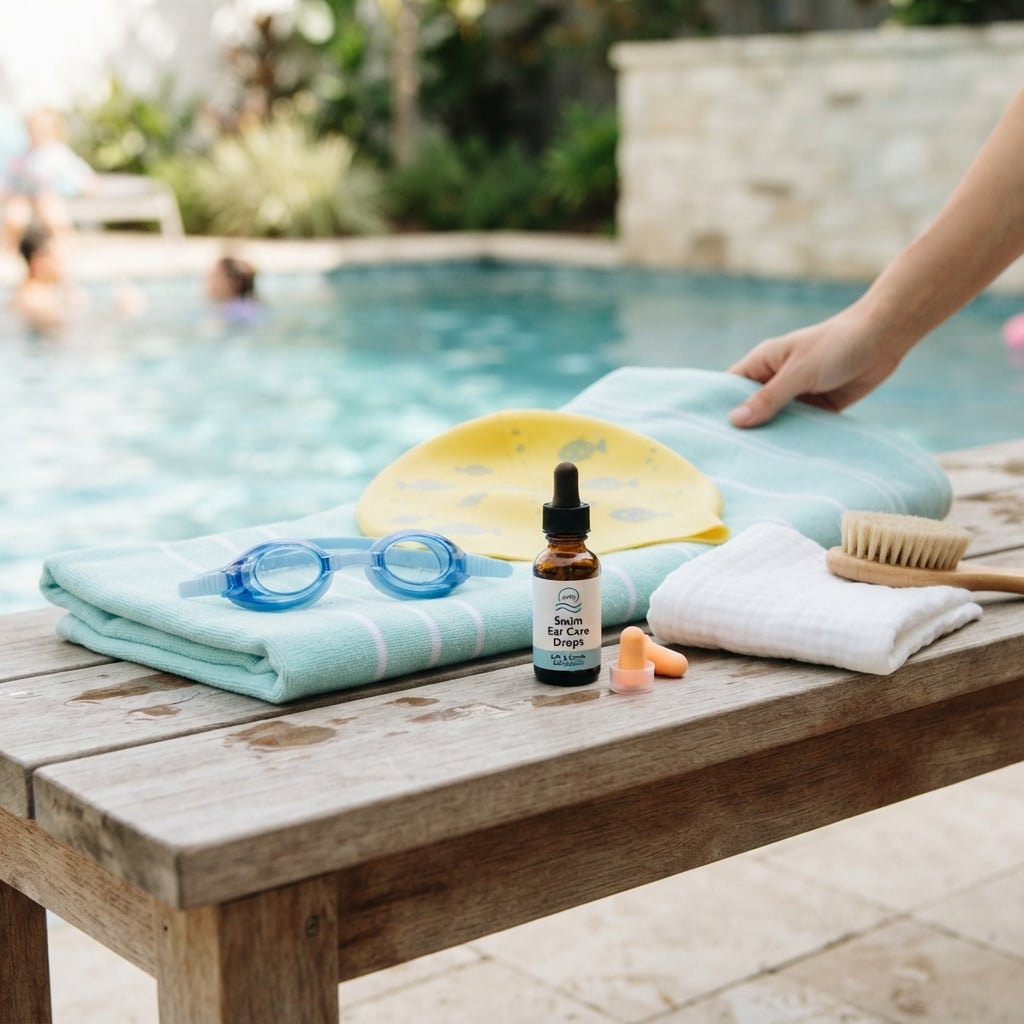
What Does Swimmer’s Ear Feel Like in Kids?
Swimmer’s ear may cause:
- Ear pain
- Itching inside the ear
- Redness around the ear canal
- Pain when touching or pulling the outer ear
- Pain when chewing
- Full feeling in the ear
- Muffled hearing
- Fluid or drainage
- Swelling
- Trouble sleeping because of ear pain
Mayo Clinic recommends getting medical help even for mild swimmer’s ear symptoms. Severe pain, fever, or symptoms that feel serious should be treated urgently.
Before Trying Any Remedy
Do not put drops, vinegar, alcohol, peroxide, oils, or homemade mixtures into a child’s ear if:
- The child has ear tubes
- The child may have a ruptured eardrum
- There is fluid, pus, or blood draining from the ear
- The child has severe pain
- The child has fever
- The child has had ear surgery
- The child has hearing loss
- You are not sure what is causing the pain
Cleveland Clinic warns that ear drops should be avoided if you think there may be a ruptured eardrum.
1. See a Doctor for Proper Ear Drops
The best remedy for swimmer’s ear in kids is often prescription ear drops from a healthcare provider.
This matters because swimmer’s ear is commonly caused by bacteria in the outer ear canal. If the ear is infected, comfort tricks may not be enough. A doctor can look inside the ear, confirm what is happening, and prescribe the right drops if needed.
Prescription drops may include:
- Antibiotic ear drops
- Steroid ear drops to reduce swelling
- Antifungal drops if fungus is suspected
- Pain-relief guidance
Cleveland Clinic says healthcare providers treat swimmer’s ear with ear drops that eliminate the infection. (Cleveland Clinic)
What Parents Can Do
Use drops exactly as prescribed.
Finish the treatment even if your child feels better early, unless the doctor tells you otherwise.
Keep the ear dry while it heals.
Ask the doctor when your child can swim again.
Helpful Item
A soft towel and waterproof shower protection can help keep the ear dry while it heals.
2. Keep the Ear Dry While It Heals
Moisture can make swimmer’s ear worse.
If your child has swimmer’s ear, avoid swimming until a healthcare provider says it is safe. Also be careful during baths and showers so water does not run into the painful ear.
Mayo Clinic advises people being treated for swimmer’s ear not to swim or scuba dive while healing.
How to Keep the Ear Dry
Try these simple steps:
- Have your child take showers instead of baths if possible.
- Keep the painful ear away from running water.
- Use a cotton ball lightly coated with petroleum jelly at the outer ear during showers if recommended by a doctor.
- Do not push cotton deep into the ear.
- Dry the outer ear gently with a towel.
- Avoid earbuds, earplugs, or headphones that press into the sore ear.
Helpful Item
A child-size swim cap may help keep water away from the ears during future swimming, once the infection has healed.
3. Use Warm Compresses for Pain Comfort
A warm compress can help soothe ear discomfort while you wait for medical treatment to work.
This does not cure the infection, but it may help your child feel more comfortable.
How to Try It
Wet a clean washcloth with warm water.
Wring it out well.
Place it gently against the outside of the painful ear for 10 to 15 minutes.
Repeat as needed.
Make sure the cloth is warm, not hot.
Never put hot water, steam, or heated oil into the ear.
Best For
- Mild discomfort
- Trouble settling at bedtime
- Pain while waiting for prescribed drops to start helping
Helpful Item
Soft microfiber washcloths are gentle for kids and useful for warm compresses.
4. Use Doctor-Approved Pain Relief
Swimmer’s ear can be painful, especially when the ear canal is swollen.
Ask your child’s doctor or pharmacist whether acetaminophen or ibuprofen is appropriate based on your child’s age, weight, health history, and other medicines.
Do not give aspirin to children unless a healthcare provider specifically tells you to.
Pain relief can help your child sleep, eat, and feel better while the ear drops treat the infection.
Important Tip
Pain medicine should not replace medical care.
If your child’s ear pain is severe, getting worse, or not improving after treatment starts, contact a healthcare provider.
5. Prevent It Next Time by Drying Ears Safely
Prevention is one of the best “remedies” for kids who get swimmer’s ear often.
After swimming or bathing, help your child dry their ears gently.
The CDC recommends tilting the head so each ear faces down, pulling the earlobe in different directions to help water drain, and using a hair dryer on the lowest heat and fan setting if water remains. (CDC)
Safe Ear-Drying Routine
After swimming:
- Have your child tilt one ear toward the ground.
- Gently pull the earlobe in different directions.
- Let water drain naturally.
- Dry the outer ear with a towel.
- Use a hair dryer on the lowest setting from a safe distance if needed.
Do not put cotton swabs deep into the ear canal. Cotton swabs can irritate the skin, push wax deeper, or injure the ear.
Helpful Item
Soft silicone swim earplugs or custom swim molds may help some children who get swimmer’s ear often. The CDC lists bathing caps, ear plugs, and custom-fitted swim molds as options for keeping water out while swimming. (CDC)
What About Vinegar and Alcohol Ear Drops?
You may see homemade swimmer’s ear drops online made with vinegar and rubbing alcohol.
These mixtures are often discussed for prevention after swimming, but they are not safe for every child and should not be used when an infection is already painful or when the eardrum status is unknown.
Do not use vinegar, alcohol, peroxide, or homemade drops in a child’s ear unless your healthcare provider says it is safe.
This is especially important if your child has ear tubes, a ruptured eardrum, ear drainage, severe pain, or a history of ear surgery.
What Not to Do for Swimmer’s Ear in Kids
Avoid these mistakes:
- Do not put cotton swabs inside the ear canal.
- Do not use ear candles.
- Do not pour oil into the ear.
- Do not use random homemade ear drops.
- Do not let the child keep swimming through ear pain.
- Do not use old prescription ear drops from a past infection.
- Do not ignore drainage, fever, swelling, or severe pain.
- Do not use adult remedies without pediatric guidance.
Ear pain in children can have several causes, including swimmer’s ear, middle ear infection, wax blockage, injury, or a foreign object. A doctor can tell the difference.
When to Call a Doctor
Call a healthcare provider if your child has:
- Ear pain after swimming
- Pain when the outer ear is touched
- Drainage from the ear
- Fever
- Swelling around the ear
- Redness spreading outside the ear
- Trouble hearing
- Dizziness
- Severe pain
- Symptoms lasting more than 24 to 48 hours
- Ear tubes or past ear surgery
- Diabetes, immune problems, or chronic skin conditions
- Pain that gets worse even after treatment starts
Get urgent help if there is severe swelling, high fever, facial weakness, strong dizziness, or your child seems very unwell.
Frequently Asked Questions
What is the best swimmer’s ear remedy for kids?
The best treatment is usually doctor-prescribed ear drops after the ear has been examined. Home care like warm compresses and keeping the ear dry can help with comfort, but they do not replace treatment for an infection.
Can swimmer’s ear go away on its own?
Sometimes mild irritation may improve, but true swimmer’s ear can get worse without proper treatment. Children with ear pain after swimming should be checked, especially if symptoms are strong or lasting.
Can I use hydrogen peroxide for swimmer’s ear?
Do not use hydrogen peroxide in a child’s painful ear unless a healthcare provider says it is safe. It may irritate the ear and should not be used if the eardrum may be damaged.
Can I use rubbing alcohol drops for my child?
Only if your child’s doctor says it is safe. Alcohol drops can burn, irritate, and may be unsafe if there are ear tubes, drainage, or a ruptured eardrum.
Should my child swim with swimmer’s ear?
No. It is usually best to avoid swimming until the ear has healed and a healthcare provider says it is okay.
How can I prevent swimmer’s ear in kids?
Dry ears after swimming, avoid putting objects in the ears, consider swim earplugs or a swim cap for children prone to swimmer’s ear, and ask your doctor whether preventive drying drops are safe for your child.
Final Thoughts
Swimmer’s ear in kids is painful, but it is usually treatable.
The safest approach is to have the ear checked, use prescribed drops if needed, keep the ear dry, use warm compresses for comfort, and prevent future problems by drying ears gently after swimming.
Be careful with online home remedies. A child’s ear is delicate, and the wrong drops can make pain worse or cause harm if the eardrum is not intact.
When in doubt, call your child’s healthcare provider. A quick exam can prevent days of unnecessary pain and help your child get back to swimming safely.