
Cleaning a room can feel overwhelming when clothes are on the floor, surfaces are covered, the bed is unmade, and you do not know where to begin.
The problem is usually not the amount of cleaning. It is trying to do everything at once without a clear order.
A simple room cleaning checklist makes the process easier because it gives you one small task at a time. Instead of moving randomly between laundry, dusting, organizing, and vacuuming, you follow a practical sequence that helps you finish faster without cleaning the same area twice.
This checklist works for bedrooms, guest rooms, dorm rooms, children’s rooms, and small living spaces. You can use the complete version for a deep clean or shorten it when you only have 10 to 20 minutes.
The goal is not to create a perfectly staged room. It is to make the space feel cleaner, calmer, more comfortable, and easier to maintain.
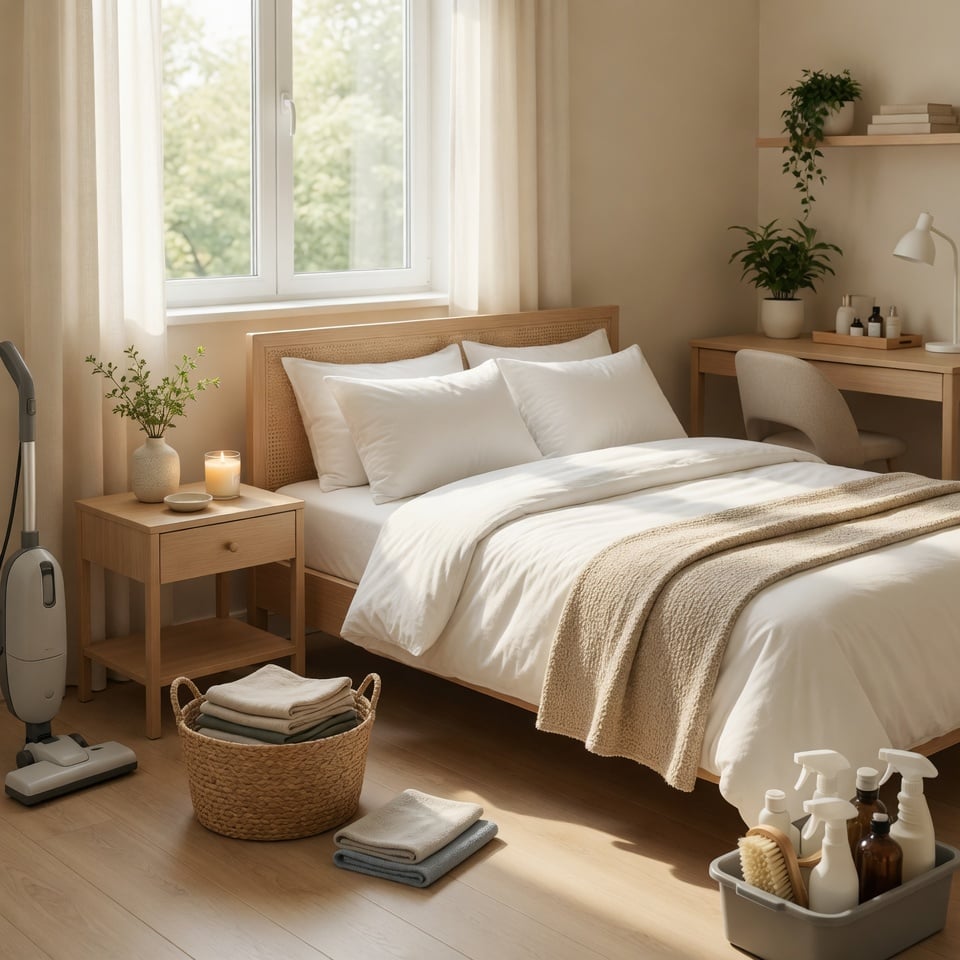
What You Need Before You Start
Gather your basic cleaning supplies before beginning so you do not waste time walking back and forth.
You may need:
- Trash bag
- Laundry basket
- Storage basket or box
- Microfiber cloths
- All-purpose cleaner
- Glass cleaner
- Duster
- Vacuum cleaner
- Mop, if the room has hard flooring
- Fresh bedding
- Disinfecting wipes
- Small brush or old toothbrush
- Storage organizers
Helpful cleaning supplies: Check room-cleaning essentials on Amazon
Open a window if the weather allows. Fresh air can make the room feel better immediately and helps prevent strong cleaning-product smells from building up.
Complete Room Cleaning Checklist
1. Open the Curtains and Let in Fresh Air
Start by opening the curtains, blinds, and windows.
Natural light makes it easier to see dust, stains, clutter, and forgotten corners. Fresh air can also make a closed room feel less stuffy while you work.
If the weather is very hot, cold, rainy, or humid, you do not have to leave the window open for long. Even five or ten minutes can help refresh the space.
Turn on the lights as well, especially in darker corners. A brightly lit room is easier to clean properly than one with dim lighting.
2. Put on Music and Set a Timer
Cleaning often feels harder when it has no clear ending.
Set a timer for 15, 30, or 60 minutes depending on how much time you have. Put on music, a podcast, or something enjoyable in the background.
A timer creates a little urgency and helps you stay focused. You may be surprised by how much you can finish in one concentrated cleaning session.
For a very messy room, work in short rounds:
- 15 minutes picking up clutter
- 10 minutes handling laundry
- 10 minutes wiping surfaces
- 10 minutes cleaning the floor
Short cleaning blocks feel much more manageable than telling yourself you have to clean the entire room.
3. Collect All Trash
Walk around the room with a trash bag and collect anything that needs to be thrown away.
Look for:
- Food wrappers
- Receipts
- Used tissues
- Empty bottles
- Junk mail
- Broken items
- Old packaging
- Dried-up pens
- Disposable cups
- Unwanted paper
Check under the bed, behind furniture, inside drawers, on the windowsill, and near the desk.
Do not stop to organize yet. Your only job during this step is removing obvious trash.
Empty the room’s wastebasket and replace the liner if necessary.
Useful option: View small bedroom trash cans on Amazon
4. Remove Dishes, Cups, and Food
Take all plates, mugs, glasses, bottles, and food containers to the kitchen.
Food left in a bedroom can create odors and attract ants, flies, cockroaches, or other pests. Even an empty mug may contain enough sugary residue to attract insects.
Check:
- Bedside table
- Desk
- Under the bed
- Window ledges
- Shelves
- Bags and backpacks
Wipe up crumbs or spills immediately, but save the full surface cleaning for later.
Try to make it a habit to take dishes out of the room every evening. This one small routine can prevent a surprising amount of mess.
5. Gather Dirty Laundry
Place all dirty clothing, towels, socks, and bedding in a laundry basket.
Look behind doors, beneath furniture, under blankets, inside bags, and in the corners of the room. Separate clean clothing from dirty clothing instead of putting everything into the wash automatically.
If the basket is full, start a load of laundry before continuing. The washing machine can run while you finish cleaning the rest of the room.
Do not leave clean clothes piled on the bed or chair. Fold them, hang them up, or place them in a temporary basket to handle after the main cleaning tasks.
Helpful option: Check collapsible laundry baskets on Amazon
6. Strip the Bed
Remove the sheets, pillowcases, blankets, and duvet cover if they need washing.
Check the care labels before laundering heavier bedding. Some comforters and mattress protectors require a gentle cycle, cold water, or a larger washing machine.
While the bed is bare:
- Check the mattress for stains
- Vacuum loose dust and crumbs
- Rotate the mattress if recommended
- Wipe the bed frame
- Look underneath the bed for clutter
Washing your bedding regularly helps remove sweat, body oils, dust, pet hair, and skin cells.
If you cannot wash everything on the same day, begin with the sheets and pillowcases because they have the most direct contact with your skin.
7. Make the Bed or Leave It Ready for Fresh Sheets
If your bedding is clean, make the bed now. If it is being washed, leave the mattress clear until the cleaning is finished.
Making the bed creates a large, clean visual area and immediately makes the room appear more organized.
Avoid using the freshly made bed as a sorting table. That usually creates another pile you must handle later.
Keep the bed clear and use a basket or a designated section of the floor for items that still need to be sorted.
8. Pick Up Everything From the Floor
Now collect everything that does not belong on the floor.
This may include:
- Shoes
- Books
- Charging cables
- Toys
- Clothing
- Bags
- Beauty products
- Papers
- Sports equipment
- Pet items
Put away anything that already has a proper home.
For objects that belong elsewhere in the house, place them in one basket. Carry the basket from room to room after you finish cleaning instead of making dozens of separate trips.
For objects without a permanent home, create a temporary “decide later” box. Do not let that box stay untouched for months, though. Schedule a time to sort it.
For quick clutter collection: View storage baskets on Amazon
9. Clear and Organize Flat Surfaces
Clear the dresser, bedside table, desk, windowsill, shelves, and other visible surfaces.
Start by removing everything. Then wipe the surface and return only the items that genuinely belong there.
A crowded surface can make the entire room look messy, even when the floor and bed are clean.
Try keeping only a few useful or decorative items on each surface, such as:
- Lamp
- Alarm clock
- Small tray
- Book
- Plant
- Framed photograph
- Water bottle
- Tissue box
Group small items in trays instead of leaving them scattered. This makes cleaning easier because you can lift one tray instead of moving ten separate objects.
Simple organizing solution: Check decorative storage trays on Amazon
10. Put Away Clothes Properly
Fold clean clothing and place it in drawers. Hang dresses, shirts, jackets, trousers, and other wrinkle-prone items.
Avoid creating the famous “clothes chair”—the chair that slowly disappears beneath clothes that are neither clean enough for the closet nor dirty enough for the laundry.
Create a clear system instead:
- Clean clothes go into the closet or drawers
- Dirty clothes go into the laundry basket
- Clothes to wear again go on one designated hook or hanger
If your drawers are overflowing, it may be time to remove clothing you no longer wear.
A small wardrobe is often easier to maintain than a packed wardrobe where nothing fits properly.
11. Declutter the Bedside Table
The bedside table is one of the quickest areas to become cluttered.
Remove old cups, receipts, chargers, books, medication packaging, hair ties, and random small objects.
Keep only the things you use regularly at night or in the morning.
A simple bedside setup might include:
- Lamp
- Phone charger
- Book
- Water
- Hand cream
- Alarm clock
- Small catchall tray
Wipe the table, lamp base, drawer handles, and charging cables before putting everything back.
12. Organize the Desk or Study Area
If the room includes a desk, sort papers before wiping the surface.
Create small categories:
- Keep
- File
- Shred
- Recycle
- Take action
Throw away dried pens, empty packaging, and unnecessary notes. Return stationery to drawers or containers.
Wipe the keyboard, mouse, monitor, desk lamp, and chair arms. Electronics collect dust quickly, so use a slightly damp microfiber cloth rather than spraying cleaner directly onto them.
Keep only the current project on the desk. Store older documents and supplies in drawers, magazine holders, or labeled folders.
For a tidier workspace: View desktop organizers on Amazon
13. Dust From Top to Bottom
Always dust before vacuuming or mopping.
Dust falls downward, so starting with the floor means you may have to clean it again.
Dust these areas:
- Ceiling fan blades
- Light fixtures
- Curtain rods
- Tops of wardrobes
- Shelves
- Picture frames
- Lampshades
- Headboard
- Dresser
- Baseboards
- Window frames
- Door frames
Use a microfiber cloth or extendable duster. For ceiling fans, an old pillowcase can help trap dust instead of scattering it around the room.
Slide the pillowcase over each blade and gently pull it backward. Most of the dust stays inside the fabric.
Helpful dusting tool: Check extendable microfiber dusters on Amazon
14. Wipe Mirrors and Glass
Clean mirrors, glass furniture, picture-frame glass, and windows if needed.
Spray glass cleaner onto a microfiber cloth rather than directly onto frames or electronics. Wipe in smooth strokes and polish away streaks with a dry section of the cloth.
Do not forget fingerprints on:
- Mirrors
- Closet doors
- Windows
- Glass shelves
- Picture frames
A clean mirror reflects more light and can make the whole room feel brighter.
15. Clean Frequently Touched Surfaces
Some of the dirtiest areas in a room are not always visibly dirty.
Wipe high-touch points such as:
- Door handles
- Drawer pulls
- Light switches
- Remote controls
- Phone chargers
- Bed frame
- Closet handles
- Desk chair arms
- Alarm clock buttons
Use a product suitable for the material. Do not soak switches, electronics, or wooden furniture.
These small areas are easy to overlook, but cleaning them makes the room feel much more thoroughly refreshed.
16. Clean Under the Bed
The space beneath the bed often collects dust, hair, socks, papers, bottles, and forgotten storage items.
Pull out everything you can safely reach. Throw away trash and return misplaced items to their proper places.
Vacuum or sweep underneath the bed. If the bed is too low, use a flat vacuum attachment, extendable duster, or long microfiber mop.
Only store items under the bed if they are contained in closed boxes or zippered bags. Loose items become dusty quickly and make future cleaning harder.
For hidden storage: View under-bed storage containers on Amazon
17. Vacuum Upholstery and Soft Furnishings
Vacuum fabric chairs, cushions, the mattress surface, upholstered headboards, and pet beds.
Use the upholstery attachment and work slowly enough to collect hair, dust, and crumbs.
Shake out curtains lightly or vacuum them with a low-suction attachment. Check care labels before washing curtains because some fabrics may shrink or require dry cleaning.
If the room smells stale, washing washable soft furnishings can make a bigger difference than spraying air freshener.
18. Vacuum or Sweep the Floor
Once the clutter and dust are gone, clean the floor.
Vacuum carpets slowly and make more than one pass through busy areas. Use the crevice tool around:
- Baseboards
- Furniture legs
- Bed edges
- Room corners
- Doorways
- Radiators
For hard floors, sweep or vacuum first. Dust and grit can scratch flooring if you mop over them.
Move lightweight furniture when possible rather than cleaning only the visible center of the room.
For small spaces: Check compact vacuum cleaners on Amazon
19. Mop Hard Flooring
If the room has tile, vinyl, laminate, or sealed wood flooring, mop after removing loose dirt.
Use a cleaner made for your flooring type. Too much water can damage laminate and wood floors, so use a lightly damp mop rather than soaking the surface.
Begin at the farthest corner and work toward the doorway so you do not walk over the wet floor.
Allow the floor to dry fully before replacing rugs or storage baskets.
20. Clean the Baseboards
Baseboards collect a surprising amount of dust and grime.
Wipe them with a damp microfiber cloth. Use a small brush or old toothbrush for corners and detailed trim.
You do not need to deep-clean baseboards every week. A quick dusting during regular cleaning and a more thorough wipe every month or two is usually enough.
Clean baseboards help the entire room look sharper, even though most people do not notice them individually.
21. Change or Wash Rugs
Shake small rugs outside and vacuum both sides.
Wash machine-safe rugs according to the care label. For rugs that cannot be washed, spot-clean stains and allow the area to dry completely.
Do not place a damp rug back on the floor. Trapped moisture can cause odors and may damage the flooring beneath it.
A freshly cleaned rug can make a room smell and feel much better, especially in bedrooms where shoes, pets, or food are present.
22. Empty and Organize Drawers
You do not have to organize every drawer during each room-cleaning session. Choose one or two problem drawers at a time.
Remove the contents and wipe the interior. Group similar items and get rid of anything broken, expired, empty, or unused.
Drawer dividers can help separate:
- Socks
- Underwear
- Accessories
- Cables
- Makeup
- Stationery
- Small personal items
Keep frequently used items near the front and less-used items toward the back.
For easier drawer organization: View adjustable drawer dividers on Amazon
23. Refresh the Closet
Straighten hanging clothes, pair shoes, return empty hangers, and remove anything that has fallen onto the floor.
Group similar items together so they are easier to find. For example:
- Shirts
- Trousers
- Dresses
- Jackets
- Work clothes
- Casual clothes
Use matching slim hangers to save space and create a cleaner appearance.
Place seasonal or rarely used items on higher shelves. Keep daily essentials within easy reach.
Do not force more items into an already full closet. Remove something before adding more storage products to a space that simply contains too much.
24. Replace Fresh Bedding
Once the room is clean and the laundry is dry, make the bed with fresh sheets and pillowcases.
Smooth the sheets, fluff the pillows, and fold the blanket or duvet neatly.
Fresh bedding often becomes the most satisfying part of cleaning a room. It makes the space feel finished and gives you a clean place to rest after all the work.
Consider keeping an extra sheet set nearby so you can remake the bed immediately while the other set is being washed.
25. Add the Finishing Touches
Now return the final decorative items and make the room feel comfortable.
You might:
- Straighten cushions
- Fold a throw blanket
- Water a plant
- Lightly mist curtains with fabric refresher
- Place fresh flowers in a vase
- Refill a bedside water bottle
- Replace tissues
- Put books back neatly
- Turn on a lamp
Avoid covering unpleasant odors with strong sprays. Remove the source of the odor first, then use fresh air or a light fragrance if desired.
Printable Room Cleaning Checklist
Use this quick checklist whenever your room needs a full reset:
Declutter
- Open curtains and windows
- Collect trash
- Remove dishes and food
- Gather dirty laundry
- Pick up everything from the floor
- Return misplaced items
- Clear desks and surfaces
- Put away clean clothes
Clean the Bed
- Strip the bedding
- Wash sheets and pillowcases
- Vacuum the mattress
- Wipe the bed frame
- Replace fresh bedding
Dust and Wipe
- Dust the ceiling fan
- Dust shelves and furniture
- Wipe mirrors
- Clean windows if needed
- Wipe door handles
- Clean light switches
- Wipe baseboards
- Clean electronics carefully
Clean the Floor
- Clean under the bed
- Vacuum rugs and upholstery
- Sweep or vacuum the floor
- Mop hard flooring
- Spot-clean carpet stains
Organize
- Straighten drawers
- Organize the closet
- Pair and store shoes
- Sort papers
- Store cables and chargers
- Remove unwanted items
Finish
- Empty the vacuum or dustpan
- Put cleaning supplies away
- Replace the trash bag
- Add fresh bedding
- Return decorative items
- Enjoy the clean room
10-Minute Room Cleaning Checklist
When you do not have time for a complete clean, focus on the tasks that create the biggest visual difference.
Minute 1–2: Remove Trash
Walk around with a bag and collect all rubbish.
Minute 3–4: Handle Laundry
Put dirty clothes in the basket and fold or hang clean clothing.
Minute 5: Remove Dishes
Take all plates, cups, and food containers to the kitchen.
Minute 6–7: Clear the Floor
Pick up shoes, books, bags, and other loose items.
Minute 8: Make the Bed
Straighten the bedding and arrange the pillows.
Minute 9: Wipe Main Surfaces
Quickly wipe the desk, bedside table, and dresser.
Minute 10: Vacuum or Sweep
Focus on the visible floor and high-traffic areas.
This quick routine will not replace a deep clean, but it can make the room look and feel much better in a short amount of time.
Weekly Room Cleaning Checklist
Complete these tasks once a week:
- Change the sheets
- Empty the trash
- Dust visible surfaces
- Clean mirrors
- Vacuum or sweep
- Mop hard flooring
- Remove dishes
- Put away clothing
- Wipe high-touch areas
- Water plants
- Clear the bedside table
- Check under the bed
A weekly routine prevents small messes from becoming an exhausting weekend project.
Monthly Bedroom Deep-Cleaning Checklist
Once a month, add a few deeper cleaning tasks:
- Dust ceiling fans and light fixtures
- Vacuum beneath furniture
- Wipe baseboards
- Wash or vacuum curtains
- Clean windows and tracks
- Organize one drawer
- Declutter the closet
- Vacuum the mattress
- Clean behind the bed
- Wash rugs
- Wipe doors and frames
- Check for signs of pests or moisture
You can divide these jobs across the month instead of doing everything on the same day.
How to Clean a Very Messy Room Without Feeling Overwhelmed
If your room feels unmanageable, do not begin by organizing tiny objects.
Start with the five biggest categories:
- Trash
- Dishes
- Dirty laundry
- Items that have a home
- Items that do not have a home
Work on only one category at a time.
Do not empty the entire closet or every drawer unless you have enough time to finish. Pulling everything out can make the room feel worse and may cause you to give up halfway through.
Begin with visible progress. Clearing the floor and making the bed will make the room feel more manageable and give you motivation to continue.
How to Keep Your Room Clean Every Day
A clean room is easier to maintain with small daily habits.
Try this five-minute evening reset:
- Put dirty clothes in the basket
- Remove dishes
- Throw away trash
- Return five items to their places
- Clear the bedside table
- Prepare clothes for the next day
Make the bed each morning, even if it is not perfect. Avoid placing items on the floor “temporarily,” because temporary piles quickly become permanent clutter.
Use the one-minute rule: if a task takes less than one minute, do it immediately. Hang up the jacket, throw away the wrapper, return the book, and place the cup near the door.
These tiny actions prevent the room from reaching the point where cleaning feels overwhelming.
Frequently Asked Questions
What is the correct order for cleaning a room?
Start by removing trash, dishes, laundry, and clutter. Then organize surfaces, dust from top to bottom, clean mirrors and high-touch areas, and finish by vacuuming or mopping the floor.
This order prevents dust and crumbs from falling onto a floor you already cleaned.
How often should you clean your room?
Quick tidying can be done daily. Dusting, changing sheets, and vacuuming are usually helpful once a week. Deeper tasks such as cleaning under furniture, washing curtains, and organizing drawers can be completed monthly or seasonally.
The right schedule depends on pets, allergies, room use, and how quickly dust accumulates.
How long should it take to clean a room?
A lightly messy room may take 20 to 30 minutes. A regular weekly clean may take 45 to 60 minutes. A cluttered room or full deep clean may require several hours.
Breaking the work into short sessions can make a large job easier.
Should I dust or vacuum first?
Dust first, then vacuum. Dust and debris fall onto the floor while you clean higher surfaces.
How often should bedding be washed?
Many people wash sheets and pillowcases weekly or every one to two weeks. More frequent washing may be useful if you sweat heavily, sleep with pets, have allergies, or are recovering from illness.
What is the fastest way to make a room look clean?
Remove trash and dishes, put away clothing, clear the floor, make the bed, and wipe visible surfaces. These tasks create the biggest visual improvement.
How do I clean my room when I have no motivation?
Set a 10-minute timer and choose only one category, such as trash or laundry. Stop when the timer ends or continue if you have gained momentum.
Starting with a small task is often easier than waiting to feel motivated.
What supplies should I keep in my room?
A small cleaning caddy can include microfiber cloths, surface cleaner, glass cleaner, disinfecting wipes, a lint roller, and trash bags. Keep chemicals away from children and pets.
Final Thoughts
A room cleaning checklist removes the hardest part of cleaning: deciding what to do next.
Begin with trash, dishes, laundry, and floor clutter. Then clear surfaces, dust from top to bottom, clean mirrors and touch points, and finish with the floor and fresh bedding.
You do not need to deep-clean every drawer and corner each time. Regular small resets will keep the room manageable, while weekly and monthly checklists take care of the deeper work.
Once your room is clean, spend five minutes each day returning items to their proper places. That small routine can save you from needing another exhausting room rescue later.