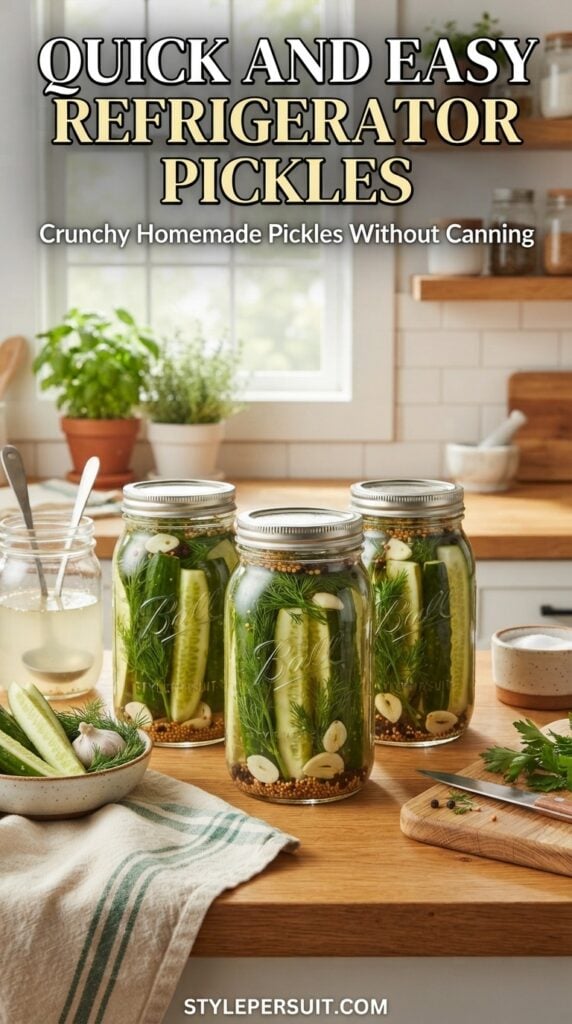
Refrigerator pickles are one of the easiest ways to turn fresh cucumbers into something crisp, tangy, and full of flavor without canning.
You do not need special equipment, a water bath canner, or weeks of waiting. You slice the cucumbers, pack them into jars with garlic and dill, pour a simple vinegar brine over the top, and refrigerate until they taste just right.
These quick and easy refrigerator pickles are crunchy, garlicky, slightly sweet, perfectly tangy, and ready to enjoy as soon as the next day.
They are perfect for sandwiches, burgers, wraps, salads, snack plates, summer cookouts, and anything that needs a bright salty bite.
Refrigerator pickles are different from shelf-stable canned pickles. They are not processed for room-temperature storage, so they must stay refrigerated.
Extension food-safety guidance also notes that quick refrigerator pickles should be kept cold and used within a short refrigerated storage window.
University of Maine Extension recommends refrigerating refrigerator pickles, letting flavor develop for 1 to 2 days, and using them within 2 weeks.
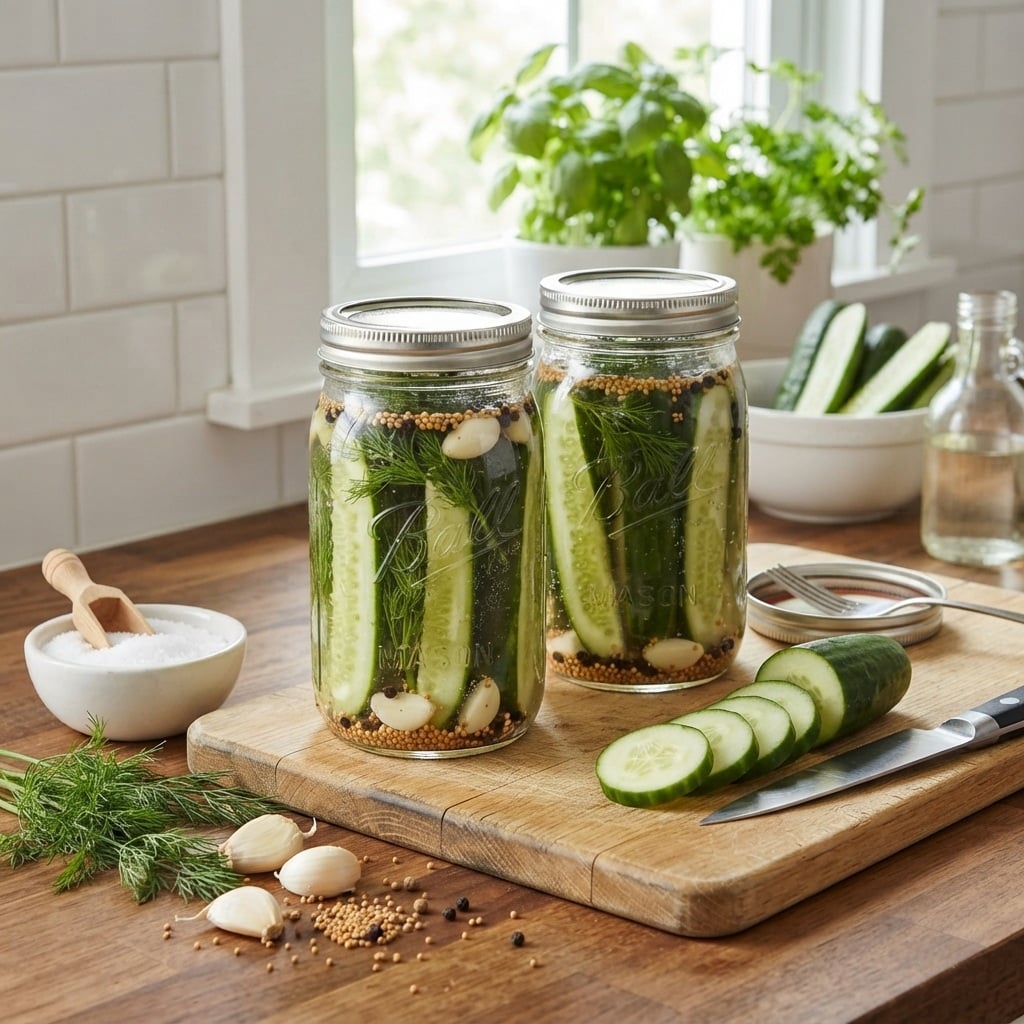
Why You’ll Love These Refrigerator Pickles
These pickles are simple, fast, and beginner-friendly.
You will love them because they are:
- Crisp and refreshing
- Made without canning
- Ready in about 24 hours
- Easy to customize
- Great for using garden cucumbers
- Perfect for sandwiches and burgers
- More flavorful after a few days in the fridge
- Made with basic pantry ingredients
The best part is that you can adjust the flavor. Make them more garlicky, more dilly, sweeter, spicier, or extra tangy depending on how you like your pickles.
What Are Refrigerator Pickles?
Refrigerator pickles are quick pickles stored in the refrigerator instead of canned for shelf storage.
They are made by soaking cucumbers in a vinegar-based brine with salt, sugar, garlic, herbs, and spices. The cold storage keeps them crisp and fresh-tasting.
Unlike fermented pickles, these do not need days or weeks at room temperature to develop acidity. They get their tangy flavor from vinegar.
North Carolina State Extension describes quick refrigerator pickles as a fast and easy method for pickling vegetables such as cucumbers, onions, asparagus, radishes, and pea pods.
Ingredients
For the pickles:
- 1 1/2 pounds small cucumbers, sliced into spears or chips
- 1 cup white vinegar
- 1 cup water
- 1 tablespoon kosher salt or pickling salt
- 1 tablespoon granulated sugar
- 3 garlic cloves, smashed
- 1 teaspoon black peppercorns
- 1 teaspoon mustard seeds
- 1/2 teaspoon red pepper flakes, optional
- 4 to 6 sprigs fresh dill
Optional flavor additions:
- 1/2 teaspoon coriander seeds
- 1 bay leaf
- 1/2 teaspoon dill seed
- Thin onion slices
- Jalapeño slices
- Extra garlic cloves
- More sugar for sweeter pickles
Helpful Kitchen Tools
Mason Jars
Wide-mouth mason jars make it easier to pack cucumber spears, dill, garlic, and spices neatly.
Small Saucepan
A small saucepan is useful for warming the brine so the salt and sugar dissolve fully.
Mandoline Slicer
A mandoline helps make thin, even cucumber slices for pickle chips. Use the safety guard carefully.
Pickling Salt
Pickling salt dissolves easily and does not contain anti-caking ingredients that may cloud brine.
Pickling Spice Set
A spice set with mustard seeds, peppercorns, coriander, dill seed, and bay leaves makes it easy to customize homemade pickles.
Best Cucumbers for Refrigerator Pickles
The best cucumbers for refrigerator pickles are small, firm, and fresh.
Good choices include:
- Kirby cucumbers
- Pickling cucumbers
- Persian cucumbers
- Small garden cucumbers
- Mini cucumbers
- English cucumbers, sliced into chips
Pickling cucumbers are usually the best option because they have thinner skins, fewer seeds, and a firm texture.
Avoid cucumbers that are soft, wrinkled, bitter, or full of large watery seeds. Older cucumbers tend to make softer pickles.
If you are using larger garden cucumbers, slice them into chips instead of spears. The texture may not be quite as crisp, but they can still taste delicious.
How to Make Quick Refrigerator Pickles
Step 1: Wash and Prep the Cucumbers
Wash the cucumbers well under cool running water.
Trim off both ends.
For extra crisp pickles, remove a thin slice from the blossom end of each cucumber. The National Center for Home Food Preservation notes that cucumber blossoms may contain an enzyme that can cause excessive softening, which is why removing a small slice from the blossom end is recommended.
Cut the cucumbers into spears, slices, or chips.
For spears, cut each cucumber lengthwise into quarters.
For chips, slice cucumbers into 1/4-inch rounds.
Step 2: Pack the Jars
Place garlic, dill, peppercorns, mustard seeds, and any optional spices into clean jars.
Pack the cucumber slices or spears tightly into the jars.
Do not crush them. You want them snug, but not smashed.
If using onion or jalapeño slices, tuck them between the cucumbers.
Step 3: Make the Brine
In a small saucepan, combine:
- 1 cup white vinegar
- 1 cup water
- 1 tablespoon kosher salt
- 1 tablespoon sugar
Warm over medium heat just until the salt and sugar dissolve.
You do not need to boil the brine for a long time.
Remove from heat and let it cool for a few minutes.
Step 4: Pour Brine Over the Cucumbers
Carefully pour the warm brine over the cucumbers.
Make sure the cucumbers are fully covered.
If needed, press them down gently or add a little extra vinegar-water mixture using the same ratio.
Leave a little space at the top of the jar.
Step 5: Cool and Refrigerate
Let the jars cool slightly at room temperature.
Cover with lids and place in the refrigerator.
Do not leave refrigerator pickles sitting out for long periods.
These are not shelf-stable canned pickles, so they must be stored cold.
Step 6: Wait for Flavor to Develop
You can taste the pickles after a few hours, but they are much better after 24 hours.
For the best flavor, wait 1 to 2 days before serving.
The longer they sit in the refrigerator, the more flavorful they become.
How Long Do Refrigerator Pickles Last?
For best quality, enjoy these refrigerator pickles within 2 weeks.
Some recipes may give longer storage times, but for a home recipe like this, 2 weeks is a safe and practical window.
Always keep the jars refrigerated and use clean utensils when removing pickles.
Throw them away if you notice:
- Mold
- Bad smell
- Slimy texture
- Unusual fizzing
- Very cloudy brine with off odors
- Soft or mushy cucumbers
- Any signs that they look unsafe
How to Keep Refrigerator Pickles Crunchy
Crunchy pickles depend on fresh cucumbers and the right prep.
Use these tips:
Use Fresh Cucumbers
The fresher the cucumbers, the better the crunch.
If possible, make pickles the same day you buy or harvest the cucumbers.
Choose Small Cucumbers
Small cucumbers usually have fewer seeds and a firmer texture.
Trim the Blossom End
This helps reduce softening.
Do Not Overheat the Cucumbers
Pour warm brine over the cucumbers, not aggressively boiling brine.
Keep Them Refrigerated
Cold storage helps preserve texture.
Add Tannin-Rich Leaves If Desired
Some people add grape leaves, oak leaves, or black tea leaves for extra crispness, but this is optional.
Do Not Use Old Soft Cucumbers
No brine can turn soft cucumbers into crisp pickles.
Best Vinegar for Refrigerator Pickles
White vinegar gives the cleanest classic pickle flavor.
Apple cider vinegar gives a slightly fruity, warmer flavor.
Rice vinegar is milder and works well for sweeter or Asian-inspired quick pickles.
For this basic recipe, use vinegar labeled 5% acidity.
The National Center for Home Food Preservation explains that acidity is important in pickled products for both safety and quality.
For refrigerator pickles, avoid randomly reducing vinegar too much because it can make the brine weak and less reliable.
Salt for Refrigerator Pickles
Pickling salt is ideal because it dissolves cleanly.
Kosher salt also works well, but different brands have different crystal sizes, so measurements can vary slightly.
Avoid iodized table salt if possible because it may make the brine cloudy or give a slightly different flavor.
Sugar: Do You Need It?
Sugar balances the sharp vinegar and makes the pickles taste smoother.
This recipe uses only 1 tablespoon, so the pickles are not very sweet.
You can adjust depending on your taste:
- No sugar: extra tangy
- 1 tablespoon: balanced
- 2 to 3 tablespoons: slightly sweet
- 1/4 cup: sweet refrigerator pickles
If you like bread-and-butter-style pickles, use more sugar and add onion, mustard seed, celery seed, and turmeric.
Flavor Variations
Garlic Dill Refrigerator Pickles
Add extra garlic cloves and plenty of fresh dill.
This is the classic version and works well for burgers, sandwiches, and snacking.
Spicy Refrigerator Pickles
Add:
- 1 sliced jalapeño
- 1 teaspoon red pepper flakes
- Extra garlic
- Black peppercorns
These are great on tacos, grilled meats, and sandwiches.
Sweet Refrigerator Pickles
Increase the sugar to 1/4 cup.
Add thin onion slices, mustard seeds, and celery seeds.
Bread and Butter Refrigerator Pickles
Use cucumber chips and add:
- Thin onion slices
- 1/4 cup sugar
- 1/2 teaspoon mustard seeds
- 1/4 teaspoon celery seeds
- Pinch of turmeric
Extra Garlicky Pickles
Use 5 to 6 smashed garlic cloves per jar.
The garlic flavor gets stronger as the pickles sit.
Herb Garden Pickles
Add fresh herbs such as:
- Dill
- Thyme
- Tarragon
- Basil
- Oregano
Use herbs lightly so they do not overpower the brine.
Onion and Cucumber Refrigerator Pickles
Add thin red onion or sweet onion slices to the jar.
The onions become tangy, crunchy, and delicious on sandwiches.
Hot Honey Pickles
Add a small spoonful of honey and red pepper flakes to the brine.
This gives a sweet-hot flavor that works well on fried chicken sandwiches.
What to Eat With Refrigerator Pickles
These pickles are useful in so many meals.
Serve them with:
- Burgers
- Hot dogs
- Sandwiches
- Wraps
- BBQ plates
- Grilled cheese
- Chicken salad
- Tuna salad
- Potato salad
- Charcuterie boards
- Snack plates
- Fried chicken
- Pulled pork
- Tacos
- Rice bowls
- Deviled eggs
You can also chop them and stir them into sauces, dips, and salads.
Ways to Use the Pickle Brine
Do not throw away the brine right away.
You can use a little in:
- Potato salad
- Tuna salad
- Chicken salad
- Deviled egg filling
- Pasta salad
- Coleslaw dressing
- Burger sauce
- Homemade tartar sauce
- Marinades
- Salad dressing
Only reuse brine carefully. If it looks cloudy, smells strange, or has been sitting too long, discard it.
Can You Reuse Refrigerator Pickle Brine?
You can reuse refrigerator pickle brine once for quick flavoring, but the second batch will be weaker.
If you reuse it, add fresh sliced vegetables and keep everything refrigerated.
Do not reuse old brine repeatedly.
Do not use reused refrigerator brine for canning.
Can You Can Refrigerator Pickles?
This recipe is not written for canning.
Refrigerator pickles are made for cold storage only.
If you want shelf-stable canned pickles, use a tested canning recipe from a reliable food-preservation source and follow it exactly. Canning recipes must have the correct vinegar, water, salt, vegetable ratio, jar size, and processing time.
University of Wyoming Extension warns that pickling recipes should not have their vinegar, food, or water proportions altered because proper acidity is important for safe pickles.
Make-Ahead Tips
Refrigerator pickles are perfect for making ahead.
For best flavor:
- Make them at least 24 hours before serving.
- Use clean jars.
- Keep cucumbers fully covered in brine.
- Store in the refrigerator.
- Use clean tongs or a fork when serving.
- Keep the lid closed between uses.
They are great for meal prep because the flavor improves after a day or two.
Common Mistakes to Avoid
Using Soft Cucumbers
Soft cucumbers make soft pickles.
Start with firm, fresh cucumbers.
Skipping the Blossom-End Trim
That tiny trim helps prevent excess softening.
Reducing the Vinegar Too Much
A weak brine can affect flavor and storage quality.
Not Covering the Cucumbers Fully
Cucumbers should stay submerged in brine.
Leaving Them at Room Temperature
These pickles belong in the refrigerator.
Using Dirty Jars
Clean jars help keep the pickles fresh.
Eating Them Too Soon
They taste better after at least 24 hours.
Making the Slices Uneven
Even slices pickle more evenly.
Recipe Card
Quick and Easy Refrigerator Pickles
Prep Time: 15 minutes
Cook Time: 5 minutes
Chill Time: 24 hours
Total Time: 1 day 20 minutes
Servings: About 2 pint jars
Ingredients
- 1 1/2 pounds small cucumbers, sliced into spears or chips
- 1 cup white vinegar
- 1 cup water
- 1 tablespoon kosher salt or pickling salt
- 1 tablespoon granulated sugar
- 3 garlic cloves, smashed
- 1 teaspoon black peppercorns
- 1 teaspoon mustard seeds
- 1/2 teaspoon red pepper flakes, optional
- 4 to 6 sprigs fresh dill
Instructions
Wash cucumbers well and trim off both ends.
Cut cucumbers into spears or slices.
Place garlic, dill, peppercorns, mustard seeds, and red pepper flakes into clean jars.
Pack cucumbers into the jars.
Combine vinegar, water, salt, and sugar in a small saucepan.
Warm until salt and sugar dissolve.
Pour brine over cucumbers until fully covered.
Cool slightly, cover, and refrigerate.
Let pickles chill for at least 24 hours before serving.
Enjoy within 2 weeks.
Notes
Use fresh small cucumbers for the best crunch.
Keep refrigerator pickles cold at all times.
This recipe is not for shelf-stable canning.
Frequently Asked Questions
How soon can you eat refrigerator pickles?
You can taste them after a few hours, but they are much better after 24 hours. For the best flavor, wait 1 to 2 days.
Do refrigerator pickles need to be canned?
No. Refrigerator pickles are not canned. They are stored in the refrigerator and eaten within a short time.
How long do refrigerator pickles last?
For this recipe, use them within 2 weeks and keep them refrigerated.
Why are my refrigerator pickles soft?
The cucumbers may have been old, overripe, or not trimmed at the blossom end. Very hot brine can also soften cucumbers.
Can I use regular cucumbers?
Yes, but small pickling cucumbers, Kirby cucumbers, or Persian cucumbers usually stay crunchier.
Can I use apple cider vinegar?
Yes. Apple cider vinegar gives a slightly fruitier flavor. White vinegar gives a cleaner classic pickle taste.
Can I make refrigerator pickles without sugar?
Yes. You can leave out the sugar if you prefer very tangy pickles.
Can I make spicy refrigerator pickles?
Yes. Add jalapeños, red pepper flakes, extra garlic, or hot pepper slices.
Can I pickle other vegetables with this brine?
Yes. You can use this brine for onions, carrots, radishes, green beans, and cauliflower. Thicker vegetables may need to be sliced thin or lightly blanched.
Why is my pickle brine cloudy?
Some cloudiness can happen from spices, garlic, or salt. But if the brine smells bad, fizzes, looks moldy, or the pickles feel slimy, throw them away.
Can I leave refrigerator pickles on the counter?
No. They should be stored in the refrigerator because they are not shelf-stable canned pickles.
Final Thoughts
Quick and easy refrigerator pickles are one of the simplest homemade recipes you can make with fresh cucumbers.
They are crisp, tangy, garlicky, and endlessly customizable. You can make classic dill pickles, spicy pickles, sweet pickles, bread-and-butter-style pickles, or extra-garlicky snack pickles using the same basic method.
The most important tips are simple: use fresh cucumbers, trim the ends, keep the cucumbers covered in brine, refrigerate the jars, and give them at least 24 hours to develop flavor.
Once you make your first batch, you may never want to buy a jar of pickles again.