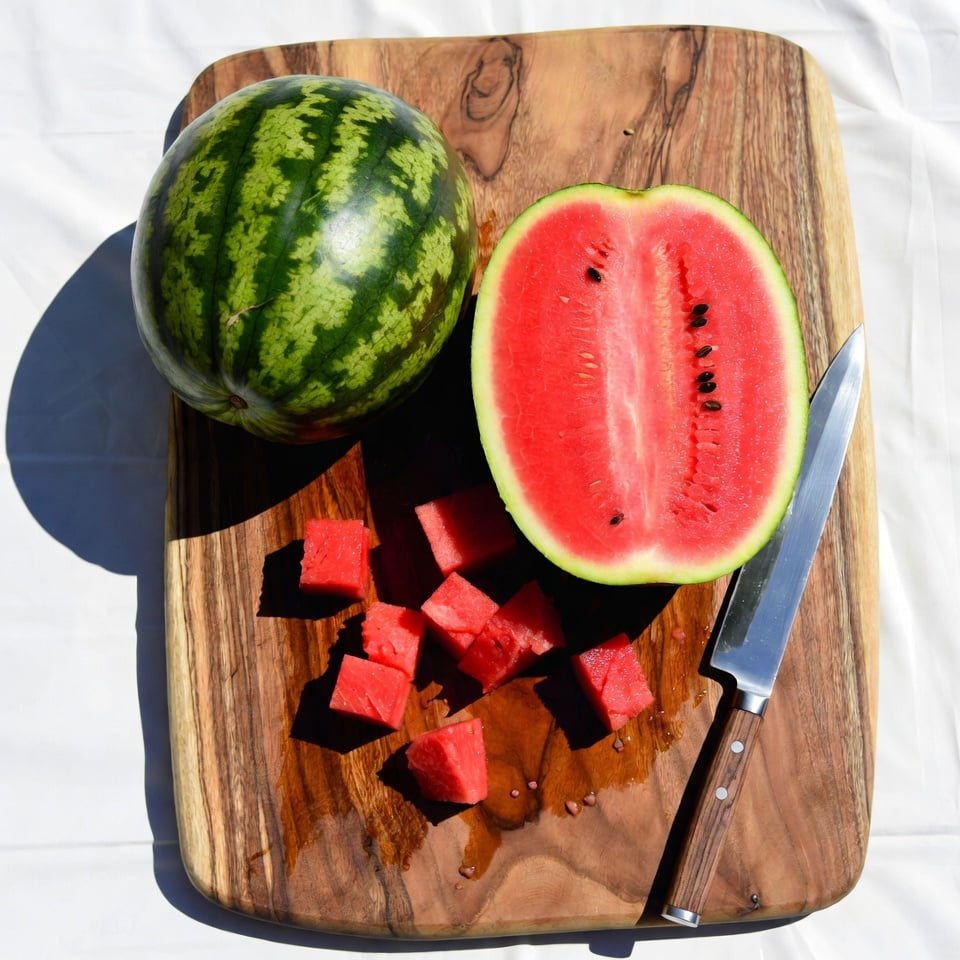
Watermelon is one of the most enjoyable summer fruits and one of the most awkward to cut.
A large watermelon is heavy, round, slippery, and the rind is tough enough that an underpowered knife or a bad technique can turn a simple task into a frustrating mess. The good news is that once you know the right method, cutting a watermelon takes less than five minutes and produces pieces that are easy to eat, serve, or store.
This guide covers every method: slices, cubes, sticks, triangles, and a few serving tricks that make watermelon easier to eat without utensils. Each method starts from the same first steps, so you can choose the shape you want after the initial cuts.
Safety note: Always use a sharp, large chef’s knife or a long serrated knife for cutting watermelon. A dull knife requires more pressure and is more likely to slip. Cut on a stable cutting board large enough to hold the whole fruit, and keep fingers curled away from the blade at all times.
What You Need
A large sharp chef’s knife or long serrated bread knife
A large stable cutting board (the bigger the better)
A large bowl or airtight container for storing cut pieces
Optional: a melon baller, a cookie cutter, or a fruit scoop for decorative cuts
Before cutting, make sure you are starting with a ripe one.
A ripe watermelon has a deep, hollow thump when you knock on it with your knuckles. It has a large yellow or cream-colored field spot on the underside where it rested on the ground.
The surface should be dull rather than shiny, and the stem end should be slightly dried out rather than green.
A shiny watermelon or one with a white field spot is likely underripe. A very soft spot or a sour smell at the stem end may indicate overripeness.
Step 1: Wash the Outside First
Rinse the watermelon under cool running water and dry it before cutting.
The outside rind can carry bacteria and surface residue from the field, storage, and handling. When you cut through the rind, a knife can carry contaminants from the surface into the flesh.
The FDA recommends washing whole produce before cutting even when you do not plan to eat the skin.
Step 2: Cut Off Both Ends
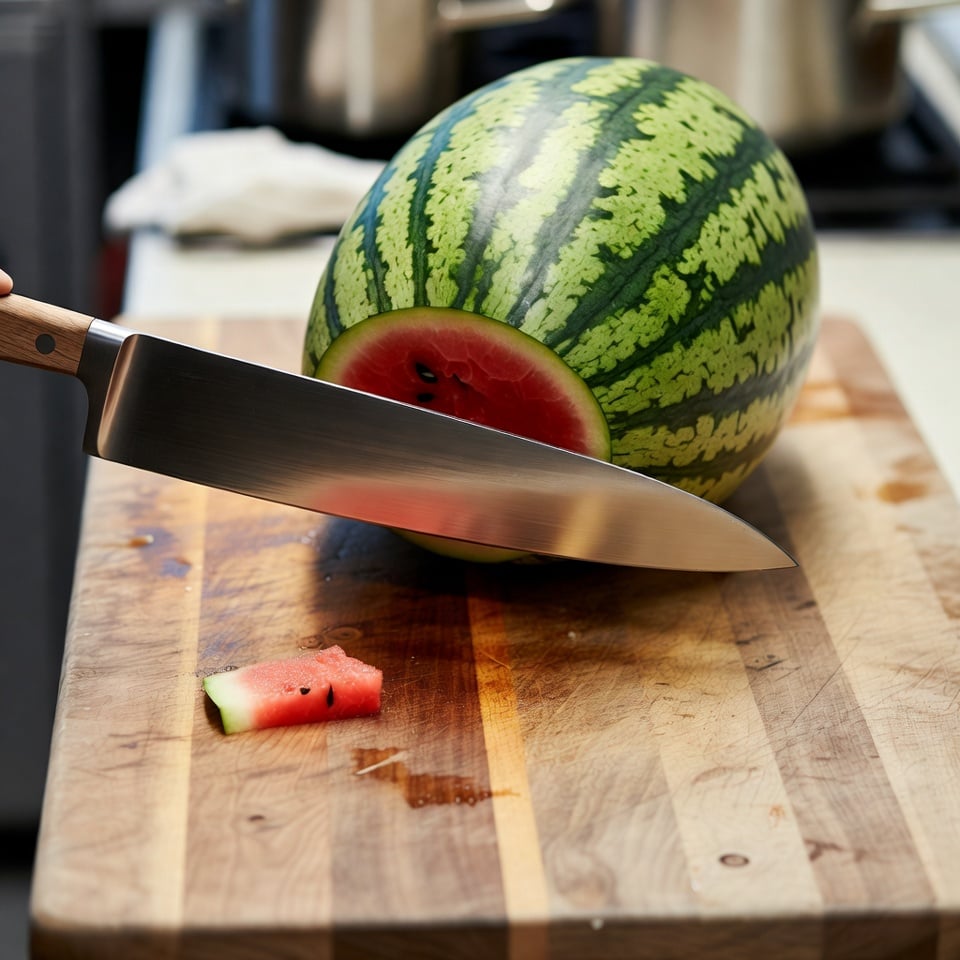
Place the watermelon on the cutting board and cut a flat slice off each end — about half an inch to one inch deep, to create two stable flat surfaces.
This is the most important step for safety. A round watermelon will roll on a cutting board. Two flat ends make it stable for every cut that follows.
How to Cut Watermelon Into Slices
This is the classic round slice that is best for immediate eating at a picnic or cookout.
After cutting the ends flat, stand the watermelon upright on one cut end.
Slice straight down through the center to cut it in half.
Lay each half flat-side down on the cutting board.
Cut each half into slices of your preferred thickness — most people prefer one to one and a half inches.
Round slices are easy to eat in a group but harder to store neatly in a container. If you are packing food to go or storing leftovers, cubes or sticks are more practical.
How to Cut Watermelon Into Cubes
Cubes are the most versatile form — easy to eat with a fork, easy to store in a container, and easy to add to fruit salads, smoothies, or drinks.
Cut the ends flat as described above.
Stand the watermelon on one end and cut it in half from top to bottom.
Lay one half flat-side down. Cut it in half again to create two quarters.
Take one quarter and lay it skin-side down on the cutting board.
Slice down through the flesh toward the rind in strips, spaced about one inch apart — but do not cut through the rind.
Rotate the quarter and make perpendicular cuts the same distance apart to create a grid pattern.
Slide the knife along the inside of the rind to release all the cubes in one motion.
Repeat with the remaining quarters.
This grid-and-release method is faster and cleaner than cutting pieces individually and produces uniform cubes with much less mess.
Watermelon sticks — sometimes called watermelon fingers are the easiest format for children and for eating without utensils at outdoor events.
Cut the ends flat.
Stand the watermelon on one end and cut it in half.
Cut each half into quarters.
Take one quarter and lay it skin-side down.
Cut it lengthwise into long strips about one inch wide.
Each strip is a ready-to-eat watermelon stick with the rind still attached as a natural handle. This is one of the most popular formats for kids’ parties and backyard gatherings.
How to Cut Watermelon Into Triangles
Triangles are the most photogenic cut and a popular choice for serving on a platter.
Cut the watermelon in half from end to end.
Lay each half flat-side down and cut it in half again lengthwise to make two long quarters.
Take one quarter and cut across it at an angle into triangles about one to two inches wide.
The triangular shape has natural rind handles on two sides and is easy to hold and eat.
How to Remove the Rind Completely
If you want completely rind-free pieces:
Cut the ends flat.
Stand the watermelon upright and slice the rind off in vertical strips from top to bottom, following the curve of the fruit.
Rotate the fruit and continue until all the rind is removed.
Cut the rindless flesh into cubes, slices, or any other shape.
This takes a little longer but produces a cleaner result for fruit salads, smoothie additions, or elegant serving presentations.
How to Use a Melon Baller
A melon baller scoops the flesh into uniform spheres that look elegant on a platter or in a fruit salad.
Cut the watermelon in half.
Press the melon baller scoop into the flesh and rotate it with a firm circular motion.
Remove the ball and repeat, working across the surface.
The melon baller is slower than slicing but produces a more decorative result.
Cut watermelon should be refrigerated immediately and consumed within three to five days for the best quality.
Store cubes or slices in an airtight container. If you have a large uncut half, press plastic wrap directly against the cut surface before refrigerating to slow moisture loss and reduce the absorption of other refrigerator odors.
Do not leave cut watermelon at room temperature for more than two hours. At outdoor events in warm weather, keep it on ice or limit the time it sits out.
The USDA recommends refrigerating cut fruit within two hours of cutting, or within one hour when temperatures exceed 90°F.
Cut watermelon can also be frozen in cubes for use in smoothies. Spread cubes in a single layer on a parchment-lined tray, freeze until solid, then transfer to a freezer bag. Frozen watermelon does not return to its original texture after thawing but works well in blended drinks.
Tips for Cleaner, Easier Cutting
Use the largest knife you have. A long blade completes each cut in one smooth stroke. Short blades require sawing, which pushes the watermelon around and creates uneven cuts.
Let the knife do the work. A sharp knife moves through watermelon flesh with very little pressure. If you are pressing hard, the knife needs sharpening.
Chill the watermelon first. A cold watermelon is firmer and holds its shape better during cutting than a room-temperature one. Refrigerate for at least an hour before cutting for the cleanest results.
Use a damp cloth under the cutting board. Place a damp kitchen towel under the cutting board to prevent it from sliding while you work.
Cut over the sink or on a rimmed cutting board. Watermelon releases a significant amount of juice. A rimmed board or cutting near the sink makes cleanup much faster.
The easiest method is to cut both ends flat, stand the watermelon on one end, slice it in half, then cut each half into quarters. From there you can cut sticks, cubes, or triangles depending on how you plan to serve it.
How do you cut a watermelon without it rolling?
Cut a flat slice off both ends before any other cut. This creates two stable surfaces that prevent the watermelon from rolling on the cutting board.
How do you cut a watermelon into cubes quickly?
The fastest method is the grid-and-release technique: lay a quarter skin-side down, make a grid of cuts through the flesh without cutting through the rind, then slide the knife along the inside of the rind to release all the cubes at once.
How long does cut watermelon last in the fridge?
Cut watermelon stored in an airtight container typically stays fresh and flavorful for three to five days in the refrigerator. Quality declines after that even if it is still technically safe.
Can you freeze cut watermelon?
Yes. Freeze cubes in a single layer first, then transfer to a sealed bag. Frozen watermelon is best used in smoothies because its texture becomes soft after thawing.
Do you need to wash watermelon before cutting?
Yes. Rinse the outside under cool running water before cutting, even though you do not eat the rind. A knife passes bacteria from the surface into the flesh as it cuts through.
What knife is best for cutting watermelon?
A large sharp chef’s knife with a blade of at least eight inches is the most practical choice. A long serrated bread knife also works well, especially for the initial cuts through the tough rind. Avoid small paring knives, which require too much pressure and increase the risk of slipping.
How do you know when a watermelon is ripe?
A ripe watermelon sounds hollow when tapped, has a large yellow or cream-colored field spot on the underside, has a dull surface rather than a shiny one, and has a slightly dried stem end.
Final Thoughts
Cutting a watermelon is one of those tasks that feels harder than it is until you know the right starting steps.
Flat ends, a stable board, and a sharp knife are all it takes to go from an awkward round fruit to a clean bowl of cubes, a platter of triangles, or a tray of sticks ready to serve.
Once you have the basic technique down, the format you choose is just about how you plan to eat or serve it — and any of them work beautifully for a summer gathering, a fruit salad, or just a cold bowl in front of the fan on a hot afternoon.