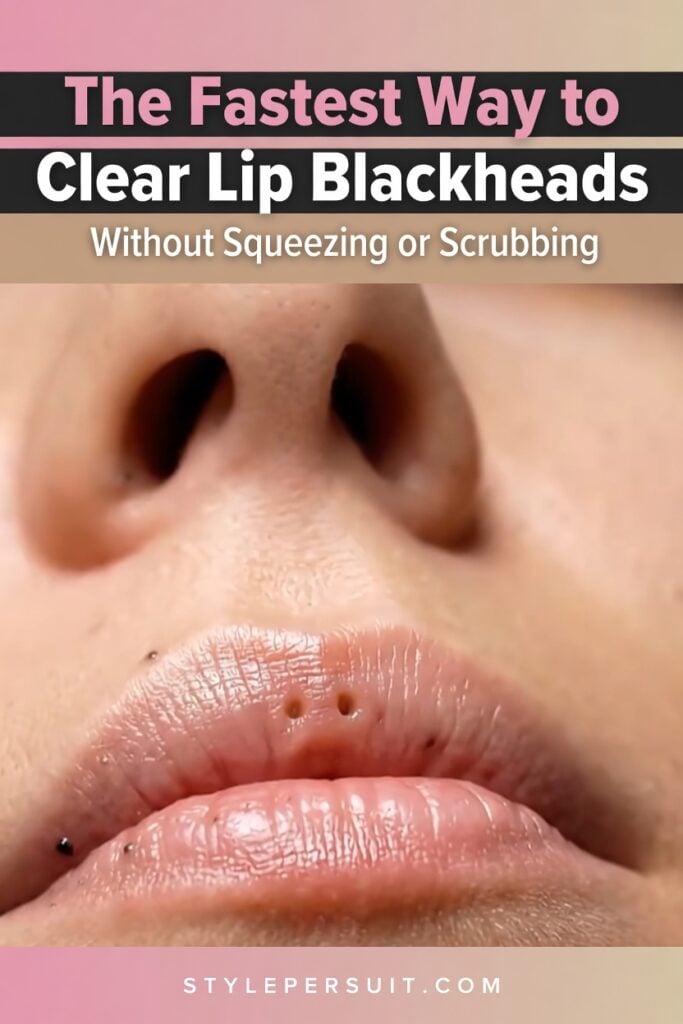
Blackheads around the lips can be surprisingly stubborn.
They may appear along the upper lip, underneath the lower lip, at the corners of the mouth, or in the crease between your lip and chin.
Because the skin around the mouth is delicate and constantly exposed to lip balm, makeup, toothpaste, food, sweat, and touching, clogged pores can keep returning even when the rest of your face looks clear.
The first thing to understand is that a blackhead is not trapped dirt.
Blackheads form when a pore becomes clogged with excess oil and dead skin cells. The pore remains open, and the material inside darkens when exposed to air. This oxidation creates the black or dark appearance.
The safest way to clear lip blackheads is to treat the skin surrounding your lips, not the pink lip tissue itself. Gentle cleansing, salicylic acid, adapalene, non-comedogenic products, and consistent skin care can help. Squeezing, scraping, harsh scrubs, pore tools, and strong DIY remedies often make the area redder and more irritated.
Can You Get Blackheads on Your Lips?
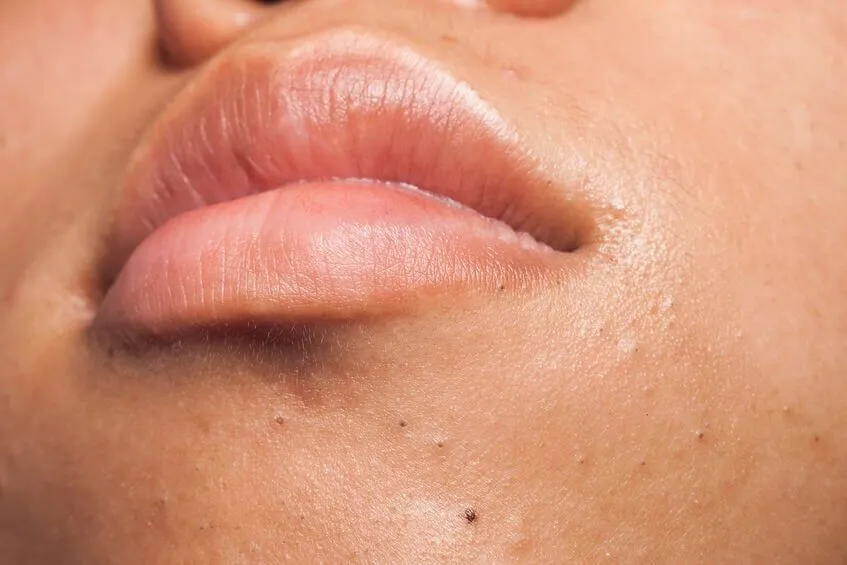
True blackheads usually develop in pores on the skin around the lips rather than directly on the pink or red part of the lip.
Common areas include:
- Above the upper lip
- Underneath the lower lip
- Around the corners of the mouth
- In the crease between the lower lip and chin
- Along the lip line
- Near facial hair follicles
The actual lip surface does not have the same type of oil-producing hair follicles as normal facial skin. A dark bump directly on the lip may therefore be something other than a blackhead.
Possible look-alikes include:
- Sebaceous filaments
- Fordyce spots
- Ingrown hairs
- Small cysts
- Irritated hair follicles
- Cold sores
- Pigmented spots
- Moles or other skin growths
Do not repeatedly squeeze a dark or raised spot directly on your lip. Have it checked by a dermatologist or healthcare professional if it does not behave like a typical clogged pore, changes color or shape, bleeds, hurts, or does not heal.
Blackheads vs. Sebaceous Filaments Around the Lips
Not every tiny dark dot is a blackhead.
Sebaceous filaments are normal structures that help move oil through the pore and keep skin hydrated. They tend to look like small, evenly spaced gray, tan, or yellowish dots. They commonly refill after being squeezed because they are a natural part of the pore rather than an acne blockage.
Blackheads are usually darker, more noticeable, and less evenly distributed. They occur when oil and dead skin create a plug inside an open pore.
Cleveland Clinic notes that removing sebaceous filaments aggressively can dry the skin and may allow irritation or acne-causing bacteria to enter.
If the dots around your lips are tiny, uniform, and quickly return after extraction, they may be sebaceous filaments rather than stubborn blackheads.
Why Do Blackheads Form Around the Lips?
Several everyday habits and products can contribute to clogged pores around the mouth.
1. Heavy Lip Balm and Lip Products
Thick lip balm, petroleum-based ointments, lip oils, gloss, and overnight lip masks can spread beyond the lip line.
When oily or waxy products sit on nearby pores, they may trap dead skin and contribute to blackheads. This does not mean every lip balm causes acne, but a very heavy formula may be a problem if the bumps appear exactly where the product spreads.
Apply lip balm only where needed and wipe excess product from the surrounding skin.
2. Makeup Around the Mouth
Foundation, concealer, lip liner, primer, and long-wear makeup can collect in the creases around your lips.
If the makeup is not removed thoroughly at night, it may combine with oil and dead skin inside the pores. Look for makeup labeled non-comedogenic, which means it is formulated to be less likely to clog pores.
3. Toothpaste Residue
Toothpaste can remain around the mouth after brushing, especially under the lower lip and in the chin crease.
Some toothpaste ingredients can irritate sensitive skin. Try brushing your teeth before completing your nighttime skin-care routine so you can gently cleanse away any remaining toothpaste.
4. Touching or Licking the Area
Touching your mouth, resting your face on your hand, biting the lip area, or repeatedly licking around the lips can cause irritation.
Saliva may also dry and irritate the surrounding skin, which can make you more likely to use heavy balm and create a cycle of irritation and product buildup.
5. Facial Hair Removal
Waxing, shaving, threading, and plucking can irritate follicles around the upper lip and chin. Small bumps after hair removal may be clogged pores, irritation, or ingrown hairs.
Use clean tools and avoid applying strong exfoliants immediately after waxing or shaving.
6. Excess Oil and Dead Skin
Blackheads form when sebum and dead skin cells clog open pores. Hormonal changes, oily skin, sweating, and naturally active sebaceous glands may make the area more prone to congestion.
7. Harsh Scrubbing
Scrubbing does not wash away the dark part of a blackhead because the color is caused by oxidation, not dirt.
Rough scrubs can irritate the skin, damage the barrier, and make the area around the mouth feel raw. The NHS advises washing acne-prone skin gently and avoiding attempts to “clean out” or squeeze blackheads because this can worsen them and cause scarring.
How to Get Rid of Blackheads Around the Lips
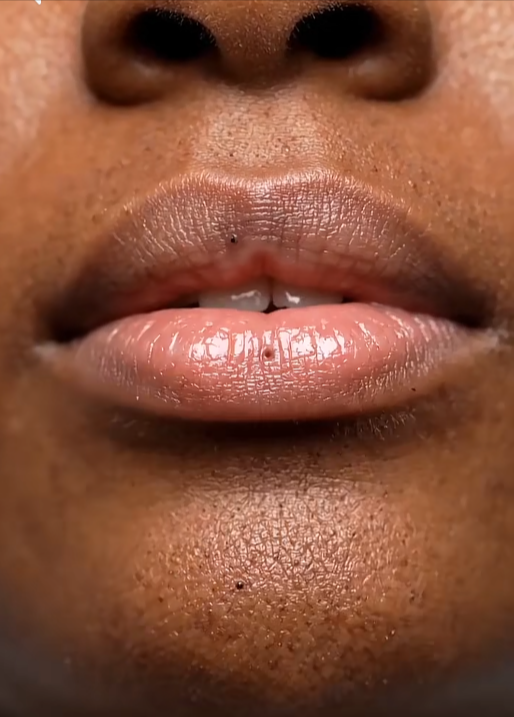
The goal is to unclog pores without burning or irritating the delicate skin near your mouth.
Step 1: Wash With a Gentle Cleanser
Wash your face in the morning and at night with a mild cleanser and lukewarm water.
Focus carefully around the mouth to remove:
- Lip product residue
- Toothpaste
- Makeup
- Sweat
- Oil
- Food residue
Avoid harsh soaps and rough washcloths. Cleanse with your fingertips, rinse thoroughly, and pat dry.
A gentle option for daily cleansing: Check price on Amazon
Step 2: Use Salicylic Acid Carefully
Salicylic acid is one of the most useful ingredients for blackheads because it helps exfoliate inside clogged pores. The American Academy of Dermatology notes that salicylic acid opens clogged pores and exfoliates the skin.
Choose either:
- A salicylic acid cleanser
- A low-strength leave-on treatment
- Medicated pads made for facial acne
Start two or three times per week rather than every day.
Apply it to the normal skin around the lips, but keep it off the pink lip tissue and away from cracked corners of the mouth. Salicylic acid may sting or dry this delicate area if used too aggressively.
For clogged pores around the mouth: View options on Amazon
Step 3: Consider Adapalene for Recurring Blackheads
Adapalene is an over-the-counter topical retinoid that helps prevent pores from clogging. The AAD identifies adapalene as an ingredient that can help clear blackheads, whiteheads, and pimples. (AAD)
Use it slowly:
- Cleanse and let the skin dry.
- Apply a pea-sized amount across the acne-prone facial area.
- Keep it away from the lips, corners of the nose, and corners of the mouth.
- Start two or three nights per week.
- Follow with moisturizer.
- Wear sunscreen every morning.
Do not put a thick dot directly onto each blackhead. Retinoids work best as a thin layer over the area where clogged pores tend to develop.
Avoid topical retinoids during pregnancy unless a qualified healthcare professional specifically advises otherwise.
For persistent clogged pores: Get it on Amazon
Step 4: Apply a Lightweight Moisturizer
Acne treatments can dry the skin around your mouth quickly. A lightweight moisturizer supports the skin barrier and may help you tolerate salicylic acid or adapalene.
Choose a moisturizer labeled:
- Non-comedogenic
- Fragrance-free
- Oil-free or lightweight
- Suitable for sensitive or acne-prone skin
Apply it to the surrounding skin without covering your lips in a heavy layer.
For daily hydration: Check price on Amazon
Step 5: Change Heavy Lip Products
Pay attention to where your blackheads appear.
If they sit directly outside your lip line, try replacing thick or heavily fragranced lip products with a simpler balm. Apply only to your lips and avoid spreading it onto the skin.
You do not need to stop using lip balm completely. The goal is to avoid coating nearby pores with more product than necessary.
A simpler lip-care option: View choices on Amazon
Step 6: Remove Makeup Thoroughly
If you wear foundation, concealer, sunscreen, or lipstick, remove it fully before bed.
A first cleansing step can loosen makeup, followed by a gentle water-based cleanser. Avoid scrubbing around the mouth with makeup wipes because friction may irritate the area.
For removing long-wear makeup gently: Get it on Amazon
Step 7: Wear Non-Comedogenic Sunscreen
Salicylic acid and adapalene can make your skin more sensitive or irritated. Daily sunscreen helps protect the skin and reduce the risk of lingering dark marks after a blemish heals.
Choose a broad-spectrum, non-comedogenic facial sunscreen with SPF 30 or higher.
For daily protection: Check price on Amazon
Simple Routine for Lip Blackheads
Morning
- Gentle cleanser
- Lightweight moisturizer
- Non-comedogenic sunscreen
- Lip balm applied only to the lips
Evening
- Remove makeup or sunscreen
- Gentle cleanser
- Salicylic acid or adapalene on selected nights
- Lightweight moisturizer
- Simple lip balm applied carefully
Do not start salicylic acid and adapalene every night at the same time. Introduce one product first and give your skin time to adjust.
A beginner schedule could look like this:
- Monday: salicylic acid
- Tuesday: moisturizer only
- Wednesday: adapalene
- Thursday: moisturizer only
- Friday: salicylic acid
- Saturday: moisturizer only
- Sunday: adapalene or recovery night
Should You Squeeze Blackheads Around Your Lips?
It is better not to squeeze them.
The skin around the lips is sensitive, and strong pressure may cause:
- Redness
- Swelling
- Broken skin
- Infection
- Dark marks
- Scarring
- A larger inflamed pimple
Cleveland Clinic and NHS guidance recommend avoiding squeezing or trying to force blackheads out because it can damage the skin or make acne worse. (Cleveland Clinic)
If a blackhead is deeply embedded or does not respond to home care, a dermatologist can perform a professional extraction using sterile equipment.
Do Pore Strips Work on Lip Blackheads?
Pore strips may temporarily remove material from the surface of pores, but they do not prevent the pore from clogging again.
They may also pull out normal sebaceous filaments and irritate delicate skin. Cleveland Clinic cautions that removing sebaceous filaments can dry the skin and potentially allow bacteria into the area. (Cleveland Clinic)
Avoid cutting nose pore strips into tiny shapes and placing them directly against your lips. The adhesive may irritate the skin, especially if you use retinoids or exfoliating acids.
Can You Use a Blackhead Vacuum Around the Lips?
Blackhead vacuums use suction to pull material from pores. They may cause bruising, broken capillaries, swelling, and skin damage if the suction is too strong.
The curved, delicate area around the lips is not an ideal place to experiment with aggressive suction. Consistent topical care is usually safer than repeatedly vacuuming the pores.
DIY Remedies to Avoid on Lip Blackheads
The skin around your mouth is sensitive, so be cautious with home remedies.
Avoid applying:
- Lemon juice
- Baking soda
- Toothpaste
- Undiluted apple cider vinegar
- Rubbing alcohol
- Sugar or salt scrubs
- Hydrogen peroxide
- Undiluted essential oils
- Glue peel-off masks
These ingredients may dry, burn, or irritate the skin without reliably clearing the pore.
Does Steaming Remove Blackheads?
Warm steam can temporarily soften surface oil, but it does not open pores like doors or permanently remove blackheads.
A warm compress may make the skin feel softer before cleansing, but it should not be followed by aggressive squeezing. Use comfortably warm water, not very hot water, and limit the compress to a few minutes.
How Long Does It Take to Clear Lip Blackheads?
You may notice smoother skin after a few weeks, but persistent blackheads often require six to twelve weeks of consistent treatment.
Acne treatments usually need time to prevent new clogs as well as clear existing ones. The NHS notes that acne treatments may take several months before symptoms improve. (nhs.uk)
Switching products every few days can make it difficult to know what is working and may irritate your skin.
How to Prevent Blackheads Around the Mouth
Use these habits to help keep pores clearer:
- Wash gently twice a day.
- Remove lipstick, foundation, and sunscreen before bed.
- Brush your teeth before washing your face at night.
- Wipe toothpaste residue from the skin.
- Apply lip balm only to the lip surface.
- Choose non-comedogenic makeup and skin care.
- Avoid touching or picking the area.
- Clean reusable facial-hair removal tools.
- Change pillowcases regularly.
- Introduce exfoliating products slowly.
- Protect your skin with sunscreen.
When to See a Dermatologist
Book an appointment if:
- The dark spot sits directly on the lip rather than nearby skin.
- It bleeds, crusts, grows, hurts, or changes color.
- You cannot tell whether it is a blackhead.
- The area repeatedly becomes infected or swollen.
- You have painful cysts or scarring.
- Blackheads do not improve after eight to twelve weeks.
- The skin around your mouth is burning, peeling, or developing a rash.
- Bumps appear after every hair-removal session.
A dermatologist can determine whether the spots are blackheads, sebaceous filaments, ingrown hairs, Fordyce spots, or another condition.
Frequently Asked Questions
How do I get rid of blackheads around my lips quickly?
There is no safe overnight cure. Start with gentle cleansing and a salicylic acid product used carefully on the surrounding skin. Avoid squeezing, scraping, and harsh DIY treatments. A dermatologist can extract a stubborn blackhead professionally.
Why do I keep getting blackheads above my upper lip?
Common causes include oil buildup, facial hair follicles, makeup, heavy lip products, sweat, hormonal changes, and irritation from shaving or waxing.
Can lip balm cause blackheads?
A heavy or waxy lip balm may contribute if it regularly spreads beyond the lip line and coats nearby pores. Try a simpler formula and apply it only to the lips.
Is salicylic acid safe around the lips?
Salicylic acid can be used on the normal skin surrounding the lips, but keep it off the pink lip tissue, cracks, and irritated corners. Start slowly and stop if it causes burning or significant peeling.
Can I use adapalene around my mouth?
Adapalene may help recurring blackheads, but it can irritate the corners of the mouth. Apply a thin layer to acne-prone skin and leave a small gap around the lips.
Why do the black dots return after squeezing?
They may be recurring blackheads, but they could also be sebaceous filaments. Sebaceous filaments naturally refill because they help move oil through the pore.
Does toothpaste remove blackheads?
No. Toothpaste is not a blackhead treatment and may irritate or burn the delicate skin around your mouth.
Can sugar scrubs remove lip blackheads?
Scrubs may remove loose surface skin, but they do not reliably clear deep pore blockages. Rough scrubbing can irritate the lip line and worsen inflammation.
Are blackheads around the lips hormonal?
Hormones may increase oil production and contribute to clogged pores, particularly if you also experience acne around the chin and jawline. However, products and habits around the mouth may also play a role.
Final Thoughts
Lip blackheads are usually blackheads on the skin around the lips rather than inside the lip itself.
The safest approach is simple: cleanse gently, use salicylic acid carefully, consider adapalene for recurring clogged pores, moisturize, wear sunscreen, and keep heavy lip products off the surrounding skin.
Avoid squeezing and harsh home remedies. The skin around your mouth is delicate, and aggressive treatment can leave you with more irritation than the original blackhead.
Give your routine several weeks to work. If a spot is directly on your lip, looks unusual, or refuses to improve, have it checked rather than continuing to squeeze it.