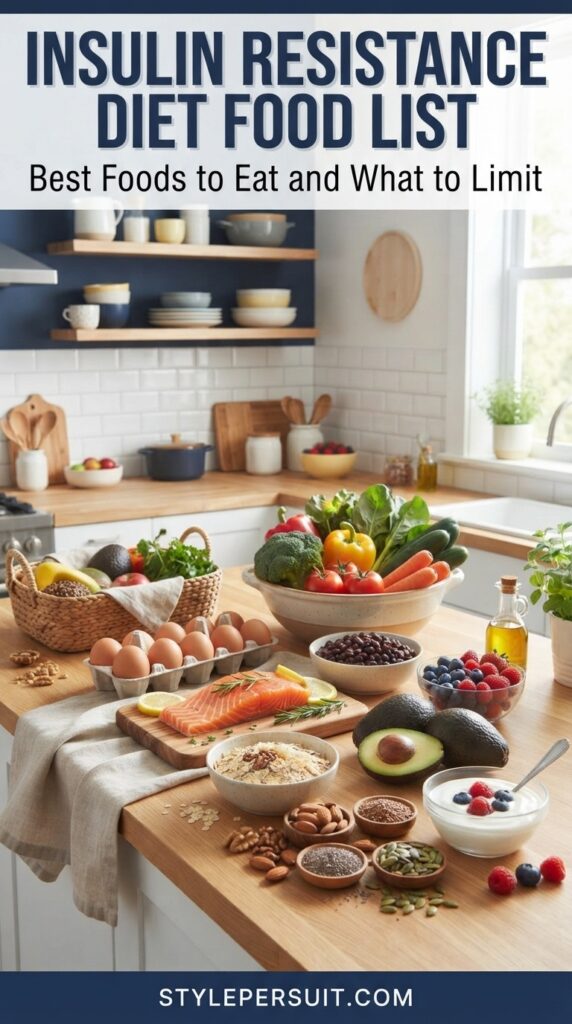
Insulin resistance can make food feel confusing.
You may hear that you need to avoid carbs completely, eat only protein, stop eating fruit, cut out all bread, or follow a strict diet forever. But the truth is more balanced.
An insulin resistance diet is not about starving yourself or removing every food you enjoy. It is about choosing foods that help keep blood sugar steadier, support healthy weight, improve fullness, and reduce big glucose spikes after meals.
Insulin resistance happens when the body does not respond to insulin as well as it should. The pancreas may make more insulin to help keep blood sugar in range, but over time this can increase the risk of prediabetes and type 2 diabetes.
The NIDDK explains that lifestyle changes, including weight loss through dietary changes and increased physical activity, helped people at high risk prevent or delay type 2 diabetes in the Diabetes Prevention Program study.
Below is a simple insulin resistance diet food list, including the best foods to eat, foods to limit, meal-building tips, snack ideas, and a beginner-friendly grocery list.
Important Note Before Changing Your Diet
This article is for general education only. It is not medical advice.
Talk to a healthcare provider or registered dietitian if you have diabetes, prediabetes, PCOS, kidney disease, heart disease, are pregnant, take insulin, take blood sugar medicine, or have a history of eating disorders.
If you take diabetes medication, do not make extreme carbohydrate changes without medical guidance because your medication may need adjustment.
What to Eat With Insulin Resistance
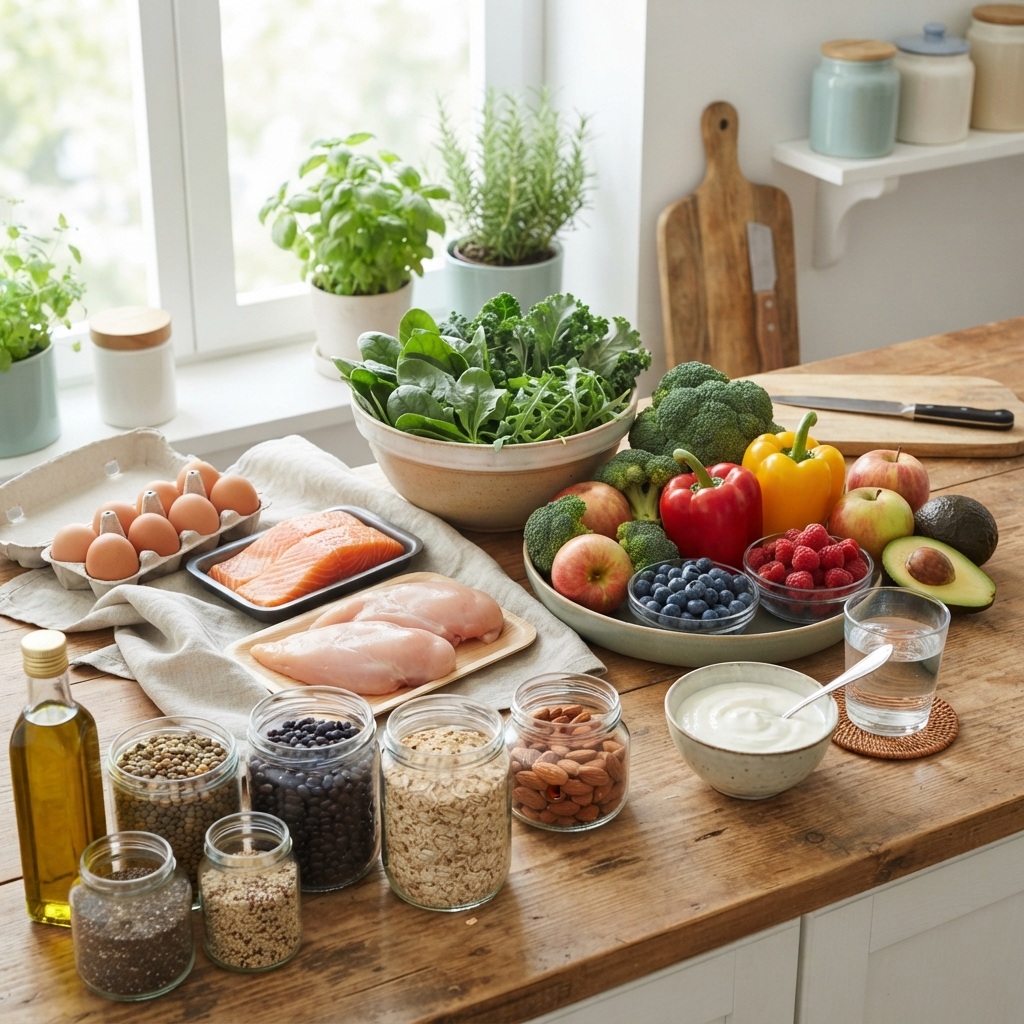
The best diet for insulin resistance usually includes:
- High-fiber vegetables
- Lean protein
- Healthy fats
- Beans and lentils
- Nuts and seeds
- Low-sugar fruits
- Whole grains in controlled portions
- Unsweetened dairy or dairy alternatives
- Water and unsweetened drinks
The CDC explains that carbohydrates raise blood sugar, but eating carbs with protein, fat, or fiber can slow how quickly blood sugar rises.
That is the main idea behind an insulin resistance-friendly plate: do not eat “naked carbs” alone. Pair carbohydrates with protein, fiber, and healthy fat.
Simple Insulin Resistance Plate Method
A helpful way to build meals is:
- ½ plate: non-starchy vegetables
- ¼ plate: protein
- ¼ plate: high-fiber carbohydrate
- Small amount: healthy fat
Example:
Grilled chicken, roasted broccoli, cucumber salad, ½ cup brown rice, and avocado.
This type of meal is more blood-sugar-friendly than eating a large bowl of rice or pasta by itself.
1. Non-Starchy Vegetables
Non-starchy vegetables are some of the best foods for insulin resistance because they are high in fiber, low in calories, and naturally lower in carbohydrates.
They help fill your plate without causing the same blood sugar rise as refined carbs.
Best Non-Starchy Vegetables
- Spinach
- Kale
- Lettuce
- Arugula
- Cabbage
- Broccoli
- Cauliflower
- Brussels sprouts
- Green beans
- Asparagus
- Zucchini
- Cucumber
- Celery
- Mushrooms
- Bell peppers
- Tomatoes
- Eggplant
- Okra
- Onions
- Radishes
- Carrots in moderate portions
Easy Ways to Eat More
Add spinach to eggs.
Use lettuce wraps instead of large tortillas.
Roast broccoli, cauliflower, and zucchini.
Add cucumber and tomato salad to lunch.
Keep chopped vegetables ready for quick snacks.
Helpful Product
A vegetable chopper can make meal prep faster if you are trying to eat more vegetables every day.
2. High-Protein Foods
Protein helps with fullness and can make meals more satisfying.
When you pair protein with carbs, the meal often feels more balanced and may reduce the chance of getting hungry again quickly.
Best Protein Foods
- Eggs
- Chicken breast
- Turkey
- Fish
- Salmon
- Tuna
- Sardines
- Lean beef
- Greek yogurt, unsweetened
- Cottage cheese
- Tofu
- Tempeh
- Edamame
- Lentils
- Beans
- Protein powder with no added sugar
- Skinless poultry
- Shellfish
Easy Meal Ideas
Eggs with vegetables for breakfast.
Chicken salad with avocado and greens.
Greek yogurt with chia seeds and berries.
Salmon with roasted vegetables.
Tofu stir-fry with broccoli and cauliflower rice.
Helpful Product
Meal prep containers make it easier to portion protein, vegetables, and high-fiber carbs ahead of time.
3. Beans, Lentils, and Legumes
Beans and lentils are excellent for many people with insulin resistance because they contain fiber, protein, and slow-digesting carbohydrates.
They are more filling than refined grains and can work well in soups, salads, bowls, and stews.
Best Options
- Black beans
- Kidney beans
- Pinto beans
- Chickpeas
- Lentils
- Split peas
- White beans
- Edamame
- Black-eyed peas
How to Use Them
Add lentils to soup.
Use black beans in taco bowls.
Make chickpea salad.
Add white beans to vegetable stew.
Use edamame as a high-protein snack.
Portion Tip
Beans still contain carbohydrates, so portion matters. Start with ½ cup cooked beans or lentils and see how your body responds.
4. Whole Grains in Smart Portions
You do not always need to cut out grains.
The goal is to choose higher-fiber grains and keep portions reasonable.
Carbs can be part of a healthy diet, and the key is choosing carbs and portions that provide nutrition with less blood sugar impact.
Better Grain Choices
- Oats
- Steel-cut oats
- Brown rice
- Quinoa
- Barley
- Farro
- Bulgur
- Whole-grain bread
- Sprouted grain bread
- Whole-wheat pasta
- Buckwheat
- Millet
Limit or Reduce
- White bread
- White rice in large portions
- Sugary cereal
- Pastries
- Regular crackers
- Refined pasta
- Instant flavored oatmeal
- Sweet granola
Portion Tip
A good starting point is ½ cup cooked whole grain or 1 slice of whole-grain bread, paired with protein and vegetables.
5. Low-Sugar Fruits
Fruit does contain natural sugar, but it also provides fiber, water, vitamins, minerals, and antioxidants.
For insulin resistance, the key is choosing whole fruit instead of juice and watching portions.
Best Fruits to Choose More Often
- Berries
- Apples
- Pears
- Oranges
- Grapefruit
- Kiwi
- Peaches
- Plums
- Cherries
- Green bananas in smaller portions
- Avocado
- Tomatoes
Fruits to Portion Carefully
- Mango
- Pineapple
- Grapes
- Ripe bananas
- Dried fruit
- Dates
- Fruit juice
- Fruit smoothies with lots of fruit
Best Way to Eat Fruit
Pair fruit with protein or fat.
Examples:
Apple with peanut butter.
Berries with Greek yogurt.
Pear with cottage cheese.
Orange with a boiled egg.
This is better than drinking fruit juice or eating a large bowl of fruit alone.
6. Healthy Fats
Healthy fats help meals feel satisfying and can reduce the need for constant snacking.
They also pair well with vegetables and protein.
Best Healthy Fats
- Avocado
- Olive oil
- Nuts
- Seeds
- Chia seeds
- Flaxseeds
- Pumpkin seeds
- Walnuts
- Almonds
- Natural peanut butter
- Almond butter
- Fatty fish
- Olives
Portion Tip
Healthy fats are still calorie-dense, so use reasonable amounts.
Good starting portions:
- ¼ to ½ avocado
- 1 tablespoon olive oil
- 1 to 2 tablespoons nut butter
- Small handful of nuts
- 1 to 2 tablespoons seeds
Helpful Product
A small oil dispenser can help you control how much olive oil you use when cooking or making salads.
7. Nuts and Seeds
Nuts and seeds are helpful for insulin resistance because they provide healthy fats, fiber, minerals, and some protein.
Best Options
- Almonds
- Walnuts
- Pistachios
- Pecans
- Cashews
- Chia seeds
- Flaxseeds
- Pumpkin seeds
- Sunflower seeds
- Hemp seeds
Easy Ways to Use Them
Sprinkle chia seeds into Greek yogurt.
Add pumpkin seeds to salads.
Use ground flaxseed in oatmeal.
Snack on a small handful of almonds.
Add walnuts to cottage cheese or berries.
Tip
Choose unsweetened and lightly salted or unsalted versions most often.
Avoid candy-coated nuts and sugary trail mixes.
8. Unsweetened Dairy and Fermented Foods
Unsweetened dairy can provide protein, calcium, and probiotics.
Choose plain options and sweeten them naturally with berries or cinnamon if needed.
Better Options
- Plain Greek yogurt
- Plain skyr
- Cottage cheese
- Kefir with no added sugar
- Unsweetened milk
- Unsweetened soy milk
- Plain probiotic yogurt
Limit
- Flavored yogurt
- Sweetened kefir
- Sweetened coffee creamers
- Condensed milk
- Ice cream
- Sugary milk drinks
Easy Snack
Plain Greek yogurt with berries, chia seeds, and cinnamon.
9. Drinks That Support Blood Sugar Goals
Drinks can quietly add a lot of sugar.
For insulin resistance, changing drinks can make a big difference.
Best Drinks
- Water
- Sparkling water with no sugar
- Unsweetened tea
- Green tea
- Black coffee
- Herbal tea
- Water with lemon or cucumber
- Unsweetened electrolyte drink when needed
Limit
- Soda
- Sweet tea
- Juice
- Energy drinks
- Sweetened coffee drinks
- Sugary smoothies
- Sports drinks
- Alcohol mixers
- Sweetened bottled teas
Liquid sugar can raise blood sugar quickly because it is easy to drink a lot without feeling full.
10. Foods to Limit With Insulin Resistance
You do not need to be perfect, but these foods are best eaten less often or in smaller portions.
Refined Carbs
- White bread
- White rice
- Regular pasta
- Crackers
- Pretzels
- Pastries
- Bagels
- Sweet rolls
- Sugary cereal
Added Sugars
- Candy
- Cookies
- Cakes
- Donuts
- Sweetened yogurt
- Ice cream
- Syrups
- Sugary coffee drinks
- Soda
- Fruit juice
Ultra-Processed Snack Foods
- Chips
- Packaged snack cakes
- Sweet granola bars
- Sugary protein bars
- Fast-food fries
- Processed frozen meals
- Candy-coated trail mix
Fried and Heavy Fast Foods
- Fried chicken
- Fries
- Large burgers with sugary sauces
- Pizza in large portions
- Fried appetizers
- Cream-heavy takeout meals
Alcohol
Alcohol can affect blood sugar, appetite, sleep, liver health, and food choices.
If you drink, keep it moderate and avoid sugary mixers.
Best Breakfast Foods for Insulin Resistance
Breakfast can set the tone for the day.
Many people feel better when breakfast includes protein, fiber, and healthy fat instead of only cereal, toast, or sweet coffee.
Good Breakfast Ideas
- Eggs with spinach and avocado
- Greek yogurt with berries and chia seeds
- Cottage cheese with walnuts and berries
- Oatmeal with protein powder, flaxseed, and cinnamon
- Tofu scramble with vegetables
- Smoked salmon with cucumber and eggs
- Protein smoothie with unsweetened Greek yogurt, spinach, chia, and berries
- Turkey sausage with vegetables and fruit
- Whole-grain toast with egg and avocado
Best Lunch Foods for Insulin Resistance
Lunch should keep you full without making you sleepy.
Good Lunch Ideas
- Chicken salad bowl with greens, beans, and avocado
- Turkey lettuce wraps with hummus and vegetables
- Tuna cucumber boats with Greek yogurt dressing
- Lentil soup with salad
- Salmon bowl with quinoa and roasted vegetables
- Bean and veggie burrito bowl without sugary sauces
- Egg salad over greens
- Tofu veggie stir-fry
- Turkey burger bowl with salad and sweet potato
Best Dinner Foods for Insulin Resistance
Dinner should be balanced and satisfying.
Good Dinner Ideas
- Salmon with roasted broccoli and quinoa
- Chicken fajita bowl with peppers, onions, avocado, and beans
- Turkey meatballs with zucchini noodles and salad
- Shrimp stir-fry with vegetables and cauliflower rice
- Lean beef lettuce wraps
- Lentil chili with salad
- Baked chicken with green beans and sweet potato
- Tofu curry with vegetables
- Turkey stuffed peppers
- Sardines or tuna with salad and roasted vegetables
Best Snacks for Insulin Resistance
A good snack should not be only carbs.
Pair protein, fiber, or fat with any carbohydrate.
Snack Ideas
- Apple slices with peanut butter
- Boiled eggs
- Greek yogurt with chia seeds
- Cottage cheese with berries
- Carrots with hummus
- Cucumber with tuna salad
- Celery with almond butter
- Turkey roll-ups
- Edamame
- Small handful of nuts
- Cheese with cherry tomatoes
- Protein smoothie
- Chia pudding with no added sugar
Insulin Resistance Grocery List
Vegetables
- Spinach
- Kale
- Lettuce
- Broccoli
- Cauliflower
- Cabbage
- Zucchini
- Cucumbers
- Tomatoes
- Bell peppers
- Mushrooms
- Green beans
- Asparagus
- Brussels sprouts
Protein
- Eggs
- Chicken
- Turkey
- Fish
- Salmon
- Tuna
- Sardines
- Lean beef
- Greek yogurt
- Cottage cheese
- Tofu
- Tempeh
- Beans
- Lentils
Carbs
- Oats
- Quinoa
- Brown rice
- Barley
- Sweet potatoes
- Beans
- Lentils
- Whole-grain bread
- Whole-wheat pasta
- Buckwheat
Fruit
- Berries
- Apples
- Pears
- Oranges
- Grapefruit
- Kiwi
- Peaches
- Plums
- Cherries
- Avocado
Fats
- Olive oil
- Avocado
- Almonds
- Walnuts
- Chia seeds
- Flaxseeds
- Pumpkin seeds
- Natural nut butter
- Olives
Drinks
- Water
- Herbal tea
- Unsweetened tea
- Black coffee
- Sparkling water with no sugar
Simple 1-Day Insulin Resistance Meal Plan
Breakfast
Greek yogurt with berries, chia seeds, cinnamon, and walnuts.
Snack
Boiled egg with cucumber slices.
Lunch
Grilled chicken salad with leafy greens, black beans, avocado, tomatoes, peppers, and olive oil dressing.
Snack
Apple slices with peanut butter.
Dinner
Salmon with roasted broccoli, cauliflower, and ½ cup quinoa.
Evening Option
Herbal tea or water.
Common Insulin Resistance Diet Mistakes
Cutting Carbs Too Low Without Guidance
Some people do well with fewer carbs, but going too low too quickly can be hard to maintain and may not be safe for everyone, especially if taking medication.
Eating Carbs Alone
A plain bagel, cereal bowl, juice, or sweet coffee can raise blood sugar quickly.
Pair carbs with protein, fiber, and fat.
Drinking Sugar
Sugary drinks are one of the easiest ways to overload blood sugar.
Ignoring Portions
Even healthy foods can add up, especially grains, fruit, nuts, oils, and nut butters.
Not Eating Enough Protein
Protein helps you feel full and makes meals more balanced.
Avoiding All Fruit
Whole fruit can fit into an insulin resistance diet. Fruit juice and large portions of dried fruit are more likely to spike blood sugar.
Forgetting Exercise
Diet matters, but movement matters too. The NIDDK says being physically active can help prevent insulin resistance and prediabetes. (NIDDK)
Frequently Asked Questions
What foods are best for insulin resistance?
The best foods include non-starchy vegetables, lean protein, beans, lentils, nuts, seeds, whole grains in controlled portions, low-sugar fruits, unsweetened dairy, and healthy fats.
What foods should I avoid with insulin resistance?
Limit sugary drinks, candy, pastries, white bread, white rice, sweet cereal, juice, fried fast food, and ultra-processed snacks.
Can I eat rice with insulin resistance?
Yes, but portion and pairing matter. Choose smaller portions, try brown rice or mixed grains, and eat it with protein, vegetables, and healthy fat.
Can I eat fruit with insulin resistance?
Yes. Choose whole fruit, especially berries, apples, pears, oranges, kiwi, and plums. Avoid fruit juice and large portions of dried fruit.
Are eggs good for insulin resistance?
Eggs are high in protein and low in carbs, so they can fit well into many insulin resistance meal plans.
Is oatmeal good for insulin resistance?
Plain oats can fit, especially when paired with protein, chia seeds, flaxseed, nuts, or Greek yogurt. Avoid sugary instant oatmeal packets.
Is keto best for insulin resistance?
Some people use low-carb diets, but the best plan is the one that is safe, sustainable, and fits your medical needs. Ask a healthcare provider if you take blood sugar medication.
How fast can diet improve insulin resistance?
It varies. Some people notice better energy and fewer cravings quickly, while blood sugar and insulin markers may take weeks or months to improve.
Final Thoughts
An insulin resistance diet does not have to be extreme.
Focus on meals that include protein, fiber, healthy fats, and smart portions of carbohydrates. Eat more vegetables, beans, lentils, nuts, seeds, whole foods, and low-sugar fruits. Limit sugary drinks, refined carbs, pastries, and ultra-processed snacks.
The goal is not perfection. The goal is steadier blood sugar, better fullness, better energy, and a way of eating you can actually continue.
Small daily choices can make a real difference over time.