Mosquito bites are annoying, itchy, and sometimes hard to avoid when you are sitting outside, gardening, camping, walking in the evening, or relaxing on the patio.
Many people prefer homemade mosquito repellents because they want something that smells better, feels lighter on the skin, or uses simple ingredients like witch hazel, aloe vera, coconut oil, citronella, lavender, lemongrass, peppermint, or eucalyptus.
DIY mosquito repellents can be useful for short outdoor moments, but they are not the same as tested commercial repellents. If you are in an area where mosquitoes may carry diseases such as malaria, dengue, Zika, chikungunya, or West Nile virus, use a proven EPA-registered insect repellent.
The CDC recommends EPA-registered repellents with active ingredients such as DEET, picaridin, IR3535, oil of lemon eucalyptus, PMD, or 2-undecanone, and says they are proven safe and effective when used as directed.
That does not mean you cannot make your own mosquito spray at home. It simply means you should understand where DIY recipes fit: they are best for low-risk situations, short periods outside, and people who can safely tolerate the ingredients.
Below are 10 DIY mosquito repellent ideas for skin, plus safety tips, dilution guidance, what not to use, and when a store-bought repellent is the better choice.
Important Safety Notes Before Making DIY Mosquito Repellent
Essential oils are strong plant extracts. They should not be applied directly to the skin without dilution because they can cause irritation, allergic reactions, redness, burning, or sensitivity. Cleveland Clinic notes that essential oils can irritate skin when they are not diluted enough, and the Tisserand Institute advises not applying undiluted essential oils to the skin.
Before using any DIY mosquito repellent on your skin:
- Do a patch test first.
- Avoid eyes, lips, broken skin, and irritated skin.
- Do not spray on hands of young children.
- Do not use essential oils on babies unless a pediatrician approves.
- Avoid oil of lemon eucalyptus or PMD products on children under 3.
- Avoid strong essential oils during pregnancy unless approved by a healthcare provider.
- Stop using the spray if your skin burns, itches, or becomes red.
- Wash it off before bed if your skin is sensitive.
- Do not use citrus oils before sun exposure unless you know they are non-phototoxic.
The CDC specifically says products containing oil of lemon eucalyptus or PMD should not be used on children under 3 years old.
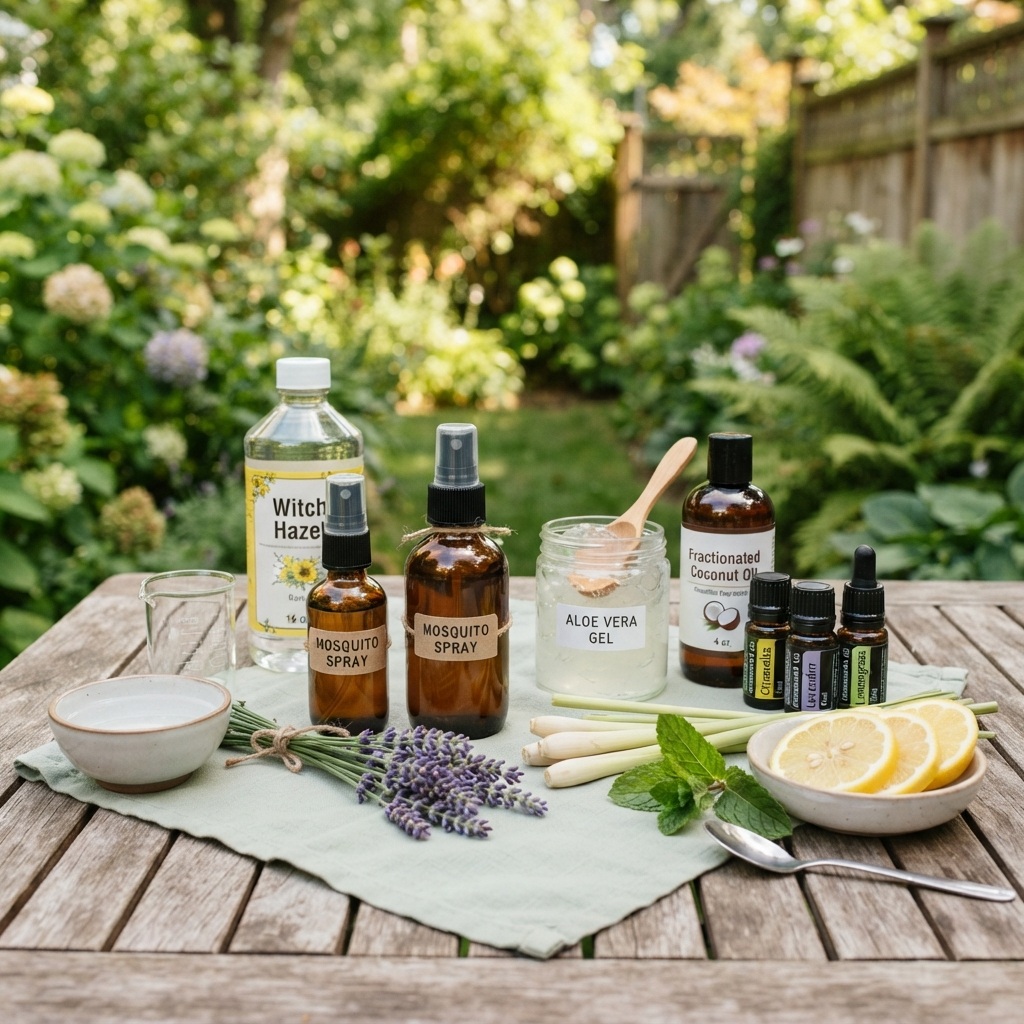
Best Ingredients for DIY Mosquito Repellent
Homemade mosquito repellents usually combine a liquid base with a small amount of essential oil.
Common base ingredients include:
- Witch hazel
- Distilled water
- Aloe vera gel
- Fractionated coconut oil
- Jojoba oil
- Sweet almond oil
- Apple cider vinegar
- Rubbing alcohol
- Vegetable glycerin
Common essential oils used in DIY mosquito sprays include:
- Citronella
- Lemongrass
- Lavender
- Peppermint
- Eucalyptus
- Tea tree
- Cedarwood
- Rosemary
- Geranium
- Catnip oil
Some plant-based ingredients are found in EPA-registered repellents, including oil of lemon eucalyptus, citronella oil, catnip oil, and 2-undecanone, but a homemade essential oil mixture is not the same as a registered product tested for performance and safety.
Helpful Supplies for Making DIY Mosquito Repellent
Amber Glass Spray Bottles
Amber glass bottles help store homemade sprays and protect essential oil blends from light.
Witch Hazel
Witch hazel is a popular base for homemade body sprays because it feels lighter than oil.
Aloe Vera Gel
Aloe vera gel can make a DIY mosquito repellent feel more soothing and less drying on the skin.
Fractionated Coconut Oil
Fractionated coconut oil is lightweight and works well for roll-on mosquito repellent blends.
Essential Oil Set
A basic essential oil set with citronella, lavender, peppermint, eucalyptus, lemongrass, and tea tree can be useful for homemade outdoor sprays.
Basic DIY Mosquito Repellent Dilution Guide
For adults, a gentle skin spray is usually kept around a low essential oil concentration.
A simple beginner-friendly guide:
- Sensitive skin: about 1% dilution
- General adult use: about 1% to 2% dilution
- Stronger outdoor blend: about 2%, only if tolerated
A 1% dilution is roughly 6 drops of essential oil per 1 ounce of carrier or base.
A 2% dilution is roughly 12 drops of essential oil per 1 ounce of carrier or base.
For children, pregnancy, sensitive skin, eczema-prone skin, and older adults, use extra caution and ask a healthcare provider when unsure.
1. DIY Citronella Mosquito Repellent Spray
Citronella is one of the most recognizable natural mosquito-repellent scents.
It has a fresh, grassy, lemony smell and is commonly used in outdoor candles, sprays, and patio products. For skin, it should always be diluted.
Ingredients
- 2 tablespoons witch hazel
- 2 tablespoons distilled water
- 6 drops citronella essential oil
- 4 drops lavender essential oil
- 2 drops cedarwood essential oil
How to Make It
Add the witch hazel and distilled water to a small spray bottle.
Add the essential oils.
Shake well before each use.
Spray lightly on exposed skin, avoiding the face and eyes.
Best For
This is a good basic DIY mosquito repellent for sitting outside, gardening, or short patio use.
Tip
Citronella has a strong smell. Start with less if you are sensitive to fragrance.
2. Lavender and Vanilla Mosquito Spray
Lavender is popular because it smells softer than many other essential oils.
Vanilla extract does not make this a powerful repellent by itself, but it can make the spray smell warmer and more pleasant.
Ingredients
- 3 tablespoons witch hazel
- 1 tablespoon distilled water
- 8 drops lavender essential oil
- 3 drops citronella essential oil
- 1/4 teaspoon vanilla extract
How to Make It
Combine everything in a small spray bottle.
Shake well before using.
Spray lightly on arms, legs, and ankles.
Best For
This is a good option if you dislike the sharp smell of many bug sprays.
Tip
Use real vanilla extract, not sticky syrup or sweetened flavoring.
3. Lemon Eucalyptus-Inspired Spray
Oil of lemon eucalyptus is one of the plant-based active ingredients recognized in EPA-registered repellents. However, homemade lemon eucalyptus essential oil is not the same thing as an EPA-registered oil of lemon eucalyptus or PMD repellent. For reliable protection, especially in mosquito-disease areas, choose a registered product. (CDC)
Ingredients
- 2 tablespoons witch hazel
- 2 tablespoons distilled water
- 8 drops lemon eucalyptus essential oil
- 3 drops lavender essential oil
- 1 drop peppermint essential oil
How to Make It
Add ingredients to a spray bottle.
Shake well.
Apply lightly to exposed skin.
Best For
This is best for adults who tolerate eucalyptus-type scents.
Safety Note
Do not use oil of lemon eucalyptus or PMD products on children under 3. Avoid this blend during pregnancy or on sensitive skin unless approved by a professional.
4. Aloe Vera Mosquito Repellent Gel
Aloe vera makes this recipe feel more like a light skin gel than a spray.
This is helpful if alcohol-based sprays feel drying.
Ingredients
- 1/4 cup aloe vera gel
- 1 tablespoon witch hazel
- 5 drops lavender essential oil
- 4 drops citronella essential oil
- 3 drops lemongrass essential oil
How to Make It
Mix the aloe vera gel and witch hazel in a small bowl.
Add essential oils.
Stir well.
Transfer to a small squeeze bottle or jar.
Apply a thin layer to exposed skin.
Best For
This works well for people who prefer a lotion-like feel instead of a spray.
Tip
Store in the refrigerator and use within a short time, especially if your aloe gel does not contain preservatives.
5. Coconut Oil Mosquito Repellent Roll-On
A roll-on is convenient for ankles, wrists, and small areas.
Oil-based blends also cling to the skin longer than watery sprays, but they can feel greasy if you use too much.
Ingredients
- 1 tablespoon fractionated coconut oil
- 3 drops citronella essential oil
- 2 drops lavender essential oil
- 1 drop cedarwood essential oil
How to Make It
Add the essential oils to a small roller bottle.
Fill with fractionated coconut oil.
Cap and roll gently to mix.
Apply lightly to wrists, ankles, and behind the knees.
Best For
This is ideal when you want something small to keep in a bag.
Tip
Do not apply too much oil if you will be in strong sun, because oily skin can feel uncomfortable and attract dust.
6. Peppermint and Tea Tree Outdoor Spray
Peppermint has a strong cooling scent, while tea tree has a sharp herbal scent.
This blend smells fresh, but it may be too strong for sensitive skin.
Ingredients
- 3 tablespoons distilled water
- 1 tablespoon witch hazel
- 4 drops peppermint essential oil
- 4 drops tea tree essential oil
- 4 drops lavender essential oil
How to Make It
Pour water and witch hazel into a spray bottle.
Add the oils.
Shake very well before each use.
Spray lightly on exposed skin.
Best For
This is best for adults who like stronger herbal scents.
Safety Note
Avoid using peppermint essential oil near young children’s faces. It can feel intense and irritating.
7. Apple Cider Vinegar Mosquito Spray
Apple cider vinegar is often used in homemade outdoor sprays.
The smell is strong at first, but it fades as the spray dries.
Ingredients
- 2 tablespoons apple cider vinegar
- 2 tablespoons distilled water
- 5 drops citronella essential oil
- 4 drops lavender essential oil
- 3 drops rosemary essential oil
How to Make It
Add everything to a spray bottle.
Shake well.
Spray lightly on arms and legs.
Best For
This is a budget-friendly option if you already have apple cider vinegar at home.
Tip
Do not use this on freshly shaved, irritated, or broken skin. Vinegar can sting.
8. Lemongrass and Geranium Body Spray
This blend has a bright, fresh scent.
Lemongrass is strong, so use it carefully and keep the dilution low.
Ingredients
- 2 tablespoons witch hazel
- 2 tablespoons distilled water
- 5 drops lemongrass essential oil
- 4 drops geranium essential oil
- 3 drops lavender essential oil
How to Make It
Combine ingredients in a spray bottle.
Shake before each use.
Mist lightly on exposed skin.
Best For
This is a good summer body spray for short backyard use.
Safety Note
Lemongrass can irritate sensitive skin. Patch test first.
9. Cedarwood and Lavender Mosquito Repellent Oil
This is a softer, woodsy blend.
It is less sharp than citronella-heavy sprays and works nicely as a roll-on or body oil.
Ingredients
- 2 tablespoons jojoba oil or fractionated coconut oil
- 5 drops cedarwood essential oil
- 4 drops lavender essential oil
- 2 drops citronella essential oil
- 1 drop rosemary essential oil
How to Make It
Add oils to a small glass bottle.
Shake gently.
Apply a very thin layer to exposed skin.
Best For
This is good for people who prefer a warm, woodsy scent instead of a lemony scent.
Tip
Use only a small amount. Too much oil can feel heavy on the skin.
10. Alcohol-Based Quick-Dry Mosquito Spray
This spray dries faster than oil-based blends.
It may feel lighter, but alcohol can be drying, especially on sensitive skin.
Ingredients
- 2 tablespoons rubbing alcohol or high-proof alcohol
- 2 tablespoons distilled water
- 5 drops citronella essential oil
- 4 drops eucalyptus essential oil
- 3 drops lavender essential oil
How to Make It
Add alcohol to the spray bottle first.
Add essential oils and shake.
Add distilled water.
Shake again before using.
Best For
This works well when you want a spray that does not feel oily.
Safety Note
Keep away from flames, grills, candles, cigarettes, and fire pits. Alcohol-based sprays are flammable until fully dry.
How to Apply DIY Mosquito Repellent Safely
Apply homemade mosquito repellent only to exposed skin.
Use a light layer.
Avoid:
- Eyes
- Mouth
- Nose
- Broken skin
- Rashes
- Sunburn
- Freshly shaved skin
- Hands of young children
For the face, spray the repellent onto your hands first, then apply carefully while avoiding eyes and lips.
Wash your hands after applying.
If you are using sunscreen, apply sunscreen first, let it absorb, then apply mosquito repellent. The CDC advises following product label instructions when using repellents, including applying them correctly and safely. (CDC)
How Long Do DIY Mosquito Repellents Last?
Homemade mosquito repellents usually do not last as long as EPA-registered commercial repellents.
You may need to reapply more often, especially if you are sweating, swimming, exercising, or sitting outside for a long time.
Reapply when:
- The scent fades
- You start getting bitten again
- You sweat heavily
- You towel off
- You have been outside for a while
For stronger and longer protection, use a registered mosquito repellent with a proven active ingredient such as DEET, picaridin, IR3535, oil of lemon eucalyptus, PMD, or 2-undecanone. (CDC)
DIY Mosquito Repellent for Kids
Be very careful with homemade repellents for children.
Children have more sensitive skin, and essential oils can irritate them more easily.
General safety tips:
- Ask a pediatrician before using essential oils on young children.
- Avoid oil of lemon eucalyptus or PMD on children under 3.
- Do not spray repellent directly on a child’s face.
- Do not apply repellent to children’s hands.
- Use the lowest effective amount.
- Wash it off after coming indoors.
- Stop immediately if irritation happens.
For children in mosquito-heavy areas, a properly labeled EPA-registered repellent is usually a better choice than homemade essential oil sprays. The American Academy of Pediatrics also says not to use oil of lemon eucalyptus or PMD on children under age 3. (AAP)
DIY Mosquito Repellent for Sensitive Skin
If your skin reacts easily, avoid strong essential oil blends.
Try a very low dilution and soothing base.
Gentle Sensitive Skin Blend
- 2 tablespoons aloe vera gel
- 1 tablespoon fractionated coconut oil
- 2 drops lavender essential oil
- 1 drop cedarwood essential oil
Mix well and patch test first.
Avoid peppermint, cinnamon, clove, oregano, thyme, and strong citrus oils if your skin is sensitive. These can be more irritating for many people.
What Not to Put on Your Skin for Mosquitoes
Avoid using harsh or unsafe ingredients on your skin.
Do not use:
- Undiluted essential oils
- Bleach
- Household cleaning sprays
- Kerosene
- Gasoline
- Strong vinegar on sensitive skin
- Mouthwash as a body spray
- Dish soap mixtures
- Rubbing alcohol over large areas
- Strong spice oils like cinnamon or clove without expert guidance
Natural does not always mean safe for skin. Essential oils and plant extracts can still cause burns, allergic reactions, or irritation.
Best Store-Bought Alternatives When You Need Stronger Protection
DIY sprays are fine for casual use, but sometimes you need something more reliable.
Choose a tested repellent if:
- You live in a malaria or dengue area
- Mosquitoes are aggressive
- You are camping or hiking
- You are pregnant
- You are protecting children
- You will be outside for hours
- You are traveling
- You keep getting bitten through DIY sprays
Look for active ingredients recommended by the CDC and EPA.
Picaridin Repellent
Picaridin is a popular option because it is often less greasy and has less odor than DEET.
DEET Mosquito Repellent
DEET is widely used and effective when applied according to label directions.
Oil of Lemon Eucalyptus Repellent
This is a plant-based registered repellent option for adults and children over 3 when used according to the label.
Extra Ways to Avoid Mosquito Bites
Repellent works better when combined with other mosquito-control habits.
Try:
- Wear long sleeves and pants in mosquito-heavy areas.
- Choose light-colored clothing.
- Use screens on windows and doors.
- Remove standing water from buckets, tires, pots, and trays.
- Keep grass and shrubs trimmed.
- Use fans on patios because mosquitoes struggle in strong airflow.
- Treat clothing with permethrin when appropriate.
- Avoid peak mosquito times if possible.
The CDC recommends using insect repellent, wearing protective clothing, treating clothing and gear when needed, and controlling mosquitoes indoors and outdoors.
Common DIY Mosquito Repellent Mistakes
Using Too Much Essential Oil
More oil does not always mean better protection. It can irritate your skin.
Forgetting to Shake the Bottle
Oil and water separate. Shake before every use.
Spraying Near the Eyes
Essential oils can burn and irritate eyes badly.
Using DIY Spray in High-Risk Areas
If mosquito-borne illness is a concern, use tested repellents.
Making Huge Batches
Homemade sprays do not stay fresh forever. Make small batches.
Skipping a Patch Test
Always test first, especially if you have sensitive skin.
Using Citrus Oils in the Sun
Some citrus oils can increase sun sensitivity. Avoid them unless you know they are safe for sun exposure.
Assuming Kids Can Use Adult Blends
Children need extra caution and lower-risk products.
Frequently Asked Questions
What is the best DIY mosquito repellent for skin?
A simple citronella, lavender, and witch hazel spray is one of the easiest homemade options. For stronger proven protection, use an EPA-registered repellent.
Do homemade mosquito repellents really work?
Some homemade blends may help reduce bites for short periods, but they are usually less reliable and shorter-lasting than tested commercial repellents.
What essential oils repel mosquitoes?
Common oils used in mosquito blends include citronella, lemongrass, lavender, eucalyptus, cedarwood, peppermint, rosemary, geranium, and tea tree.
Can I put citronella oil directly on my skin?
No. Citronella essential oil should be diluted in a carrier or base before applying to skin.
Is lemon eucalyptus oil safe for kids?
Products containing oil of lemon eucalyptus or PMD should not be used on children under 3 years old.
Can I use coconut oil as mosquito repellent?
Coconut oil alone is not a strong mosquito repellent, but it can be used as a carrier oil for diluted essential oils.
How often should I reapply DIY mosquito repellent?
Reapply when the scent fades, after sweating, after swimming, or when mosquitoes start biting again.
Can I use vinegar as mosquito repellent on skin?
Diluted apple cider vinegar is used in some homemade sprays, but it can irritate sensitive or broken skin.
What is the safest mosquito repellent for skin?
For proven protection, the CDC recommends EPA-registered repellents used according to label directions. For DIY blends, the safest option is one that is properly diluted, patch-tested, and used only when appropriate.
Can pregnant women use DIY mosquito repellent?
Pregnant people should be cautious with essential oils and should choose proven repellents recommended by health authorities when mosquito protection is important. EPA-registered repellents are considered safe and effective when used as directed, including for pregnant and breastfeeding women. (CDC)
Final Thoughts
DIY mosquito repellents for skin can be simple, affordable, and pleasant to use for short outdoor moments.
A homemade spray with witch hazel, aloe vera, coconut oil, citronella, lavender, cedarwood, lemongrass, or eucalyptus may help make your skin less attractive to mosquitoes for a while. But DIY recipes are not the best choice when you need serious protection.
If mosquitoes are aggressive or you live somewhere mosquito-borne illness is a concern, use an EPA-registered repellent and follow the label carefully.
For casual backyard use, start with a gentle recipe, dilute essential oils properly, patch test first, and reapply as needed.