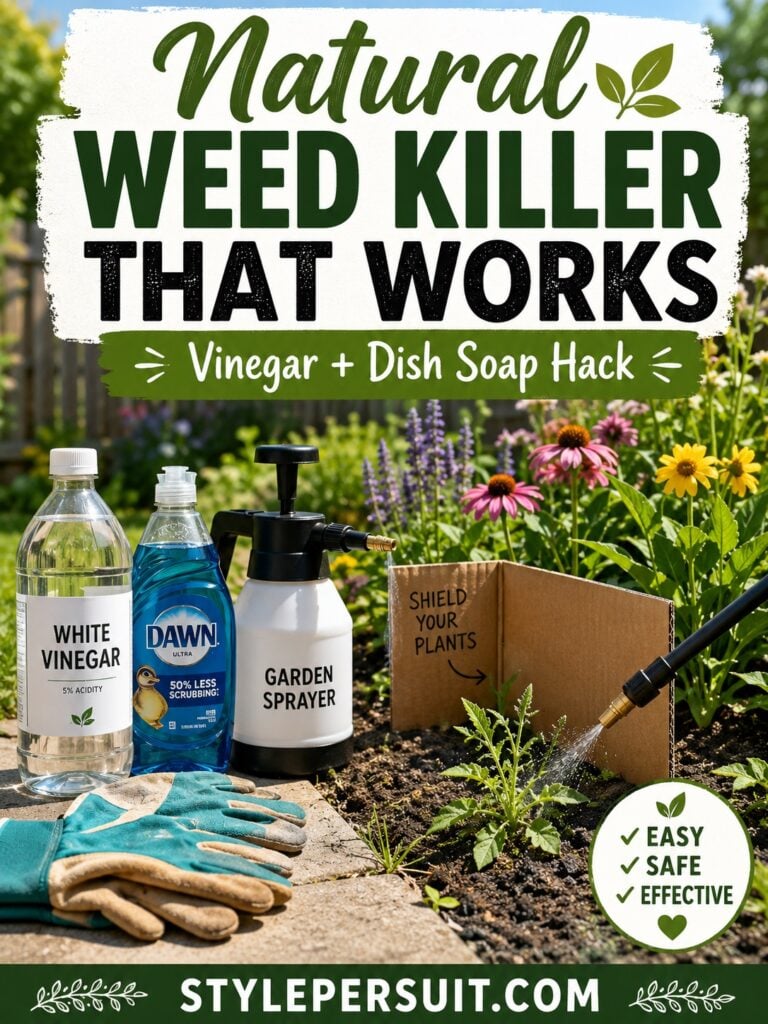
If weeds are taking over your driveway cracks, patio edges, gravel path, fence line, or garden border, you have probably seen the popular DIY recipe using Dawn dish soap and vinegar for weeds.
It is one of those home remedies that sounds almost too simple: grab vinegar, add dish soap, spray the weeds, and watch them dry out.
And honestly, it can work — but with a few important limits.
Vinegar can damage and dry out the leafy part of weeds, especially young annual weeds. Dish soap helps the vinegar stick to the leaves instead of rolling right off. But this mixture is not magic, and it usually does not kill deep roots on mature weeds or tough perennials. Some weeds may look dead on top, then grow back from the root.
Also, this spray is non-selective. That means it can damage grass, flowers, vegetables, herbs, shrubs, and any plant it touches. So it is best for areas like sidewalks, gravel, paver cracks, driveway seams, and spots where you do not want anything growing.
Affiliate Disclosure: This post contains affiliate links. If you buy through links on this page, StylePersuit may earn a small commission at no extra cost to you.
Does Dawn Dish Soap and Vinegar Kill Weeds?
Yes, Dawn dish soap and vinegar can kill or burn back many small weeds, especially when sprayed directly onto the leaves on a warm, sunny, dry day.
The vinegar works because of acetic acid. It pulls moisture from the plant tissue and causes the leaves to dry out. The dish soap acts as a surfactant, helping the vinegar spread across and cling to the waxy leaf surface.
This DIY weed killer works best on:
- Young weeds
- Small annual weeds
- Weeds in driveway cracks
- Weeds between pavers
- Weeds in gravel paths
- Weeds along fence lines
- Weeds in sidewalk cracks
- Small weeds around patio edges
It works less well on:
- Dandelions with deep taproots
- Bindweed
- Bermuda grass
- Crabgrass clumps
- Thistle
- Mature weeds
- Weeds with established roots
- Perennial weeds that regrow from underground
Vinegar-based weed killers often damage the visible top growth more than the roots, so larger or perennial weeds may need repeat applications or physical removal. Gardening sources commonly note that vinegar works best on young weeds and may only temporarily burn back mature weeds.
DIY Dawn and Vinegar Weed Killer Recipe
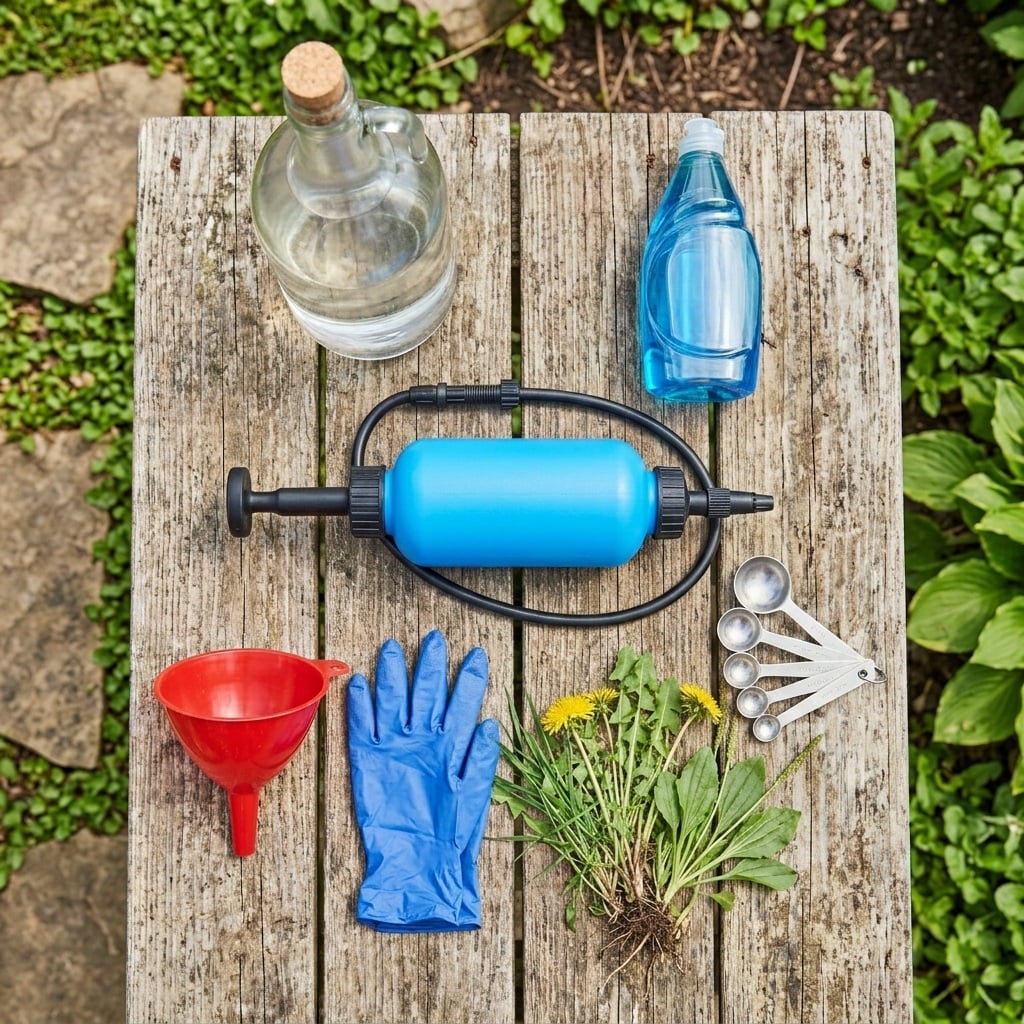
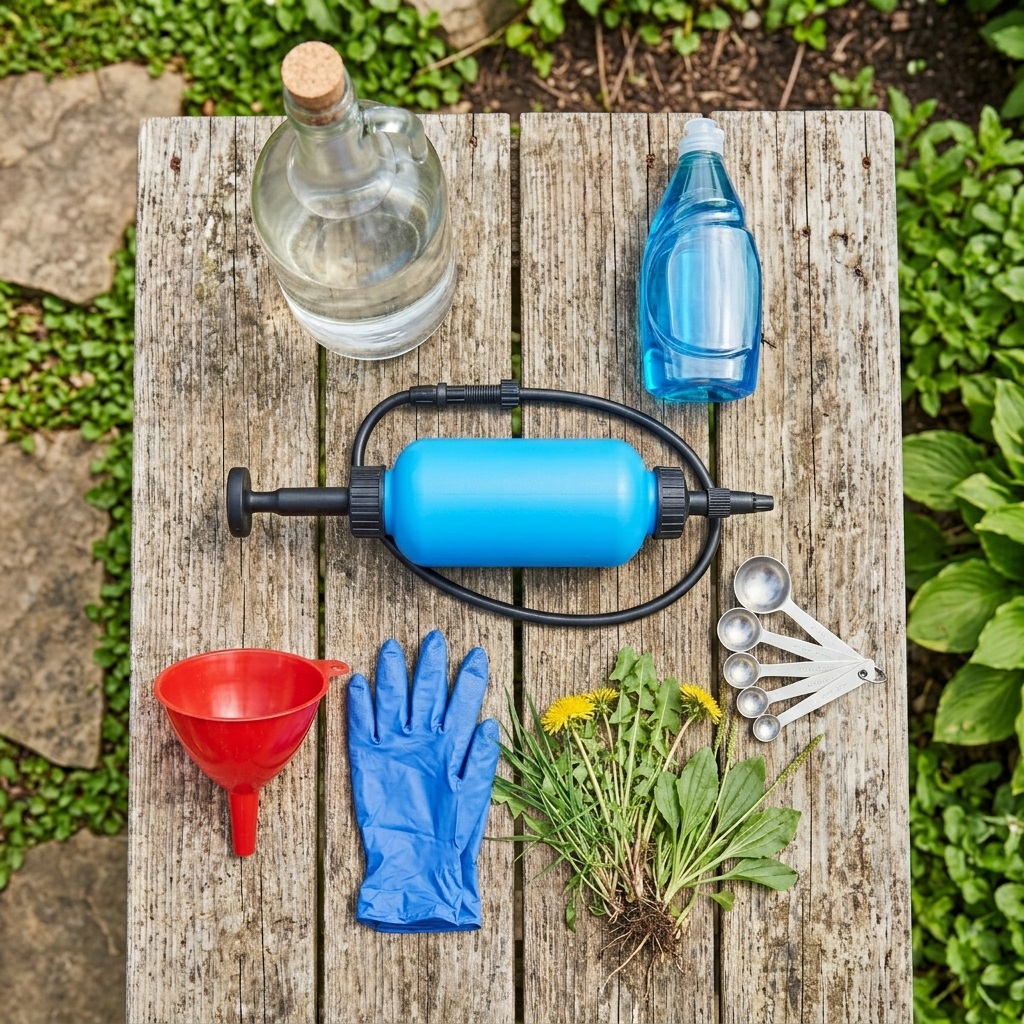
This is the simple version most people use for patios, pavers, gravel, and driveway cracks.
You’ll need:
- 1 gallon white vinegar, 5% acidity
- 1 tablespoon Dawn dish soap
- Garden sprayer or spray bottle
- Funnel
- Gloves
- Optional: measuring spoon
How to make it:
Pour the vinegar into a clean garden sprayer. Add 1 tablespoon of Dawn dish soap. Close the sprayer and gently swirl to mix.
Do not shake aggressively, or the dish soap may create too many bubbles.
Spray directly onto weed leaves until they are coated but not dripping everywhere. Try to hit the weed, not the surrounding plants or grass.
Helpful option: Check price on Amazon
When to Spray Vinegar and Dish Soap on Weeds
Timing makes a big difference.
For the best results, spray weeds:
- On a sunny day
- When no rain is expected for 24 hours
- When the weeds are dry
- During warm weather
- In the morning after dew has dried
- When there is little to no wind
Sun and heat help the vinegar dry out the leaves faster. Rain can wash the spray away before it works. Wind can blow the mixture onto nearby grass, flowers, or vegetables.
Avoid spraying right before rain, during windy weather, or when desirable plants are nearby.
Where You Should Use Dawn and Vinegar Weed Killer
This mixture is best for places where you want to kill weeds but are not worried about damaging nearby plants.
Good places to use it include:
- Driveway cracks
- Sidewalk seams
- Gravel paths
- Paver joints
- Patio edges
- Fence lines
- Around stone borders
- Between stepping stones
- Around mailbox posts
- Along curb cracks
Be careful using it in flower beds, vegetable gardens, or lawns because it can damage plants you want to keep.
Where You Should Not Use It
Do not use Dawn and vinegar weed killer carelessly in areas where you want plants to grow.
Avoid spraying it:
- Directly on your lawn
- Near vegetable plants
- Near flowers
- Near herbs
- Around young shrubs
- Around tree roots
- On windy days
- On soil where you plan to plant soon
Vinegar can affect nearby plants if it touches their leaves. Dish soap can also strip protective oils from plant surfaces. This is why targeted spraying is important.
Should You Add Salt to Vinegar and Dish Soap Weed Killer?
A lot of DIY recipes include salt, but I would be very careful with that.
Salt can damage soil and make it harder for plants to grow later. That might sound useful for driveway cracks, but salt can wash into nearby soil, garden beds, or lawn edges when it rains.
If you are spraying a sidewalk crack or gravel area where you truly never want anything to grow, some people use salt. But for most yards, patios, and garden borders, it is better to skip it.
Better Homes & Gardens warns against using salt as a weed killer because of long-term soil toxicity and environmental harm. (Better Homes & Gardens)
Stronger Vinegar vs Regular White Vinegar
Regular household white vinegar is usually around 5% acidity. It can work on small young weeds, but it may struggle with larger, tougher weeds.
Horticultural vinegar is much stronger, sometimes 20% or more. It can burn weeds faster, but it is also more dangerous. Strong vinegar can irritate or burn skin, eyes, and lungs if handled carelessly.
For most homeowners, regular white vinegar is safer and easier to use. If you choose stronger horticultural vinegar, wear protective gear, follow the label, and treat it like a serious outdoor chemical.
For safer spraying: Get it on Amazon
How Long Does It Take Vinegar and Dawn to Kill Weeds?
You may see weeds begin to wilt within a few hours on a hot sunny day. Smaller weeds may look brown and dry within 24 hours.
Larger weeds may take longer, and some may grow back from the roots.
A realistic timeline:
- 2–6 hours: leaves may start wilting
- 24 hours: small weeds may brown
- 2–3 days: treated leaves may dry out more
- 1–2 weeks: deep-rooted weeds may regrow
If weeds regrow, spray again or pull them out by the root.
How to Apply Dawn and Vinegar Weed Killer Without Damaging Your Yard
The secret is careful targeting.
Step 1: Choose the right day
Pick a dry, sunny, calm day. Avoid windy weather.
Step 2: Protect nearby plants
If spraying near flowers or grass, use cardboard as a shield. Hold it between the weed and the plant you want to protect.
Step 3: Spray the leaves directly
Coat the weed leaves, but do not soak the soil.
Step 4: Wait and watch
Give it 24–48 hours. Small weeds should start browning.
Step 5: Pull dead weeds
Once weeds dry out, pull or scrape them away so the area looks clean.
Helpful tool: View on Amazon
Dawn Dish Soap, Vinegar, and Salt Weed Killer Recipe
If you still want the stronger version for driveway cracks or areas where you do not want anything growing, here is the common recipe. Use it carefully.
You’ll need:
- 1 gallon white vinegar
- 1 cup table salt
- 1 tablespoon Dawn dish soap
- Garden sprayer
- Gloves
How to make it:
Pour vinegar into the sprayer. Add salt and let it dissolve as much as possible. Add Dawn dish soap last. Gently swirl to mix.
Spray only on weeds growing in cracks, gravel, or areas away from plants.
Do not use this in garden beds or lawns. Salt can stay in the soil and make it harder to grow plants later.
Better Ways to Keep Weeds From Coming Back
The vinegar and Dawn mixture can kill visible weeds, but prevention is what keeps the yard cleaner long-term.
1. Pull Deep-Rooted Weeds First
For dandelions, thistle, and other deep-rooted weeds, spraying the leaves may not be enough. Pull the root after rain when the soil is softer.
Helpful tool: Check price on Amazon
2. Add Mulch to Garden Beds
Mulch blocks sunlight from reaching weed seeds. It also makes garden beds look cleaner and more finished.
Use mulch around shrubs, flowers, trees, and fence-line beds.
3. Use Landscape Fabric Under Gravel
If weeds keep coming through gravel, the issue may be that there is no barrier underneath. Landscape fabric can help reduce weeds under gravel paths and patios.
For gravel paths: View options on Amazon
4. Fill Paver Cracks With Polymeric Sand
If weeds grow between pavers, refill the gaps with polymeric sand. It hardens after being activated with water and helps block weed growth.
For pavers: Get it on Amazon
5. Boiling Water for Small Crack Weeds
Boiling water can kill small weeds in sidewalk or driveway cracks. Pour it carefully and avoid nearby plants.
This method is cheap, but it can burn skin, so be careful.
6. Use a Weed Torch Carefully
A weed torch can work on weeds in gravel or cracks, but it must be used with extreme caution. Never use it near dry grass, mulch, fences, leaves, or during dry/windy weather.
For hardscape weeds: Check price on Amazon
Common Mistakes With Vinegar and Dawn Weed Killer
Spraying the Lawn
This mixture can damage grass. Do not use it as a lawn weed killer unless you are okay with killing the grass too.
Spraying on Windy Days
Wind can carry the spray onto plants you want to keep.
Expecting One Spray to Kill Deep Roots
Vinegar often burns the top growth. Mature weeds may return.
Adding Too Much Dish Soap
More soap does not make the recipe better. Too much can make the mixture messy and harder to spray.
Using Salt Everywhere
Salt can harm soil. Use it only where you truly do not want plants to grow.
FAQs About Dawn Dish Soap and Vinegar for Weeds
Does Dawn dish soap and vinegar really kill weeds?
Yes, it can kill or burn back small weeds, especially young annual weeds. Vinegar dries out the leaves, while Dawn helps the mixture stick. However, it may not kill deep roots, so some weeds can grow back.
What is the best vinegar and Dawn weed killer recipe?
A simple recipe is 1 gallon white vinegar mixed with 1 tablespoon Dawn dish soap. Spray directly onto weed leaves on a sunny, dry, calm day.
Does vinegar kill weeds permanently?
Vinegar does not always kill weeds permanently. It often damages the leaves but may not kill the roots, especially on mature or perennial weeds.
Should I add salt to vinegar weed killer?
Salt can make the mixture stronger, but it can also damage soil and nearby plants. It is better to avoid salt in lawns, flower beds, vegetable gardens, or anywhere you may want plants to grow later.
Will vinegar and Dawn kill grass?
Yes, it can damage or kill grass if sprayed directly on it. This mixture is non-selective, meaning it can harm many plants it touches.
How fast does vinegar and Dawn kill weeds?
Small weeds may start wilting within a few hours and look brown within 24 hours, especially on hot sunny days.
Can I use apple cider vinegar instead of white vinegar?
You can, but white vinegar is usually cheaper and commonly used for DIY weed sprays. The acetic acid is what matters most.
Is vinegar weed killer safe for pets?
Keep pets away while spraying and until the treated area is dry. Vinegar can irritate paws, skin, noses, and eyes. Strong vinegar is especially risky.
Final Thoughts
Dawn dish soap and vinegar can be a useful DIY weed killer for small weeds in driveway cracks, sidewalks, patios, gravel paths, and fence lines. It is cheap, simple, and easy to mix.
But it is not perfect. It can damage plants you want to keep, and it may not kill deep roots. For best results, use it on young weeds, spray on a sunny dry day, avoid wind, and skip the salt unless you are treating an area where you truly never want anything to grow.
For long-term weed control, combine this DIY spray with pulling, mulching, landscape fabric, paver sand, and regular yard maintenance.