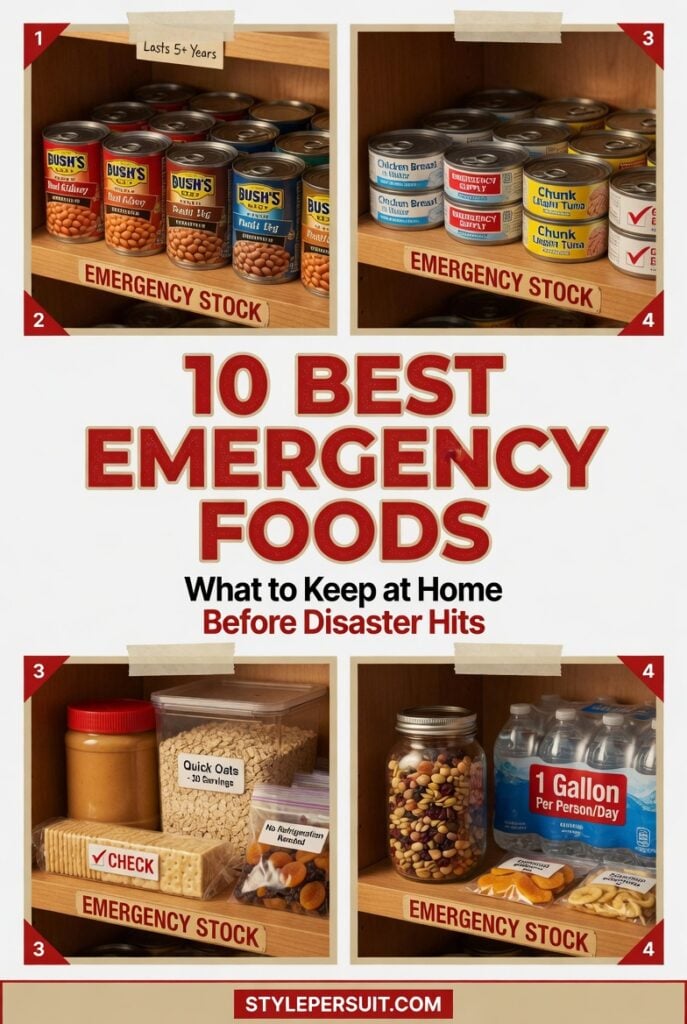
Emergency food is one of those things you do not think much about until you suddenly need it.
A storm knocks out power. Roads flood. A snowstorm traps everyone inside. The water supply becomes unsafe. Or maybe you simply cannot get to the store for a few days.
That is why having a small emergency food supply at home is not dramatic — it is practical.
The best emergency foods are non-perishable, easy to prepare, filling, familiar, and shelf-stable. You want foods that do not need refrigeration, complicated cooking, or a lot of water. Ready.gov recommends storing at least a several-day supply of non-perishable food, while the Red Cross recommends non-perishable, easy-to-prepare food for a 3-day evacuation supply and a 2-week home supply.
Below are 10 of the best emergency foods to keep in your pantry, survival kit, storm kit, or family emergency food supply.
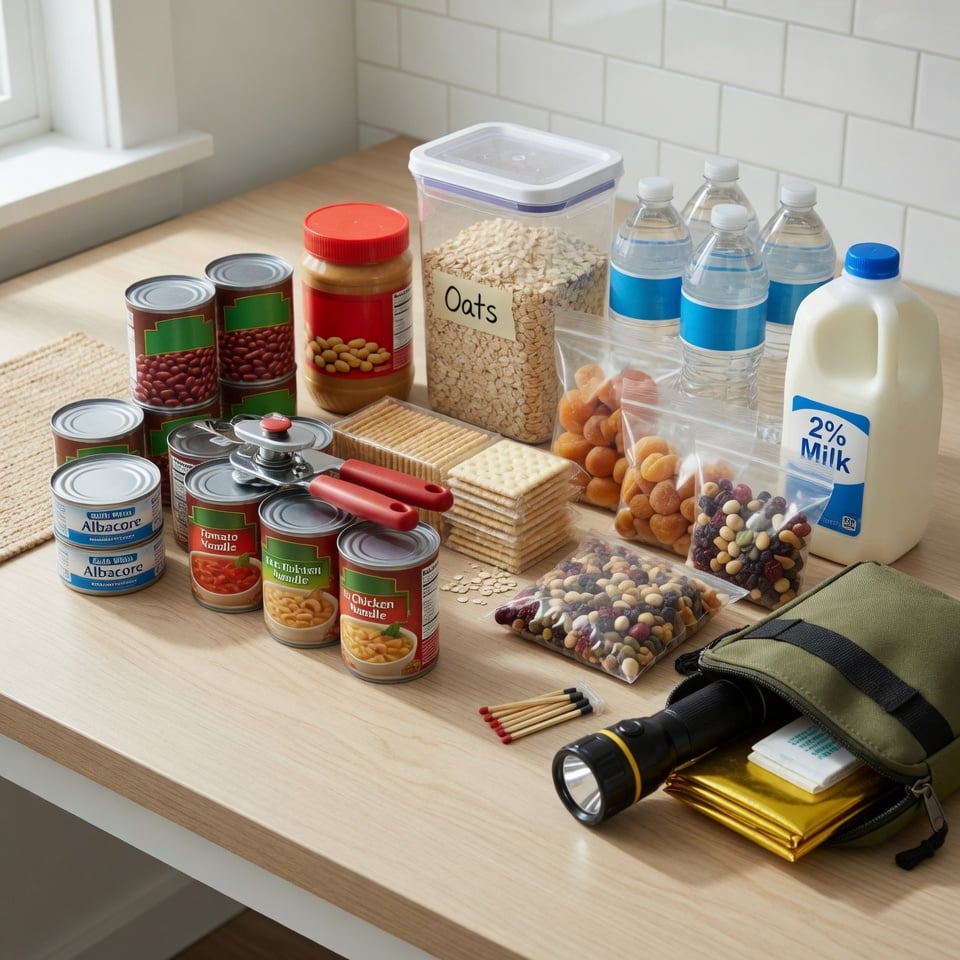
1. Canned Beans
Canned beans are one of the best emergency foods because they are filling, affordable, and easy to use. They provide plant-based protein, fiber, and calories, which makes them more satisfying than snack foods alone.
Good options include black beans, kidney beans, chickpeas, pinto beans, baked beans, and cannellini beans. They can be eaten cold if needed, though they taste better warmed up.
Choose low-sodium cans if possible, and keep a manual can opener in your emergency kit. That little detail matters more than people realize.
Helpful option: Check price on Amazon
2. Canned Tuna, Salmon, Chicken, or Sardines
Canned protein is extremely useful during emergencies because it does not require refrigeration before opening and can be added to crackers, rice, pasta, or canned vegetables.
Tuna, salmon, chicken, sardines, and canned turkey are all good options. Choose pull-tab cans when possible, but do not rely on them completely because tabs can break. Again, keep a can opener.
These foods are especially helpful because emergency meals should not be only carbohydrates. Protein helps make meals feel more complete.
For emergency meals: View options on Amazon
3. Peanut Butter or Nut Butter
Peanut butter is a classic emergency food for a reason. It is calorie-dense, shelf-stable, filling, and does not require cooking.
You can spread it on crackers, bread, tortillas, rice cakes, or eat a spoonful when you need something quick. If someone in your home has a peanut allergy, choose almond butter, sunflower seed butter, or another safe alternative.
Individual packets are especially useful for go-bags, car kits, school bags, and evacuation kits.
Easy add-on: Get it on Amazon
4. Ready-to-Eat Canned Meals
Canned soups, chili, beef stew, ravioli, lentil soup, and canned pasta can make emergency eating feel much more normal.
The Red Cross notes that familiar foods are important because they lift morale and give a feeling of security during stressful situations. (American Red Cross)
Look for meals your family actually likes. In an emergency, that matters. Children especially may struggle if the only foods available are unfamiliar.
Choose options that can be eaten at room temperature if necessary, but can also be warmed if you have a safe cooking method.
5. Rice, Pasta, and Instant Noodles
Rice, pasta, and instant noodles are useful because they are cheap, shelf-stable, and filling. The downside is that they need water and heat, so they are best for home emergency kits where you have a camping stove, gas stove, or safe backup cooking method.
If you want easier options, choose instant rice, couscous, quick-cook pasta, ramen, or ready rice pouches. They need less cooking time and less fuel.
Keep in mind that water is a priority. The Red Cross recommends storing one gallon of water per person per day, with a 3-day supply for evacuation and 2-week supply for home. (American Red Cross)
For backup cooking: Check price on Amazon
6. Oats and Instant Breakfast Packets
Oats are excellent emergency pantry food because they are affordable, filling, and easy to store. Instant oats are especially useful because they only need hot water, and in a pinch, they can soften in cold water or shelf-stable milk.
Choose plain oats if you want flexibility, or instant oatmeal packets for convenience.
You can pair oats with peanut butter, dried fruit, nuts, powdered milk, cinnamon, or honey for a more satisfying meal.
7. Crackers, Rice Cakes, and Shelf-Stable Bread
Crackers and crispbreads are useful because they replace fresh bread when you cannot shop. They pair well with peanut butter, tuna, canned chicken, cheese spreads, hummus cups, or canned beans.
Choose sturdy crackers that do not crush too easily. Whole grain crackers can be more filling, but plain saltines are also useful during stomach upset.
Rotate them often because crackers can go stale faster than canned foods.
8. Dried Fruit, Nuts, and Trail Mix
Dried fruit and nuts are great emergency foods because they are calorie-dense, portable, and easy to eat without cooking.
Good options include raisins, dried cranberries, apricots, banana chips, almonds, peanuts, cashews, walnuts, and trail mix.
Just watch salt and sugar levels. A little salt can be useful, but very salty snacks may make you thirstier, which matters when water is limited.
Helpful option: Shop it on Amazon
9. Powdered Milk, Shelf-Stable Milk, and Protein Drinks
Shelf-stable milk and powdered milk can be helpful for families, especially if you have kids or use milk in oatmeal, cereal, coffee, or simple meals.
Protein shakes or shelf-stable nutrition drinks can also be useful for older adults, people with low appetite, or anyone who needs quick calories and nutrients.
Choose what your household will actually drink. Emergency food should fit real life, not just look good in storage.
10. Freeze-Dried Meals or Emergency Food Kits
Freeze-dried meals and emergency food kits are not always necessary, but they can be very convenient. They are lightweight, long-lasting, and useful for evacuation bags, camping, power outages, and longer-term emergency planning.
The downside is that many freeze-dried meals require hot water. So if you buy them, make sure you also have stored water and a safe way to heat it.
Look for meals with enough calories, protein, and variety — not just a bucket that looks impressive on the outside.
Helpful option: View emergency food kits on Amazon
Bonus: Do Not Forget Water
Technically, water is not food, but it is more important than anything on this list.
You can survive much longer without food than without water, and many emergency foods require water to prepare.
The Red Cross recommends one gallon of water per person per day, with a 3-day supply for evacuation and a 2-week supply for home.
Also keep water purification tablets or a water filter as a backup if possible.
Useful backup: Check price on Amazon
What Makes a Good Emergency Food?
A good emergency food should be:
- Shelf-stable
- Easy to open
- Easy to prepare
- Familiar to your family
- Calorie-dense
- Not too salty
- Not dependent on refrigeration
- Easy to rotate into normal meals
- Safe to store for months or years
The CDC also recommends preparing for food safety during emergencies by keeping appliance thermometers in refrigerators and freezers, having coolers and frozen gel packs ready, and using ice if power may be out for a long time. (CDC)
Simple 3-Day Emergency Food List
For one adult, a simple 3-day emergency food supply could include:
- 3–6 cans of beans, soup, chili, or stew
- 3 cans of tuna, chicken, salmon, or sardines
- 1 jar or several packets of peanut butter
- 1 box crackers
- 3 instant oatmeal packets
- 3 ready rice or noodle packets
- Dried fruit or trail mix
- Shelf-stable milk or protein drinks
- Comfort snacks
- 3 gallons of water
Adjust for children, pets, medical needs, allergies, and food preferences.
Emergency Food Storage Tips
Store emergency food in a cool, dry place. Keep cans away from extreme heat, moisture, and direct sunlight. Rotate foods by using older items first and replacing them with new ones.
A simple system is to write the purchase date on each item with a marker. Place newer items in the back and older items in the front.
Also keep:
- Manual can opener
- Disposable plates
- Utensils
- Paper towels
- Trash bags
- Hand sanitizer
- Matches or lighter
- Backup cooking method
- Pet food if needed
- Baby food if needed
FAQs About Emergency Food
What is the best food to stockpile for emergencies?
The best foods to stockpile are non-perishable, easy-to-prepare foods like canned beans, canned meat or fish, peanut butter, canned meals, oats, rice, pasta, crackers, dried fruit, nuts, shelf-stable milk, and freeze-dried meals.
How much emergency food should I store?
A good starting point is at least a 3-day supply for evacuation and a 2-week supply for home, depending on your space and budget. The Red Cross uses those same time frames for food and water planning. (American Red Cross)
What foods last the longest for emergency storage?
Freeze-dried meals, white rice, dried beans, powdered milk, canned foods, oats, pasta, and emergency ration bars can last a long time when stored properly. Always check expiration dates and rotate your supply.
What emergency food does not need cooking?
Good no-cook emergency foods include canned beans, canned tuna, canned chicken, peanut butter, crackers, dried fruit, nuts, trail mix, protein bars, canned fruit, and ready-to-eat canned meals.
Should I buy an emergency food kit?
Emergency food kits are convenient, especially for long-term storage or evacuation bags. But you can also build a strong emergency pantry with regular grocery-store foods your family already eats.
What should I avoid storing for emergencies?
Avoid foods your family hates, foods that require lots of water, items that spoil quickly, dented or damaged cans, and foods that make you very thirsty if water is limited.
Final Thoughts
The best emergency food is not always the fanciest survival bucket. It is the food your household will actually eat, can prepare easily, and can store safely.
Start simple. Add canned beans, tuna, peanut butter, oats, crackers, dried fruit, canned meals, and water. Then build from there.
A small emergency food supply gives you peace of mind, and if something unexpected happens, you will be glad you prepared before you needed it.