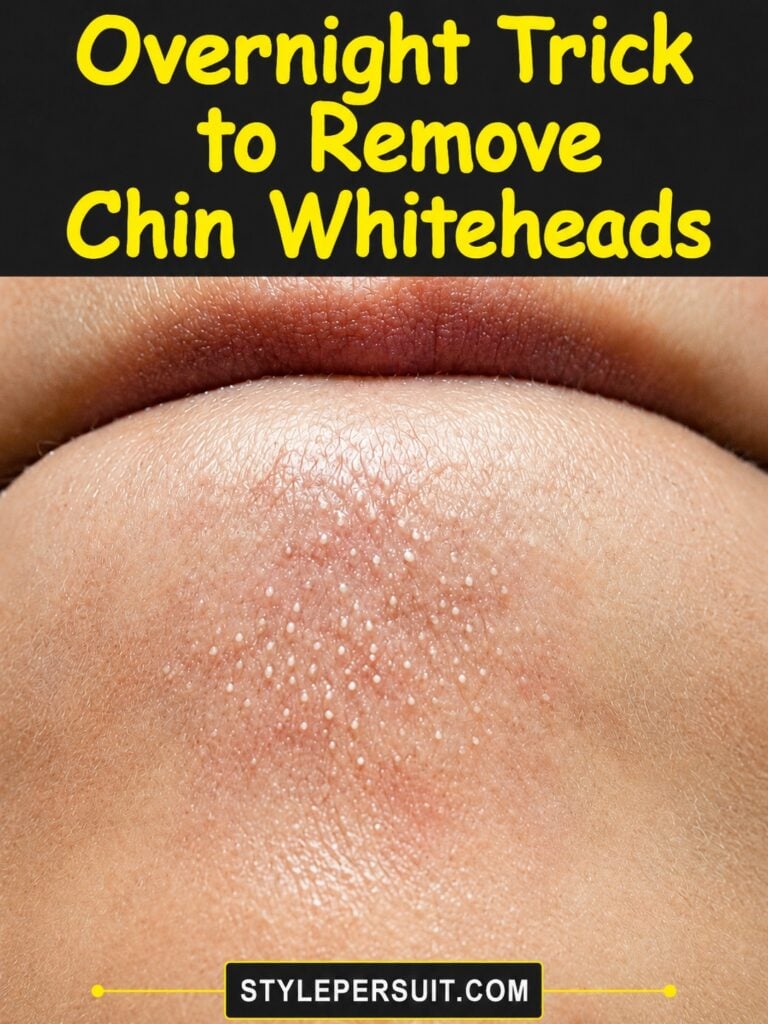
Chin whiteheads are annoying because they always seem to show up in the most noticeable place — under the lower lip, around the mouth, along the jawline, or right in the center of the chin.
And the worst part? They can be stubborn.
You wash your face. You avoid touching them. You try a scrub. Maybe you even try to squeeze one, only to end up with a red angry bump that looks worse than before.
Affiliate Disclosure: This post contains affiliate links. If you buy through links on this page, StylePersuit may earn a small commission at no extra cost to you.
If you’re wondering how to get rid of chin whiteheads, the first thing to understand is that whiteheads are clogged pores.
Cleveland Clinic describes whiteheads as closed bumps that form when oil and dead skin close off a follicle or oil gland. They are also called closed comedones.
The good news is that chin whiteheads can often improve with the right routine. The trick is not to attack your skin.
It’s to gently unclog pores, reduce excess oil, avoid pore-clogging products, and keep your skin barrier calm.
What Are Chin Whiteheads?
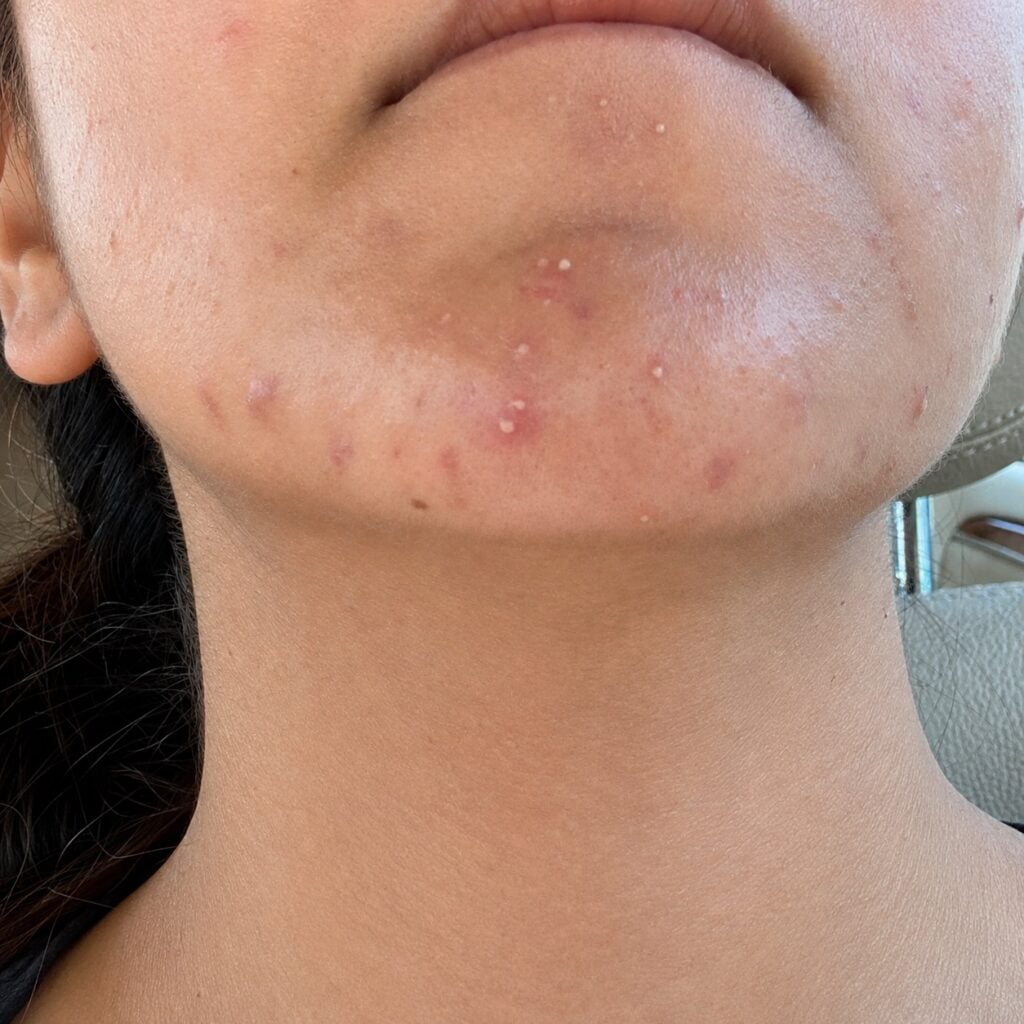
Chin whiteheads are small clogged pores that stay closed at the surface. They may look white, flesh-colored, or slightly raised.
Unlike blackheads, they do not have an open surface exposed to air, so they stay covered by skin.
You may notice:
- Tiny white bumps on the chin
- Flesh-colored bumps under the lower lip
- Rough texture around the mouth
- Small clogged pores along the jawline
- Bumps that do not easily pop
- Whiteheads that keep coming back in the same area
Whiteheads often form when pores or hair follicles become clogged with dead skin cells and sebum, which is your skin’s natural oil.
Cleveland Clinic also notes that increased oil production, hormones, keratin changes, and acne-related bacteria can contribute to comedonal acne.
Why Do Whiteheads Keep Showing Up on the Chin?
The chin is one of those areas that reacts to everything hormones, skincare, lip balm, toothpaste, makeup, sweat, stress, and touching your face.
So before you buy ten new products, it helps to figure out what may be triggering the bumps.
1. Hormonal Chin Breakouts
The chin and jawline are common areas for hormonal breakouts. If your whiteheads get worse before your period, during stressful weeks, after changing birth control, or alongside deeper jawline pimples, hormones may be involved.
Hormonal changes can increase oil production. When that extra oil mixes with dead skin cells, pores can clog more easily.
2. Heavy Skincare Products
Thick creams, greasy sunscreen, rich night masks, heavy facial oils, and pore-clogging makeup can all contribute to chin whiteheads.
If your bumps are mostly around the mouth or lower face, check the products you use near that area. Even lip products can spread onto the chin while you sleep.
A lightweight moisturizer is usually better for acne-prone skin.
Helpful option: Check price on Amazon
3. Lip Balm and Toothpaste Residue
This one is sneaky.
Heavy lip balm, gloss, ointments, and toothpaste residue can collect around the mouth and chin. If your whiteheads appear right under your lower lip or around the chin crease, this could be part of the problem.
Try brushing your teeth before washing your face at night. That way, your cleanser removes leftover toothpaste from around the mouth.
4. Touching Your Chin
Resting your chin on your hand, leaning on your palm, wearing tight masks, or touching your face while working can trap oil, friction, sweat, and bacteria against the skin.
It may seem harmless, but repeated contact can make clogged pores worse.
5. Not Removing Sunscreen or Makeup Properly
Sunscreen and makeup are important, but they need to come off properly at night. If sunscreen, foundation, concealer, or sweat sits on the chin overnight, pores may clog more easily.
A gentle cleanser can help remove buildup without stripping your skin.
For this step: Get it on Amazon
6. Over-Exfoliating
When your chin feels bumpy, it is tempting to scrub harder. But rough scrubs, cleansing brushes, baking soda, lemon juice, and harsh exfoliating masks can irritate your skin barrier.
For whiteheads and closed comedones, gentle chemical exfoliation is usually more helpful than physical scrubbing.
How to Get Rid of Chin Whiteheads
The best way to get rid of chin whiteheads is to build a simple routine that clears clogged pores without irritating your skin.
The American Academy of Dermatology’s acne guideline supports several topical acne treatments, including benzoyl peroxide, topical retinoids, salicylic acid, and azelaic acid. (American Academy of Dermatology)
For mild chin whiteheads, you usually do not need a complicated routine. Start with the basics.
Step 1: Use a Gentle Cleanser Morning and Night
A gentle cleanser removes oil, sweat, sunscreen, makeup, and product buildup from the chin area. It should leave your skin feeling clean, not tight or burning.
Use it:
- In the morning
- At night
- After sweating
- After wearing makeup or sunscreen
Avoid harsh bar soaps or scrubs. If your cleanser makes your skin feel squeaky, dry, or irritated, it may be too strong.
Helpful option: Check price on Amazon
Step 2: Use Salicylic Acid for Clogged Chin Pores
Salicylic acid is one of the most useful ingredients for chin whiteheads because it helps exfoliate inside oily pores. It is especially helpful for clogged pores, rough texture, blackheads, and closed comedones.
Start slowly.
Try this:
- Use it 2–3 nights per week at first
- Apply a thin layer if using a leave-on product
- Moisturize afterward
- Stop or reduce use if your skin stings, burns, or flakes badly
Do not use salicylic acid multiple times a day just because you want fast results. More is not always better.
Recommended: Check price on Amazon
For a leave-on exfoliant:
Try this: View options on Amazon
Step 3: Try Adapalene for Stubborn Chin Whiteheads
If your chin whiteheads keep coming back, adapalene may help. Adapalene is a topical retinoid commonly used for acne. Retinoids help support normal skin cell turnover, which can prevent pores from clogging over time.
The AAD notes that topical retinoids are commonly used acne treatments, and it recommends applying retinoids as directed, often in the evening, while protecting skin from the sun. (American Academy of Dermatology)
Use adapalene carefully:
- Apply at night
- Start 2–3 nights per week
- Use a pea-sized amount for the whole face
- Avoid the lips and corners of the mouth
- Moisturize well
- Use sunscreen every morning
Do not use retinoids if you are pregnant, trying to become pregnant, or breastfeeding unless your doctor says it is safe.
Recommended: Get it on Amazon
Step 4: Use Benzoyl Peroxide for Red or Inflamed Pimples
If your chin whiteheads sometimes turn into red, sore pimples, benzoyl peroxide may help. The AAD explains that benzoyl peroxide reduces acne-causing bacteria and is often most effective when used with another acne treatment that targets other causes of acne. (American Academy of Dermatology)
Benzoyl peroxide can be drying, so start gently. A wash may be easier to tolerate than a leave-on treatment.
Use it as:
- A short-contact cleanser
- A spot treatment
- A thin layer on breakout-prone areas
Be careful because benzoyl peroxide can bleach towels, pillowcases, and clothing.
Helpful option: Check price on Amazon
Step 5: Moisturize Even If Your Skin Is Oily
A lot of people skip moisturizer because they think it will make acne worse. But dry, irritated skin can make acne treatments harder to tolerate.
The key is to choose the right moisturizer. Look for something lightweight, oil-free, and non-comedogenic.
Helpful ingredients include:
- Glycerin
- Hyaluronic acid
- Ceramides
- Niacinamide
- Aloe vera
A good moisturizer helps your skin barrier stay calm while you use salicylic acid, benzoyl peroxide, or adapalene.
For this step: Shop it on Amazon
Step 6: Wear Non-Comedogenic Sunscreen Every Morning
Sunscreen is important, especially if you are using acne treatments. The AAD recommends non-comedogenic sunscreen that offers broad-spectrum protection, SPF 30 or higher, and water resistance. (American Academy of Dermatology)
Choose a sunscreen that feels lightweight and does not leave your chin greasy.
Recommended: Check price on Amazon
Step 7: Stop Picking or Squeezing
I know. This is the hardest step.
But squeezing chin whiteheads can turn a tiny clogged pore into a red, inflamed bump. It can also leave dark marks or scars.
If a whitehead feels tight or irritated, use a warm compress for a few minutes, then apply your treatment and leave it alone.
If a pimple has already come to a head, a hydrocolloid patch can help protect it from picking.
Helpful option: Get it on Amazon
Simple Morning Routine for Chin Whiteheads
Your morning routine should be simple and protective.
Morning Routine
- Gentle cleanser
- Lightweight moisturizer
- Non-comedogenic sunscreen
If you use benzoyl peroxide in the morning, apply it carefully and follow with moisturizer and sunscreen.
Simple Night Routine for Chin Whiteheads
Nighttime is when you can focus more on clogged pores.
Night Routine
- Gentle cleanser
- Salicylic acid or adapalene
- Lightweight moisturizer
Do not start salicylic acid and adapalene every night at the same time. That can irritate your skin.
A beginner-friendly schedule could look like this:
- Monday: salicylic acid
- Tuesday: moisturizer only
- Wednesday: adapalene
- Thursday: moisturizer only
- Friday: salicylic acid
- Saturday: moisturizer only
- Sunday: adapalene or rest night
This gives your skin time to adjust.
Best Products to Help Clear Chin Whiteheads
You do not need a huge skincare shelf. A few good products are enough.
1. Gentle Face Cleanser
A gentle cleanser helps remove oil, sweat, sunscreen, and makeup without stripping your skin.
Start here: Check price on Amazon
2. Salicylic Acid Cleanser or Exfoliant
Salicylic acid is helpful for clogged pores, rough texture, blackheads, and whiteheads.
For clogged pores: Get it on Amazon
3. Adapalene Gel
Adapalene can help stubborn closed comedones and recurring whiteheads over time.
For stubborn bumps: Check price on Amazon
4. Benzoyl Peroxide Wash
Benzoyl peroxide is useful if your whiteheads often turn into red, inflamed pimples.
Helpful option: View on Amazon
5. Lightweight Moisturizer
A lightweight moisturizer helps your skin handle acne treatments without becoming overly dry.
For daily use: Shop it on Amazon
6. Non-Comedogenic Sunscreen
Daily sunscreen protects your skin and helps prevent dark marks from looking worse.
Daily essential: Check price on Amazon
7. Hydrocolloid Pimple Patches
Pimple patches are useful if you pick at spots or need to protect a healing bump.
Easy add-on: Get it on Amazon
8. Clay Mask for Oily Skin
A clay mask can help absorb excess oil once or twice a week. Do not use it every day, and avoid leaving it on until your skin feels tight and cracked.
Optional weekly step: View options on Amazon
DIY Remedies for Chin Whiteheads
DIY skincare should be gentle. Some home remedies can calm the skin, but others can make whiteheads worse.
Gentle DIY Options That May Help
Warm Compress
A warm compress can soften the skin and make clogged pores feel less tight.
Soak a clean cloth in warm water. Press it gently on your chin for 5–10 minutes. Pat dry. Do not scrub.
This will not magically clear deep whiteheads overnight, but it can soothe irritation and make the area feel calmer.
Honey Mask
Plain honey can feel soothing on irritated skin.
Apply a thin layer to clean skin for 10–15 minutes, then rinse gently. This is not a replacement for acne treatment, but it can be a calming option when your skin feels irritated.
Aloe Vera Gel
Plain aloe vera gel can help calm skin that feels dry or irritated from acne products.
Apply a light layer after cleansing, then follow with moisturizer if needed.
Helpful option: Get it on Amazon
DIY Remedies to Avoid
Avoid using these on chin whiteheads:
- Lemon juice
- Baking soda
- Toothpaste
- Harsh sugar scrubs
- Salt scrubs
- Rubbing alcohol
- Undiluted essential oils
- Coconut oil if you are acne-prone
These can irritate the skin, damage your barrier, or clog pores.
How Long Does It Take to Get Rid of Chin Whiteheads?
Chin whiteheads usually do not disappear overnight.
You may notice some improvement in 2–4 weeks, but stubborn closed comedones can take 6–12 weeks to improve clearly.
That is why consistency matters. Do not switch products every few days unless your skin is burning, swelling, peeling badly, or reacting strongly.
Common Mistakes That Make Chin Whiteheads Worse
Using Too Many Acne Products at Once
Do not use a scrub, salicylic acid, benzoyl peroxide, retinoid, clay mask, and exfoliating toner all in one routine. That is too much for most skin.
Skipping Moisturizer
Moisturizer helps your skin tolerate acne treatments better.
Sleeping in Makeup or Sunscreen
Even non-comedogenic products can clog pores if left on overnight.
Letting Lip Balm Spread Onto the Chin
Heavy lip products can migrate while you sleep. Keep lip balm on your lips, not the skin around your mouth.
Picking at Tiny Bumps
Picking usually makes whiteheads bigger, redder, and more noticeable.
When to See a Dermatologist
See a dermatologist if:
- Chin whiteheads do not improve after 8–12 weeks
- You have painful cystic acne
- Breakouts leave dark marks or scars
- Your skin burns or reacts to many products
- Acne appears suddenly and severely
- Your chin and jawline breakouts seem hormonal
- You are pregnant and unsure which acne products are safe
A dermatologist can recommend prescription treatments if over-the-counter options are not enough.
FAQs About Chin Whiteheads
How do I get rid of whiteheads on my chin fast?
You can make chin whiteheads look calmer by cleansing gently, using a warm compress, applying salicylic acid, and avoiding picking. But true closed comedones usually take time to clear. A steady routine works better than harsh scrubbing.
Why do I keep getting whiteheads on my chin?
Recurring chin whiteheads may be caused by hormones, excess oil, clogged pores, heavy skincare products, lip balm, toothpaste residue, touching your face, makeup, sunscreen buildup, or not cleansing properly at night.
Is salicylic acid good for chin whiteheads?
Yes. Salicylic acid can help with chin whiteheads because it works well for oily clogged pores and rough texture. Start slowly to avoid dryness or irritation.
Should I pop chin whiteheads?
It is better not to pop chin whiteheads. Squeezing can cause redness, irritation, dark marks, and scarring.
Can toothpaste cause chin whiteheads?
Toothpaste residue can irritate the skin around the mouth and chin for some people. Try brushing before washing your face at night so you cleanse away any residue.
What is the best product for chin whiteheads?
A simple routine may include a gentle cleanser, salicylic acid, adapalene, lightweight moisturizer, and sunscreen. If the bumps become red or inflamed, benzoyl peroxide may help.
Are chin whiteheads hormonal?
They can be. Chin and jawline breakouts are often linked with hormonal changes, especially if they flare before your period or appear with deeper pimples.
Can diet cause chin whiteheads?
Diet affects people differently. Some people notice breakouts after high-sugar foods or dairy, while others do not. If you suspect a food trigger, track your skin for a few weeks before making big changes.
Final Thoughts
Getting rid of chin whiteheads is not about punishing your skin. It is about gently unclogging pores and building a routine your skin can tolerate.
Start with a gentle cleanser. Add salicylic acid or adapalene slowly. Moisturize well. Wear sunscreen every morning. Watch for sneaky triggers like lip balm, toothpaste residue, heavy creams, and touching your chin.
With consistency, chin whiteheads can improve — not instantly, but steadily. And that steady progress is usually what gives you the clearest, longest-lasting results.