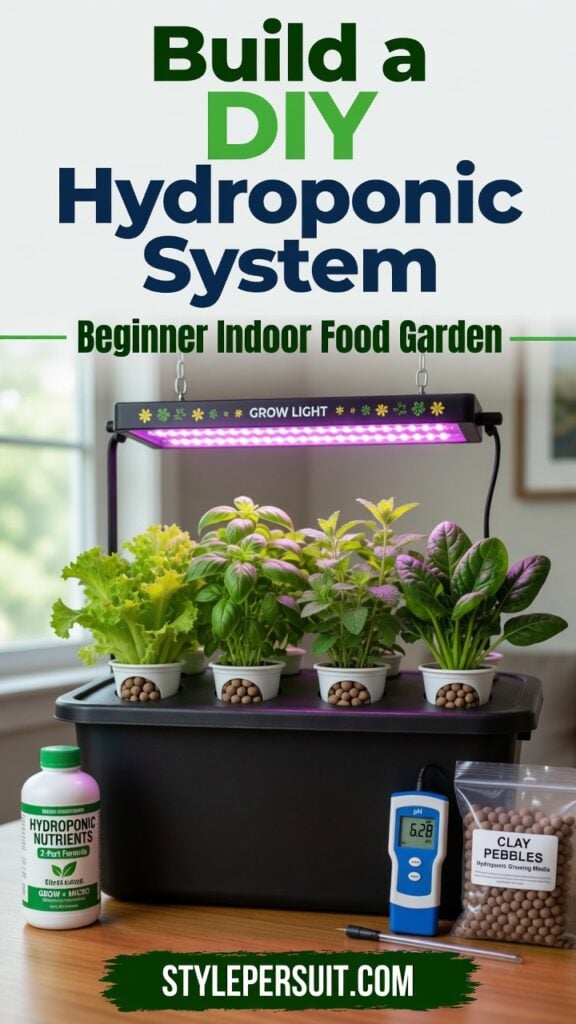
Growing food indoors sounds fancy until you realize a simple hydroponic system can be made with basic supplies, a small container, water, nutrients, and a little light.
You do not need a greenhouse. You do not need a huge backyard. And you definitely do not need to be an expert gardener.
A DIY hydroponic system lets you grow herbs, leafy greens, and small vegetables indoors without soil. Instead of roots searching through dirt for nutrients, the plants grow in water mixed with a balanced nutrient solution.
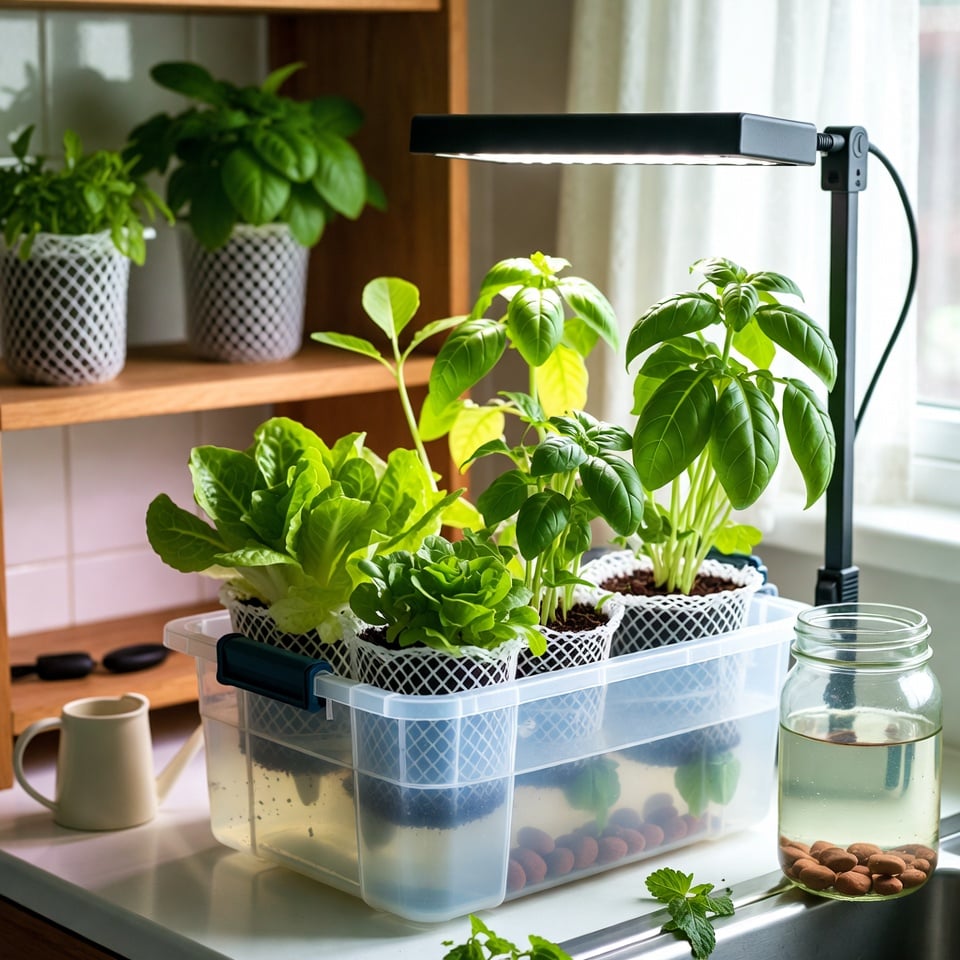
Hydroponics is simply growing plants with a water-based nutrient solution instead of soil, often with a growing medium like coco coir, perlite, vermiculite, clay pebbles, or rockwool to support the plant roots.
For beginners, the easiest indoor hydroponic garden is usually a Kratky hydroponic system or a small deep water culture system. Both are simple, affordable, and great for growing lettuce, basil, spinach, kale, mint, cilantro, parsley, and other beginner-friendly indoor food plants.
This guide will show you how to build a DIY hydroponic system for beginners, what supplies you need, which plants to grow first, how to mix nutrients, how to manage light, and how to avoid the common mistakes that make new growers give up too soon.
What Is a DIY Hydroponic System?
A DIY hydroponic system is a homemade soilless garden where plants grow with their roots in or near nutrient-rich water. Instead of planting seeds in outdoor garden soil, you place seedlings or starter plugs into net cups, support them with a growing medium, and let the roots reach the nutrient solution below.
The reason hydroponics works is simple: plants still get what they need. They need light, air, water, nutrients, warmth, and space. Hydroponic systems can work indoors or outdoors as long as those basic needs are met. The University of Nevada Extension notes that hydroponic growing can be done in homes, apartments, greenhouses, or offices, and plants need light, air, water, nutrients, heat, and space to grow well.
For a beginner indoor food garden, hydroponics can be especially helpful if you:
- Live in an apartment
- Have no backyard
- Want fresh herbs indoors
- Want to grow lettuce in a small space
- Want a low-mess garden without soil
- Want to grow food during winter
- Want a fun DIY gardening project
And honestly, there is something very satisfying about clipping fresh basil, lettuce, or mint from a little system you built yourself.
Best DIY Hydroponic System for Beginners
For your first setup, keep it simple. The goal is not to build a complicated indoor farm. The goal is to create a beginner hydroponic system that actually works.
The easiest options are:
1. Kratky Hydroponic System
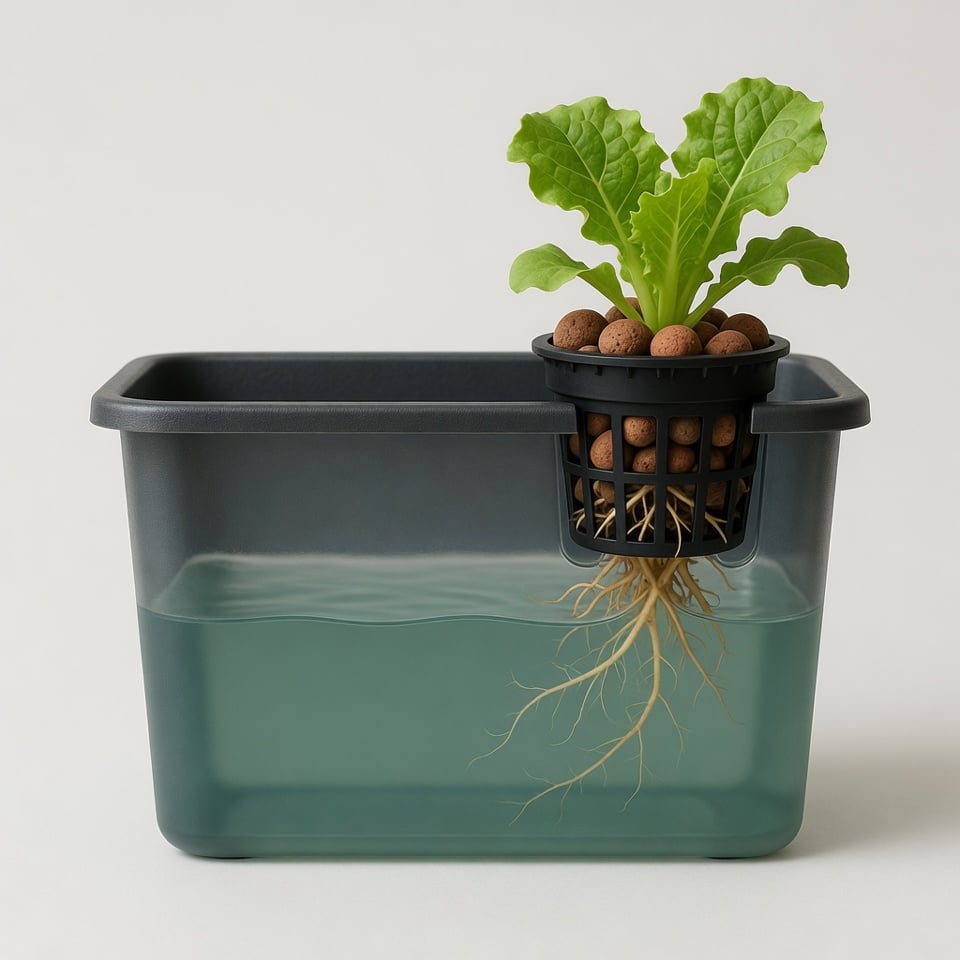
The Kratky method is one of the easiest hydroponic systems for beginners because it does not need a pump, electricity, or moving water. You use a container filled with nutrient solution, place a plant in a net cup above it, and let the roots grow down into the water.
As the plant drinks, the water level drops. This creates an air gap where the roots can access oxygen.
This system is perfect for:
- Lettuce
- Basil
- Mint
- Spinach
- Kale
- Bok choy
- Cilantro
- Parsley
It is simple, quiet, cheap, and great for an indoor food garden.
2. Deep Water Culture System
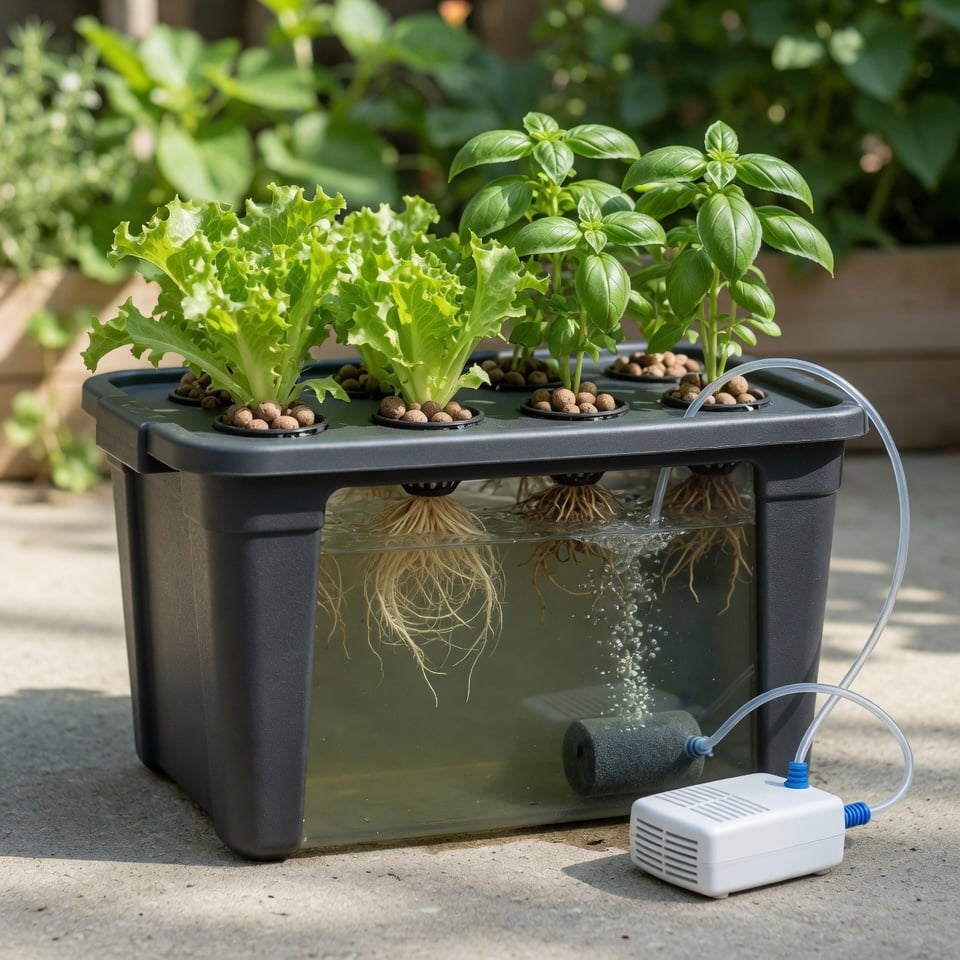
A deep water culture system, often called DWC, is slightly more active. The plant roots sit in nutrient-rich water, and an air pump with an air stone adds oxygen to the water.
This is helpful because roots need oxygen too. A DWC setup can grow leafy greens and herbs very well, and it is still beginner-friendly.
This system is good for:
- Lettuce
- Basil
- Swiss chard
- Kale
- Spinach
- Herbs
- Small pepper plants, once you have more experience
Active hydroponic systems use pumps or aerators to deliver oxygen and nutrients, while passive systems like Kratky rely on simpler setups. Beginner growers often start with passive systems because they require less equipment and maintenance.
3. Mason Jar Hydroponic Garden
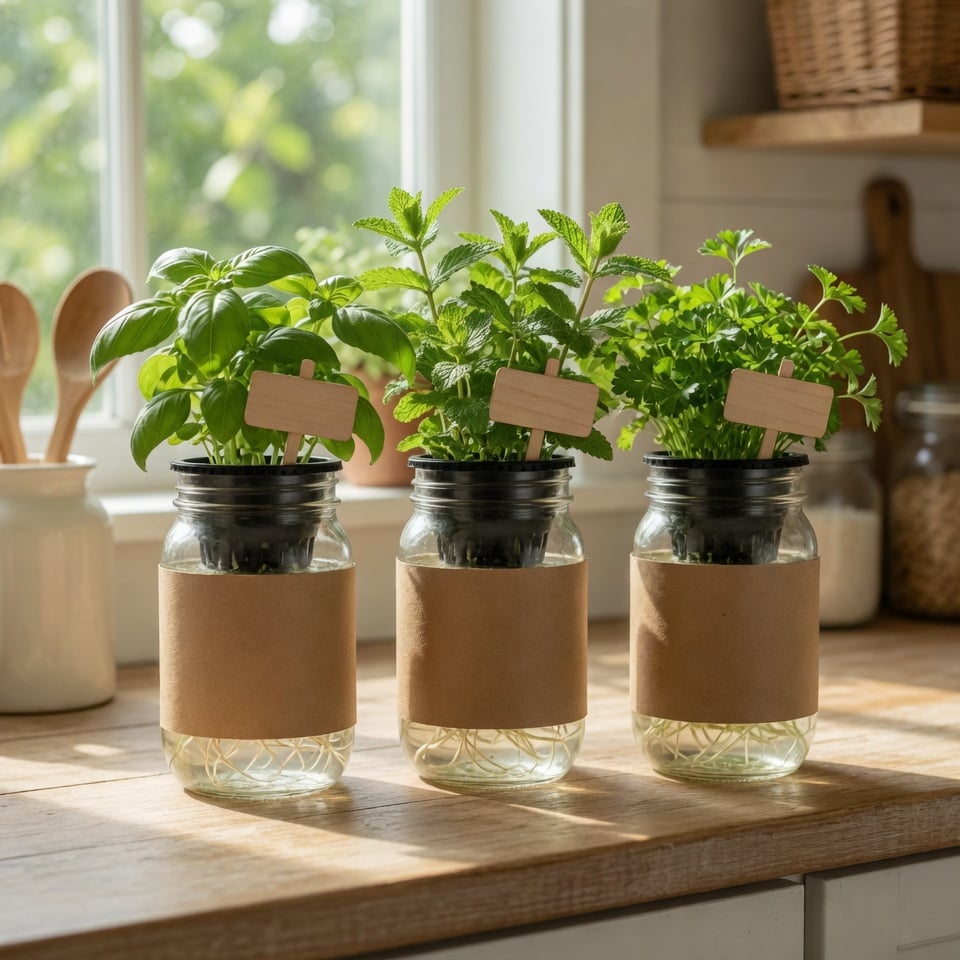
A mason jar hydroponic garden is basically a small Kratky system. It is cute, compact, and perfect for windowsills, kitchen counters, or shelves with grow lights.
This is best for herbs like:
- Basil
- Mint
- Parsley
- Cilantro
- Oregano
- Lettuce seedlings
If you want a Pinterest-friendly DIY indoor garden, mason jar hydroponics is one of the prettiest beginner options.
Supplies You Need to Build a DIY Hydroponic System
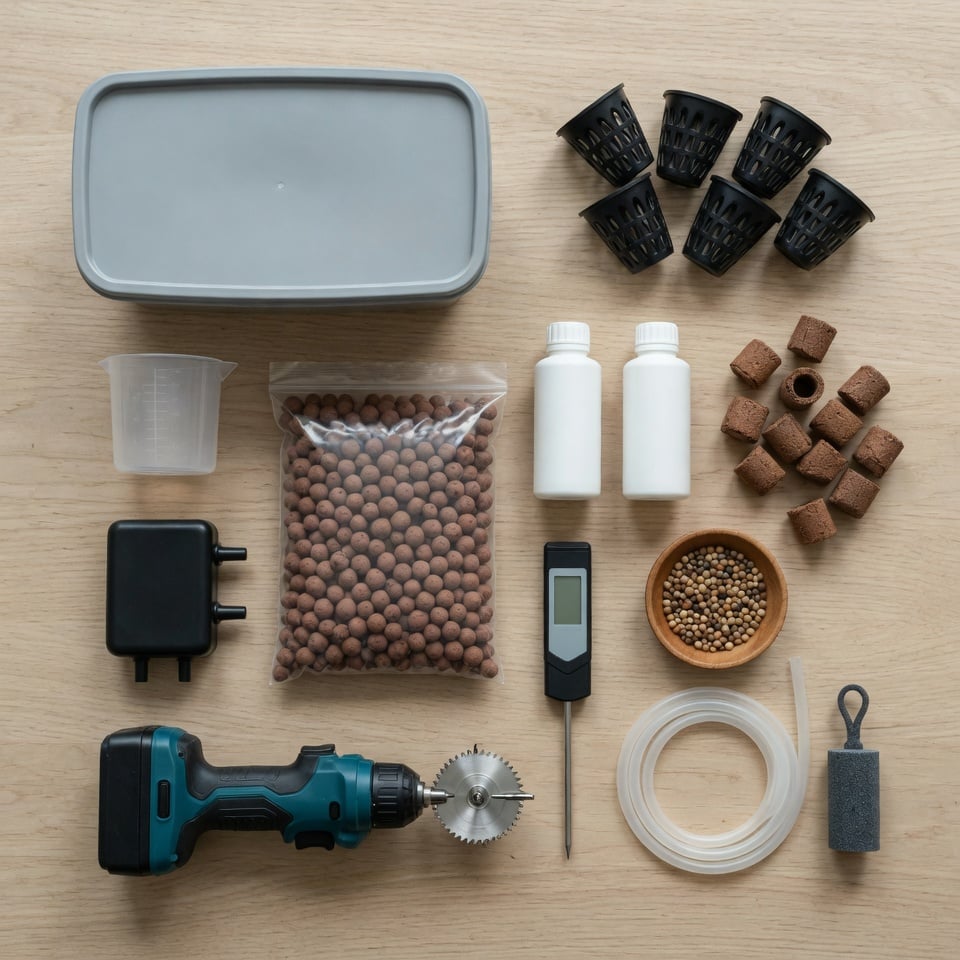
You do not need expensive equipment to start. A basic DIY hydroponic system can be made with affordable supplies.
Basic Supplies
- Opaque plastic container, storage tote, bucket, or mason jar
- Net cups
- Hydroponic growing medium
- Hydroponic nutrients
- Water
- pH test kit or pH meter
- pH up and pH down solution
- Seeds or seedlings
- Grow light or bright natural light
- Drill or hole saw
- Marker
- Measuring cup
- Optional air pump and air stone
Use an opaque container if possible. Clear containers let light reach the water, and that can encourage algae growth. If you use mason jars, wrap them in kraft paper, black fabric, foil, or paint the outside so light does not hit the nutrient water.
Best Plants for a Beginner Indoor Hydroponic Garden
Start with easy plants. This matters more than people think.
Some plants are forgiving. Others are dramatic.
For your first DIY hydroponic garden, choose leafy greens and herbs because they grow faster, stay smaller, and do not need fruiting support like tomatoes or cucumbers.
Easy Hydroponic Plants for Beginners
- Lettuce
- Basil
- Mint
- Spinach
- Kale
- Bok choy
- Swiss chard
- Arugula
- Cilantro
- Parsley
- Watercress
Small-scale hydroponics is a good option for people with little or no gardening space, and it can be used to grow greens, herbs, vegetables, and fruit year-round.
Plants to Avoid at First
Beginners may want to wait before growing:
- Tomatoes
- Cucumbers
- Melons
- Large peppers
- Squash
- Corn
- Root vegetables
These plants can be grown hydroponically, but they usually need more light, more space, stronger support, more nutrients, and more attention.
How to Build a DIY Hydroponic System Step by Step
This beginner setup uses a storage container and net cups. It is simple, affordable, and works well for lettuce and herbs.
Step 1: Choose Your Container
Pick an opaque container with a lid. A small storage tote, food-safe bucket, or wide plastic container works well.
For beginners, a container between 1 and 5 gallons is usually enough. If you are growing several lettuce plants, a larger tote gives the roots more room.
Avoid clear containers unless you plan to block light from reaching the water. Light plus nutrients plus water can lead to algae.
Step 2: Mark Holes for the Net Cups
Place your net cups upside down on the lid and trace around them with a marker.
Leave enough space between plants. Lettuce may need 6 to 8 inches between cups. Herbs can often grow a little closer, but basil gets bushy, so give it room.
For a small tote, start with 4 to 6 plants. It is better to grow fewer healthy plants than overcrowd the system.
Step 3: Cut the Holes
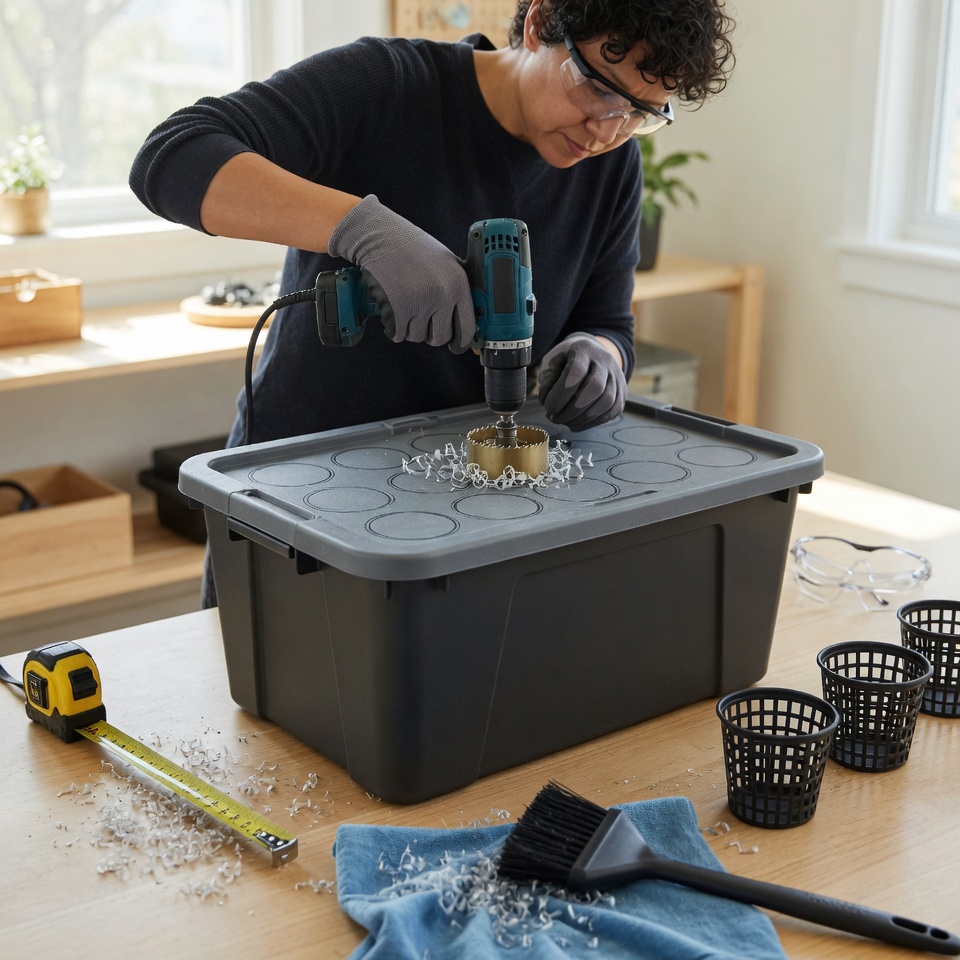
Use a drill with a hole saw attachment to cut holes in the lid. The holes should be just large enough for the net cups to sit securely without falling through.
After cutting, wipe away plastic dust and rinse the lid.
Safety note: Wear eye protection when drilling plastic, and work slowly so the lid does not crack.
Step 4: Add Water to the Reservoir
Fill your container with clean water. If your tap water is heavily chlorinated, let it sit uncovered for 24 hours before mixing nutrients, or use filtered water.
Do not fill all the way to the top. You want the bottom of the net cup or starter plug to touch the water at first, especially if seedlings do not have long roots yet.
Once roots grow down into the solution, the water level can sit lower.
Step 5: Mix Hydroponic Nutrients
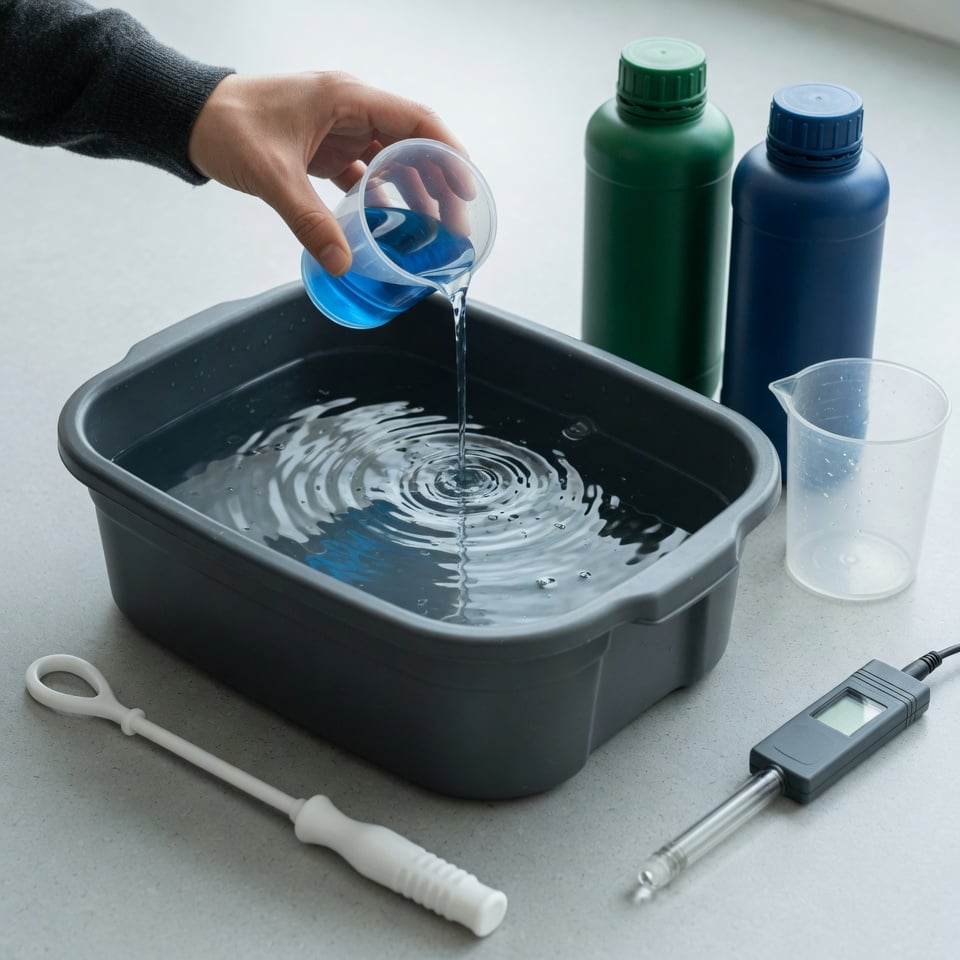
Hydroponic plants need nutrients because they are not getting minerals from soil. In soil gardening, nutrients are held and released by soil particles. In hydroponics, nutrients are dissolved in water as a nutrient solution.
UNH Extension notes that calculating, mixing, and maintaining the nutrient solution can be one of the trickiest parts of planning and running a hydroponic system.
Use a beginner-friendly liquid hydroponic nutrient made for leafy greens or general vegetables. Follow the label exactly. Do not guess.
More nutrients do not mean faster growth. Too much fertilizer can burn roots or stress plants.
For your first indoor hydroponic food garden, start with a mild nutrient mix. Many beginners do better with slightly weaker nutrients than with an overly strong solution.
Step 6: Check and Adjust pH
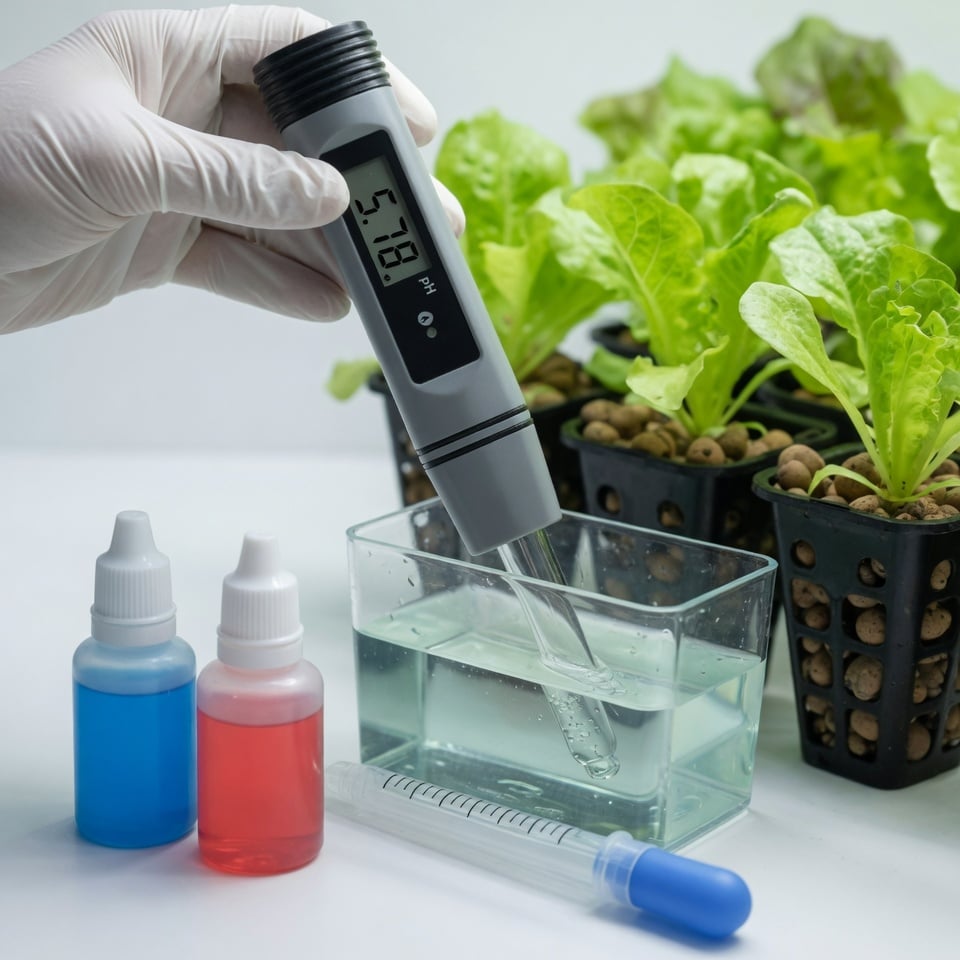
This is the part beginners often skip, but it matters.
The pH affects how well plants can absorb nutrients. Oklahoma State University Extension explains that hydroponic nutrient solutions are commonly maintained around pH 5 to 6, often near 5.5, so the root environment stays in a range where nutrients are available.
For most beginner leafy greens and herbs, aim for a pH around 5.5 to 6.5.
Use a pH test kit or digital pH meter. If the pH is too high, use pH down. If it is too low, use pH up. Add tiny amounts, mix, and test again.
Do not panic over small changes. Just check regularly and adjust slowly.
Step 7: Add Seedlings to Net Cups
You can start seeds in rockwool cubes, coco plugs, peat plugs, or another hydroponic-friendly starter medium.
Once seedlings have a few true leaves and visible roots, place them into net cups. Add clay pebbles or another growing medium around the plug to hold it steady.
Do not bury the crown of the plant too deeply. The roots need access to moisture, but the stem should not sit wet all the time.
Step 8: Add Light
Indoor food gardens need enough light. A sunny window may work for herbs, but many indoor hydroponic systems grow better with a simple LED grow light.
Leafy greens and herbs usually need around 12 to 16 hours of light per day indoors. Keep the light close enough to prevent leggy growth, but not so close that leaves burn.
If plants stretch toward the light, they need more light. If leaves look scorched or curled near the top, the light may be too strong or too close.
Step 9: Add Air Pump if Using DWC
If you are building a deep water culture system, connect an air pump to airline tubing and an air stone. Place the air stone in the nutrient solution.
The bubbles add oxygen to the water and help keep roots healthier.
If you are using the Kratky method, you can skip the air pump.
Step 10: Monitor Your Plants Weekly
Once your system is running, check it regularly.
Every few days, look at:
- Water level
- pH
- Root color
- Leaf color
- Plant growth
- Algae
- Smell of water
- Light position
Healthy roots are usually white or cream-colored. If roots turn brown, slimy, or smell bad, your system may need more oxygen, cleaner water, or better temperature control.
DIY Mason Jar Hydroponic System for Herbs
If you want the easiest small beginner project, try a mason jar herb garden.
Supplies
- Wide-mouth mason jar
- 3-inch net cup
- Clay pebbles
- Basil, mint, or parsley seedling
- Hydroponic nutrients
- Water
- pH test kit
- Paper, fabric, paint, or jar sleeve to block light
Steps
Fill the mason jar with nutrient solution. Adjust pH. Place the seedling in the net cup with clay pebbles. Set the net cup into the mouth of the jar. Make sure the roots or bottom of the starter plug can reach moisture.
Then cover the jar so light does not hit the water. Place it under a grow light or in a bright spot.
This is a beautiful DIY hydroponic herb garden for a kitchen counter, but keep expectations realistic. Mason jars work best for herbs and small greens, not big fruiting plants.
DIY Storage Tote Hydroponic System for Lettuce
This is the better option if you want to grow indoor food regularly.
Supplies
- Opaque storage tote with lid
- 2-inch or 3-inch net cups
- Hole saw
- Lettuce seedlings
- Clay pebbles
- Hydroponic nutrients
- pH kit
- Optional air pump and air stone
Steps
Cut holes in the lid, fill the tote with water and nutrients, adjust pH, place seedlings in net cups, and set the lid on top. Use a grow light for consistent growth.
For a passive Kratky system, leave an air gap as the water level drops. For deep water culture, add an air pump and air stone.
This is one of the best DIY hydroponic systems for beginners because it gives roots more room and keeps the setup easy to manage.
Best Indoor Location for a Hydroponic Garden
Choose a spot that is:
- Near an outlet
- Away from extreme heat
- Away from cold drafts
- Easy to check daily
- Safe from pets or children
- Level and stable
- Close to water if possible
A kitchen, laundry room, sunny shelf, spare room, or indoor plant corner can work well.
Avoid putting the system where water spills could damage floors or electronics. Use a tray underneath if needed.
How Often Should You Change Hydroponic Water?
For a small beginner system, change the nutrient solution about every 1 to 2 weeks, or sooner if it smells bad, looks dirty, or becomes unbalanced.
Top off water as plants drink, but remember that topping off is not the same as a full change. Over time, nutrients can become imbalanced.
A simple routine:
- Check water level every 2 to 3 days
- Check pH once or twice a week
- Top off with water as needed
- Replace nutrient solution every 1 to 2 weeks
- Clean the container between crops
Common Beginner Hydroponic Mistakes
Using Clear Containers
Clear containers encourage algae because light reaches the water. Use opaque containers or cover jars.
Adding Too Much Nutrient
More nutrients do not equal faster growth. Follow the label and start mild.
Ignoring pH
If pH is off, plants may struggle even if nutrients are present.
Not Enough Light
Weak light leads to tall, thin, floppy plants. Use a grow light if your window is not strong enough.
Overcrowding Plants
Tiny seedlings become full plants. Give them room.
Forgetting Airflow
Indoor gardens need airflow. A small fan nearby can help reduce humidity and strengthen plants.
Letting Water Get Too Warm
Warm stagnant water can cause root problems. Keep the system away from hot windows or heat vents.
What Can You Grow in a DIY Indoor Hydroponic Food Garden?
For fast results, start with greens and herbs.
Lettuce
Lettuce is one of the best hydroponic crops for beginners. It grows quickly, does not need deep roots, and can be harvested leaf by leaf.
Basil
Basil loves hydroponic systems when it gets enough light. Pinch it often to make it bushier.
Mint
Mint grows easily and can become very vigorous. Keep it trimmed.
Spinach
Spinach can grow well indoors if temperatures stay cool and light is strong.
Kale
Kale is sturdy and forgiving, though it needs more space than lettuce.
Cilantro
Cilantro can be a little fussy in heat, but it grows nicely in cooler indoor conditions.
How to Harvest Your Indoor Hydroponic Garden
For lettuce, harvest outer leaves first and let the center continue growing. This gives you multiple harvests from one plant.
For herbs, pinch stems above a leaf node. This encourages bushier growth.
Do not remove more than one-third of the plant at once unless you are doing a full harvest.
Wash produce before eating, even if it was grown indoors. Hydroponic systems still need good hygiene, clean hands, clean tools, and safe water handling.
Food Safety Tips for Indoor Hydroponics
Because you are growing food in water, cleanliness matters.
Use clean containers, wash your hands before handling plants, sanitize tools, and avoid letting pets drink from the reservoir. Keep dead leaves out of the water and clean the system between crops.
Food safety is an important part of hydroponic food production, especially because fresh produce is often eaten raw. Virginia Cooperative Extension notes that hydroponic edible crop production has food safety considerations that growers should manage carefully.
Simple rule: if the water smells bad, looks slimy, or grows algae, clean the system.
Beginner DIY Hydroponic Maintenance Checklist
Use this weekly checklist to keep your indoor hydroponic garden healthy:
- Check water level
- Test pH
- Look for yellow leaves
- Check roots
- Remove dead leaves
- Clean algae if needed
- Adjust grow light height
- Top off water
- Check nutrient strength if you have an EC meter
- Harvest mature leaves
You do not need to obsess over the system every hour. Just check it regularly.
FAQs About DIY Hydroponic Systems for Beginners
What is the easiest hydroponic system for beginners?
The easiest hydroponic system for beginners is usually the Kratky method because it does not require pumps, electricity, or complicated plumbing. A mason jar or storage tote Kratky system is great for lettuce, basil, mint, and other small indoor food plants.
Can I build a hydroponic system at home?
Yes, you can build a hydroponic system at home using a container, net cups, growing medium, water, hydroponic nutrients, and a light source. A simple DIY hydroponic system can fit on a shelf, kitchen counter, windowsill, or small indoor growing area.
What foods can I grow indoors with hydroponics?
The best foods to grow indoors with hydroponics are lettuce, basil, mint, parsley, cilantro, spinach, kale, bok choy, arugula, and Swiss chard. These plants are easier than tomatoes, cucumbers, or peppers because they need less space and less intense care.
Do hydroponic plants need sunlight?
Hydroponic plants need light, but it does not have to be sunlight. Indoors, many plants grow better with LED grow lights because the light is more consistent than a window.
Do I need a pump for a DIY hydroponic system?
No, you do not need a pump if you use a Kratky hydroponic system. If you build a deep water culture system, then an air pump and air stone help add oxygen to the water.
Is hydroponic gardening good for apartments?
Yes, hydroponic gardening is great for apartments because it uses less space than traditional gardening and does not require soil. A small indoor hydroponic herb garden or lettuce system can fit on a shelf or counter.
How expensive is a beginner hydroponic system?
A simple DIY hydroponic system can be very affordable, especially if you use a storage tote, mason jars, or recycled food-safe containers. Your main costs are usually net cups, growing medium, hydroponic nutrients, seeds, and a grow light if needed.
Why are my hydroponic plants turning yellow?
Yellow leaves can be caused by weak light, incorrect pH, nutrient imbalance, old water, root problems, or natural aging of older leaves. Start by checking pH, light strength, and the nutrient solution.
Final Thoughts
Building a DIY hydroponic system for beginners is one of the easiest ways to grow an indoor food garden without soil, without a backyard, and without a huge setup.
Start small. Grow lettuce or basil first. Use a simple Kratky jar or storage tote system. Keep the water clean, check pH, give your plants enough light, and avoid overcomplicating the process.
Once your first plants start growing, it becomes addictive in the best way. There is something special about harvesting fresh food from a little indoor garden you built with your own hands.