A rock garden can turn a plain, difficult, or forgotten part of your yard into something beautiful.
It works especially well in places where grass struggles, water drains quickly, the soil is poor, or you simply want landscaping that does not demand constant mowing, watering, and replanting.
The secret to a good rock garden is making it look natural.
Instead of placing a few random stones in a straight line, combine rocks of different sizes with gravel, drought-tolerant plants, ground covers, ornamental grasses, and small shrubs. The goal is to create layers, texture, and movement while still keeping the space easy to maintain.
Rock gardens can work in large backyards, small front yards, narrow side yards, sloped areas, patio corners, and even containers. You do not need a huge landscape or an expensive professional design to make one look good.
These 12 rock garden ideas will help you create a yard that feels polished, peaceful, and naturally connected to the surrounding landscape.
Before You Build a Rock Garden
Spend a little time planning before moving heavy stones or buying plants.
Think about:
- How much sunlight the area receives
- Whether water collects or drains quickly
- The size of the available space
- Which rocks are naturally found in your region
- The colors of your house, fence, and existing landscaping
- How much watering and maintenance you want
- Whether you need a walking path through the space
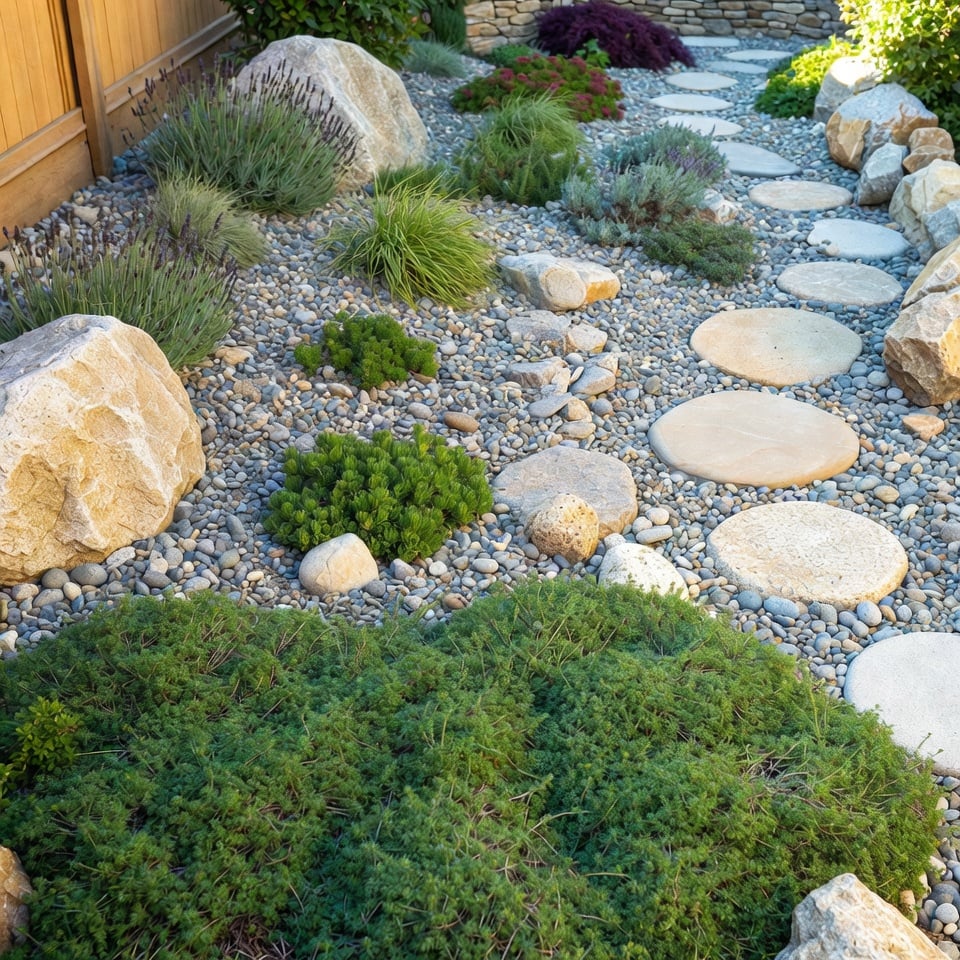
Choose rocks that look related rather than mixing too many unrelated colors and styles. A combination of one main stone type, smaller coordinating rocks, and gravel usually looks more natural than using every stone available at the garden center.
It also helps to repeat plants and rock shapes throughout the design. Repetition makes the garden feel intentional instead of random.
Helpful landscaping supplies: Check rock-garden tools and materials on Amazon
1. Create a Simple Front Yard Rock Garden
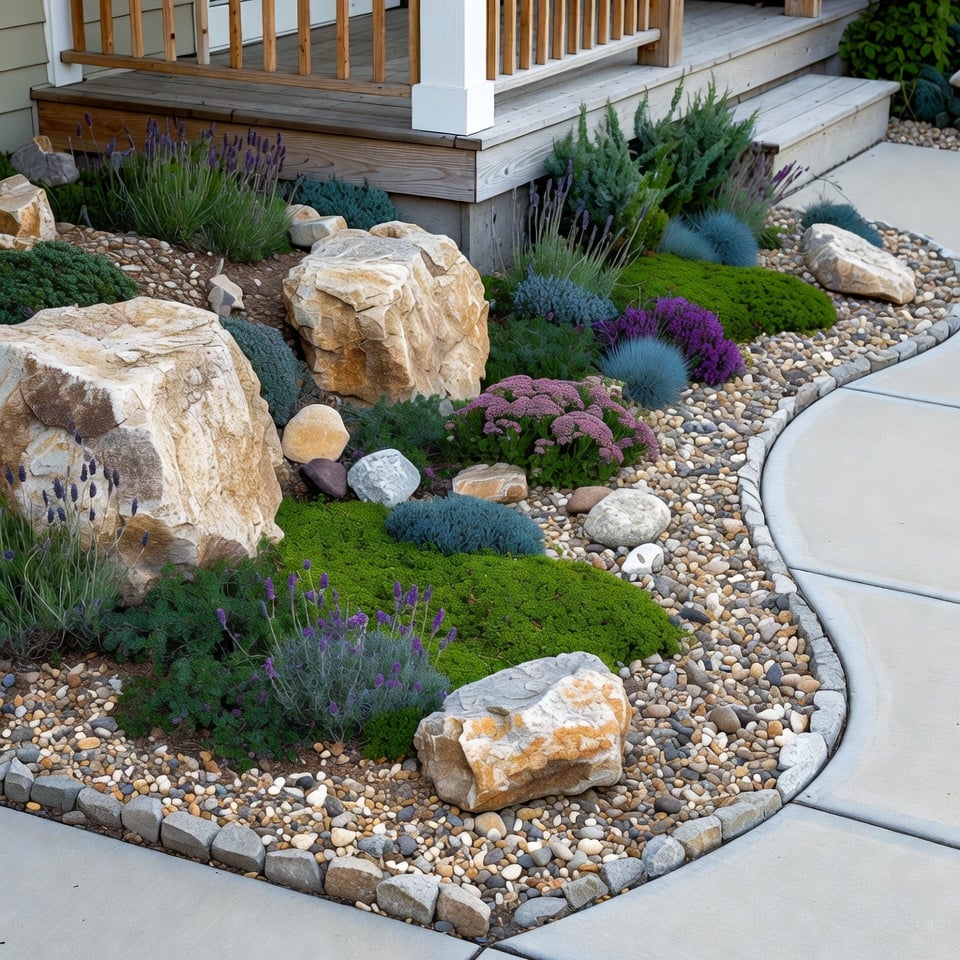
A front yard rock garden can add curb appeal without requiring a large lawn or complicated flower beds.
Start with one clearly defined area near the walkway, mailbox, driveway, or front porch. Use two or three larger stones as anchor points, then surround them with smaller rocks, gravel, and low-growing plants.
Good front-yard plants include:
- Lavender
- Sedum
- Creeping thyme
- Blue fescue
- Dwarf juniper
- Salvia
- Yarrow
- Hens and chicks
Avoid placing every plant the same distance apart. Natural landscapes rarely grow in perfect rows. Instead, plant in small groups and leave a little open gravel between them.
A curved border can make the space feel softer and more inviting. Use metal edging, stone edging, or a shallow trench to keep gravel from spreading into the lawn.
Choose stone colors that complement the house. Warm tan and brown rocks work well with brick and beige exteriors, while gray stone often looks beautiful with white, blue, black, or modern homes.
A small rock garden near the entrance can make the entire property feel more thoughtfully designed.
2. Build a Rock Garden on a Slope
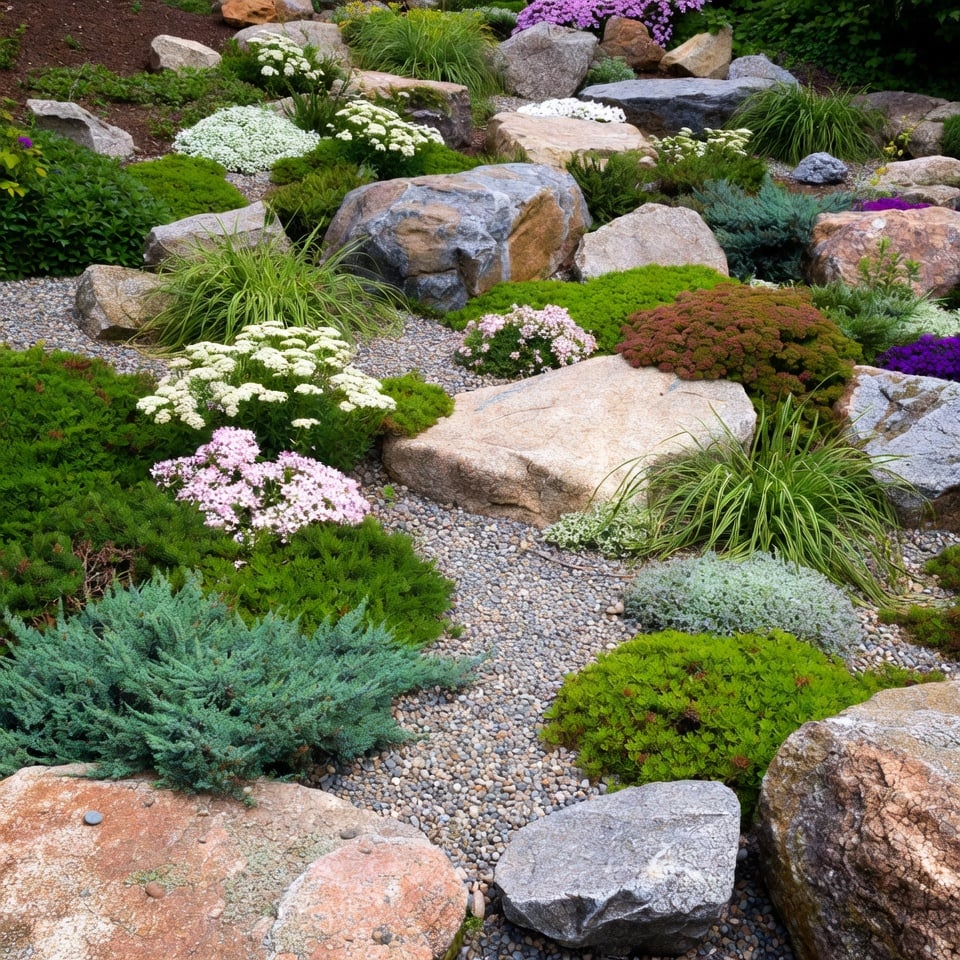
Sloped areas can be difficult to mow and may lose soil during heavy rain.
A rock garden can help create structure while turning the slope into a feature rather than a problem.
Begin by placing large rocks partly into the soil. Burying approximately one-third of each stone often makes it look more natural and stable than setting it directly on top of the ground.
Arrange the rocks in loose terraces so they help slow water and create small planting pockets. Fill those spaces with plants that can handle the slope’s sun and drainage conditions.
Useful plants may include:
- Creeping phlox
- Sedum
- Thyme
- Juniper
- Ice plant
- Yarrow
- Ornamental grasses
- Low-growing native plants
Use mulch, gravel, or smaller stones between plants to protect exposed soil.
Do not place rocks in a way that redirects large amounts of water toward your house, neighbor’s property, walkway, or foundation. A steep or unstable slope may require professional grading, drainage work, or retaining structures.
For a gentle slope, however, a layered rock garden can reduce mowing and create a beautiful natural transition between different parts of the yard.
3. Design a Dry Creek Bed
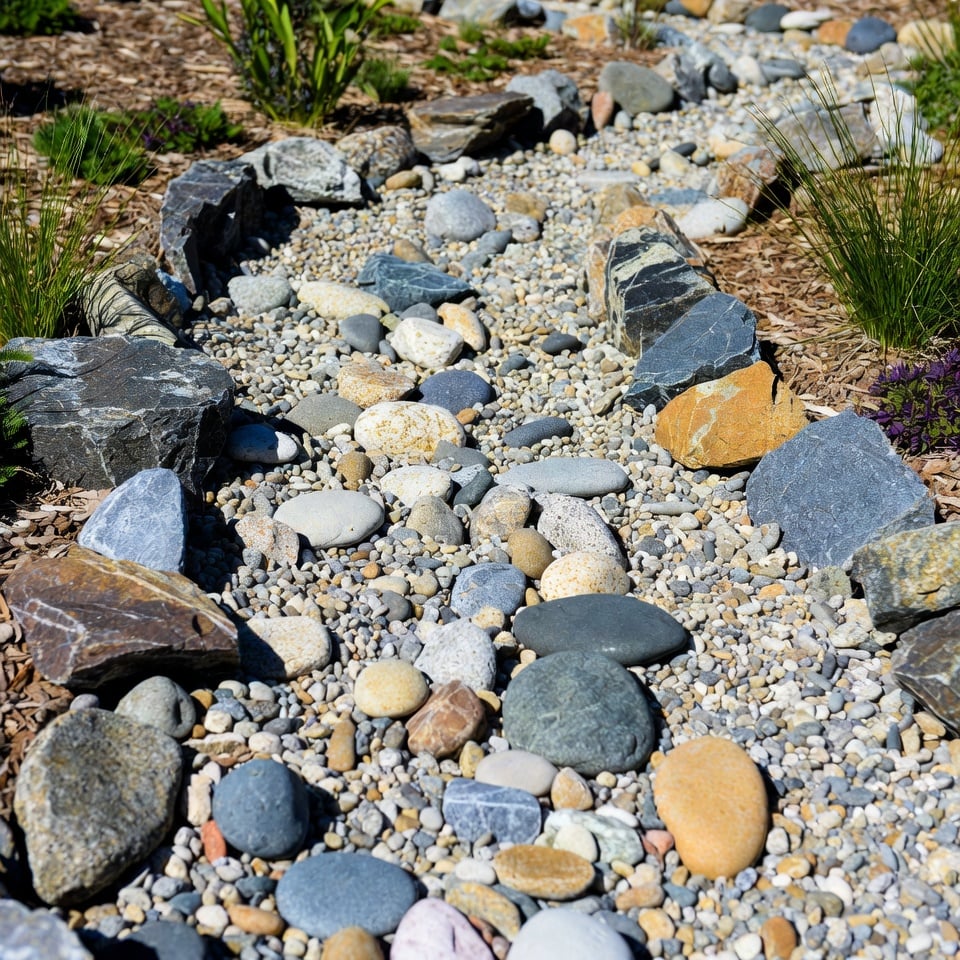
A dry creek bed adds movement to a landscape even when no water is flowing.
It can also help guide occasional rainwater through a low area when it is properly designed. The finished feature should resemble a shallow natural stream rather than a straight trench filled with identical stones.
Begin with a gently curved path. Make some sections wider and others narrower.
Use:
- Larger rocks along the edges
- Medium river stones through the center
- Small gravel to fill gaps
- Occasional boulders at bends
- Plants near selected edges
Arrange the stones as though water gradually moved them into place. Larger rocks often look natural near curves, while smaller stones can fill the center channel.
Plant ornamental grasses, ferns, sedges, hostas, iris, or drought-tolerant plants nearby depending on the amount of moisture and sunlight.
A decorative dry creek bed is not automatically a complete drainage solution. If you are trying to control serious runoff, flooding, or water near the foundation, consult a drainage professional before digging.
When used mainly as a landscape feature, a dry creek can make a flat yard look more interesting and visually connected.
4. Make a Succulent Rock Garden
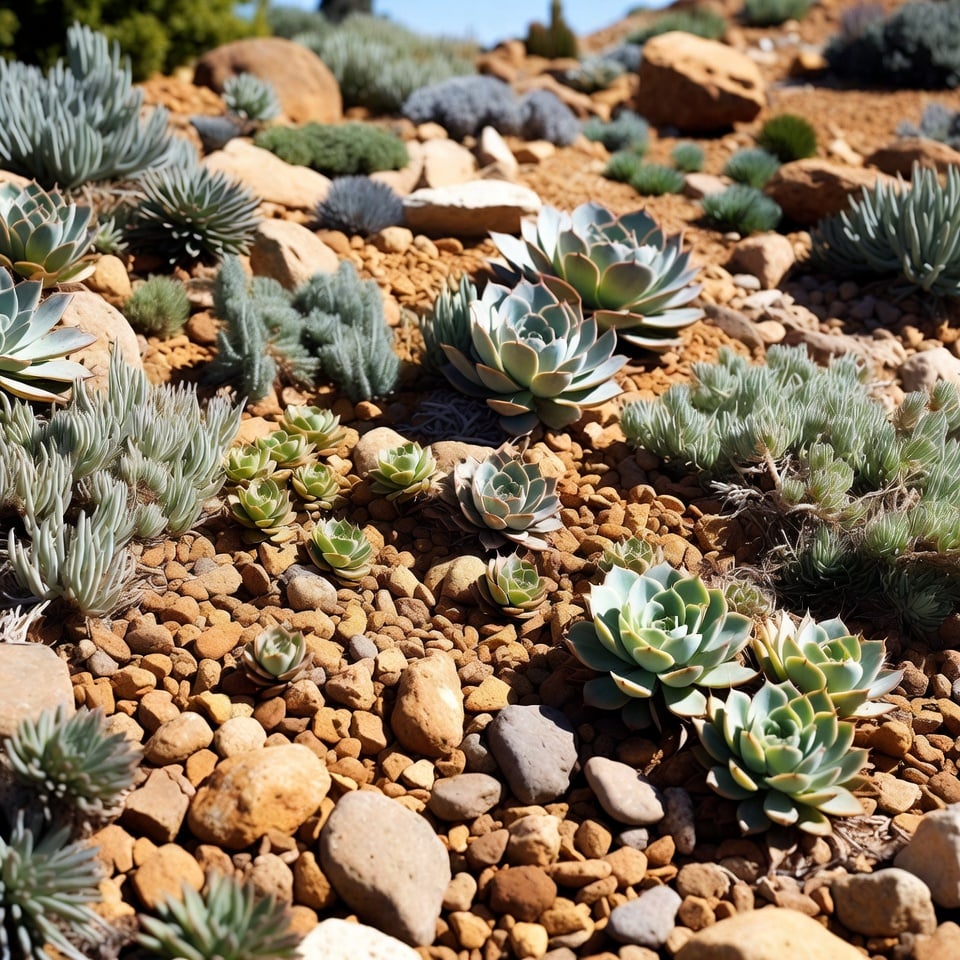
Succulents and rocks naturally work well together because many succulents prefer sunny conditions and fast-draining soil.
This style is perfect for:
- Hot patios
- Dry front yards
- Raised beds
- Courtyards
- Poolside landscaping
- Small backyard corners
Choose rocks in warm neutral shades and combine them with plants that have different colors and shapes.
Possible plants include:
- Hens and chicks
- Sedum
- Echeveria
- Aloe in suitable climates
- Agave
- Stonecrop
- Hardy ice plant
- Yucca
Use a soil mixture designed for excellent drainage. Avoid planting succulents in a low spot where rainwater remains around the roots.
Place larger sculptural plants toward the back or center, then add smaller rosette-shaped succulents and trailing varieties near the edges.
Leave open areas of gravel so each plant has room to stand out. Crowding too many succulents together can make the garden look messy and may reduce airflow.
Check the cold tolerance of every plant before placing it outdoors permanently. Some succulents tolerate frost, while others must be moved indoors or treated as seasonal plants.
For a small succulent garden: View hardy succulent plants and supplies on Amazon
5. Add a Rock Garden Around a Tree
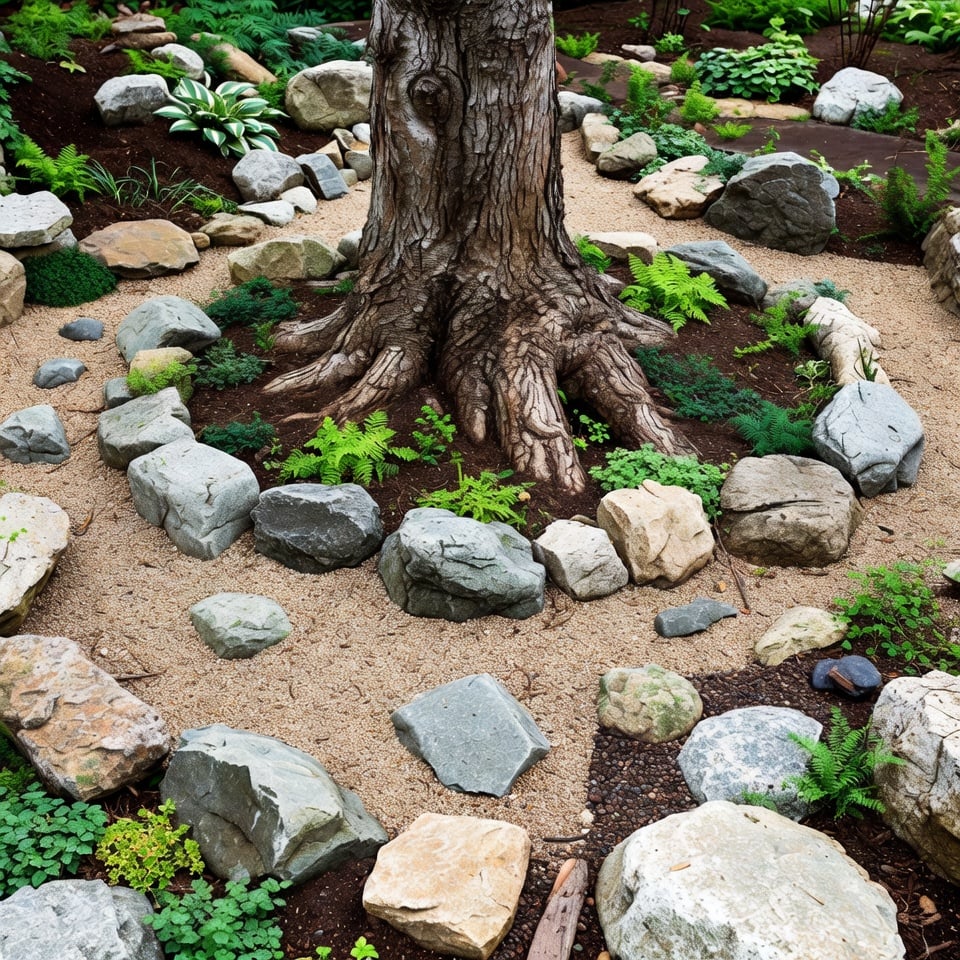
The area around a tree can be challenging because of shade, roots, and dry soil.
A simple rock garden may make the space look more finished, but it must be created carefully. Avoid piling soil, mulch, or rocks against the tree trunk. The root flare—the area where the trunk widens into the roots—should remain visible.
Do not build a deep raised ring around an established tree, because adding too much material over the roots may interfere with air and water movement.
Instead, use a light layer of gravel or mulch and place a few decorative rocks outside the immediate trunk area.
Choose plants that tolerate the light and root competition beneath the tree. Depending on your climate, options may include:
- Ferns
- Hostas
- Coral bells
- Ajuga
- Wild ginger
- Epimedium
- Shade-tolerant sedges
- Native woodland ground covers
Keep digging shallow and limited because cutting large roots can damage the tree.
A carefully designed tree rock garden should highlight the tree rather than bury it. Use stones to define the surrounding space while keeping the trunk clear and the roots protected.
6. Build a Japanese-Inspired Rock Garden
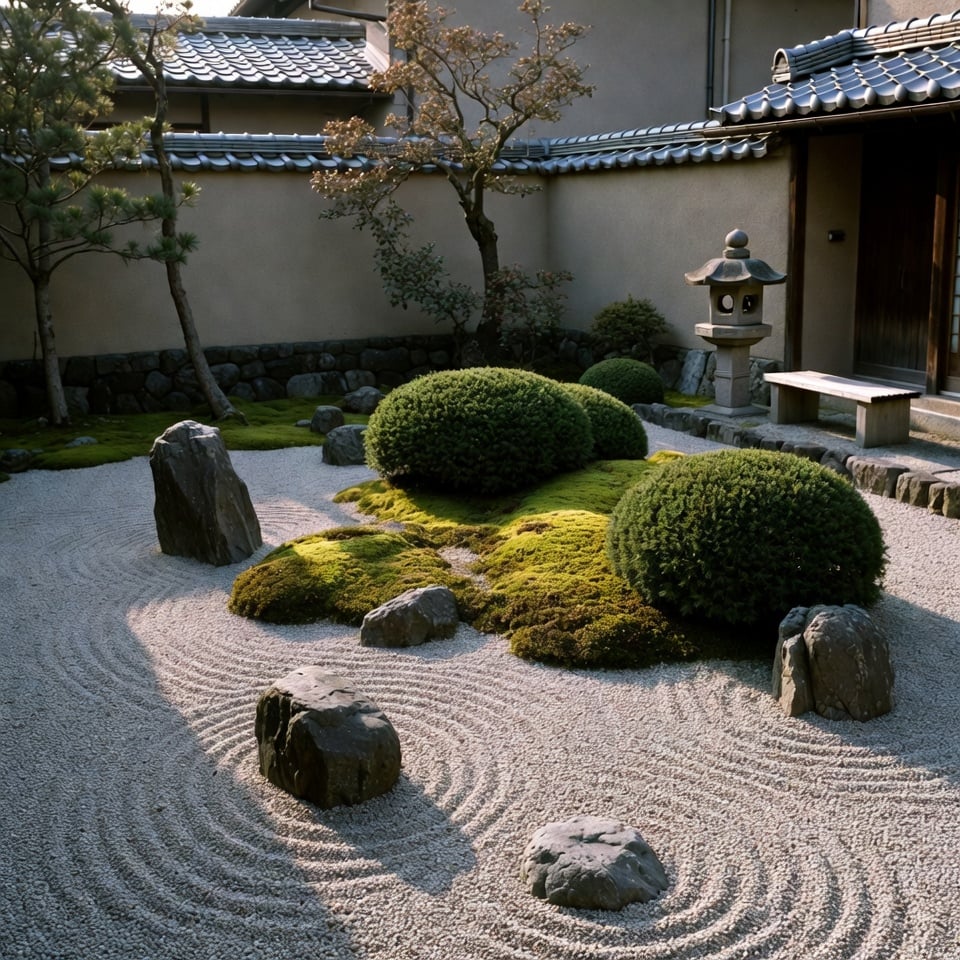
A Japanese-inspired rock garden can create a calm, uncluttered area for quiet sitting or reflection.
The design does not need to copy a traditional garden exactly. You can borrow a few principles such as simplicity, asymmetry, open space, and carefully placed natural materials.
Use:
- A small number of meaningful rocks
- Fine gravel
- Moss or low ground covers
- A compact evergreen
- A stone lantern or simple basin
- Bamboo or wood accents
- One peaceful seating point
Place the rocks in uneven groups rather than perfect rows. One larger stone can become the main focal point, while smaller stones support the composition.
Raked gravel can suggest water or movement, although it requires occasional maintenance to keep the pattern neat.
Choose restrained plant colors. Green foliage, soft moss, dwarf conifers, ferns, and one seasonal flowering plant often create a calmer appearance than many bright colors.
Avoid filling every empty area. Open space is part of the design.
This style works beautifully in a small side yard, enclosed courtyard, patio corner, or area visible from a window.
7. Create a Rock Border Along a Walkway
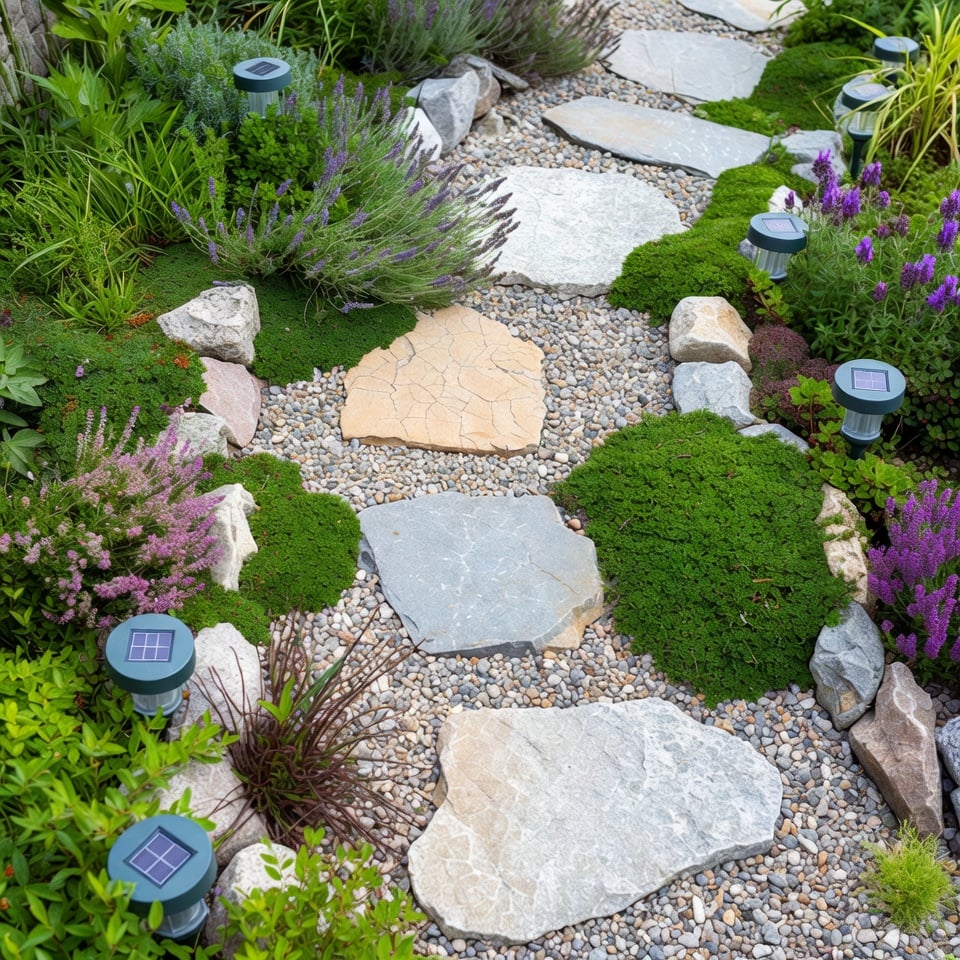
A rock border can make a plain walkway feel more intentional.
Instead of placing stones in one stiff line, create small planting pockets along the path. Use larger rocks at selected points, then connect them visually with gravel, low plants, and repeated textures.
Good walkway plants include:
- Creeping thyme
- Sedum
- Lavender
- Dwarf grasses
- Dianthus
- Coreopsis
- Salvia
- Low-growing juniper
Keep plants far enough from the walking surface that they do not become a tripping hazard or completely cover the path.
Fragrant plants such as thyme and lavender can make the walkway more enjoyable, especially near an entrance or patio.
Use smooth stones near areas where people walk. Sharp or unstable rocks should not protrude into the path.
Solar lights can be placed among the rocks to improve visibility at night, but avoid using too many. A few well-spaced lights usually look more elegant than a bright row.
A rock-lined walkway can connect separate garden beds and make the landscape feel cohesive.
8. Add Ornamental Grasses to a Rock Garden
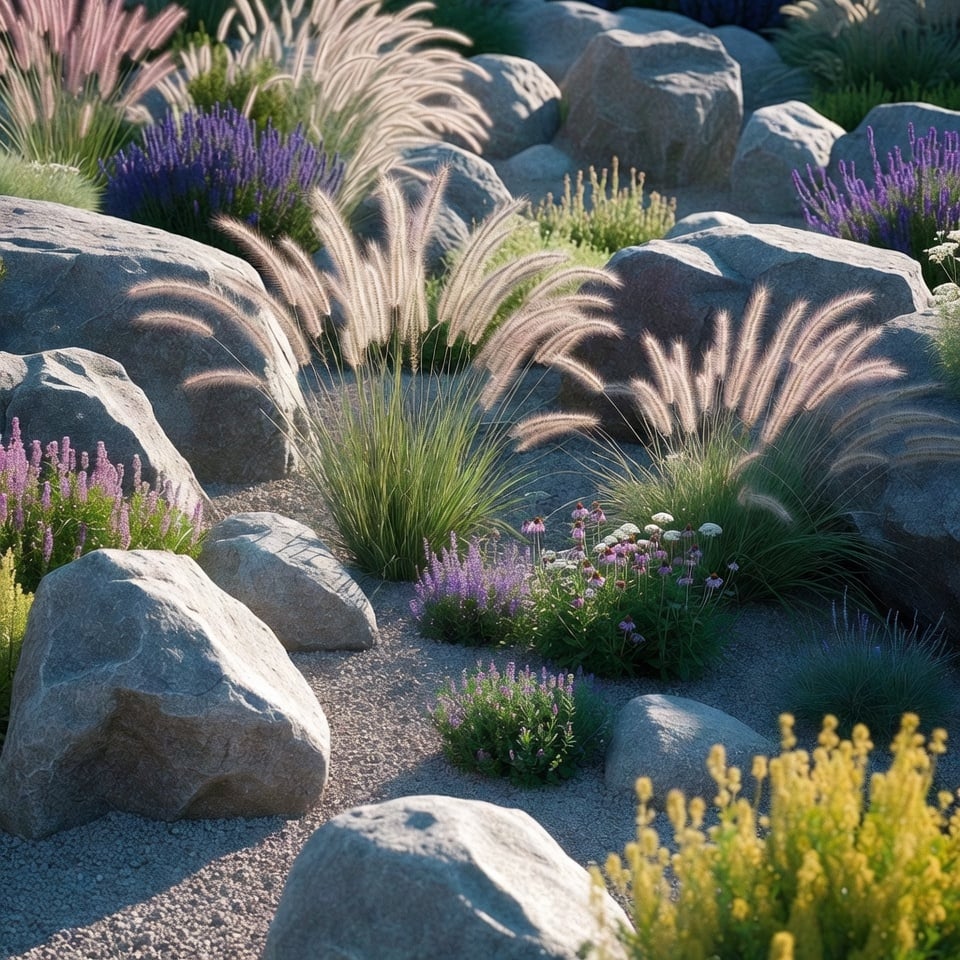
Ornamental grasses bring softness and movement to a hard landscape.
Without plants that sway or spread gently, a rock garden can sometimes feel heavy. Grasses balance the stones with fine leaves, arching shapes, and seasonal texture.
Depending on your climate, consider:
- Blue fescue
- Fountain grass
- Feather reed grass
- Little bluestem
- Pink muhly grass
- Switchgrass
- Mexican feather grass where it is non-invasive
- Dwarf miscanthus varieties
Check whether a grass is invasive in your area before planting. Native grasses are often a safer and more environmentally appropriate choice.
Plant grasses in small groups rather than placing one of every type. Repeating the same grass three or five times can make the design look more intentional.
Use taller grasses toward the back and compact varieties near pathways or smaller rocks.
Leave enough space for mature growth. A tiny nursery plant can become much wider after one or two seasons.
Grasses look especially beautiful when paired with large gray stones, gravel, lavender, yarrow, coneflowers, or sedum.
9. Create a Small Rock Garden in a Corner
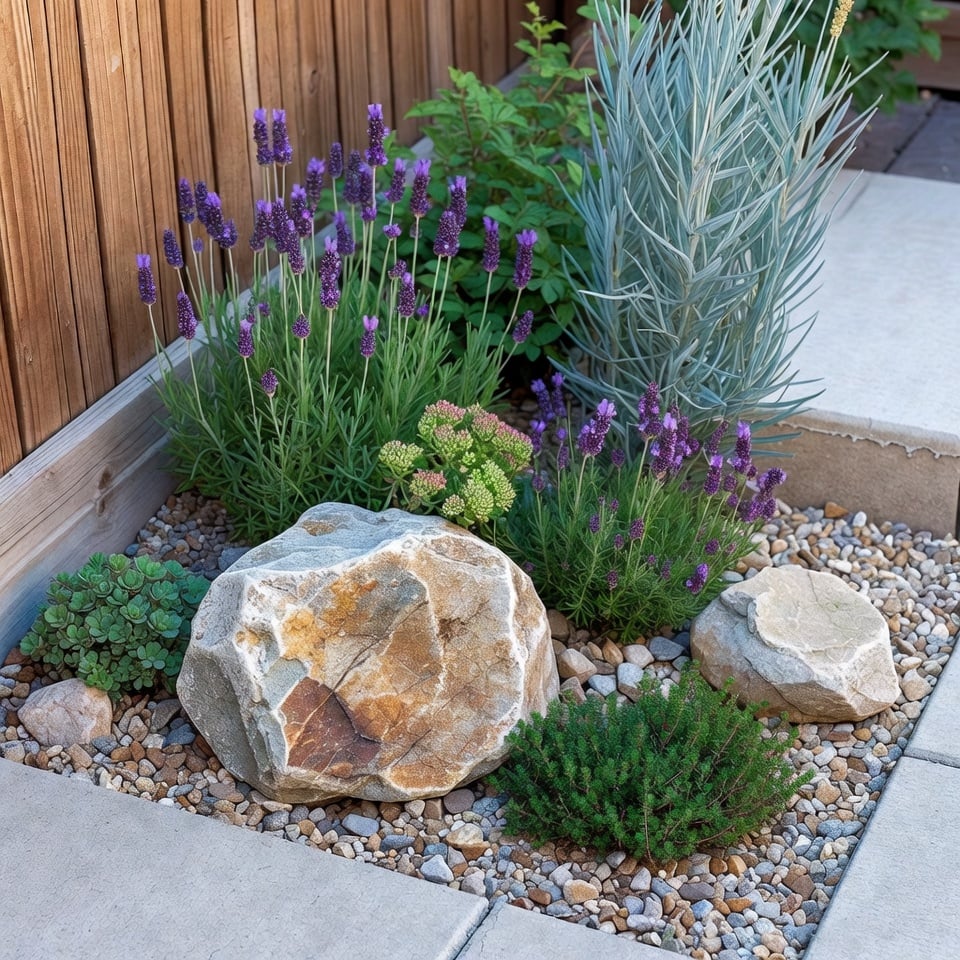
You do not need a large yard to create a rock garden.
An empty corner beside a patio, fence, shed, porch, or staircase can become a compact focal point.
Begin with one attractive stone or small boulder. Add two or three medium rocks and a simple layer of gravel.
Choose a limited group of plants based on the conditions. For a sunny corner, try:
- Lavender
- Sedum
- Thyme
- Blue fescue
- Dwarf salvia
For partial shade, consider:
- Coral bells
- Ferns
- Small hostas
- Ajuga
- Shade-tolerant sedges
Add one vertical element, such as a tall ornamental grass, narrow evergreen, garden sculpture, or simple trellis. This prevents the corner from looking flat.
Keep the design proportional. Very large boulders may overwhelm a tiny space, while many small stones can make it look cluttered.
A restrained combination of three rock sizes, two or three plants, and one focal feature is often enough.
10. Build a Raised Rock Garden Bed
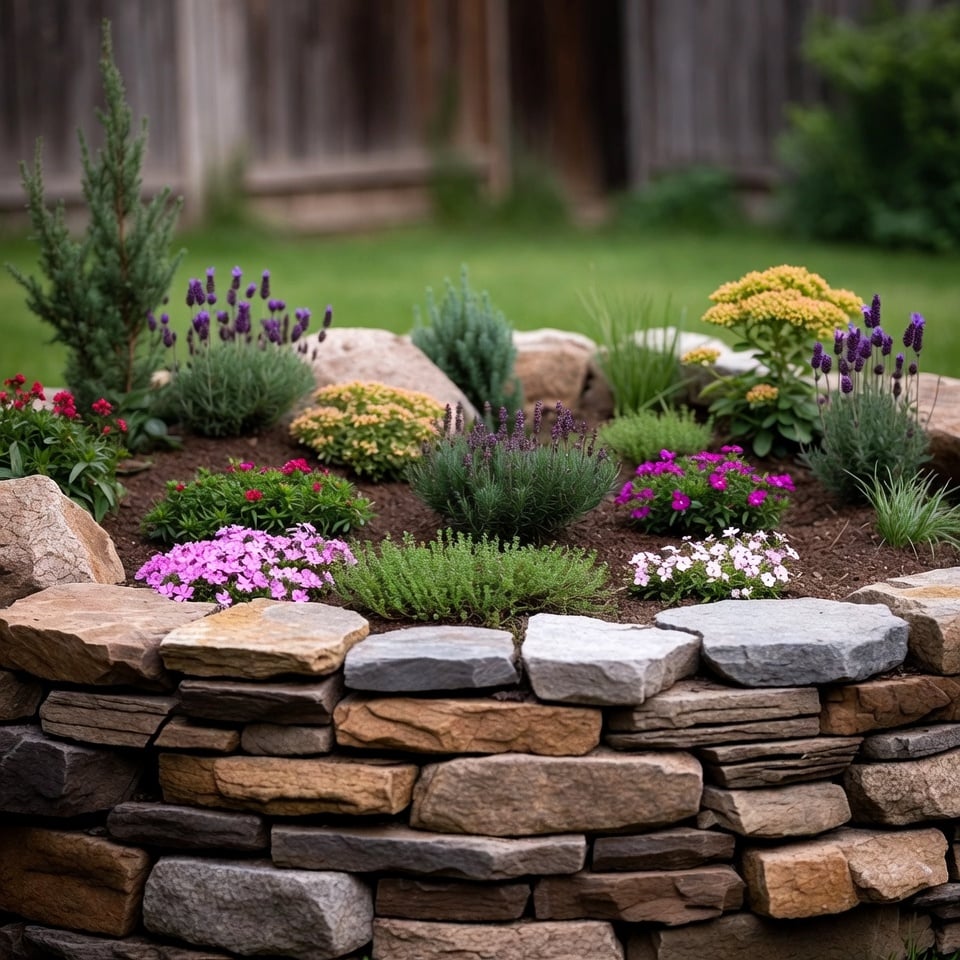
A raised rock garden bed provides better control over soil and drainage.
It is particularly useful when the existing soil is heavy clay, poorly drained, or difficult to improve.
Create the raised edge with:
- Natural stone
- Landscape blocks
- Timber suitable for outdoor use
- Gabion-style rock cages
- Large flat stones
Fill the bed with a soil mixture appropriate for the plants you want to grow. For alpine plants and many drought-tolerant species, use a fast-draining mixture rather than heavy garden soil.
Arrange rocks inside the bed at different heights. Some can be partly buried to create small pockets and ledges.
Plants suitable for a raised rock garden may include:
- Creeping phlox
- Sedum
- Thyme
- Dianthus
- Candytuft
- Lavender
- Dwarf conifers
- Small ornamental grasses
Raised beds can warm and dry more quickly than ground-level beds, so they may need more frequent watering during the first growing season.
Use a drip line or slow watering method to help new plants establish without washing soil out between the rocks.
11. Mix Flowers With Natural Stone
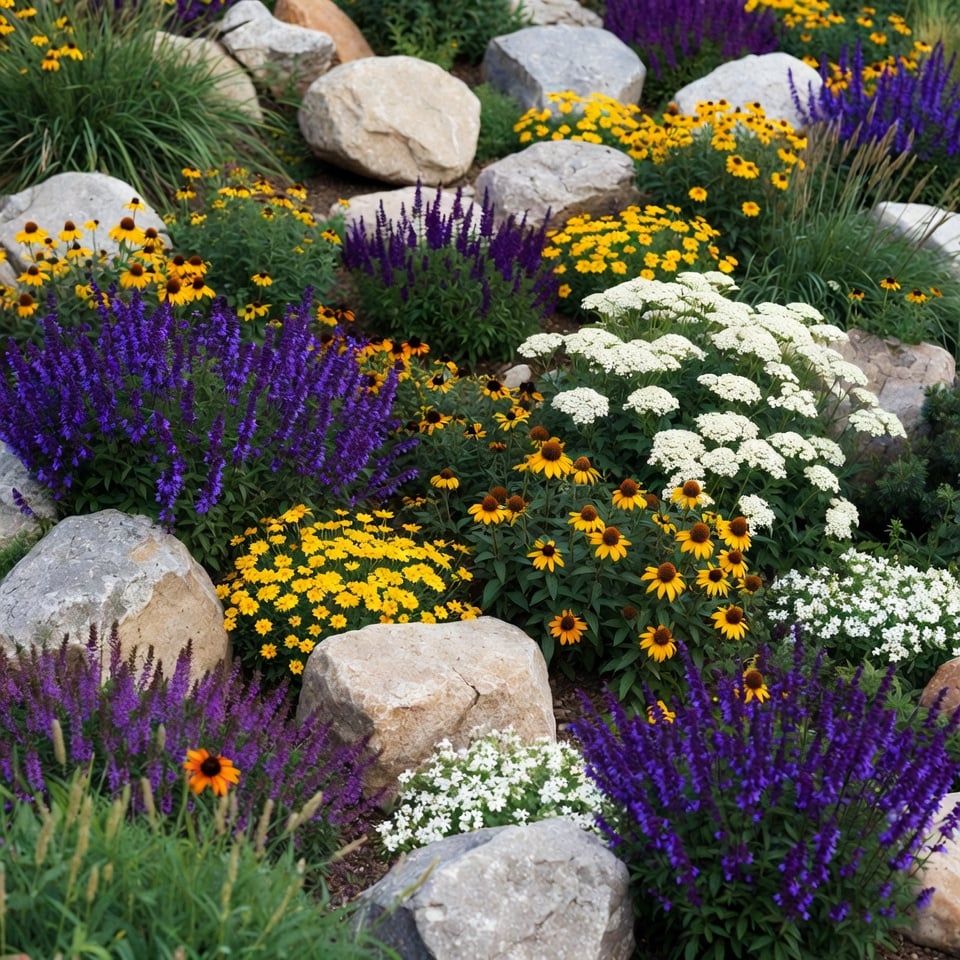
A rock garden does not have to be limited to succulents and gray-green plants.
Colorful flowers can soften the stone and make the garden feel cheerful without turning it into a high-maintenance annual bed.
Choose flowers that suit the soil, moisture, and sunlight.
Sun-loving options may include:
- Coreopsis
- Yarrow
- Coneflowers
- Black-eyed Susans
- Blanket flower
- Salvia
- Dianthus
- Creeping phlox
Use flowers in repeated groups instead of scattering one plant of every color.
For a calm look, choose two or three colors. Purple, yellow, and white work beautifully with gray stones. Pink, lavender, and silver create a softer cottage style. Red, orange, and gold can create a warmer desert-inspired garden.
Combine flowering plants with evergreen foliage and grasses so the area still has structure when blooms fade.
Deadheading may encourage additional flowers, but choosing naturally long-blooming perennials can reduce maintenance.
12. Create a Rock Garden With a Small Water Feature
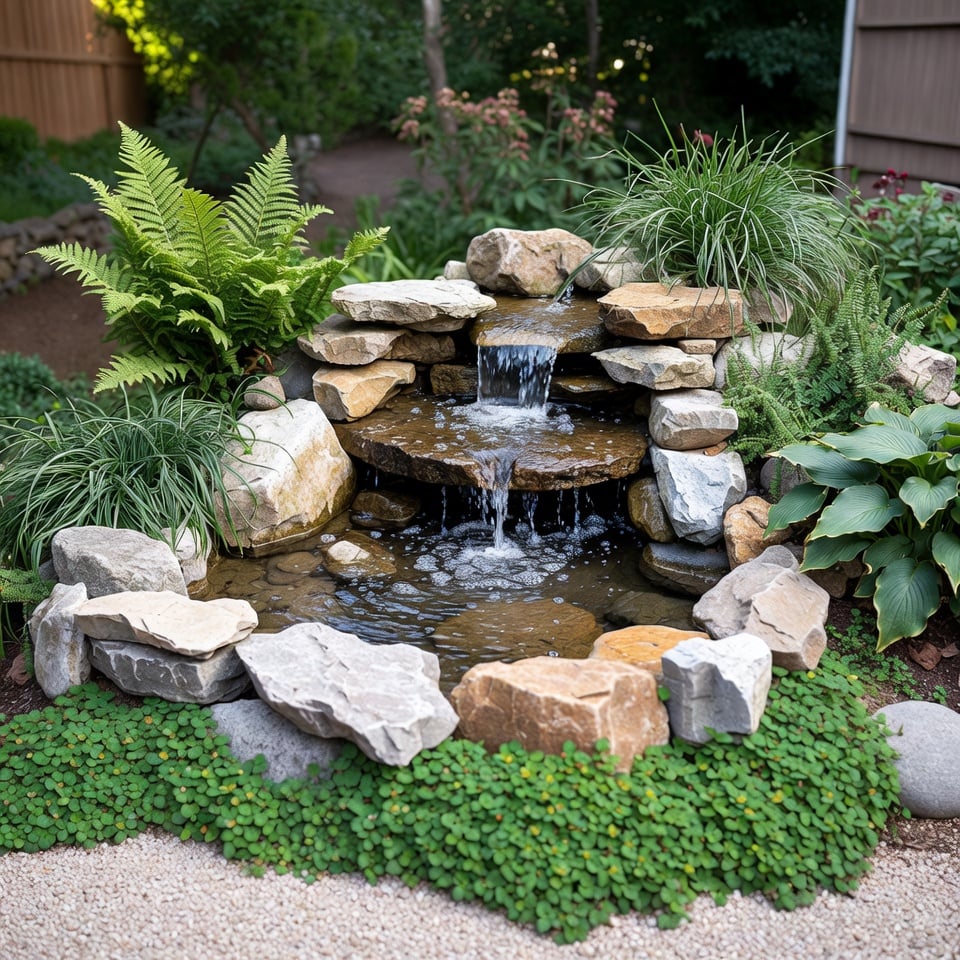
Water and stone create a naturally peaceful combination.
A small fountain, recirculating bowl, bubbling rock, or shallow pond can become the focal point of a rock garden without requiring a large installation.
Surround the feature with rocks of different sizes and plants that match the moisture conditions.
Possible additions include:
- Ferns
- Sedges
- Iris
- Hostas
- Creeping Jenny
- Moss
- Ornamental grasses
- Water-loving native plants
For a sunny, dry garden, use a self-contained fountain and keep the surrounding plants drought-tolerant.
Choose a pump that suits the size of the feature and make sure the electrical connection is approved for outdoor use. Keep cords protected and follow all safety instructions.
Standing water can attract mosquitoes, so keep water circulating and maintain the feature regularly.
Clean leaves, algae, and debris as needed. In cold climates, some pumps and bowls must be drained or protected during winter.
A small water feature can make a simple rock garden feel much more complete and relaxing.
For a compact garden feature: Check outdoor recirculating fountains on Amazon
Best Plants for a Low-Maintenance Rock Garden
The best plants depend on your climate, soil, and sunlight, but these are commonly used in rock-style landscapes.
For Full Sun
- Sedum
- Lavender
- Creeping thyme
- Yarrow
- Salvia
- Dianthus
- Coreopsis
- Blue fescue
- Juniper
- Hens and chicks
For Partial Shade
- Coral bells
- Ajuga
- Ferns
- Small hostas
- Epimedium
- Shade-tolerant sedges
- Foamflower
For Dry Conditions
- Agave
- Yucca
- Sedum
- Thyme
- Lavender
- Blue fescue
- Blanket flower
- Native drought-tolerant plants
Choose plants based on mature size rather than how small they look in the nursery container.
How to Make a Rock Garden Look Natural
Use Different Rock Sizes
Natural landscapes contain large, medium, and small stones. Using only one size can make the garden look artificial.
Bury Part of Each Large Rock
A large rock sitting completely above the soil may look as though it was dropped there. Partly burying it helps it appear naturally connected to the ground.
Repeat Materials
Use the same stone type throughout the design. Repetition creates harmony.
Avoid Perfect Spacing
Group plants and rocks unevenly. Natural gardens rarely follow a strict grid.
Leave Open Space
Gravel and bare areas give the eye somewhere to rest and prevent the garden from looking crowded.
Follow the Shape of the Land
Let the garden curve with the slope, walkway, or edge of the yard instead of forcing a straight shape.
How to Build a Basic Rock Garden
Step 1: Choose the Location
Select an area with the right amount of sunlight for your intended plants.
Step 2: Mark the Shape
Use a garden hose, rope, or marking paint to test the outline before digging.
Step 3: Remove Weeds and Unwanted Grass
Clear the area thoroughly. Persistent weeds may grow through gravel later if the roots remain.
Step 4: Improve Drainage
Loosen compacted soil and add appropriate material if drainage is poor. Do not create a low basin that holds water unless you are designing a rain garden with suitable plants.
Step 5: Place the Largest Rocks
Install the anchor stones first because they are the hardest to move later.
Step 6: Add Soil and Smaller Rocks
Create planting pockets and blend medium stones around the anchors.
Step 7: Plant
Set plants at the same depth they grew in their containers. Water them thoroughly after planting.
Step 8: Add Gravel or Mulch
Spread a thin, even layer without burying plant stems.
Step 9: Water During Establishment
Even drought-tolerant plants need regular water while their roots become established.
Common Rock Garden Mistakes
Using Too Many Different Rock Types
Mixing many colors and textures can make the garden look busy.
Placing Rocks in Straight Rows
Unless you are building a formal border, uneven placement usually looks more natural.
Ignoring Drainage
Many rock-garden plants dislike wet roots. Test how water moves through the area before planting.
Choosing Plants That Grow Too Large
A small shrub can eventually cover the rocks and overwhelm the garden.
Using Landscape Fabric Incorrectly
Fabric may help in some gravel-only areas, but it can complicate planting, collect soil on top, and make future changes difficult. Use it only when appropriate for the design.
Forgetting About Weeds
A rock garden is low-maintenance, not maintenance-free. Windblown soil and seeds can still collect between stones.
Piling Rocks Against Trees or Foundations
Keep tree trunks exposed and avoid trapping moisture against the house.
How to Maintain a Rock Garden
A well-designed rock garden is fairly easy to maintain, but it still needs occasional attention.
Weekly or as needed
- Remove visible weeds
- Check new plants for dryness
- Remove fallen leaves
- Look for displaced gravel
Seasonally
- Trim dead plant growth
- Divide crowded perennials
- Replace washed-out gravel
- Check edging
- Remove invasive seedlings
- Clean water features
- Inspect drainage after heavy rain
Use a leaf blower on its lowest setting or a small hand rake to remove debris without scattering gravel.
Frequently Asked Questions
Are rock gardens truly low-maintenance?
They can require less mowing and watering than a traditional lawn, especially when planted with drought-tolerant perennials. However, they still need weeding, pruning, occasional watering, and debris removal.
What should I put under a rock garden?
The answer depends on the design. You may use improved soil beneath planted areas and compacted base material beneath paths or gravel-only sections. Landscape fabric is optional and should not replace proper weed removal.
What plants look best in a rock garden?
Sedum, creeping thyme, lavender, yarrow, ornamental grasses, dwarf conifers, hens and chicks, salvia, and native drought-tolerant plants are popular choices.
How do I stop weeds from growing through rocks?
Remove existing weeds and roots before installing the garden. Use proper edging, maintain an adequate gravel layer, and pull new weeds before they produce seeds.
Can I build a rock garden in the shade?
Yes. Use shade-tolerant plants such as ferns, coral bells, hostas, ajuga, epimedium, and woodland ground covers.
Do rock gardens need watering?
New plants need regular watering while they establish. Mature drought-tolerant plants may need much less, but requirements vary by climate and plant type.
How deep should decorative gravel be?
A layer approximately two to three inches deep is common for many decorative areas, although the correct depth depends on the stone size, soil, plants, and intended use.
How can I make a small rock garden look bigger?
Use a curved outline, smaller plants near the front, taller plants in the back, repeated materials, and a narrow path or dry creek shape that draws the eye through the space.
What color rocks are best for landscaping?
Choose colors that complement the house and surrounding landscape. Gray, tan, brown, cream, and mixed natural stone tend to remain visually flexible.
Final Thoughts
A beautiful rock garden does not need to be large, expensive, or complicated.
Start with a clearly defined area and a few carefully chosen stones. Add plants that suit the sunlight, drainage, and climate, then use gravel or smaller rocks to connect the design.
Whether you create a dry creek bed, succulent garden, sloped landscape, walkway border, or peaceful corner with a water feature, the best result will feel natural rather than overly arranged.
Use different rock sizes, repeat a limited number of plants, leave open space, and give the garden time to mature.
With thoughtful planning, a rock garden can make your yard look more beautiful while reducing the amount of lawn care, watering, and seasonal replanting you need to do.