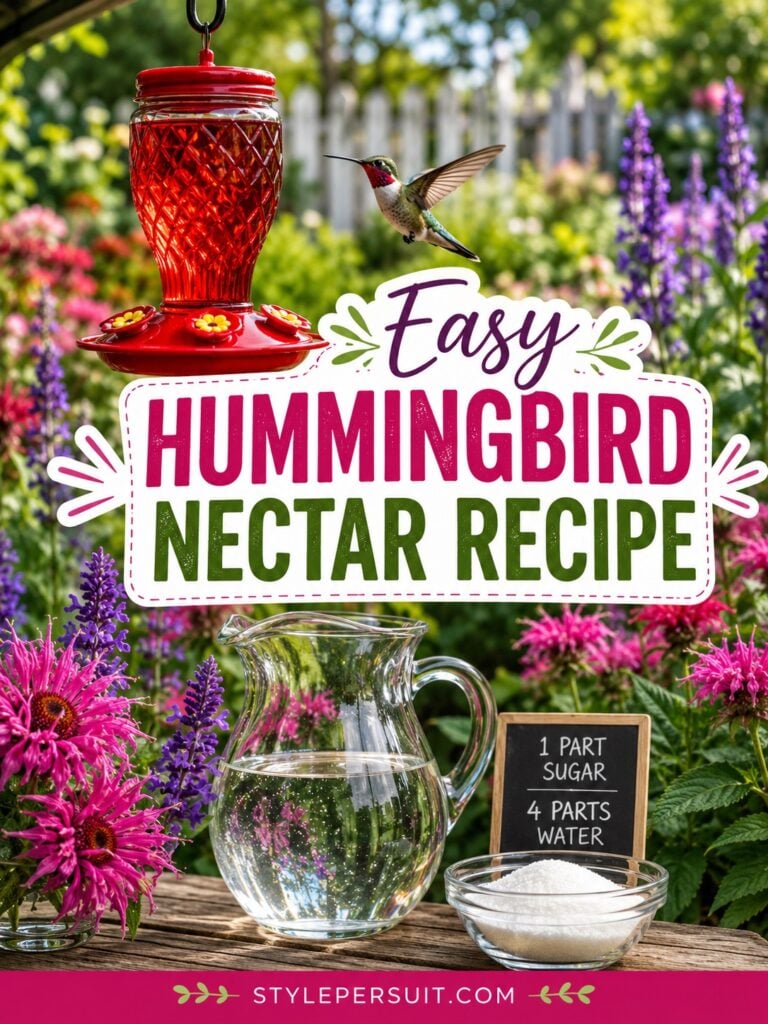
Hummingbirds are tiny, fast, beautiful little visitors — and once they find your feeder, it honestly feels like your backyard has become a little more magical.
But if you want to feed them safely, the nectar recipe matters.
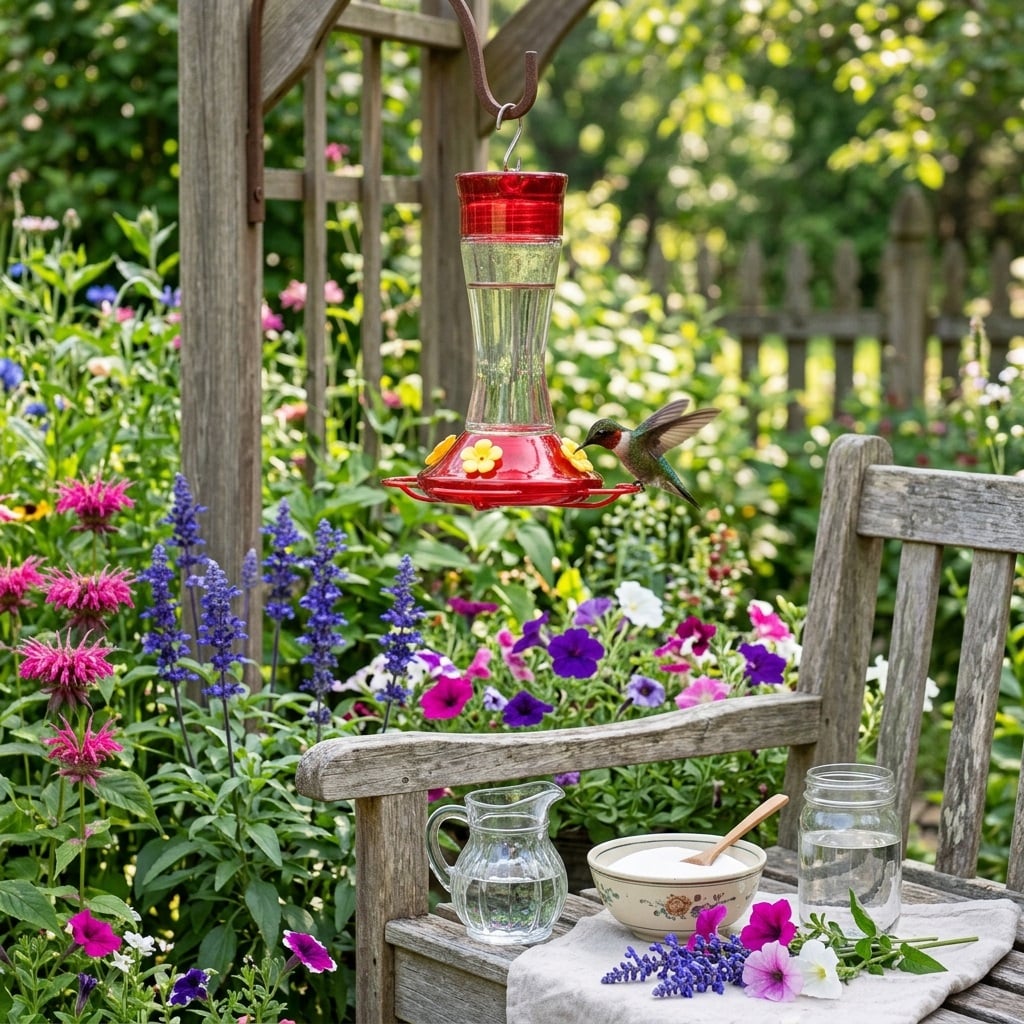
The best hummingbird nectar recipe is simple: 1 part white granulated sugar to 4 parts water. No red dye. No honey. No brown sugar. No artificial sweeteners. Just plain white sugar and clean water.
That mixture closely mimics the sugar-water style nectar hummingbirds naturally drink from flowers, and it is the standard recipe recommended by bird experts, including the Smithsonian National Zoo and Audubon.
The Best Hummingbird Nectar Recipe
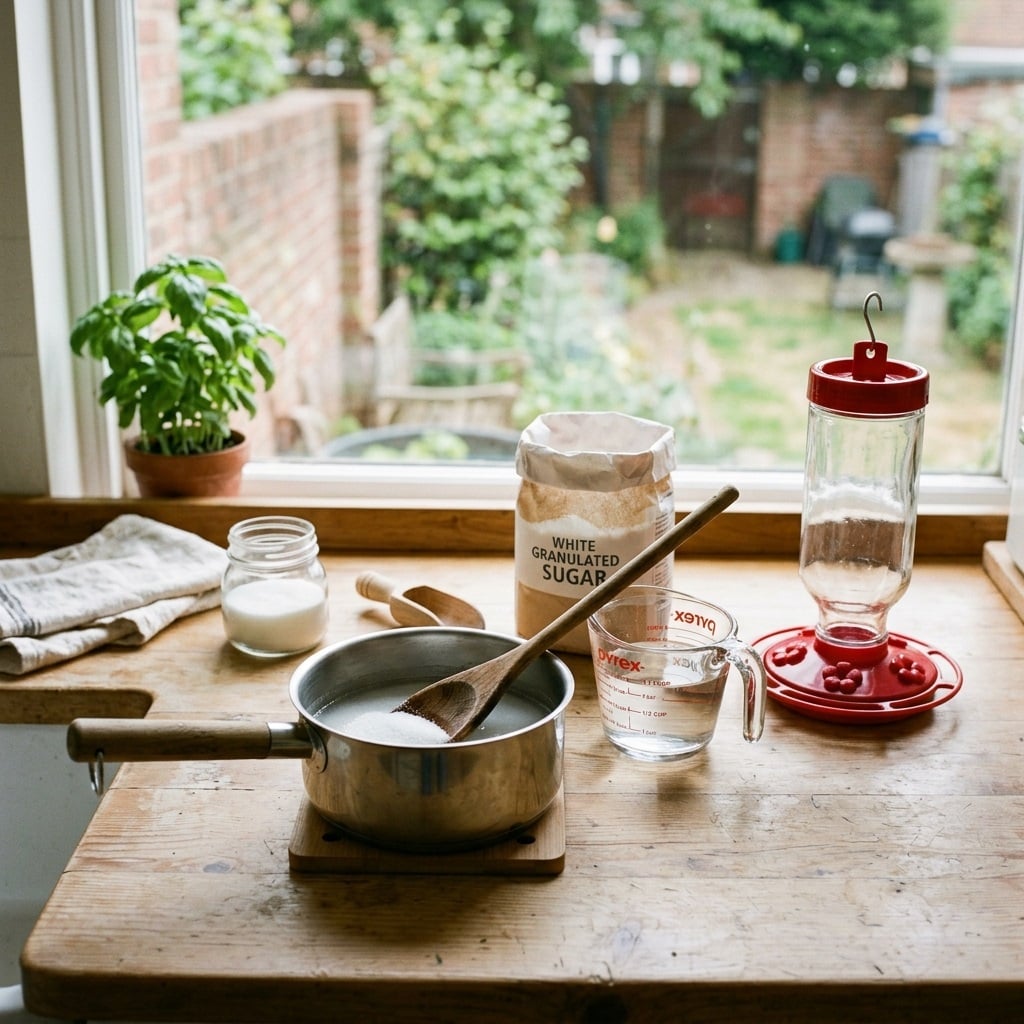
Ingredients
- 1 cup white granulated sugar
- 4 cups water
Instructions
- Bring the water to a boil.
- Remove from heat.
- Stir in the white sugar until fully dissolved.
- Let the nectar cool completely.
- Fill your clean hummingbird feeder.
- Store extra nectar in the refrigerator.
That’s it. Two ingredients, no dyes, no extras.
Helpful option: Check price on Amazon
Hummingbird Nectar Ratio
The safest everyday ratio is:
1 part sugar to 4 parts water
That means you can make smaller or larger batches like this:
| Sugar | Water |
|---|---|
| ¼ cup sugar | 1 cup water |
| ½ cup sugar | 2 cups water |
| 1 cup sugar | 4 cups water |
| 2 cups sugar | 8 cups water |
The Smithsonian recommends mixing 1 part sugar with 4 parts water and changing feeders every other day to prevent harmful mold growth. (National Zoo)
Do You Have to Boil Hummingbird Nectar?
Boiling is helpful because it dissolves sugar quickly and can reduce some microbes in the water.
Audubon’s instructions are simple: mix sugar and boiling water until dissolved, cool it, then fill the feeder.
If your water is already safe to drink and you are making a small batch, some people simply use very hot water and stir until dissolved.
But boiling is still a good habit, especially if you plan to store extra nectar in the fridge.
Always cool the nectar completely before adding it to the feeder. Hot nectar can harm hummingbirds.
Why You Should Not Add Red Dye
Please skip the red dye.
Hummingbirds are attracted to red feeder parts, red flowers, and bright garden colors. They do not need red-colored nectar.
The Smithsonian specifically says not to add red dye to hummingbird nectar.
If you want to attract hummingbirds, use a feeder with red accents instead.
Helpful option: View on Amazon
What Sugar Should You Use?
Use plain white granulated sugar.
Avoid:
- Honey
- Brown sugar
- Raw sugar
- Powdered sugar
- Molasses
- Maple syrup
- Agave
- Artificial sweeteners
- Sugar substitutes
Cornell Lab’s All About Birds says to use table sugar rather than honey because diluted honey can allow bacteria and fungus to thrive. (All About Birds)
White sugar is simple, dissolves easily, and is the recommended option for homemade hummingbird food.
How Often Should You Change Hummingbird Nectar?
Change nectar often. This is where many people accidentally make mistakes.
In normal weather, change nectar every 2 days if possible. In hot weather, change it daily or every 1–2 days because nectar can ferment quickly.
The Smithsonian recommends changing feeders every other day and cleaning them thoroughly each time to prevent mold growth.
If the nectar looks cloudy, has floating bits, smells sour, or you see mold, dump it immediately and clean the feeder.
How to Clean a Hummingbird Feeder
A clean feeder is just as important as the nectar recipe.
You’ll need:
- Hot water
- Bottle brush or feeder brush
- White vinegar
- Small cleaning brush for feeder ports
- Clean towel
How to clean it:
Take the feeder apart and rinse every piece with hot water. Scrub the bottle, base, feeding ports, and any tiny corners where sugar residue can hide.
For a deeper clean, soak the feeder in a vinegar-water solution, then scrub and rinse very well. Let everything dry before refilling.
Avoid using harsh soap if residue may remain in small feeder parts.
Helpful option: Get it on Amazon
Where to Hang a Hummingbird Feeder
The best spot is visible, safe, and easy for you to reach for cleaning.
Good feeder placement:
- Near hummingbird-friendly flowers
- In partial shade
- Away from heavy wind
- Away from windows or placed very close to reduce collision risk
- Away from cats
- Easy to access for refilling
- Not directly beside busy bird feeders
A shaded spot helps nectar stay fresh longer. A feeder placed near flowers also makes the area more attractive.
Best Flowers to Attract Hummingbirds
A feeder is helpful, but flowers make your yard even better for hummingbirds.
Try planting nectar-rich flowers like:
- Bee balm
- Salvia
- Trumpet vine
- Cardinal flower
- Columbine
- Honeysuckle
- Penstemon
- Fuchsia
- Zinnia
- Petunia
Audubon also encourages attracting hummingbirds naturally with nectar-bearing native plants.
For your garden: Check price on Amazon
Common Hummingbird Nectar Mistakes
Using red dye
Red dye is unnecessary. Use a red feeder instead.
Making nectar too sweet
Do not add extra sugar thinking it will help. Too much sugar can be hard for hummingbirds to digest.
Leaving nectar out too long
Old nectar can ferment or grow mold. Change it often.
Using honey
Honey can promote bacteria and fungus when diluted in water. Use white sugar instead. (All About Birds)
Forgetting to clean the feeder ports
The tiny feeding holes can grow mold quickly. Scrub them carefully.
Filling a huge feeder when only a few birds visit
A smaller feeder is easier to keep fresh. If the nectar is not being finished quickly, use less.
FAQs About Hummingbird Nectar
What is the correct hummingbird nectar recipe?
The correct hummingbird nectar recipe is 1 part white granulated sugar to 4 parts water. For example, mix 1 cup sugar with 4 cups water.
Do hummingbirds need red dye in nectar?
No. Do not add red dye. Use a red feeder or plant red flowers to attract hummingbirds safely.
Can I use brown sugar for hummingbird food?
No. Use plain white granulated sugar. Brown sugar, raw sugar, molasses, and honey are not recommended.
How long does homemade hummingbird nectar last?
Extra nectar can be stored in the refrigerator, but feeder nectar should be changed often — ideally every other day, and more often in hot weather.
Should hummingbird nectar be warm or cold?
Let nectar cool completely before filling the feeder. Room-temperature nectar is best.
Can I make hummingbird nectar without boiling?
You can dissolve sugar in very hot safe drinking water, but boiling helps dissolve sugar and is a good habit when making extra nectar. Always cool it before use.
Why is my hummingbird nectar cloudy?
Cloudy nectar may be fermenting or growing bacteria. Dump it, clean the feeder thoroughly, and refill with fresh nectar.
Final Thoughts
The best hummingbird nectar recipe is beautifully simple: 1 part white sugar to 4 parts water.
No red dye. No honey. No fancy sweeteners.
Keep the feeder clean, change nectar often, and place it somewhere safe and visible. Add nectar-rich flowers nearby, and your backyard has a much better chance of becoming a sweet little stop for hummingbirds all season long.