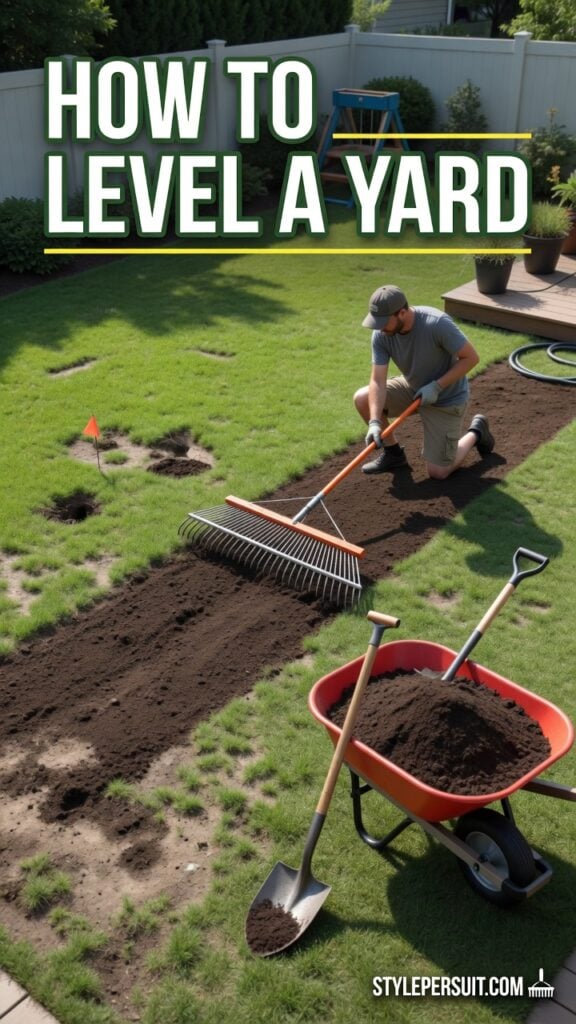
An uneven yard can be more annoying than it looks. One part of the lawn feels soft and sunken.
Another area has little bumps that make mowing feel like a workout. Maybe water collects in one corner after rain, or your patio, play area, shed, garden bed, or walkway just does not sit right because the ground is lumpy.
If you have been wondering how to level a yard, the good news is that many uneven lawn problems can be fixed without hiring a professional.
You just need to understand what caused the uneven ground, how serious the problem is, and which leveling method makes the most sense.
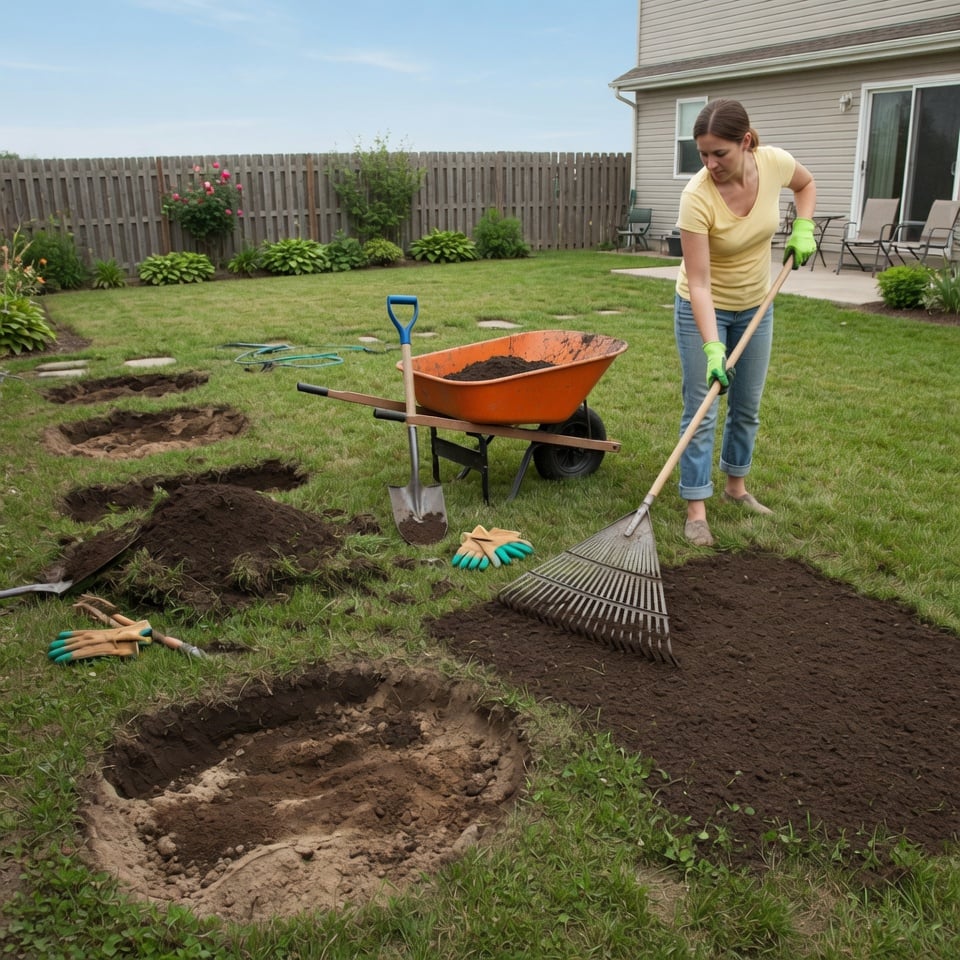
Some yards only need a thin layer of topdressing. Others need low spots filled with soil. And if the yard has major drainage issues, deep holes, tree root damage, or heavy sinking, you may need a bigger repair plan.
Affiliate Disclosure: This post contains affiliate links. If you buy through links on this page, StylePersuit may earn a small commission at no extra cost to you.
This guide will walk you through how to level a yard step by step, what tools you need, the best soil mix to use, how to level low spots in a lawn, and how to prevent the yard from becoming uneven again.
Why Your Yard Is Uneven
Before you start throwing soil everywhere, it helps to figure out why your yard became uneven in the first place.
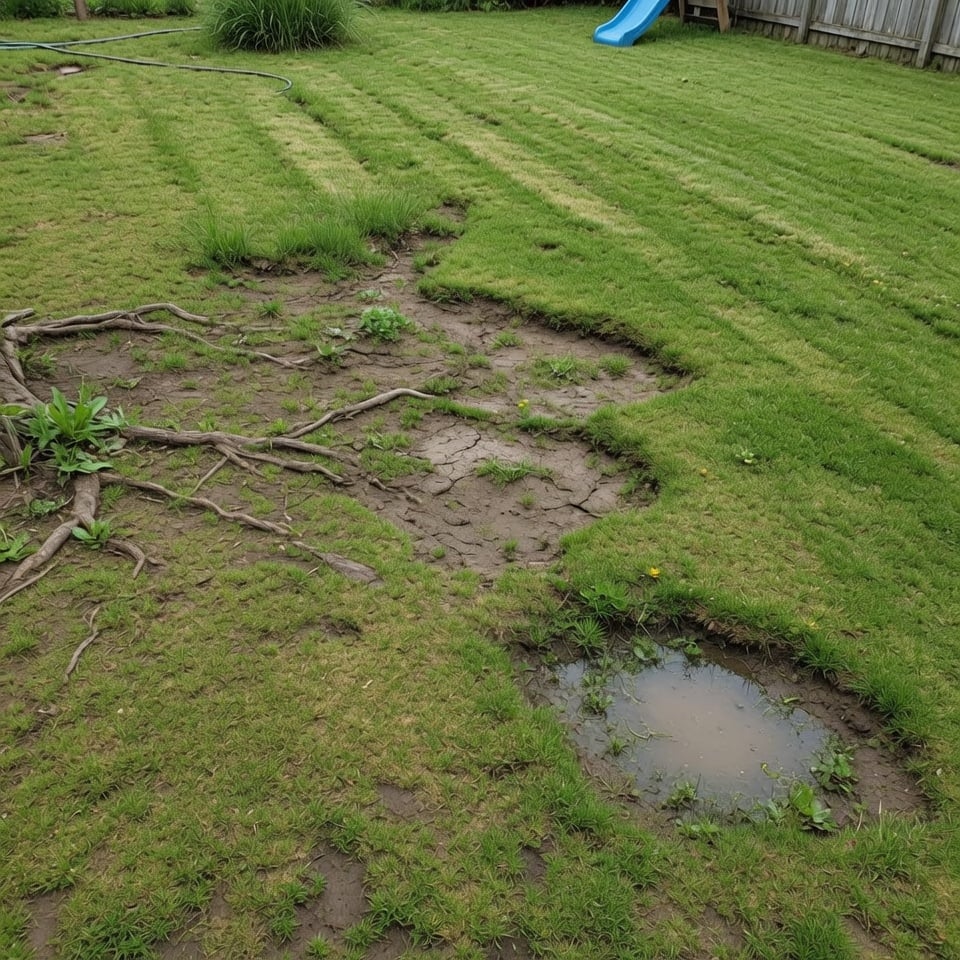
Common causes include:
- Soil settling over time
- Poor drainage
- Heavy foot traffic
- Pets digging
- Tree roots growing near the surface
- Buried debris breaking down underground
- Moles, voles, or other lawn pests
- Erosion from rainwater runoff
- Poor grading around the house
- Old landscaping changes
A few small bumps are normal. But if water flows toward your house, pools near the foundation, or creates muddy low spots after every rain, you may have a drainage or grading issue — not just a cosmetic lawn problem.
When Is the Best Time to Level a Yard?
The best time to level a yard is usually during the active growing season for your grass.
For many lawns, that means:
- Spring for cool-season grasses
- Early fall for cool-season grasses
- Late spring to summer for warm-season grasses
Avoid leveling during extreme heat, drought, frozen ground, or heavy rainy periods. Grass needs time to recover, and soil needs to settle properly.
If you are leveling a yard before laying sod, installing pavers, adding a shed, or building a garden area, choose a dry period when the ground is workable but not rock-hard.
Tools You Need to Level a Yard
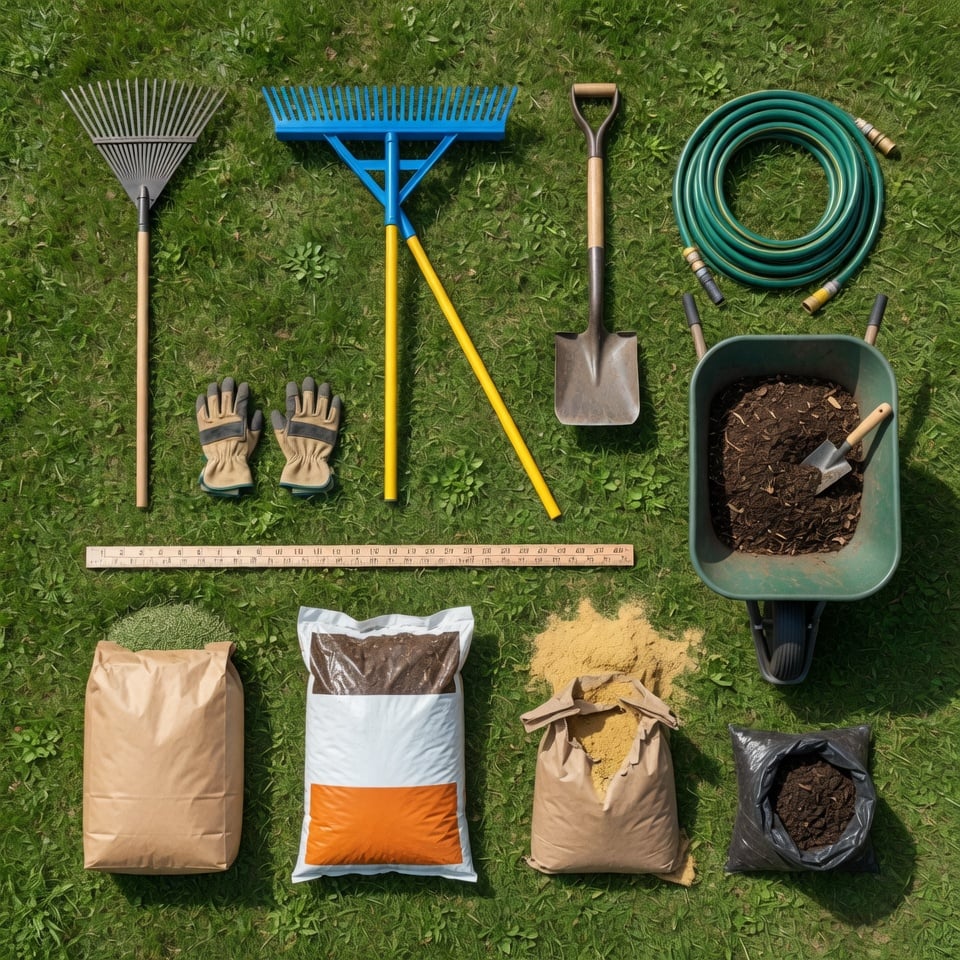
You do not need every landscaping tool in the world, but the right basics make the job much easier.
Helpful Tools and Materials
- Lawn mower
- Garden rake
- Bow rake
- Leveling rake or lawn lute
- Shovel
- Wheelbarrow
- Topsoil
- Sand
- Compost
- Grass seed
- Lawn roller, optional
- Tamper, optional
- Garden hose
- Work gloves
- Measuring stick or string line
For bigger yard leveling projects, a lawn leveling rake makes the work much smoother because it spreads soil evenly across grass.
Helpful tool: Check price on Amazon
A strong wheelbarrow also helps if you are moving soil around the yard.
For this project: View options on Amazon
Best Soil Mix for Leveling a Yard
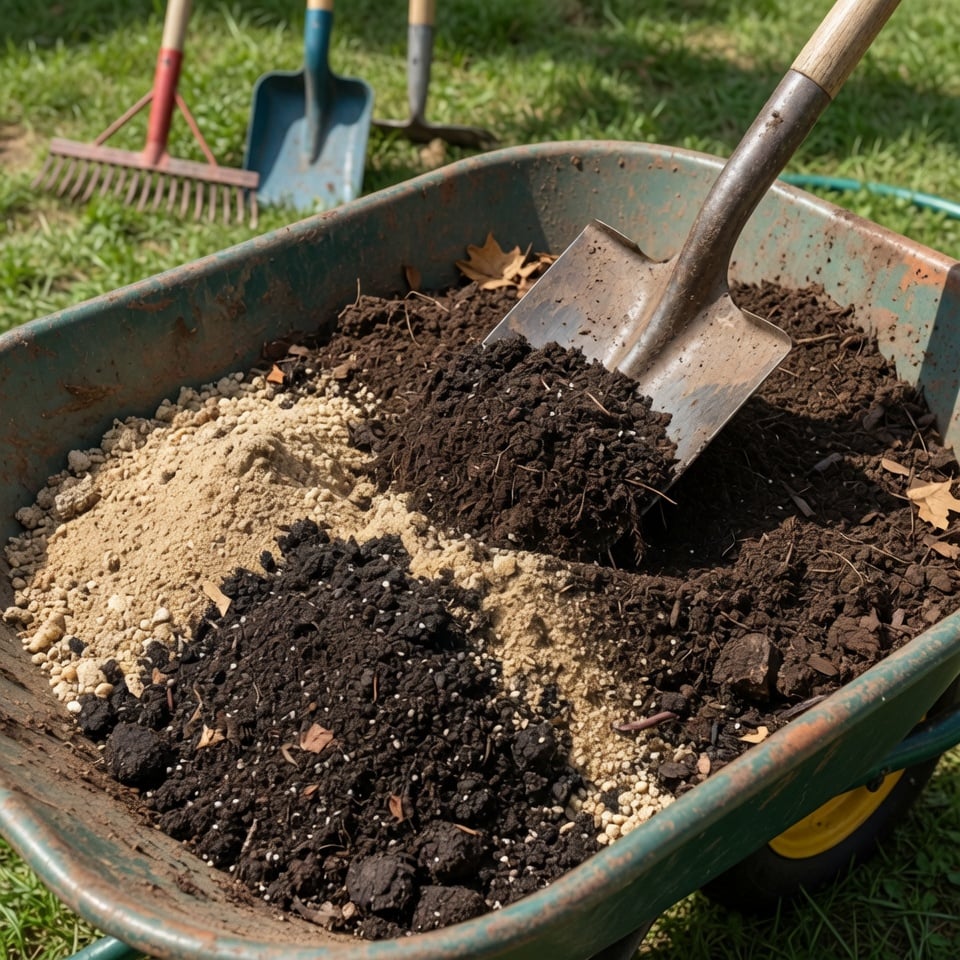
For most lawn leveling projects, you do not want to use only sand, only compost, or only heavy clay soil.
A good leveling mix is usually:
- Topsoil
- Sand
- Compost
A simple beginner-friendly mix is:
- 2 parts topsoil
- 1 part compost
- 1 part sand
Topsoil adds structure. Compost adds nutrients and improves soil health. Sand helps with drainage and spreading.
If your yard already has sandy soil, use less sand. If your soil is heavy clay, compost can help improve texture over time.
Avoid using mulch, potting mix, or pure compost to level a lawn. They can break down too quickly and leave the yard uneven again.
How to Level a Yard Step by Step
Now let’s get into the actual process.
Step 1: Mow the Lawn Short
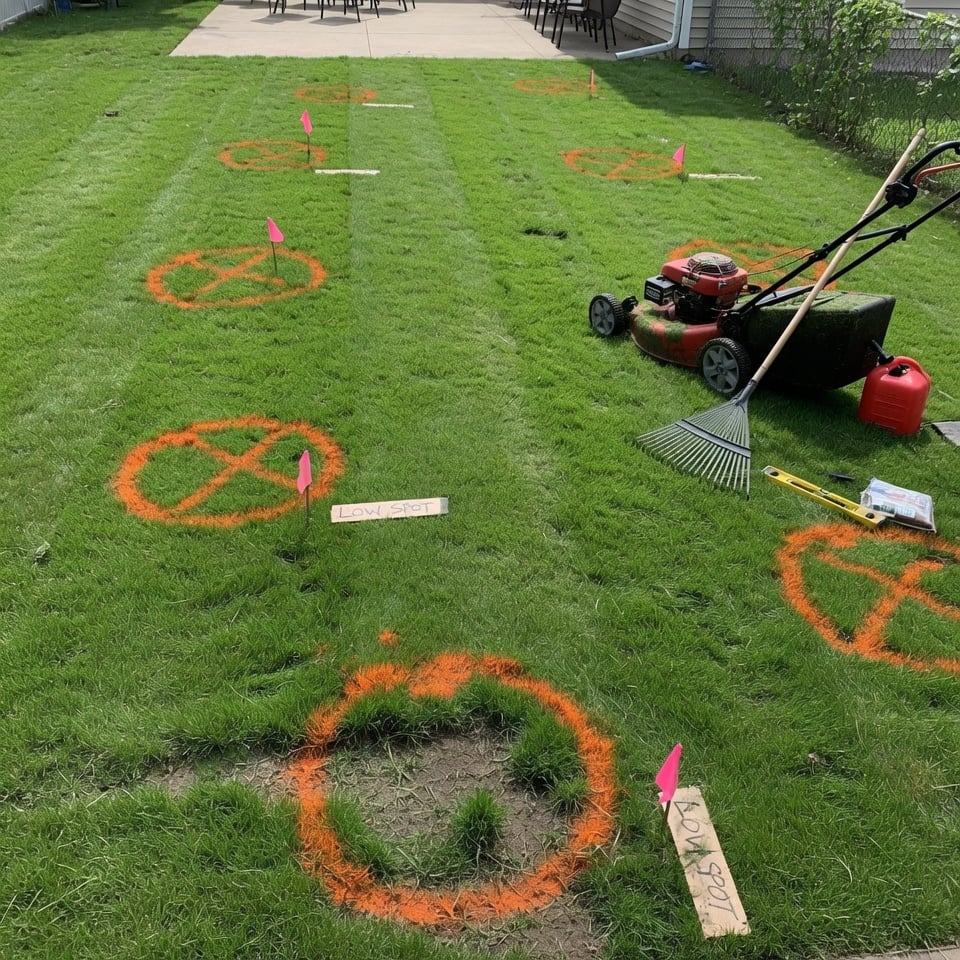
Before leveling, mow the lawn slightly shorter than usual. This makes it easier to see the bumps, dips, and low spots.
Do not scalp the lawn down to the dirt. Just cut it low enough so the grass is easier to work through.
After mowing, rake away loose clippings, leaves, sticks, and debris.
Step 2: Mark the Low Spots
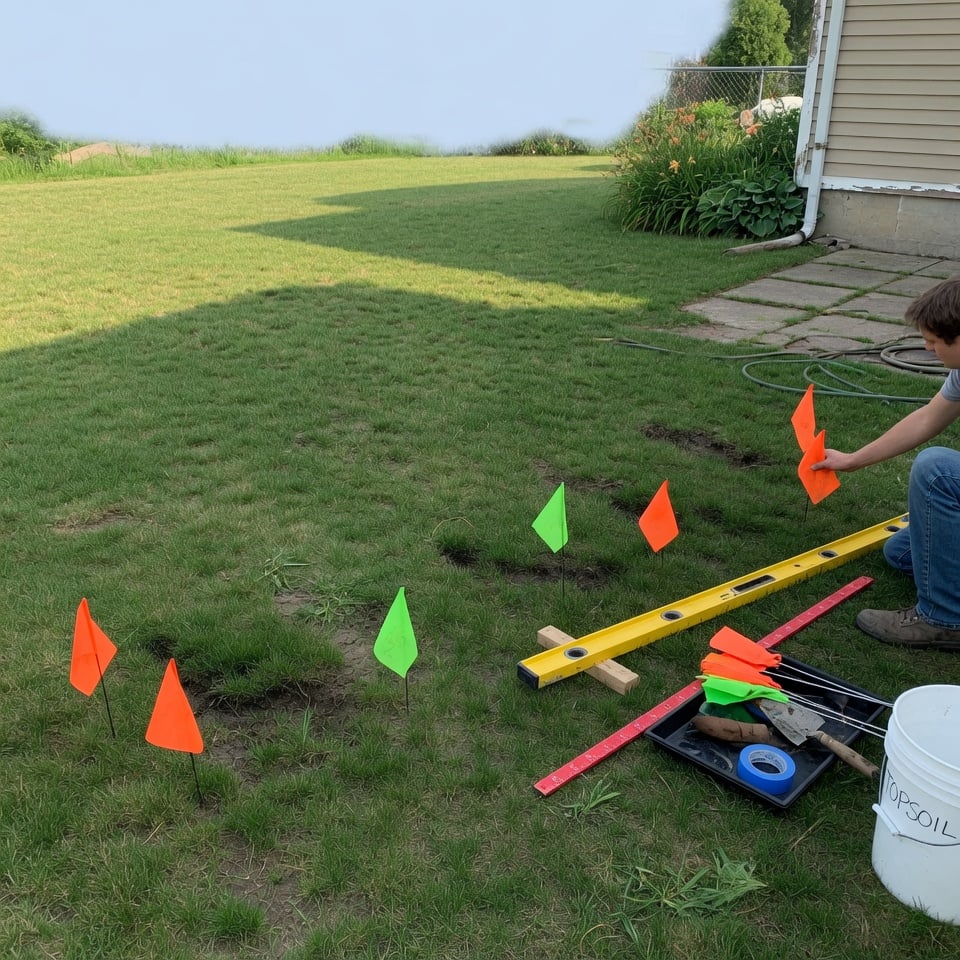
Walk slowly around your yard and look for uneven areas. You can mark low spots with small flags, sticks, stones, or spray paint made for lawns.
Pay attention to:
- Areas where water pools
- Places where the mower bounces
- Soft sunken spots
- Dips near walkways
- Uneven patches around patios
- Low spots where grass grows poorly
If you are trying to level a yard for drainage, watch where water goes after rain. That will tell you a lot.
Step 3: Check How Deep the Low Areas Are
Not all low spots should be fixed the same way.
Shallow low spots
If the dip is less than about 1 inch deep, you can usually topdress over the grass.
Medium low spots
If the dip is 1–3 inches deep, you may need to lift the grass, add soil underneath, then place the grass back down.
Deep holes or major sinking
If the dip is more than 3 inches deep, fill it in layers and compact each layer lightly. Large sinking areas may need drainage repair or professional help if they keep coming back.
Step 4: Mix Your Leveling Soil
In a wheelbarrow, mix your topsoil, sand, and compost until the texture is loose and easy to spread.
Break up clumps with your hands or rake. Large chunks make leveling harder and can smother grass.
If you are leveling a lawn with existing grass, the mix should be fine enough to fall between grass blades.
Step 5: Fill Small Low Spots With Topdressing
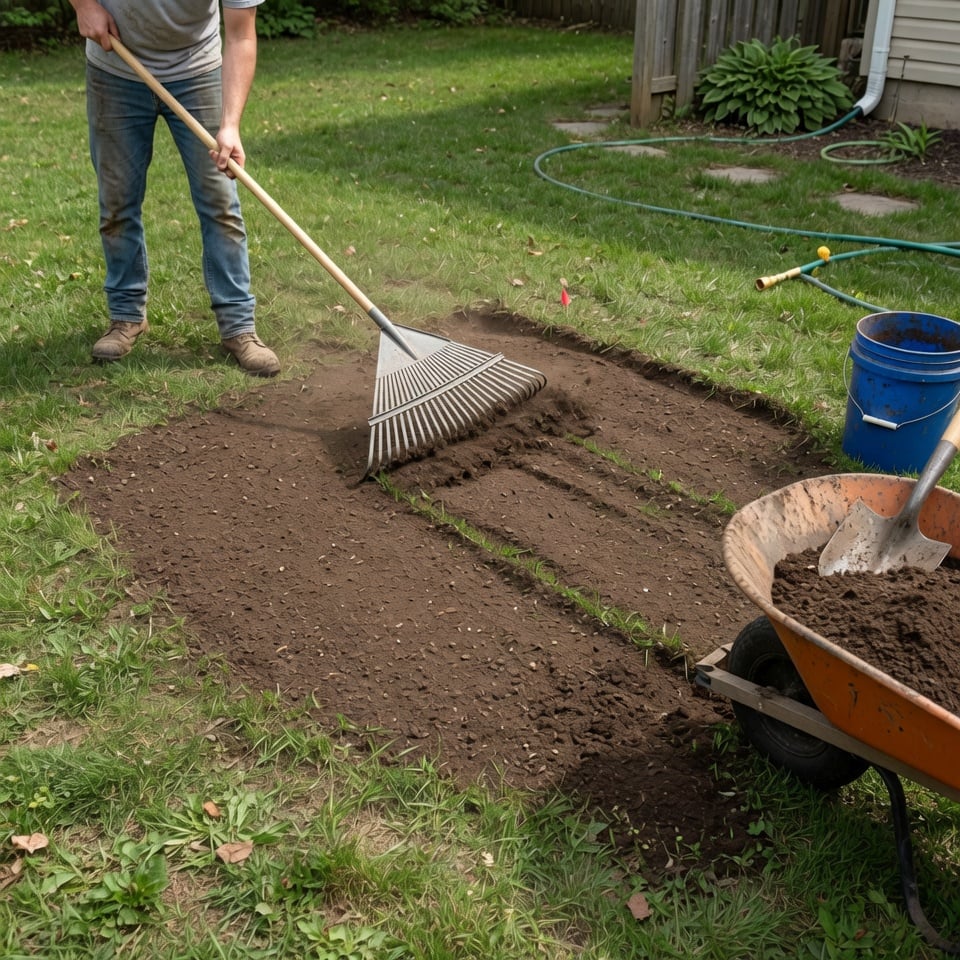
For shallow dips, spread a thin layer of leveling mix over the low area.
Use the back of a rake or lawn leveling rake to work the soil into the grass. The grass blades should still be visible. Do not bury the lawn completely.
A good rule is to add no more than about ½ inch of soil at a time over existing grass. If you add too much, the grass may suffocate.
Helpful tool: Get it on Amazon
Step 6: Fix Deeper Low Spots by Lifting the Grass
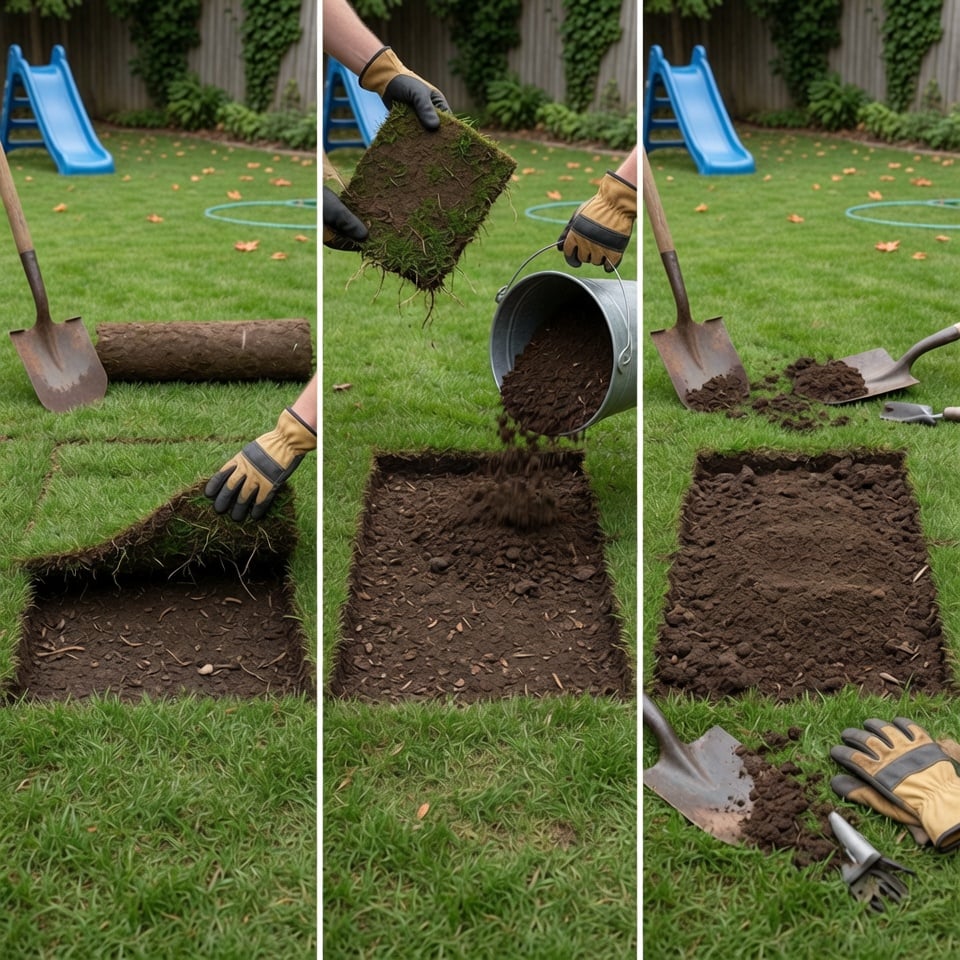
For deeper dips, it is better to lift the grass instead of burying it.
Here is how:
- Use a shovel to cut around the sunken area.
- Carefully lift the grass like a small piece of sod.
- Add leveling soil underneath.
- Press the soil down lightly.
- Put the grass back in place.
- Water the area well.
This method helps preserve your existing grass while raising the low spot.
Step 7: Level Bumpy High Spots
If your yard has raised bumps, do not just cover everything with soil. You may need to remove the high area.
For small bumps:
- Cut into the raised area with a shovel.
- Lift the grass if possible.
- Remove excess soil underneath.
- Replace the grass.
- Press it down gently.
- Water well.
This works well for mower bumps, small humps, or areas raised by soil settling unevenly.
Step 8: Rake Everything Smooth
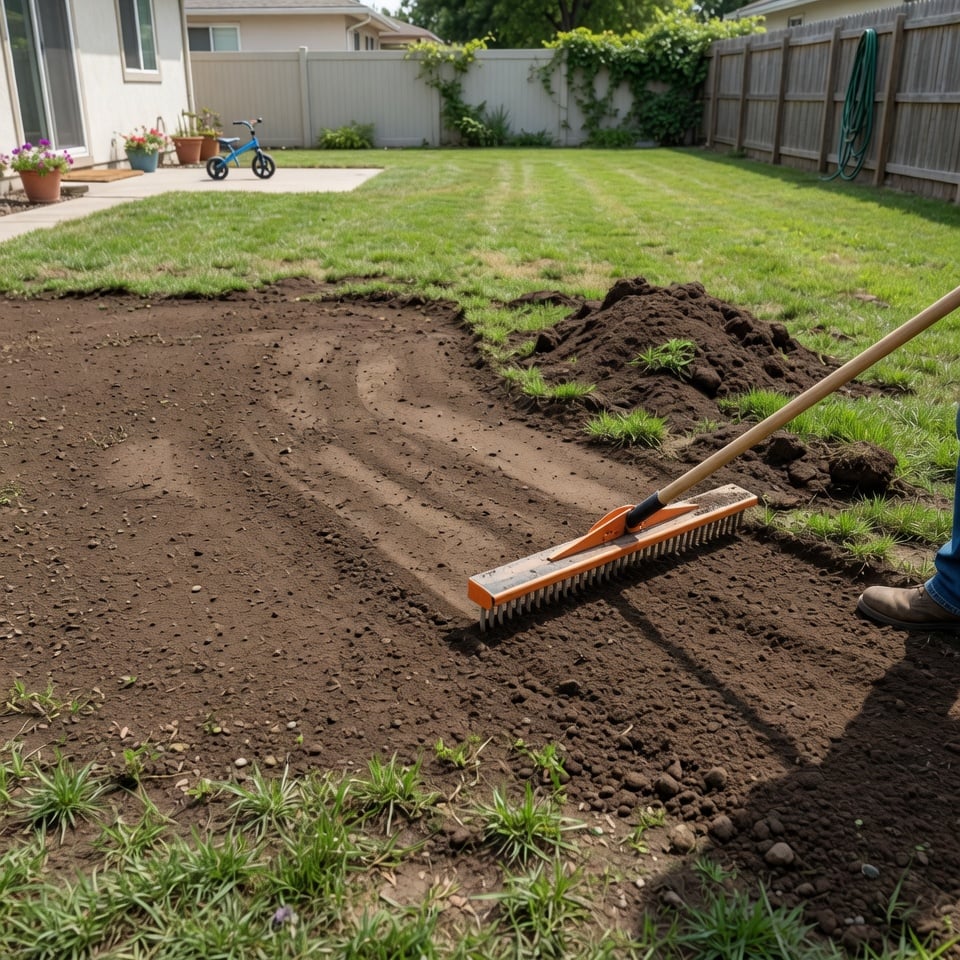
Once the low spots are filled and high spots are reduced, rake the area smooth.
Use a leveling rake, bow rake, or the back of a garden rake. The goal is to blend the repaired area into the surrounding lawn so there are no sharp edges or obvious mounds.
Take your time here. This step makes a big difference.
Step 9: Water the Area Lightly
After leveling, water the yard lightly to help the soil settle.
Do not flood it. Heavy water can wash away your leveling mix before it has settled.
After a few days, check the area again. Some soil may settle lower, and you may need to add a little more mix.
Step 10: Add Grass Seed Where Needed
If you buried thin patches, exposed bare soil, or repaired deeper spots, add grass seed.
Choose a seed that matches your existing lawn. Lightly rake it in, press it down, and keep the area moist until it germinates.
Helpful option: Shop grass seed on Amazon
You can also use straw or seed starter mulch lightly over bare soil to help retain moisture.
For bare patches: Check price on Amazon
How to Level a Yard Without Killing Grass
If you want to level a yard without killing the grass, the most important rule is this:
Do not smother the grass.
Use thin layers of leveling mix. Keep grass blades visible. Water lightly. Repeat the process gradually if needed.
For shallow lawn unevenness, topdressing works well. For deeper low spots, lift the grass and add soil underneath instead of burying it.
This is slower, but it keeps the lawn healthier.
How to Level a Yard for Drainage
If water pools in your yard, leveling may help — but only if the slope is correct.
A yard should generally slope away from the house so water does not run toward the foundation. If your yard has low spots that trap water, fill them gradually with soil and create a smooth path for water to move away.
For small drainage dips:
- Fill low areas with soil mix
- Rake smooth
- Compact lightly
- Water and let settle
- Add more soil if needed
- Seed the area
For serious drainage problems, you may need:
- French drain
- Dry creek bed
- Regrading
- Soil amendment
- Downspout extension
- Catch basin
If water is collecting near your foundation, that is more serious than a normal lawn dip. In that case, consider getting professional drainage advice.
How to Level a Yard Before Laying Sod
If you are leveling a yard before sod, you can be more aggressive because you are not trying to preserve existing grass.
Here is the basic process:
- Remove old grass and weeds.
- Loosen the top few inches of soil.
- Add topsoil where needed.
- Rake the surface smooth.
- Use a long board or leveling rake to even the area.
- Lightly compact the soil.
- Water and let it settle.
- Add more soil to sunken spots.
- Lay sod on a smooth, moist surface.
A flat, smooth base helps sod root better and prevents bumps from showing later.
How to Level a Yard for Pavers, Patio, or Shed
If you are leveling ground for pavers, a patio, or a shed, you need more precision than basic lawn leveling.
For these projects, you usually need:
- String line
- Level
- Tamper
- Gravel base
- Sand layer
- Landscape fabric, optional
- Pavers or shed foundation blocks
Do not rely on loose topsoil under pavers or sheds. Topsoil settles too much. Use a compacted gravel base instead.
Helpful tool: Check price on Amazon
A basic level also helps you avoid a tilted patio or shed base.
For accuracy: View on Amazon
How Much Soil Do You Need to Level a Yard?
The amount of soil depends on how large and deep the low area is.
A simple formula:
Length × Width × Depth = Cubic Feet
For example, if a low spot is:
- 10 feet long
- 5 feet wide
- 0.25 feet deep
That equals:
10 × 5 × 0.25 = 12.5 cubic feet
There are 27 cubic feet in one cubic yard, so 12.5 cubic feet is a little less than half a cubic yard.
For small lawn repairs, bagged topsoil may be enough. For large yard leveling, bulk soil delivery is usually cheaper.
Common Yard Leveling Mistakes to Avoid
Adding Too Much Soil at Once
If you dump several inches of soil over grass, it may suffocate. Use thin layers for existing lawns.
Using the Wrong Soil
Mulch, potting soil, and pure compost are not ideal for leveling lawns. Use a topsoil-based mix.
Ignoring Drainage
If water is causing the low spot, filling it without fixing water flow may only be temporary.
Leveling During Extreme Heat
Grass is already stressed in extreme heat. Leveling can make it worse.
Forgetting to Water
New soil and grass seed need moisture to settle and grow.
Not Letting Soil Settle
Fresh soil often settles after watering or rain. Check the area after a few days and top up if needed.
How to Prevent Your Yard From Becoming Uneven Again
Once your yard is level, a few simple habits can help keep it that way.
- Fix drainage problems early
- Avoid heavy equipment on wet lawns
- Fill holes from pets quickly
- Control burrowing pests
- Aerate compacted soil
- Overseed thin areas
- Keep grass healthy
- Redirect downspouts away from low areas
A healthy lawn with strong roots holds soil better and resists erosion.
FAQs About How to Level a Yard
What is the easiest way to level a yard?
The easiest way to level a yard is to topdress low spots with a mix of topsoil, compost, and sand. Spread a thin layer over shallow dips, rake it smooth, water lightly, and repeat if needed.
Can I level my yard myself?
Yes, you can level small to medium lawn unevenness yourself with basic tools like a rake, shovel, wheelbarrow, leveling mix, and grass seed. Major drainage issues, steep slopes, or large sinking areas may need professional help.
What is the best soil to level a yard?
A good yard leveling mix is usually topsoil, compost, and sand. This gives structure, nutrients, and better spreadability. Avoid using only sand or only compost for most lawns.
How do I level a bumpy lawn?
To level a bumpy lawn, mow the grass, mark high and low areas, fill shallow dips with leveling mix, remove soil from raised bumps if needed, rake everything smooth, water lightly, and reseed bare areas.
Can I put topsoil over grass to level it?
Yes, but only in thin layers. Keep the grass blades visible so the lawn does not suffocate. For deeper low spots, lift the grass, add soil underneath, then place the grass back down.
How do I level a yard with low spots?
Fill low spots with a topsoil-based leveling mix. For shallow dips, topdress over the grass. For deeper dips, lift the sod, add soil underneath, replace the sod, and water well.
Should I use sand to level my yard?
Sand can be part of a leveling mix, but using only sand is not always best. Sand works better when mixed with topsoil and compost, especially if your lawn soil is not already sandy.
How long does it take for a leveled yard to settle?
Soil may begin settling after watering or rain within a few days, but full settling can take a few weeks. You may need to add more soil after the first round settles.
Can leveling a yard fix drainage?
Leveling can help small drainage dips, but it may not fix major drainage problems. If water flows toward your house or pools badly, you may need regrading, downspout extensions, a French drain, or professional drainage work.
Final Thoughts
Learning how to level a yard is one of those home projects that feels intimidating until you break it into simple steps.
Start by mowing and marking the low spots. Use the right soil mix. Fill shallow dips with thin layers. Lift the grass for deeper spots. Rake everything smooth, water lightly, and reseed bare patches.
If the yard is uneven because of normal settling, this is a very doable DIY project. But if the problem is caused by poor drainage, erosion, or water flowing toward your house, fix the drainage first so the low spots do not keep coming back.
A level yard looks better, feels safer, drains better, and makes mowing so much easier — and once it’s done, you’ll wonder why you waited so long.