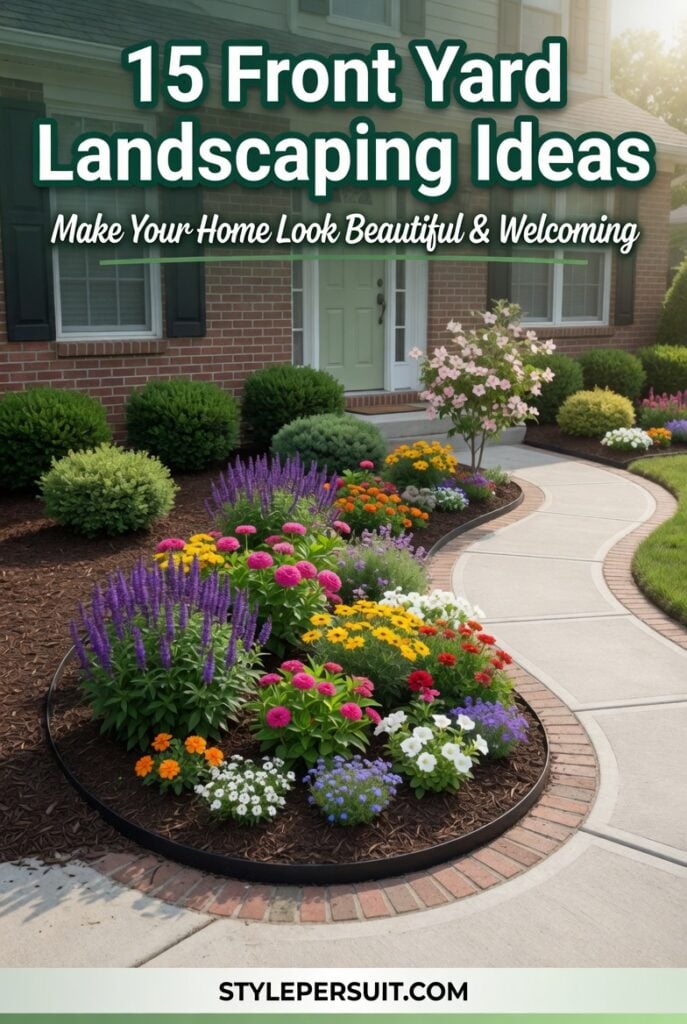
Your front yard is the first thing people notice about your home. Before anyone sees your living room, your kitchen, or your personal style inside, they see the outside.
And whether you have a tiny entryway, a wide lawn, a narrow walkway, or a plain patch of grass that feels a little forgotten, good landscaping can completely change the way your home feels.
The lovely part is this: front yard landscaping does not have to mean expensive stonework, professional garden plans, or a full makeover.
Sometimes, the biggest difference comes from adding structure, choosing the right plants, creating layers, or making the walkway feel more intentional.
A beautiful front yard should feel welcoming, balanced, and easy to maintain. It should fit your home, your climate, and your lifestyle—not just look good for one week after planting.
These ideas will help you create a front yard that feels polished, fresh, and full of curb appeal without making it feel stiff or overdone.
1. Create a Curved Flower Bed Along the Walkway
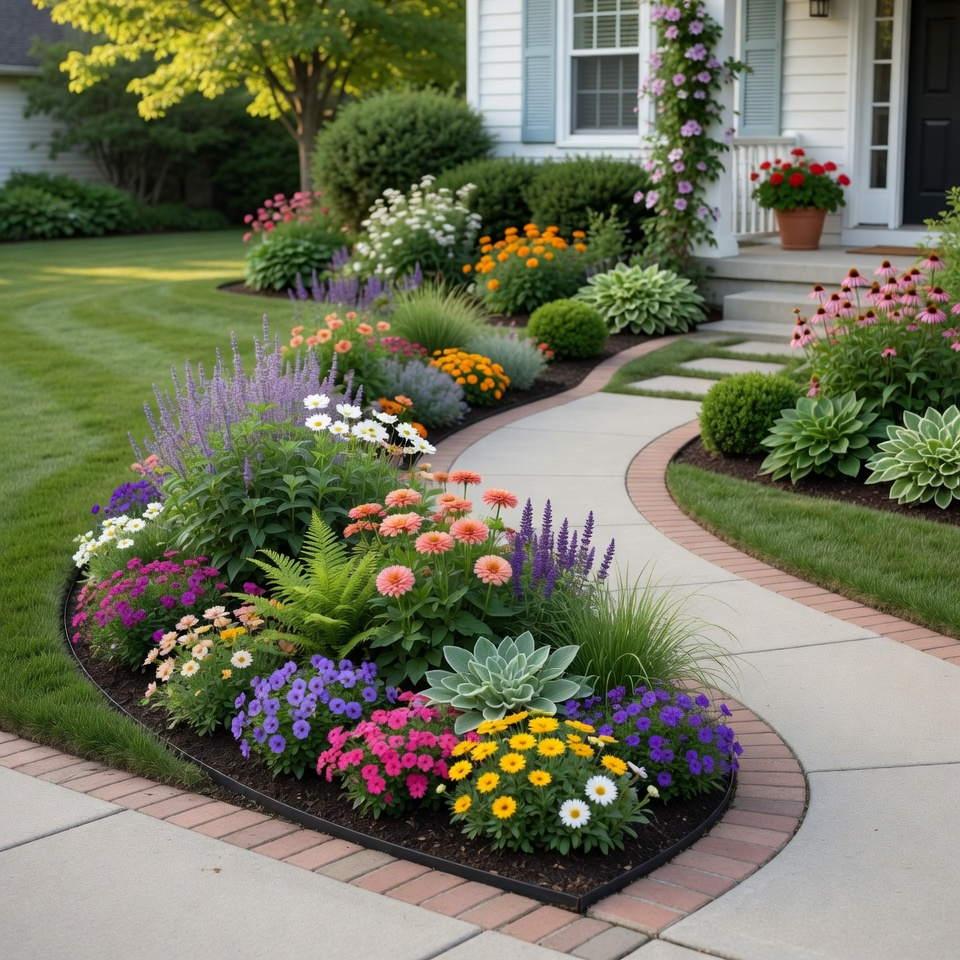
A curved flower bed instantly makes a front yard feel softer and more intentional. Straight lines can look clean, but curves feel natural and inviting, especially near a walkway where guests are moving toward your front door.
Instead of having plain grass running all the way to the path, shape a gentle border with flowers, shrubs, or ornamental grasses.
The trick is to layer your plants. Place shorter flowers near the front edge, medium plants in the middle, and taller shrubs or grasses toward the back.
This gives the bed depth instead of making it look flat. You can use colorful seasonal flowers for a cheerful look or choose mostly greenery for something more elegant and low-maintenance.
Add mulch between plants to keep weeds down and make everything look finished. Even a simple curved bed can make your entrance feel like it was designed with care.
2. Add Foundation Plants Around the House
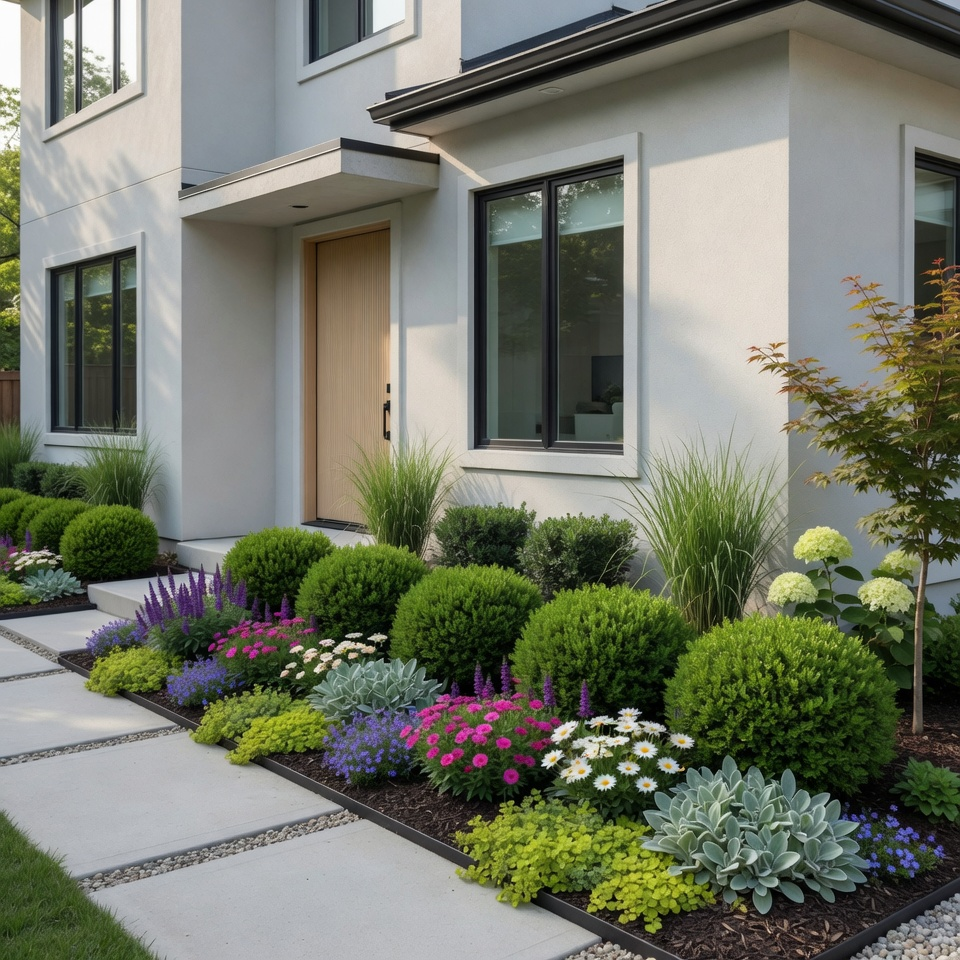
Foundation planting is one of the easiest ways to make a home look grounded. Without plants around the base of the house, the building can feel a little bare or disconnected from the yard.
A row of shrubs, flowers, and greenery helps soften the edges and creates a smoother transition between the home and the landscape.
Avoid planting everything in a stiff, identical row. A more modern approach is to mix heights and textures.
Try evergreen shrubs for year-round structure, flowering plants for color, and smaller border plants to fill gaps. Keep taller shrubs away from windows so your home still feels open and bright.
The goal is not to hide your house—it is to frame it beautifully. When done well, foundation plants make even a simple home exterior feel more polished and complete.
3. Use Large Planters Near the Front Door
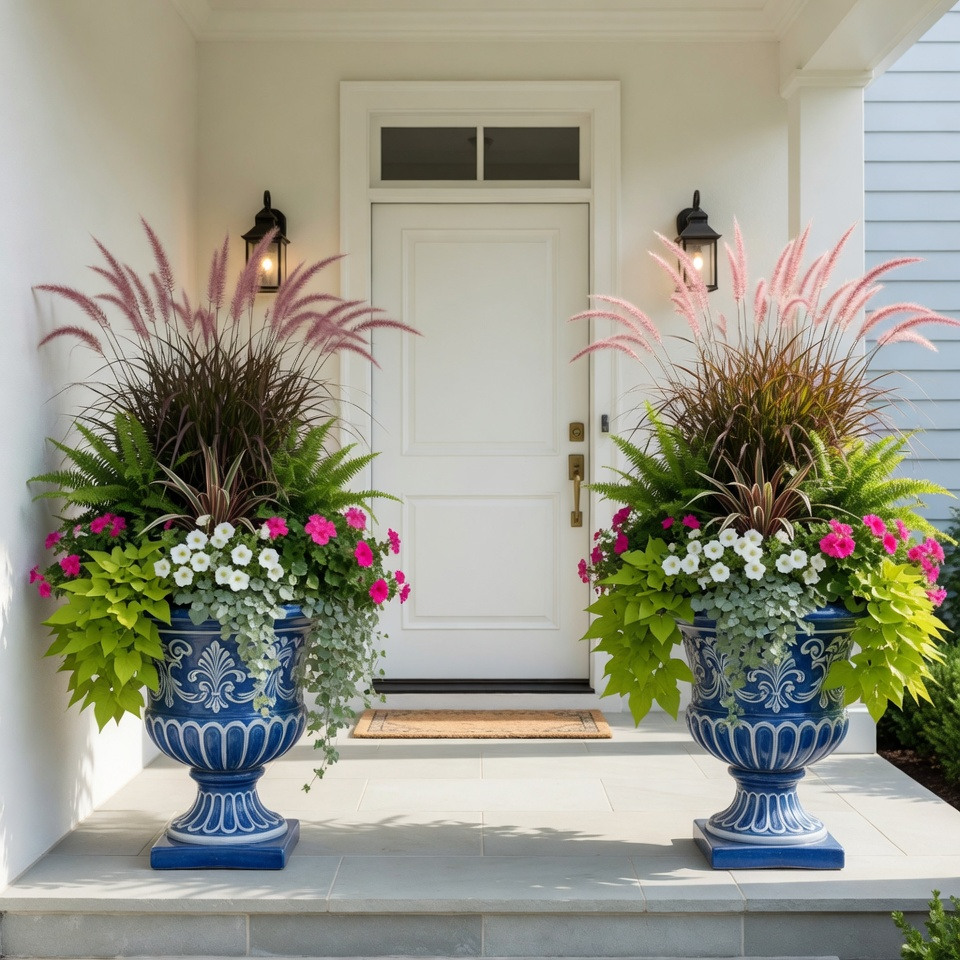
Large planters are perfect if you want a quick upgrade without digging up your yard.
A pair of oversized pots on either side of the front door creates instant symmetry and makes your entrance feel more welcoming. Even one large planter can work beautifully if your porch is small.
Choose planters that match your home’s style. Terracotta feels warm and classic, black planters look modern, and stone or concrete pots create a timeless look.
For plants, use the “thriller, filler, spiller” formula: one tall plant for height, fuller plants to fill the pot, and trailing plants that spill over the sides.
This creates a lush arrangement that looks professionally styled. Best of all, planters are easy to refresh each season, so your front yard can change without a major redesign.
4. Install a Stone or Gravel Pathway
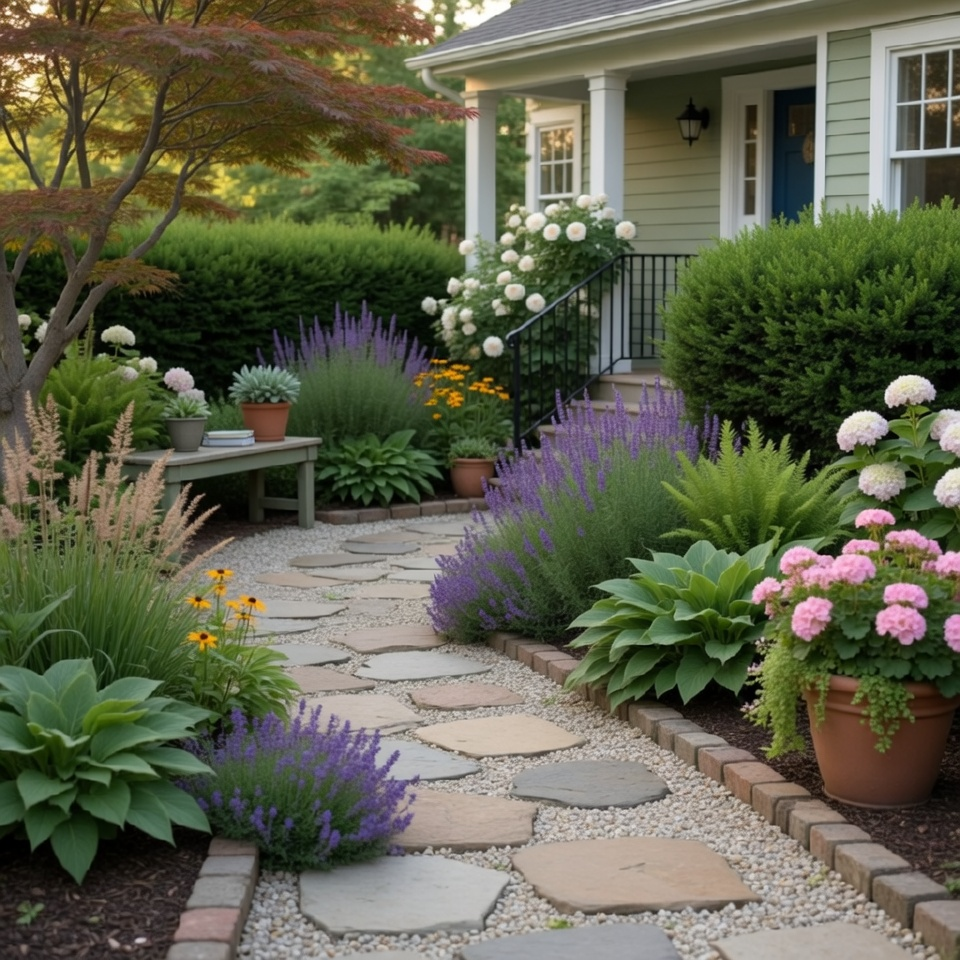
A pathway does more than guide people to your front door—it gives your yard structure.
If your front yard feels empty or unplanned, adding a stone, gravel, or stepping-stone path can immediately make it feel more thoughtful.
Gravel paths are budget-friendly and work beautifully with cottage, farmhouse, or Mediterranean-style homes.
Stepping stones feel casual and charming, especially when surrounded by ground cover or grass. Larger pavers create a cleaner, more modern look.
The key is to make the path wide enough to feel comfortable and easy to walk on. You can also line it with small plants or solar lights to make it stand out.
A good pathway creates movement and makes the whole yard feel more inviting.
5. Mix Evergreen and Seasonal Plants
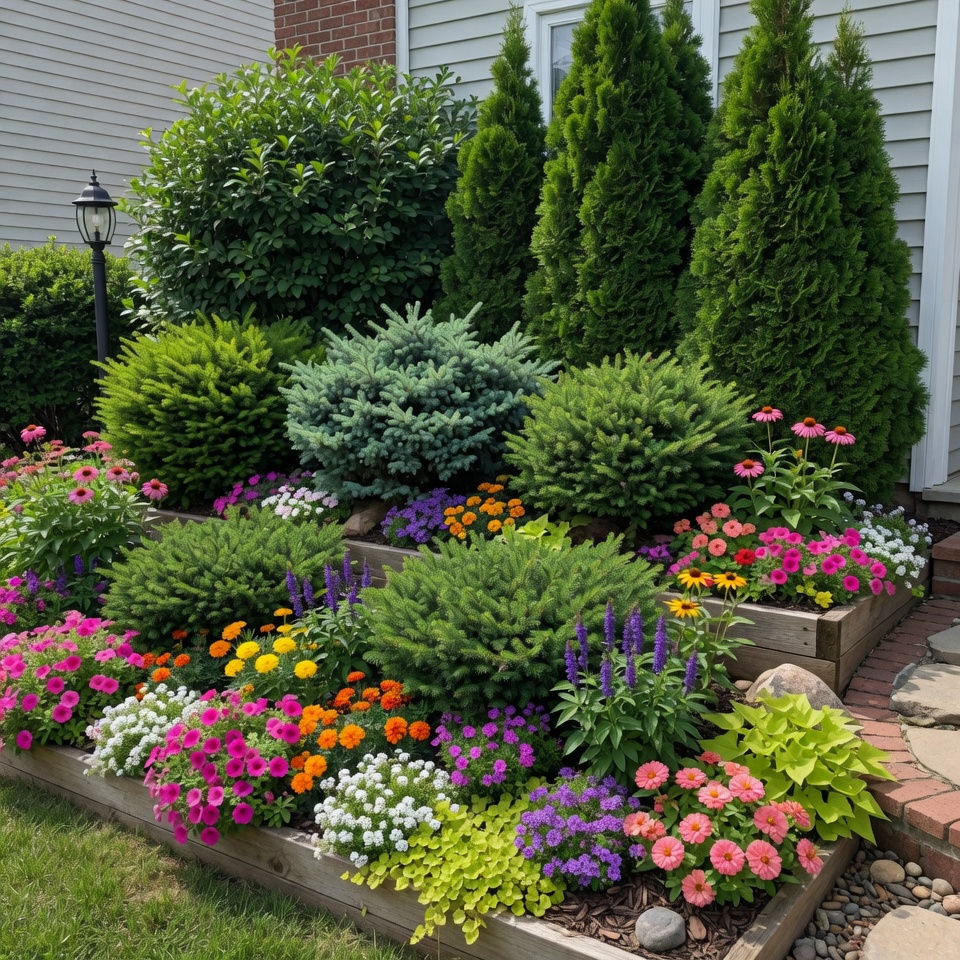
One common landscaping mistake is choosing plants that only look good during one season.
They bloom beautifully for a few weeks, then the yard looks empty again. A smarter approach is to mix evergreen plants with seasonal flowers.
Evergreens provide structure all year. They keep your yard from looking bare in colder months or dry seasons.
Seasonal plants, on the other hand, bring color and freshness. Think of evergreens as the bones of your landscape and flowers as the personality.
This combination gives you a front yard that feels alive throughout the year without needing constant replanting.
Boxwood, dwarf shrubs, ornamental grasses, lavender, petunias, marigolds, hydrangeas, and salvia can all work depending on your climate.
6. Add Landscape Lighting for Evening Curb Appeal
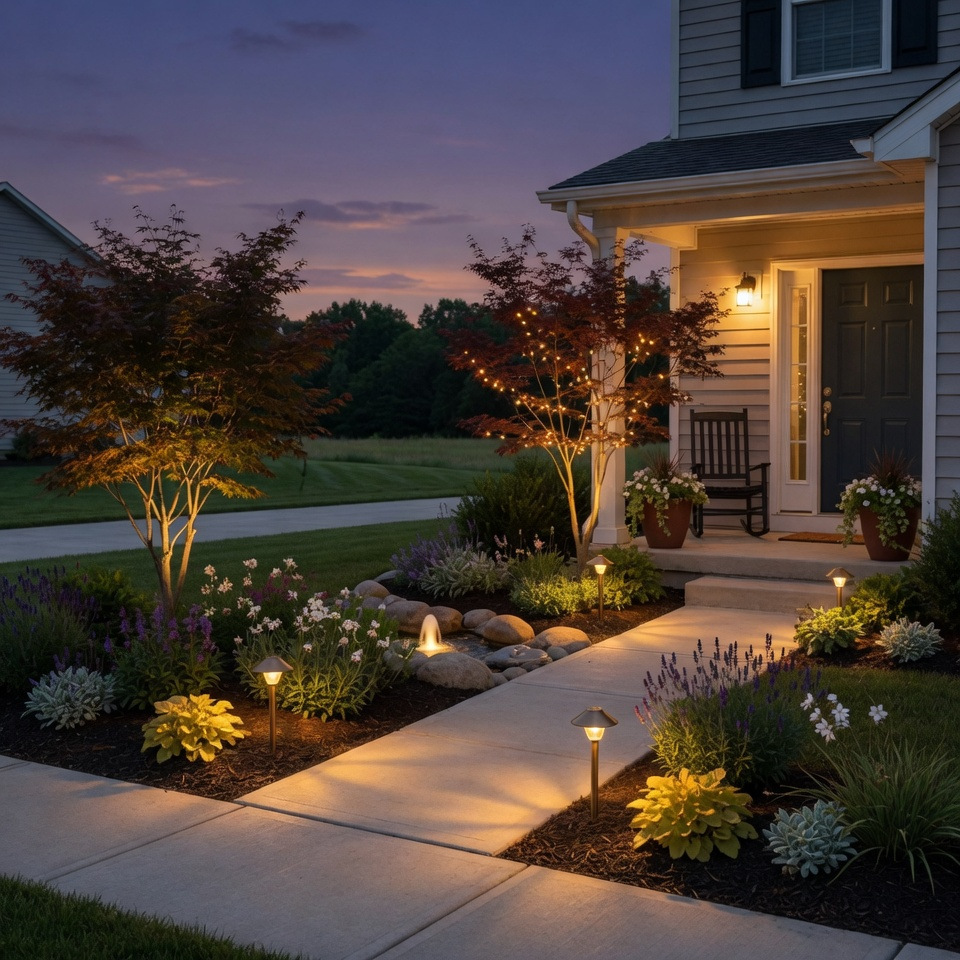
A front yard should not disappear after sunset. Landscape lighting adds warmth, safety, and a little bit of drama, in the best way. Even simple solar lights along the walkway can make your home feel more welcoming at night.
Use lighting to highlight the best parts of your yard. Place path lights along walkways, uplights near small trees, or soft lights around flower beds.
You do not need too many; in fact, too much lighting can look harsh. The goal is a gentle glow that guides the eye and makes the space feel cozy.
This is especially useful if you often come home in the evening or host guests. A well-lit front yard feels cared for, secure, and surprisingly high-end.
7. Create a Small Seating Area
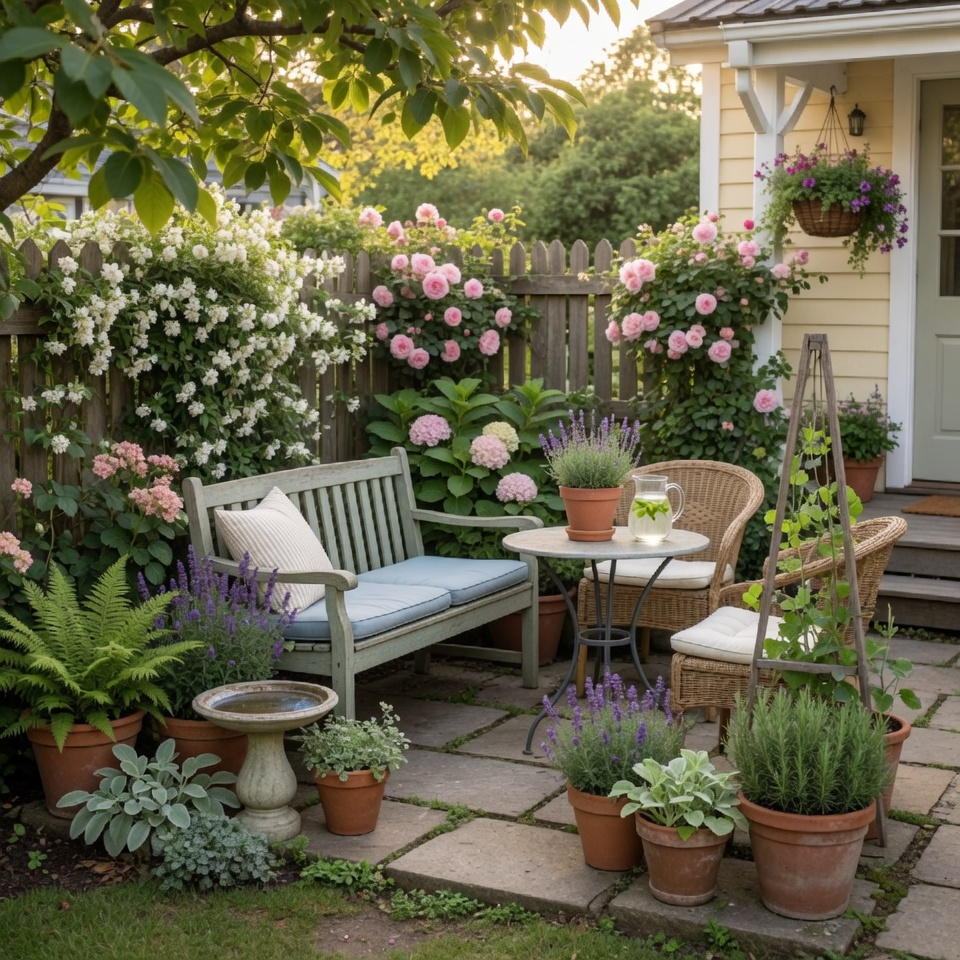
If you have enough space, adding a small seating area can make your front yard feel more personal.
It could be a bench under a tree, two chairs near the porch, or a small bistro set by a garden bed.
This kind of detail turns the front yard from “just landscaping” into a space that feels lived in.
The key is placement. Choose a spot that feels natural, not random. A bench along a pathway or near a flower bed creates a charming pause point.
Add surrounding plants to make it feel tucked in and intentional. You do not need a large area; even a small corner can create a warm, neighborly feel.
It also makes your home look more inviting because it suggests that the outside space is enjoyed, not just maintained.
8. Use Mulch to Clean Up Garden Beds
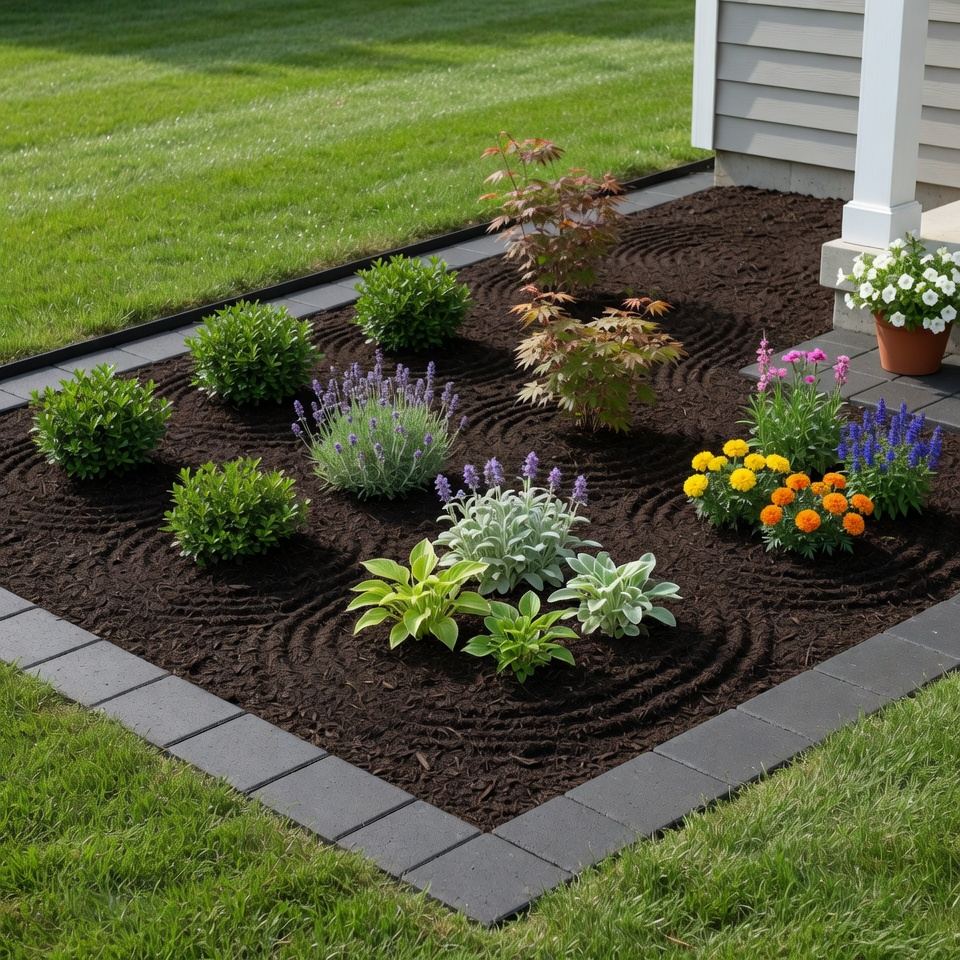
Mulch might not sound exciting, but it makes a huge visual difference. A fresh layer of mulch can take a messy garden bed and make it look instantly cleaner and more professional.
It also helps retain soil moisture, suppress weeds, and protect plant roots.
Choose a mulch color that complements your home. Dark mulch creates contrast and makes green plants pop. Natural brown mulch feels warm and classic.
Gravel or stone mulch works well for modern or drought-friendly designs. Just avoid piling mulch too high around plant stems or tree trunks, because that can trap moisture and cause problems.
A clean mulch layer is one of the fastest ways to refresh your front yard without spending a fortune.
9. Plant a Statement Tree
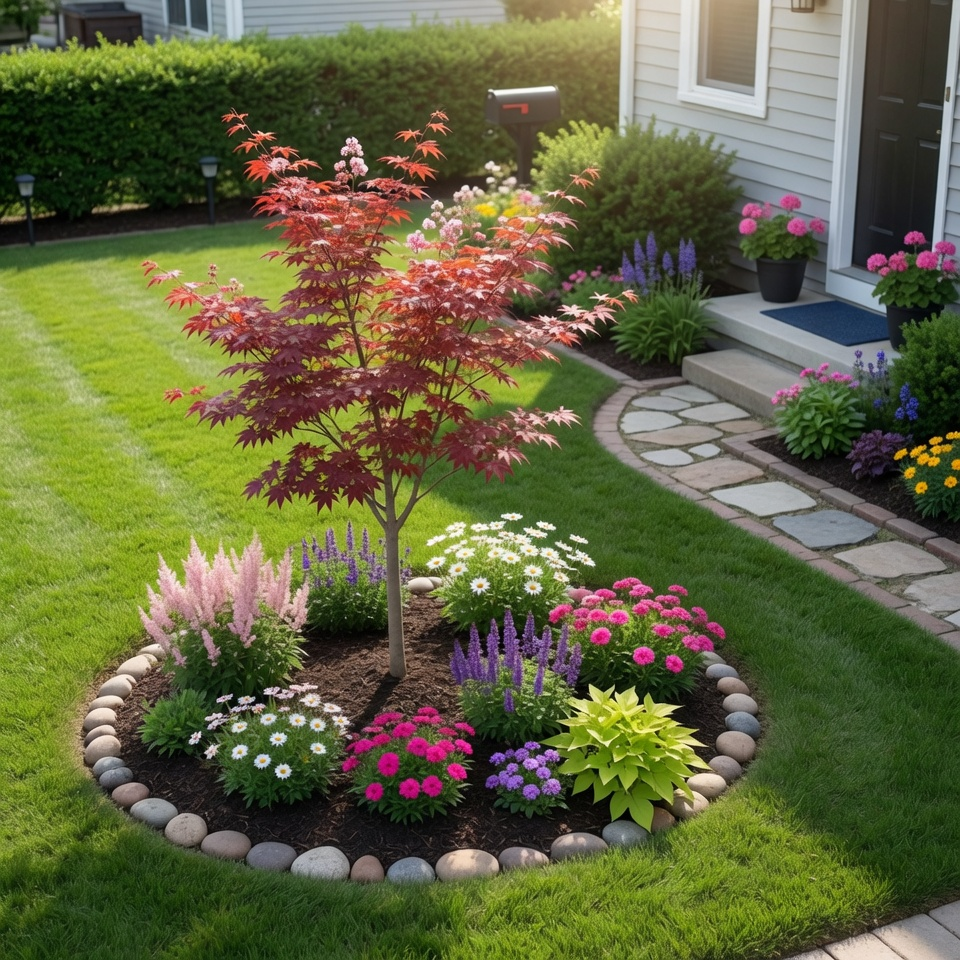
A statement tree can become the anchor of your front yard. It adds height, shade, and character. Without vertical elements, a yard can feel flat, even if the flower beds are pretty. A tree gives the eye somewhere to land.
Choose a tree based on your yard size and climate. For smaller front yards, look for compact ornamental trees such as Japanese maple, crepe myrtle, dwarf magnolia, or flowering dogwood.
For larger yards, shade trees can create a more established look over time. Think carefully about placement—too close to the house, driveway, or power lines can cause future problems.
A well-placed tree makes your landscaping feel mature and thoughtful, even if the rest of the yard is simple.
10. Add a Rock Garden for Low-Maintenance Beauty
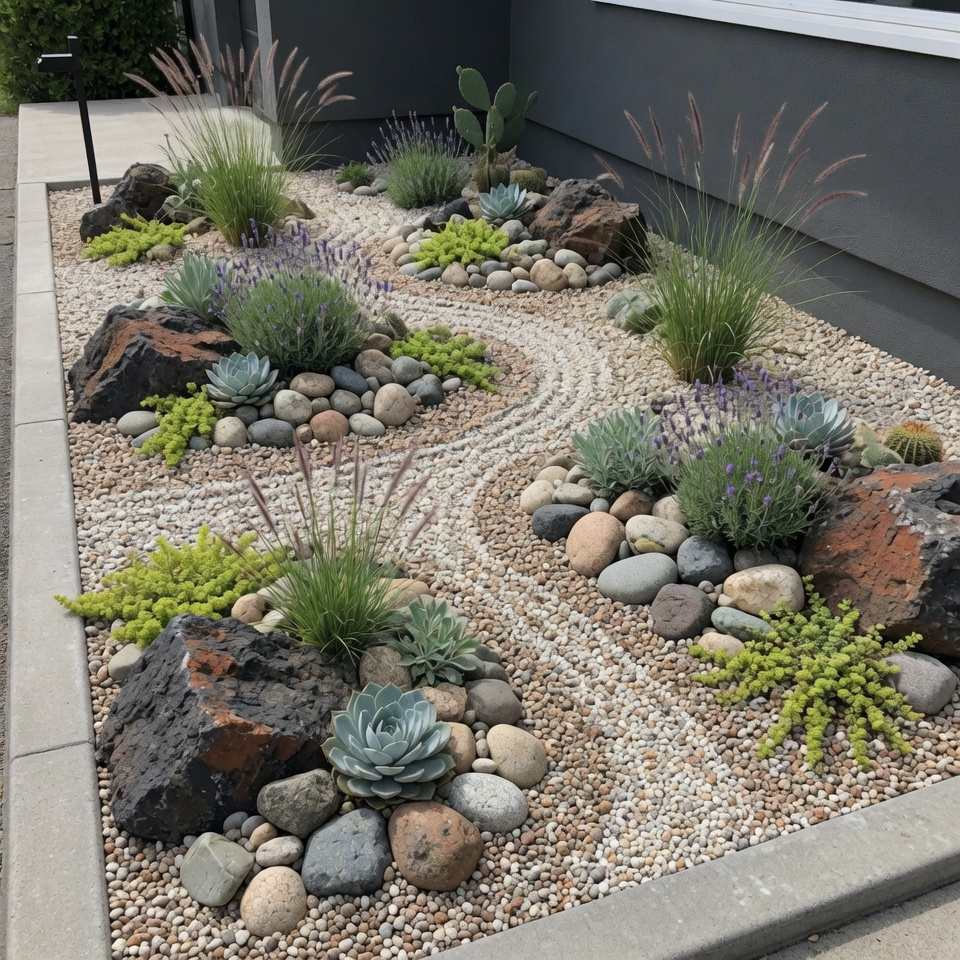
A rock garden is a great option if you want something stylish but easy to maintain. It works especially well in dry climates or areas where grass struggles.
Instead of relying on thirsty plants, you create interest with stones, gravel, drought-tolerant plants, and sculptural shapes.
The beauty of a rock garden is texture. Mix different sizes of rocks—large anchor stones, medium river rocks, and smaller gravel—to avoid a flat look.
Add plants like succulents, ornamental grasses, lavender, yucca, or sedum depending on your region.
Keep the design natural, not overly perfect. A good rock garden feels calm, earthy, and modern while requiring less watering and mowing than a traditional lawn.
11. Frame the Driveway with Plants
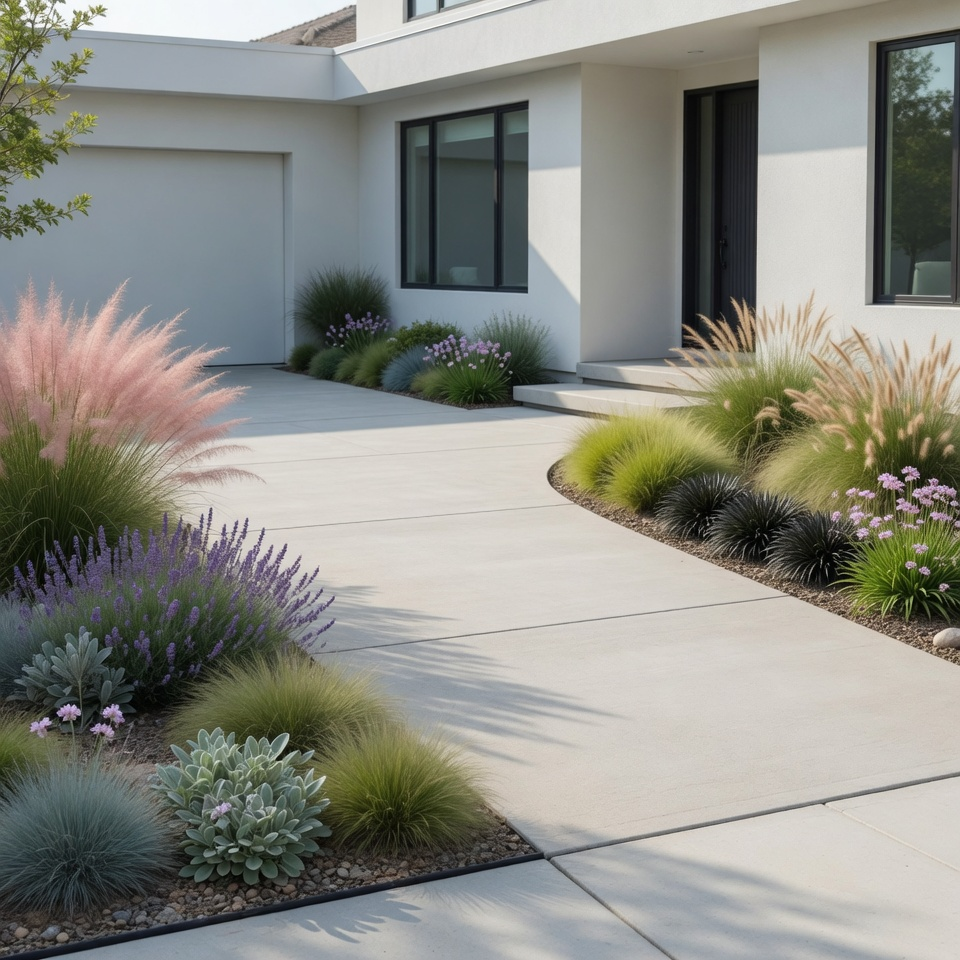
Driveways often take up a lot of visual space, but they are usually ignored in landscaping.
Adding plants along the edges can soften the hard concrete and make the whole front yard look more finished.
You can use low shrubs, ornamental grasses, small flowering plants, or ground cover along the sides. Keep plants low enough that they do not block visibility when backing out.
If your driveway is long, repeating the same plant every few feet creates rhythm and makes the design feel cohesive. You can also add lighting along the driveway for extra polish.
This simple detail turns a plain driveway into part of the landscape instead of something that interrupts it.
12. Try a Cottage Garden Look
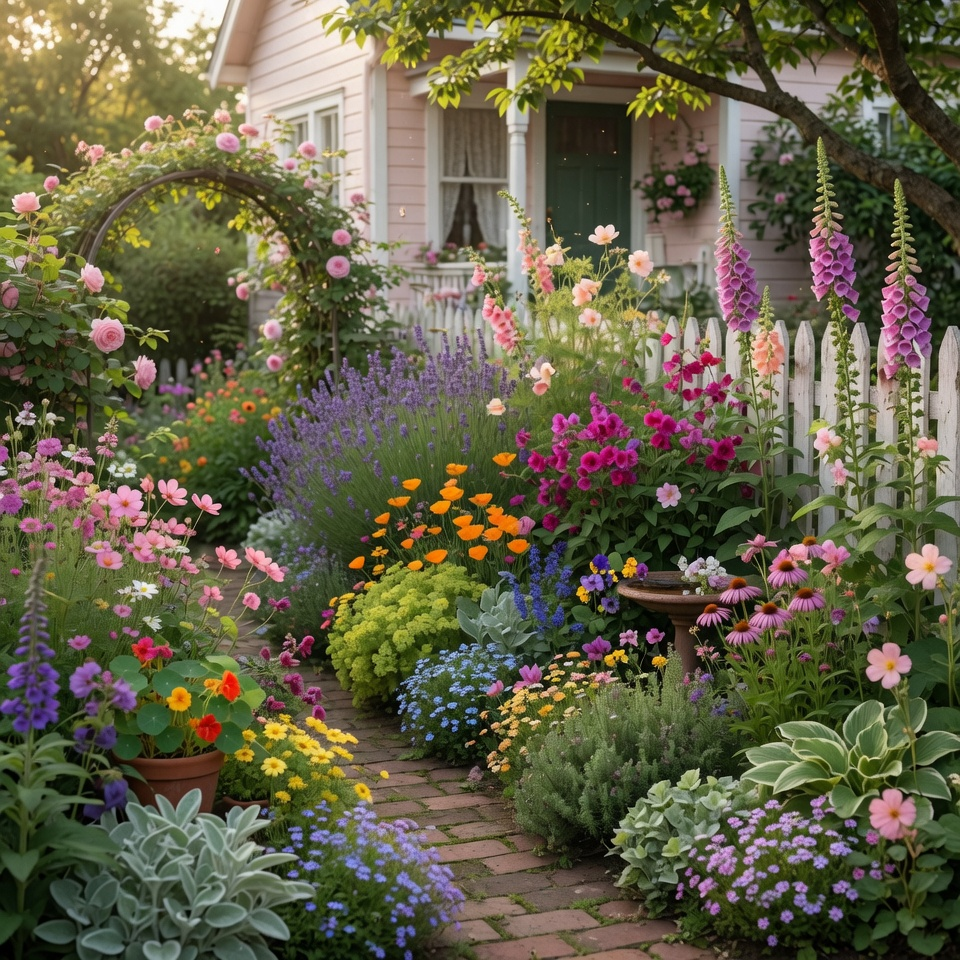
A cottage garden front yard feels romantic, relaxed, and full of life. Instead of perfectly spaced plants, it uses layers of flowers, herbs, and greenery to create a soft, abundant look. It is ideal if you love a slightly wild but beautiful style.
To make it work, choose plants that bloom at different times and vary in height. Roses, lavender, daisies, foxgloves, catmint, salvia, and hydrangeas are classic choices.
Add a simple path or border so the garden still feels controlled rather than messy. The magic of a cottage garden is that it feels welcoming and personal, like the home has a story.
It is not the lowest-maintenance option, but it can be one of the most charming.
13. Replace Some Lawn with Ground Cover
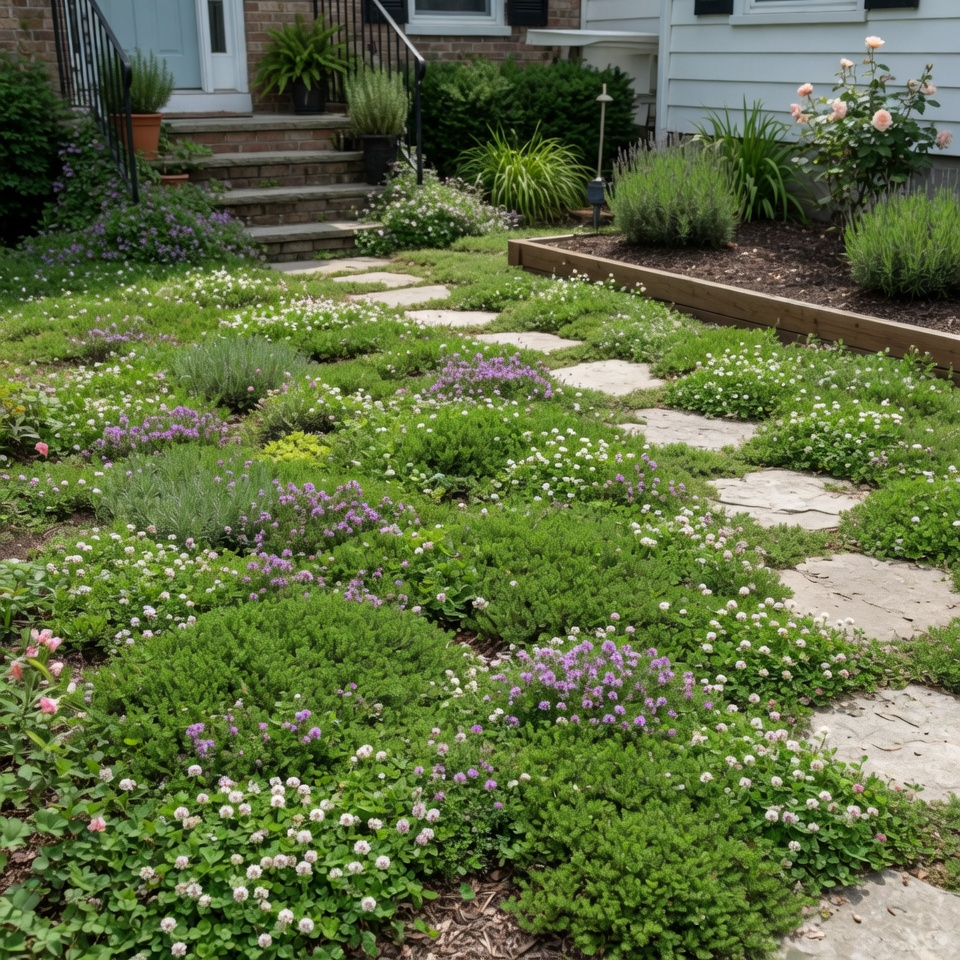
If your lawn takes too much work or has patchy areas, ground cover can be a smart alternative. It fills space, reduces mowing, and adds texture to the yard.
Ground cover can also soften pathways, surround trees, or fill awkward corners where grass does not grow well.
Options vary by climate, but creeping thyme, mondo grass, clover, sedum, ajuga, and creeping Jenny are popular choices.
Some stay green, some flower, and some handle foot traffic better than others. The key is choosing one that fits your conditions—sun, shade, moisture, and how much walking the area gets.
Replacing even a small section of lawn can make the front yard feel more designed and less demanding.
14. Add Window Boxes for Extra Charm
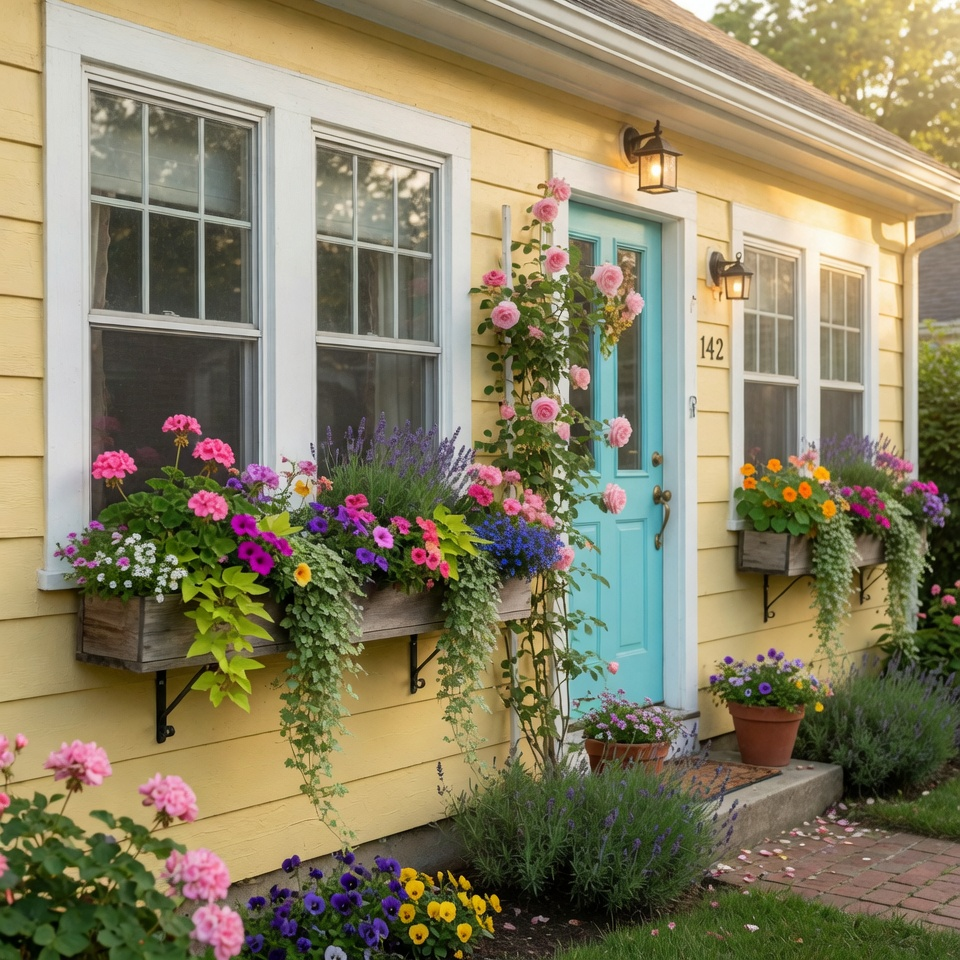
Window boxes are small, but they can completely change the personality of your home.
They draw attention upward, add color near the house, and make the exterior feel more charming. This is especially helpful if you have a plain front wall or limited yard space.
Choose flowers and trailing plants that match your home’s color palette. For a classic look, use white flowers and greenery.
For a cheerful summer look, mix bright blooms like petunias, geraniums, or calibrachoa. Make sure the boxes are securely installed and easy to water.
Window boxes work beautifully with cottage, farmhouse, and traditional homes, but they can also look modern when styled simply. They are a small detail with a big visual payoff.
15. Create a Clear Focal Point
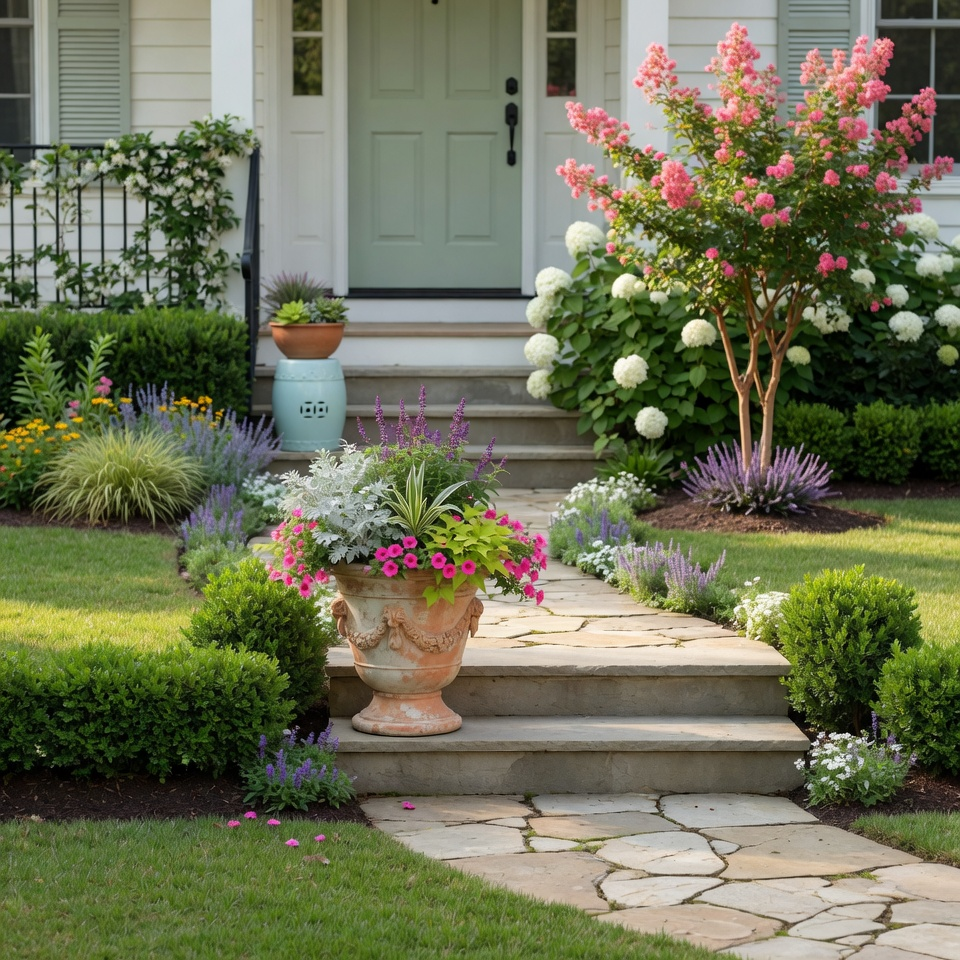
Every beautiful front yard needs a focal point. Without one, the eye does not know where to look, and the yard can feel scattered. A focal point gives your landscaping a sense of purpose.
Your focal point could be a small tree, a fountain, a large planter, a colorful flower bed, a garden bench, or even a beautiful front door framed by plants.
The important thing is that it feels intentional. Once you choose the focal point, arrange the rest of the landscaping to support it instead of competing with it.
For example, if your front door is the focal point, use path lighting, matching planters, and flower beds to lead the eye toward it. This one design principle can make your yard look much more polished.
Final Thoughts
Front yard landscaping is not about copying a perfect magazine photo. It is about creating an entrance that feels good every time you come home. Maybe that means adding a few pots by the door, shaping a flower bed, planting a small tree, or simply refreshing the mulch. Small changes can make a surprisingly big difference.
Start with structure first: pathways, borders, foundation plants, and focal points. Then add personality with flowers, planters, lighting, and seasonal touches. When those pieces work together, your front yard becomes more than outdoor space—it becomes part of your home’s welcome.
The best landscape is the one that fits your life, not one that creates more stress. Keep it beautiful, practical, and true to your style.