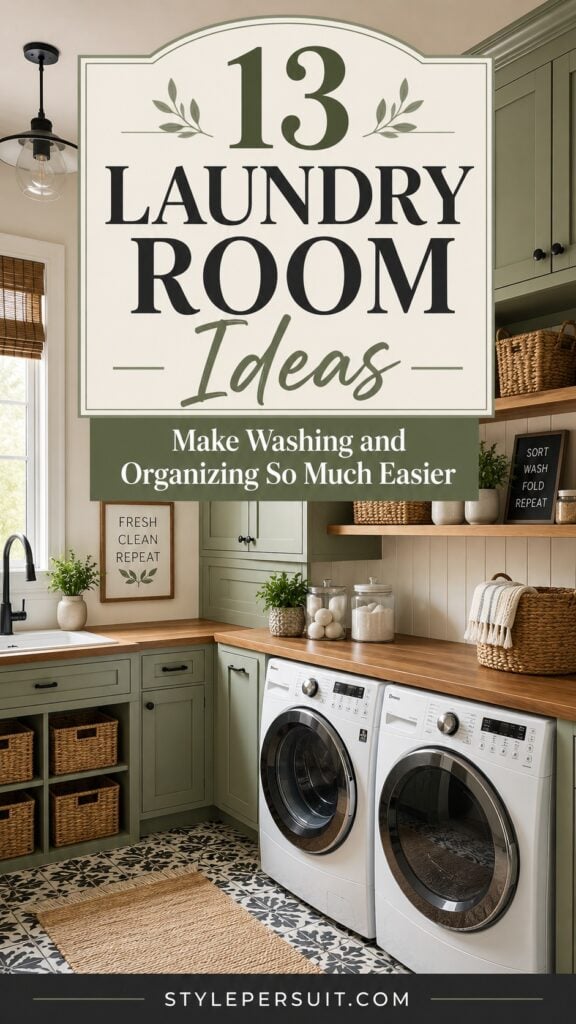
A laundry room is one of the hardest-working spaces in a home, yet it is often treated as an afterthought.
Detergent bottles crowd the washer. Clean clothes wait in baskets because there is nowhere to fold them. Delicate pieces hang from doors, and ironing boards take up more space than expected. In a small laundry room, even a few misplaced items can make the entire area feel chaotic.
The best laundry room ideas solve these everyday problems while making the room feel clean, bright, and connected to the rest of the home.
Popular laundry-room inspiration online and on Pinterest currently focuses on vertical storage, stacked appliances, folding counters, hanging rails, hidden hampers, drying racks, bold wallpaper, warm cabinet colors, pet-washing stations, and multifunctional laundry-mudroom layouts. Recent design coverage also highlights hidden appliances, flexible work zones, natural finishes, and laundry rooms that double as drop zones, recycling stations, or pet-care spaces.
Whether you have a spacious utility room, a tiny laundry closet, or only a corner beside the kitchen, these ideas can help you create a space that makes laundry day easier.
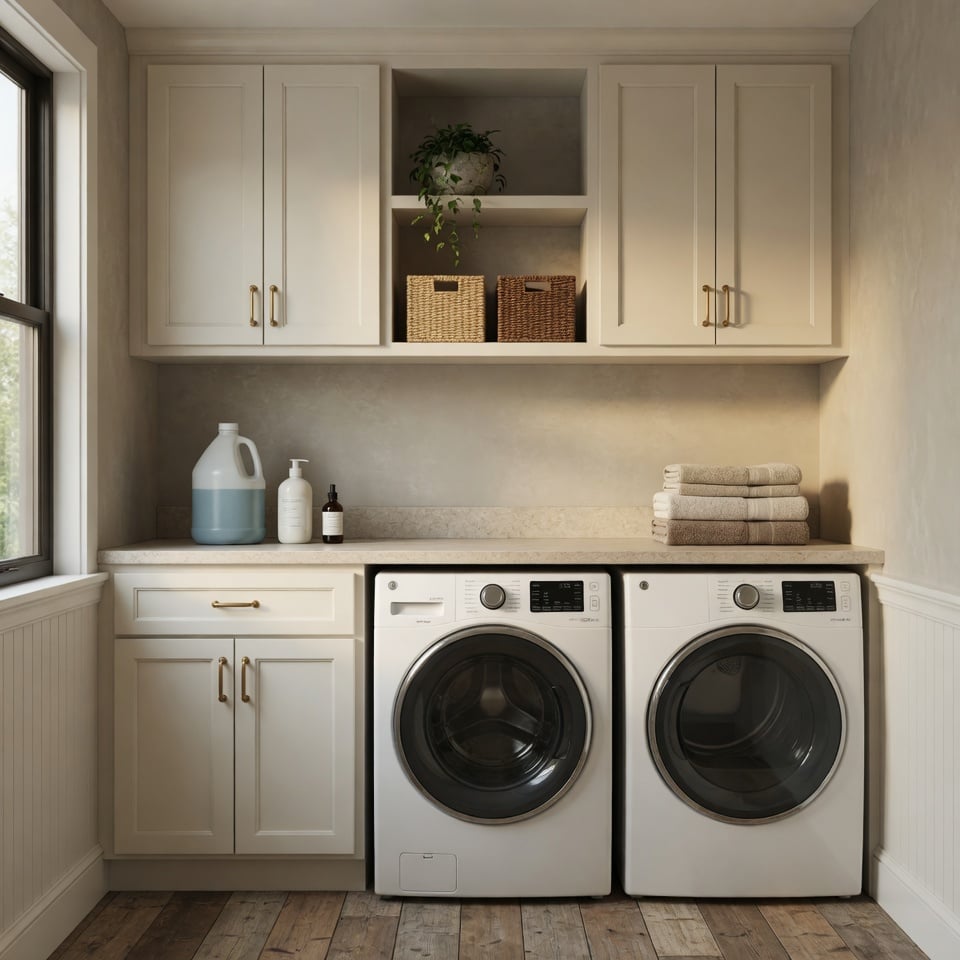
Before Redesigning Your Laundry Room
Start by observing how you currently wash, dry, fold, and store clothing.
Ask yourself:
- Where does dirty laundry collect?
- Where do you sort light and dark clothing?
- Do you need space to air-dry delicate items?
- Where do clean clothes wait before being put away?
- Can you reach detergent comfortably?
- Is there enough room for appliance doors to open?
- Do you need a sink?
- Does the room also store cleaning supplies, shoes, coats, or pet items?
- Is the lighting bright enough to spot stains?
- Is there proper airflow and ventilation?
Measure the room carefully, including the width and depth of the appliances and the space required for their doors.
A beautiful cabinet or countertop will not help if it blocks the washer, dryer, doorway, or storage cabinets. Designers regularly identify poor door clearance, inadequate lighting, insufficient folding space, and weak workflow as common laundry-room planning mistakes.
Choose materials that can tolerate humidity, spills, vibration, and regular cleaning.
1. Add Cabinets Above the Washer and Dryer
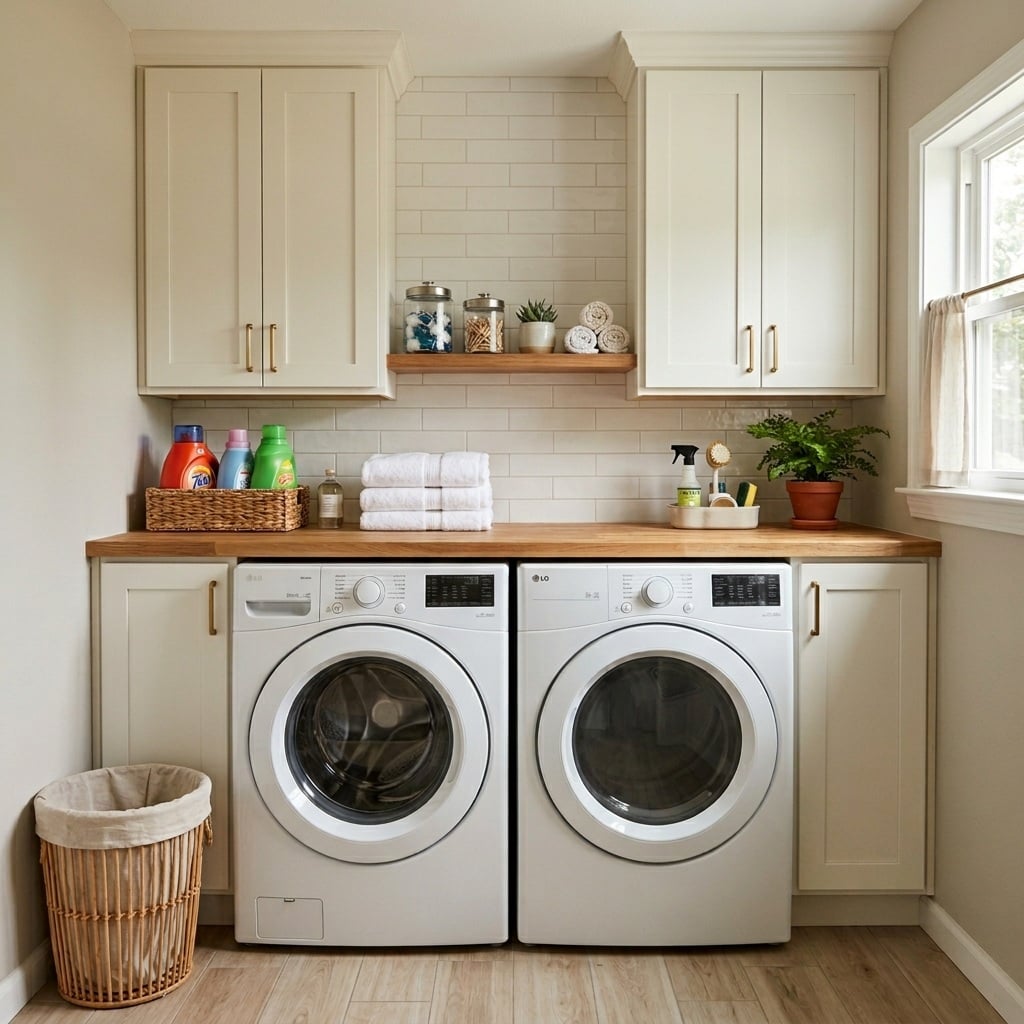
The wall above the appliances is often the most valuable storage area in a laundry room.
Install upper cabinets to store:
- Laundry detergent
- Stain removers
- Fabric-care products
- Ironing supplies
- Cleaning cloths
- Spare towels
- Light bulbs
- Household refills
- Products that must stay away from children and pets
Closed cabinets keep colorful packaging out of sight, making the room look calmer and more organized.
For a small laundry room, carry cabinets close to the ceiling. Store frequently used supplies on the lower shelves and bulk refills higher up.
Popular cabinet colors include:
- Warm white
- Sage green
- Dusty blue
- Deep navy
- Mushroom beige
- Charcoal
- Natural oak
- Warm eucalyptus green
Add simple handles that coordinate with the faucet, drying rail, or light fixture.
If full cabinets are outside your budget, use two wall-mounted cupboards with a short open shelf between them.
Helpful option: Check wall-mounted laundry-room cabinets on Amazon.
2. Build a Folding Counter Over Front-Loading Machines
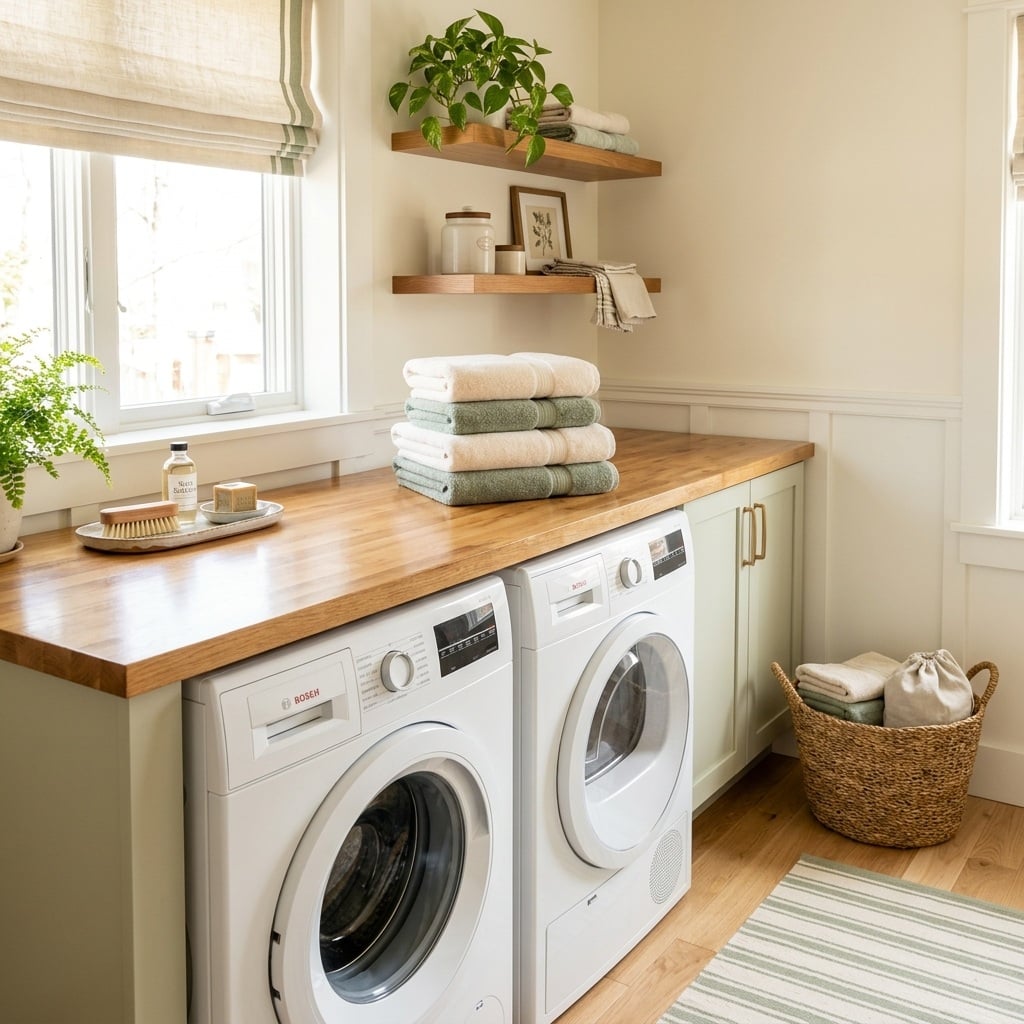
A countertop above a side-by-side washer and dryer creates an instant folding station.
It also prevents small items from falling behind the appliances and gives the room a finished, built-in appearance.
Possible countertop materials include:
- Sealed butcher block
- Laminate
- Quartz
- Solid-surface material
- Sealed plywood
- Moisture-resistant wood
- Stone-look countertop panels
Warm butcher block is especially popular because it softens white appliances and painted cabinetry.
Before installing the counter, check the appliance instructions. Leave any required space for airflow, vibration, hoses, controls, and maintenance access.
Use the counter for:
- Folding clean clothes
- Sorting laundry
- Treating stains
- Holding baskets temporarily
- Organizing matching socks
- Packing towels and linens
Keep most of the surface empty. A counter covered with jars, signs, and decorative objects cannot perform its main job.
3. Stack the Washer and Dryer to Save Floor Space
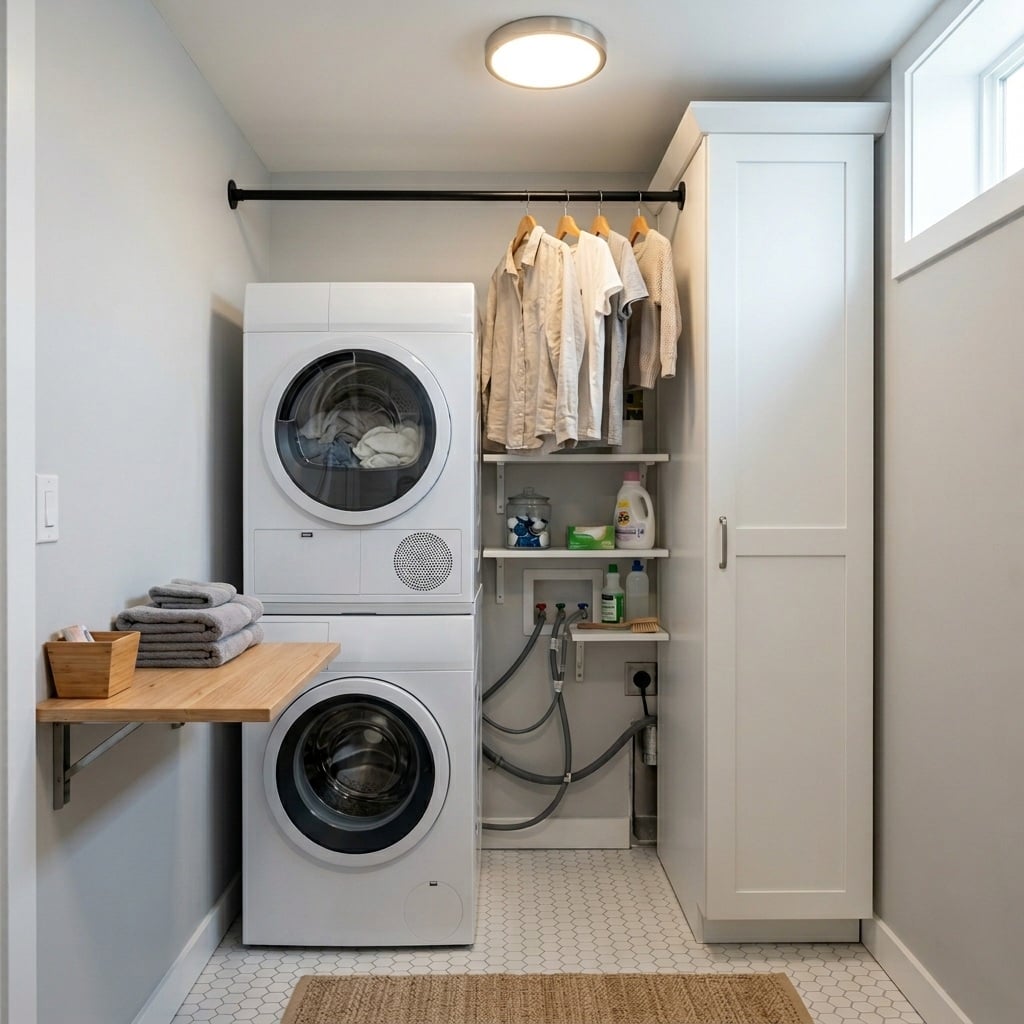
Stacking appliances can free enough room for a sink, tall cabinet, drying rack, or folding area.
This works particularly well in:
- Laundry closets
- Apartments
- Narrow utility rooms
- Bathrooms with laundry
- Small mudrooms
- Hallway laundry spaces
Stacked appliances continue to perform strongly in Pinterest-oriented utility-room research because they use vertical space and reduce the floor area occupied by laundry equipment.
Use only appliances designed and approved for stacking, along with the correct manufacturer stacking kit.
Beside the appliances, add a narrow cabinet for detergent, an ironing board, broom, vacuum attachments, and cleaning products.
You can also install a shallow countertop or small pull-out shelf nearby for folding.
Keep controls reachable. Some people may find the upper dryer controls difficult to use, so consider height and accessibility before committing to the layout.
4. Install a Wall-Mounted Drying Rack
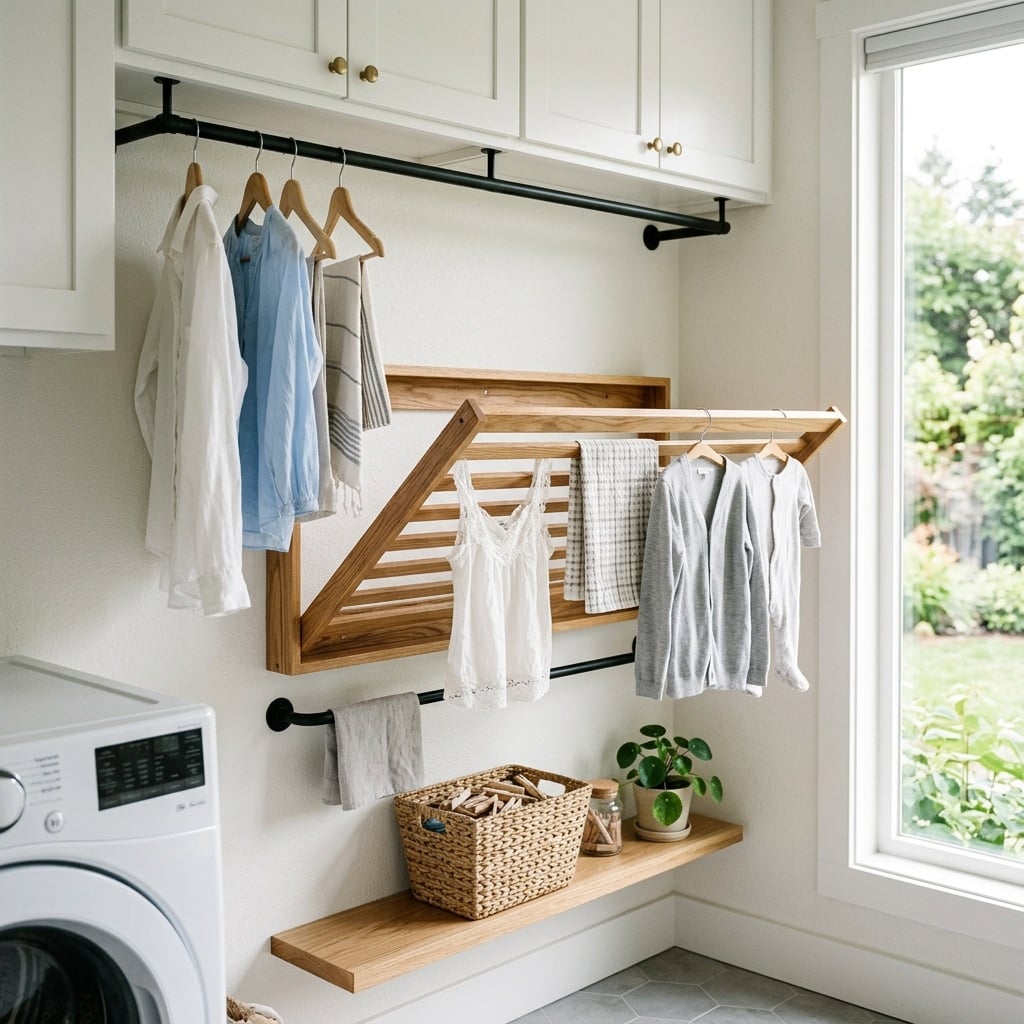
A fold-down drying rack gives you a place to air-dry delicate clothes without leaving a large freestanding rack in the middle of the room.
Useful styles include:
- Accordion drying racks
- Fold-down wooden racks
- Retractable clotheslines
- Ceiling-mounted racks
- Pull-out cabinet racks
- Wall-mounted rails
- Hanging rods between cabinets
A drying rod is ideal for shirts, dresses, and items placed on hangers.
A flat rack works better for sweaters that may stretch when hung.
Wall-mounted, ceiling-mounted, and retractable drying solutions are increasingly recommended for small homes because they provide drying capacity without permanently using valuable floor space.
Position the rack where damp clothing receives airflow without blocking cabinets or doorways.
Avoid drying large amounts of wet clothing in a poorly ventilated room. Moisture may contribute to condensation, musty smells, and mold growth.
Helpful option: View fold-down laundry drying racks on Amazon.
5. Use Open Shelves With Matching Baskets
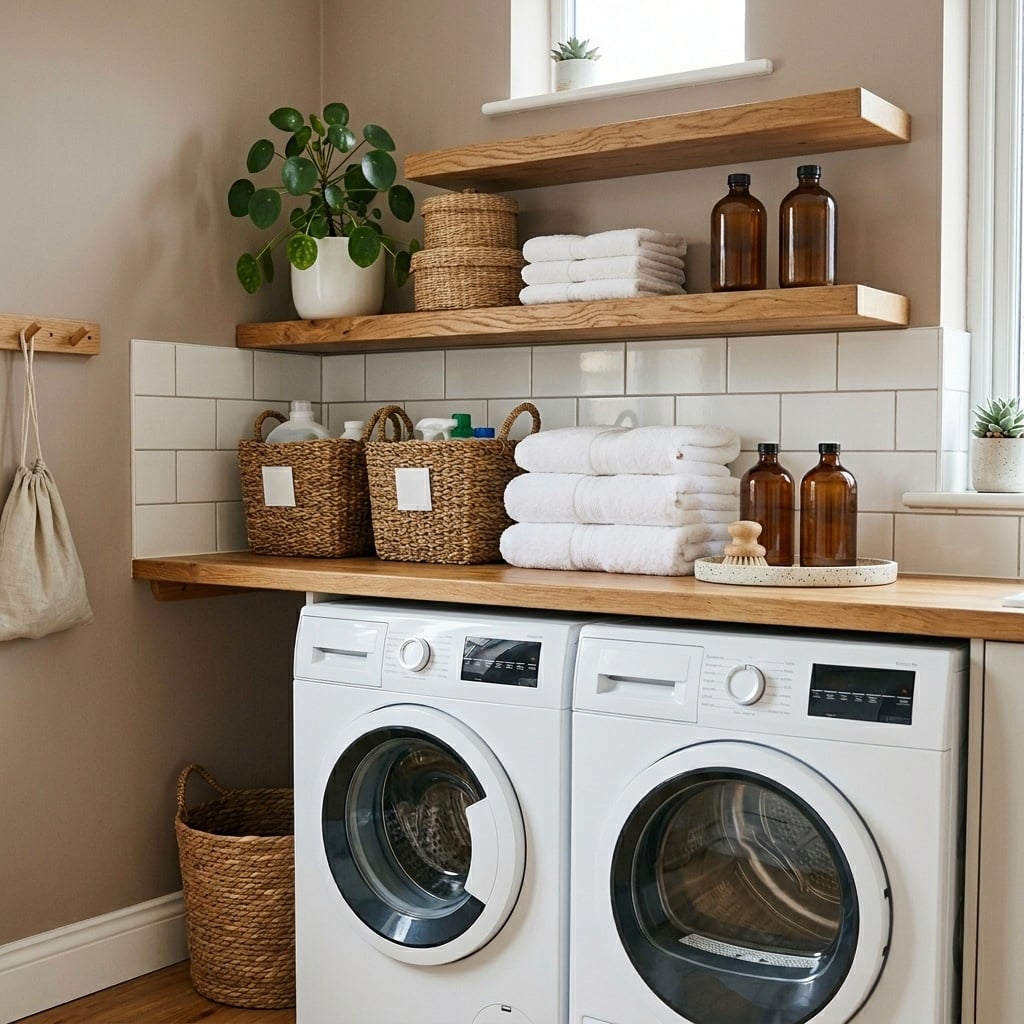
Open shelving can make frequently used supplies easy to reach.
However, it looks best when products are grouped rather than scattered.
Use matching baskets or bins for categories such as:
- Stain treatment
- Dryer supplies
- Cleaning cloths
- Ironing accessories
- Lost socks
- Sewing and repairs
- Pet towels
- Household refills
Place detergent and daily-use products on a tray to catch drips.
A balanced shelf arrangement might include:
- One basket
- One detergent container
- A small plant
- Folded towels
- One decorative object
Do not transfer laundry pods, powders, or chemicals into unmarked containers if doing so could create confusion or a poisoning risk. Keep safety instructions and labels available.
Open shelves are best for households willing to maintain them. Designers often recommend combining closed cabinets with a smaller amount of open shelving so the room remains attractive without exposing every product.
6. Create a Hidden Laundry-Hamper Station
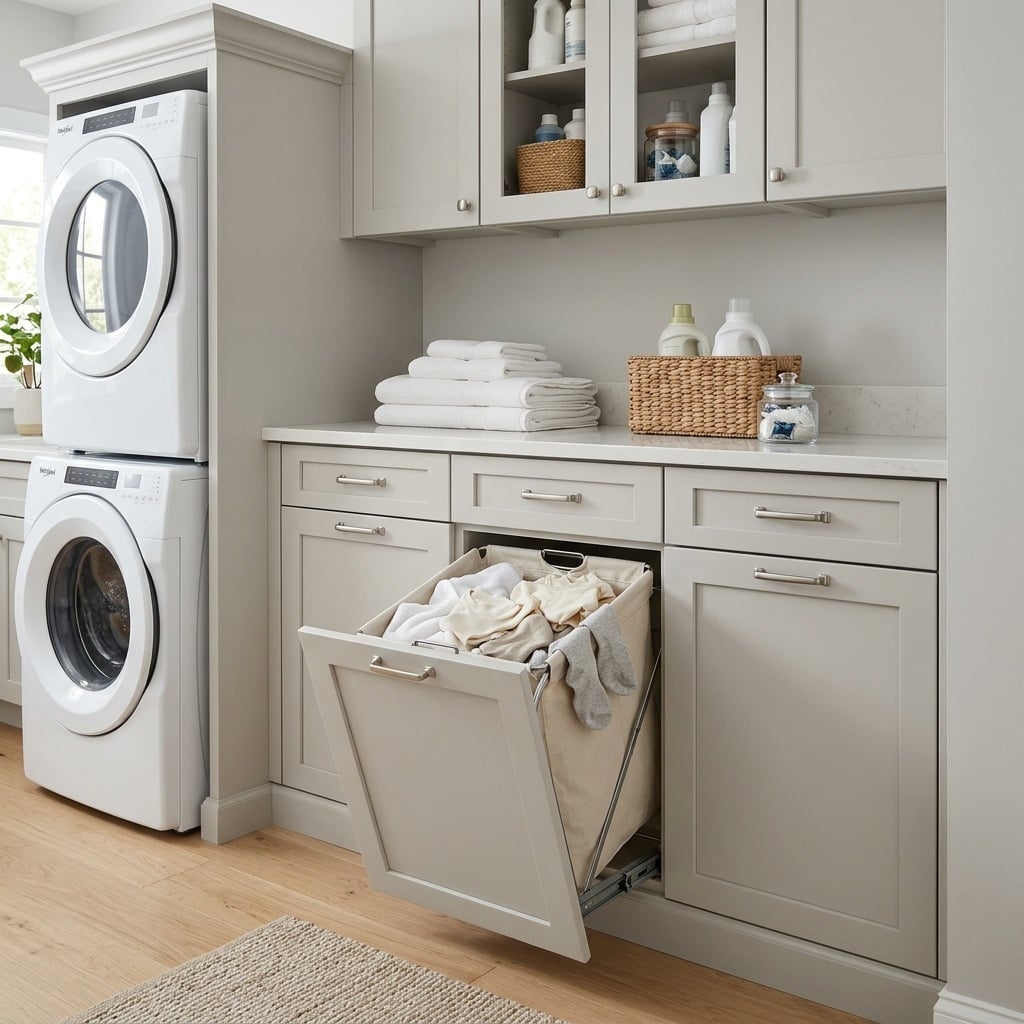
Dirty laundry can make an otherwise beautiful room look untidy.
Built-in or pull-out hampers keep clothing separated and off the floor.
Create sections for:
- Whites
- Dark clothes
- Colors
- Towels
- Delicates
- Children’s clothing
Possible solutions include:
- Tilt-out hamper cabinets
- Pull-out wire baskets
- Rolling laundry carts
- Canvas sorting bags
- Baskets placed beneath a countertop
- Hampers hidden inside a tall cabinet
Tilt-out hampers and compact laundry carts appear frequently in current laundry-room and Pinterest inspiration because they conceal clutter while keeping sorting simple.
Make sure the hampers can be removed for cleaning.
Ventilated baskets are helpful for damp towels or workout clothing. Avoid trapping wet fabric inside a sealed cabinet for long periods.
7. Add a Deep Utility Sink
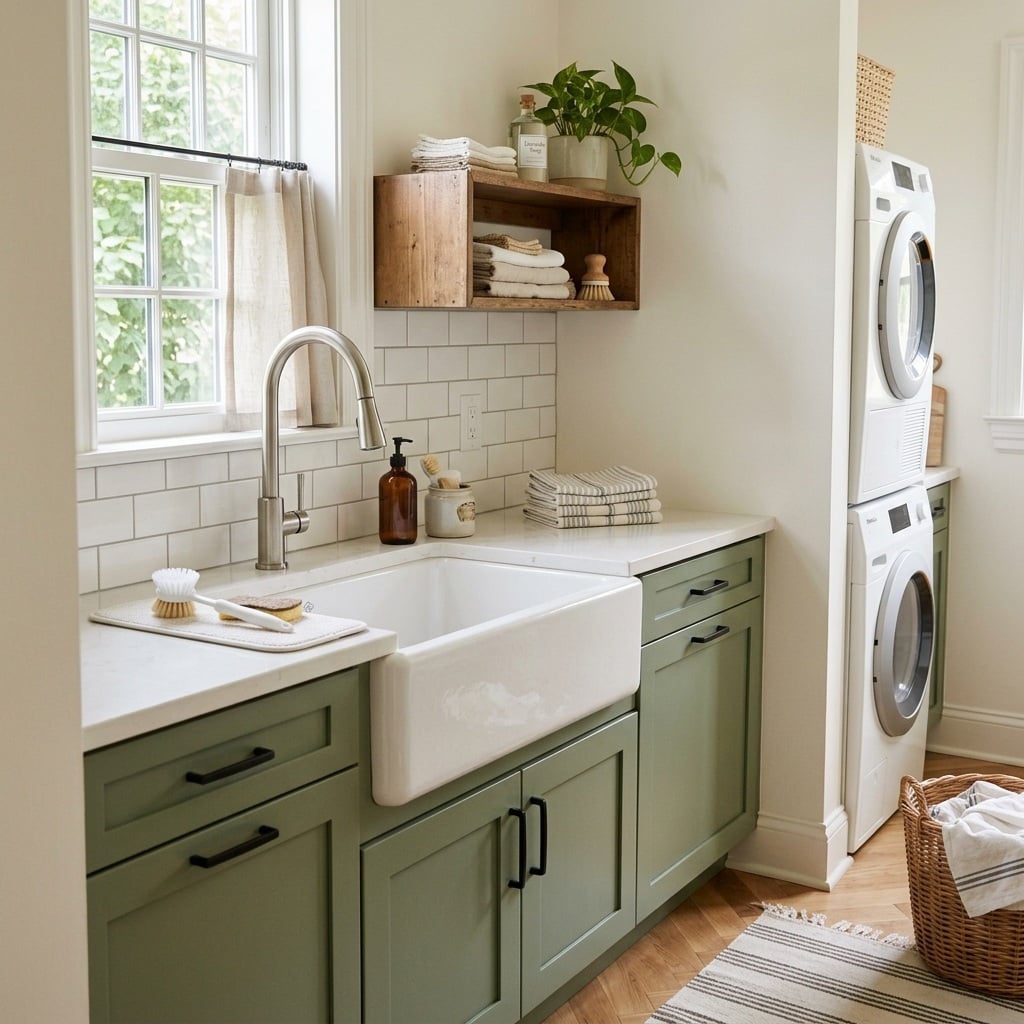
A utility sink can make the laundry room significantly more practical.
Use it for:
- Hand-washing delicate clothes
- Soaking stained items
- Rinsing muddy shoes
- Filling mop buckets
- Cleaning brushes
- Washing pet accessories
- Rinsing gardening tools
- Handling messy household tasks
Choose a sink deep enough to contain splashes.
Common options include:
- Stainless-steel utility sinks
- White composite sinks
- Fireclay farmhouse sinks
- Deep undermount sinks
- Freestanding utility tubs
Add a pull-down or high-arc faucet for easier rinsing.
Protect the wall behind the sink with tile, stone, washable panels, or another moisture-resistant backsplash.
A sink that is too small may not handle large garments, buckets, or dirty boots. Utility-room planning guidance recommends choosing a genuinely functional sink rather than sacrificing usefulness for appearance.
Plumbing changes should be completed in line with local requirements.
8. Turn the Laundry Room Into a Mudroom
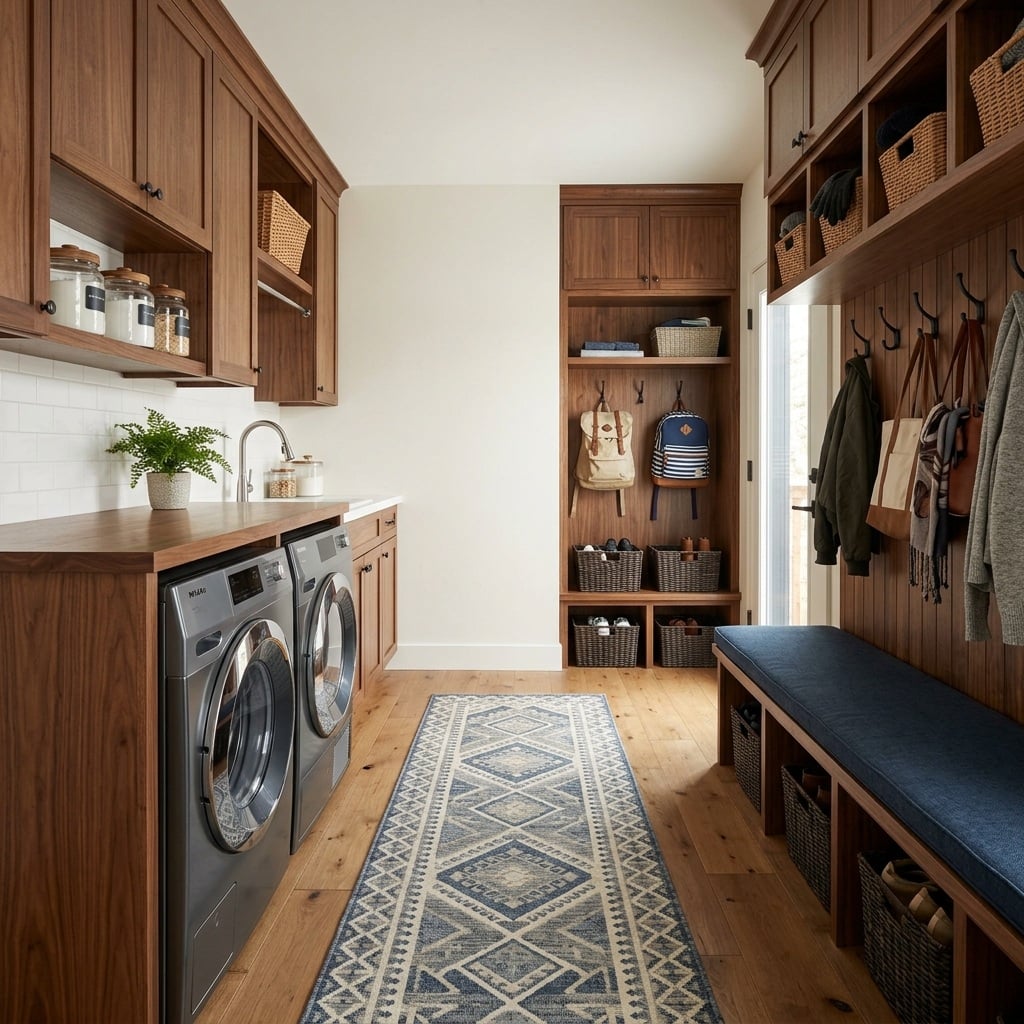
A combined laundry and mudroom can handle clothes, shoes, bags, coats, and household drop-zone clutter in one location.
Add:
- Wall hooks
- Bench seating
- Shoe baskets
- Boot tray
- Upper cabinets
- Backpack storage
- Key hooks
- Mail organizer
- Small charging station
- Washable runner
Divide the room visually into zones.
For example:
Laundry zone
Washer, dryer, sink, detergent, drying rack, and folding counter.
Entry zone
Bench, hooks, shoes, bags, and outdoor accessories.
Use cabinetry or paint color to make both areas feel connected.
Hybrid laundry rooms that also function as drop zones, recycling areas, and pet spaces are among the strongest multifunctional utility-room trends.
Choose durable, moisture-resistant flooring because the room may handle wet shoes, dripping clothes, and cleaning spills.
9. Add a Pet-Washing Station
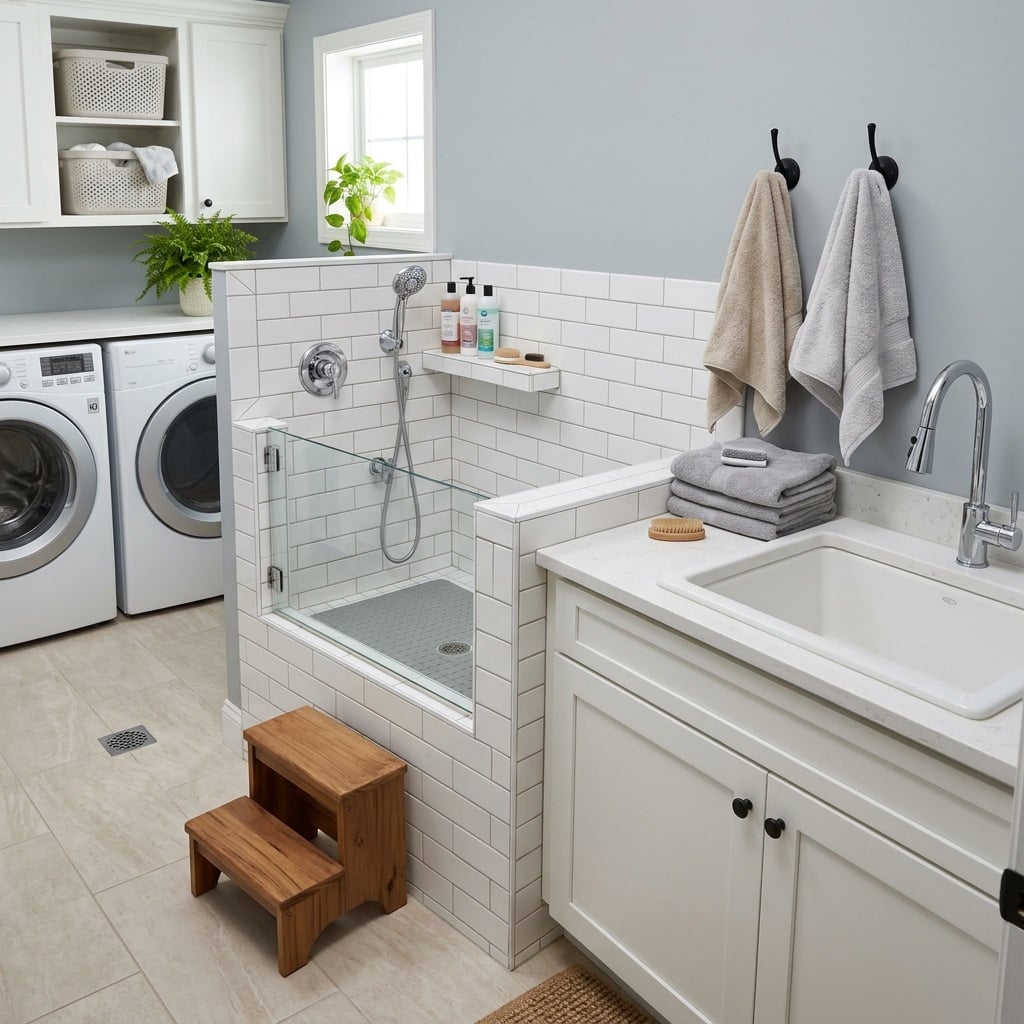
For households with dogs, a raised pet-washing station can reduce the mess created by bathing pets in a bathtub or shower.
A practical station may include:
- Tiled raised basin
- Handheld sprayer
- Nonslip surface
- Low step or ramp
- Towel hooks
- Grooming-supply cabinet
- Drain
- Space for pet shampoo
- Basket for clean pet towels
Laundry rooms are often chosen for dog-wash stations because plumbing and water-resistant finishes may already be nearby. Pet-washing and laundry-mudroom combinations are also appearing frequently in current online and Pinterest design inspiration.
Design the height and access based on the size, mobility, and weight of the animal.
A large dog may need a low-entry shower rather than a high tub.
Use suitable plumbing, waterproofing, and ventilation. Improper installation can lead to leaks or damaged walls and floors.
10. Use Wallpaper or Bold Paint
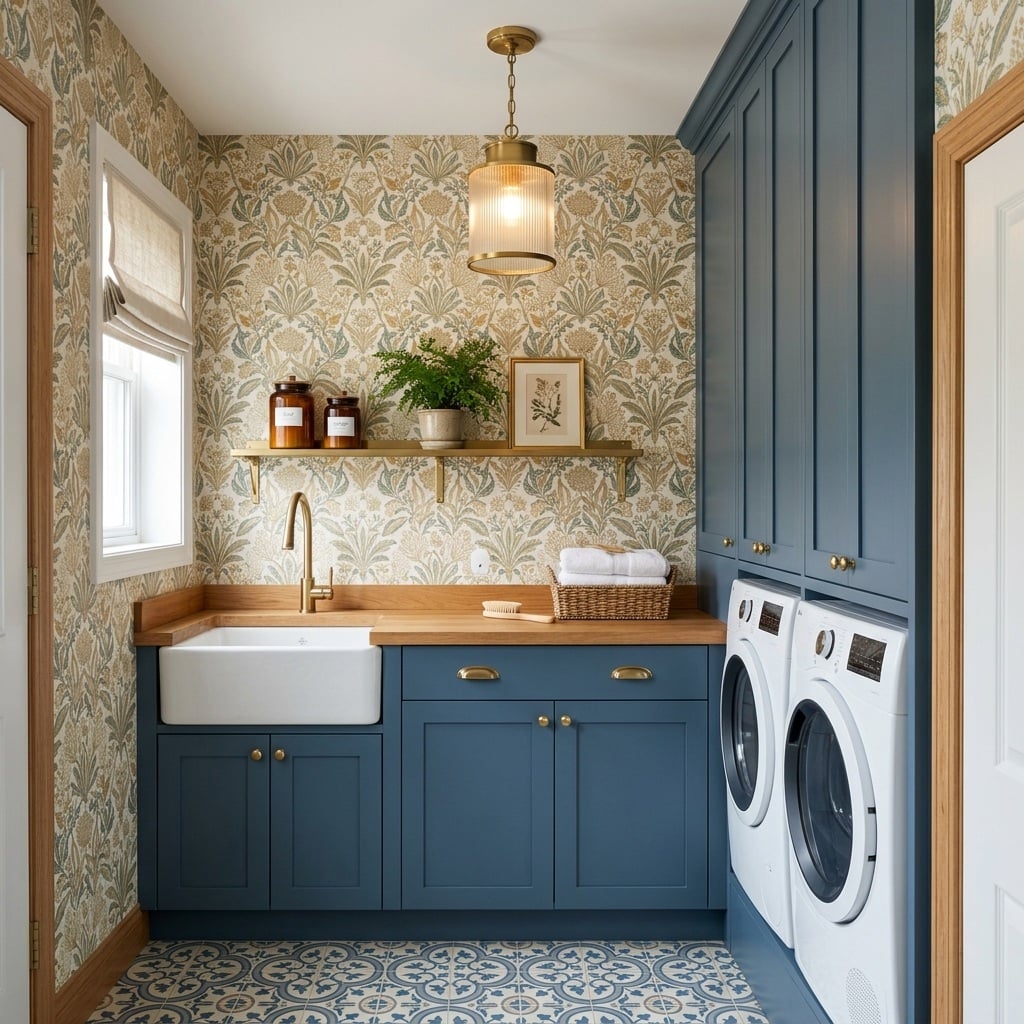
A laundry room is a good place to use color or pattern because it is usually smaller than a kitchen or living room.
Popular choices include:
- Botanical wallpaper
- Vintage floral prints
- Blue-and-white patterns
- Geometric designs
- Small checks
- Muted stripes
- Deep green paint
- Dusty blue cabinetry
- Burgundy or merlot walls
- Warm yellow accents
- Soft pink and terracotta
Bold wallpaper, patterned floors, color-drenched walls, and statement lighting are being used to give hardworking laundry rooms more personality.
For a balanced room, pair bold wallpaper with simple cabinets and countertops.
If the cabinetry is colorful, use a quieter backsplash.
Make sure wallpaper is suitable for the room’s humidity and ventilation. Avoid installing ordinary paper in areas frequently exposed to water.
Renters can try peel-and-stick wallpaper after testing it on a hidden section of wall.
11. Build a Tall Cleaning-Supply Cabinet
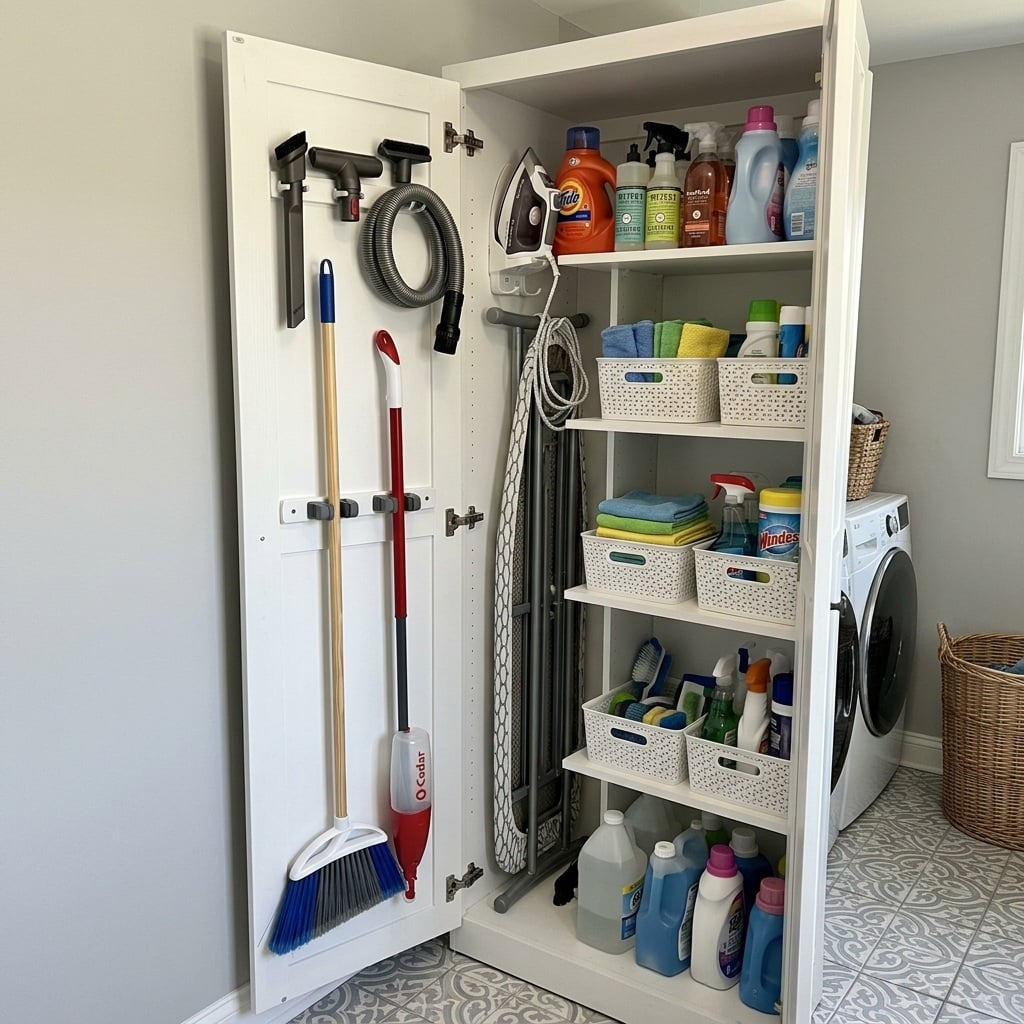
Mops, brooms, ironing boards, vacuums, and drying racks are difficult to store in short cabinets.
A tall narrow cupboard can hold these awkward items vertically.
Include:
- Hooks for brooms
- Ironing-board holder
- Vacuum shelf
- Cleaning-product baskets
- Small appliance outlet
- Shelves for refills
- Door-mounted organizer
Use child-resistant storage for products that could be dangerous.
If the room is narrow, a cabinet only needs to be deep enough for the items you actually plan to store.
Tall storage is often missed during utility-room planning, yet it is one of the best ways to keep long and bulky cleaning tools organized.
A shallow broom cabinet beside stacked appliances can use space that might otherwise remain wasted.
12. Add a Pull-Out Ironing Board or Folding Surface
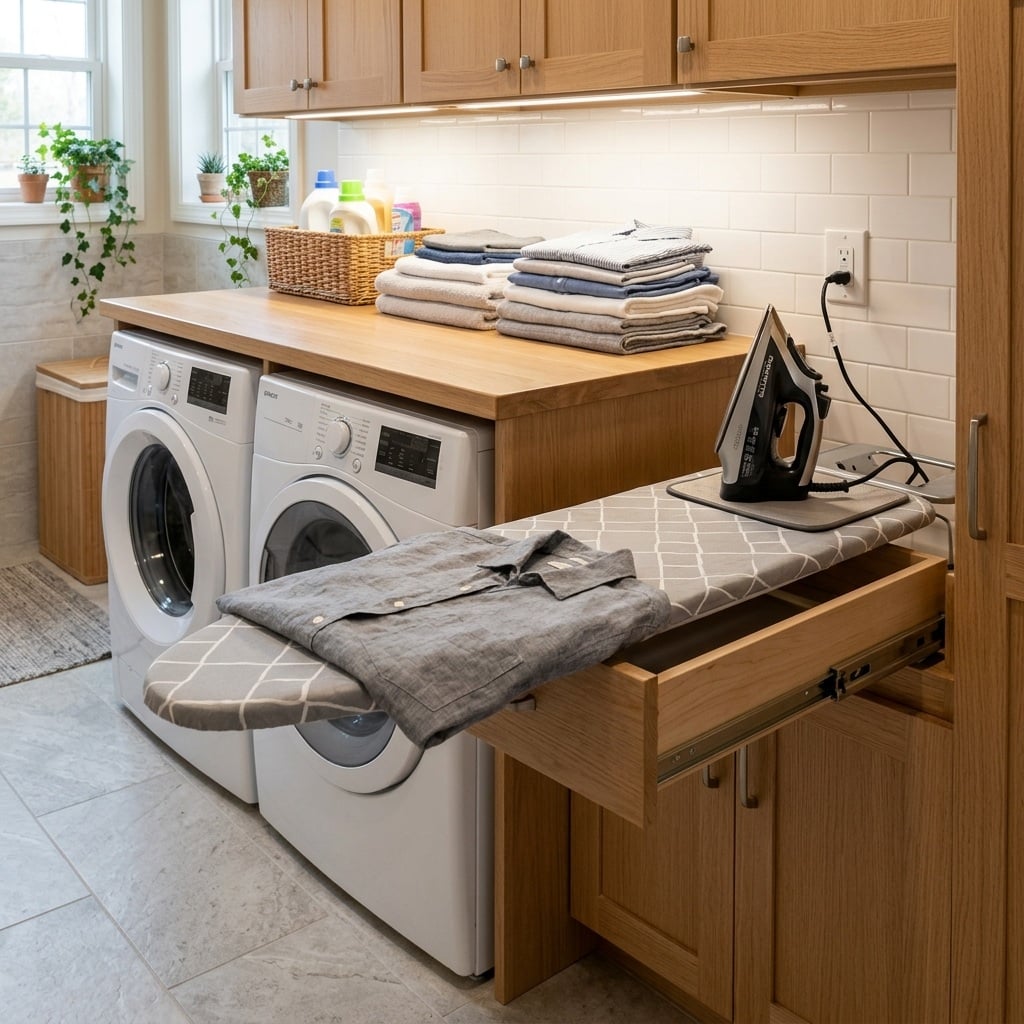
Traditional ironing boards are useful but awkward to store.
Space-saving alternatives include:
- Drawer-mounted ironing board
- Fold-down wall board
- Cabinet-hidden ironing station
- Over-the-door ironing board
- Pull-out folding shelf
- Wall-mounted drop-leaf table
A pull-out ironing board remains one of the more popular utility-room space-saving ideas identified through Pinterest-related trend analysis.
Place it near an electrical outlet, but keep cords away from water and walkways.
A fold-down table can serve several purposes:
- Folding clothes
- Treating stains
- Ironing
- Sorting laundry
- Holding baskets
Secure wall-mounted tables properly and confirm that they can support the expected weight.
13. Hide a Laundry Closet Behind Doors or Curtains
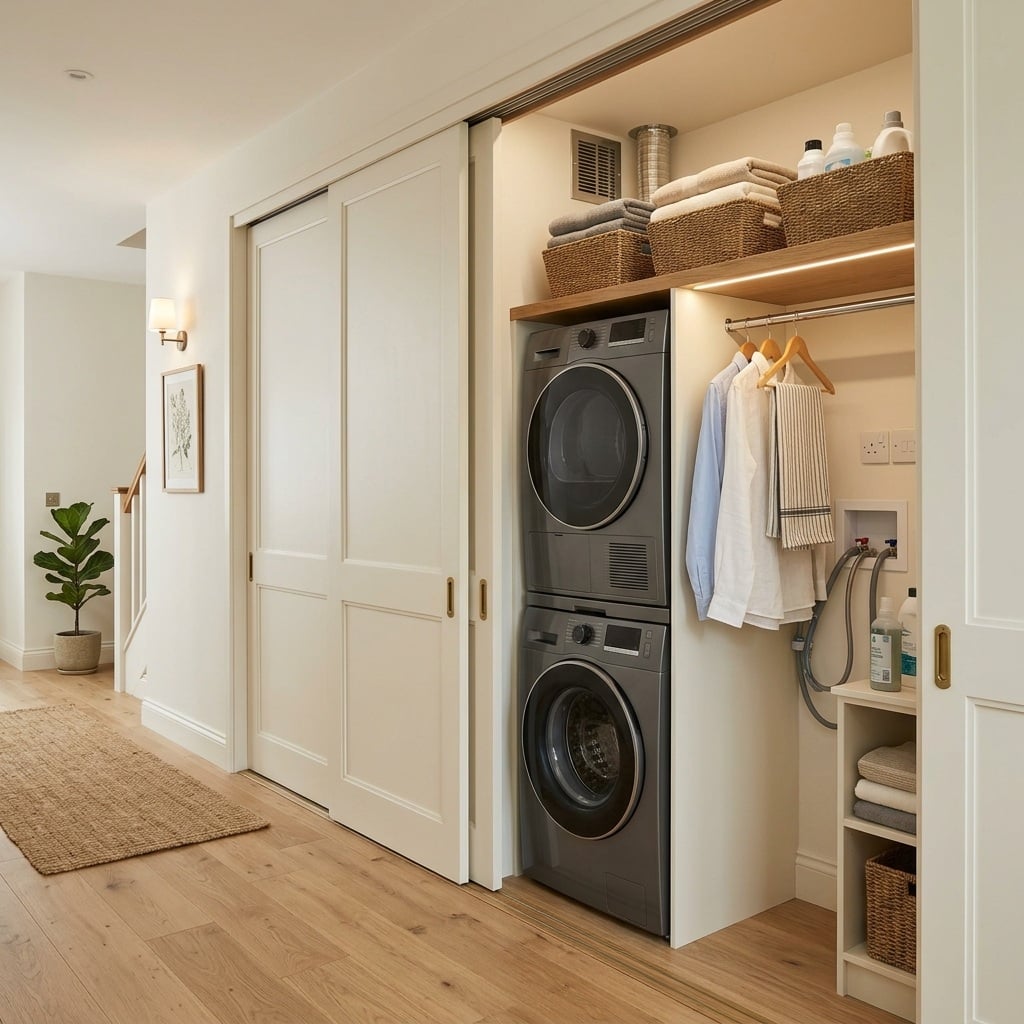
Not every home has a separate laundry room.
If the washer and dryer are in a hallway, bathroom, kitchen, or open living area, conceal them when they are not in use.
Options include:
- Cabinet doors
- Sliding doors
- Pocket doors
- Folding doors
- Curtains
- Wood-slat screens
- Paneled doors matching nearby cabinetry
Hidden appliances are a notable current laundry trend because they help multifunctional spaces feel cleaner and more cohesive.
Add shelves above the appliances and use the side walls for hooks, a narrow rail, or magnetic storage.
Do not block required ventilation.
Appliances must remain accessible for maintenance, hoses, electrical connections, and emergency shutoff.
When using curtains, keep fabric away from hot surfaces and moving appliance doors.
Laundry Room Ideas for Small Spaces
A tiny laundry room needs every item to earn its place.
Consider:
- Stacked washer and dryer
- Cabinets reaching the ceiling
- Slim rolling cart between appliances
- Wall-mounted drying rack
- Floating shelves
- Pull-out folding shelf
- Pegboard organizer
- Over-the-door storage
- Magnetic containers
- Hooks on appliance-side walls
- Ceiling-mounted drying rack
- Fold-down ironing board
Small-space laundry designs consistently prioritize vertical storage, narrow rolling carts, wall-mounted systems, and overlooked spaces around doors and appliances.
Keep the color palette simple so the space does not feel visually crowded.
Light colors can make the room feel brighter, but deep color can also create a stylish jewel-box effect when paired with good lighting.
Laundry Room Color Ideas
Sage Green and Warm Wood
Calm, natural, and ideal for farmhouse or organic-modern interiors.
Dusty Blue and White
Fresh and classic without feeling cold.
Black, White, and Brass
Bold, high-contrast, and suitable for a modern laundry room.
Cream and Natural Oak
Warm, bright, and easy to maintain visually.
Deep Navy and White
Clean and sophisticated, especially with patterned tile.
Soft Pink and Burgundy
Unexpected and personal for a small statement laundry room.
Terracotta and Beige
Warm and earthy, particularly with woven baskets and natural stone.
Charcoal and Walnut
Dramatic and polished for a larger utility room.
How to Make a Laundry Room Look Expensive
Use Consistent Storage
Matching baskets and containers create a calmer appearance.
Add a Backsplash
Tile or washable wall panels make the space feel more finished and protect the wall.
Upgrade the Light Fixture
A pendant, flush-mount fixture, or attractive wall light can give the room personality.
Use Cabinet Hardware With Contrast
Black, brass, bronze, or brushed nickel handles can elevate simple cabinets.
Add a Countertop
A continuous folding surface makes freestanding appliances feel built in.
Hide Packaging
Keep backups inside cabinets and use trays to group daily products safely.
Add One Strong Pattern
Use wallpaper, tile, or flooring as the main decorative feature rather than combining several competing patterns.
Keep the Floor Clear
Wall storage and concealed hampers make the room look larger and easier to clean.
Common Laundry Room Design Mistakes
Forgetting Appliance Clearance
Measure how far the washer, dryer, cabinets, and room doors open.
Skipping Folding Space
Even a small pull-out surface is better than balancing clothes on top of the machines.
Using Only Open Shelves
Too much visible packaging can make the room look cluttered.
Installing Poor Lighting
Include bright general lighting and focused light near the sink or folding counter.
Ignoring Ventilation
Dryers and damp clothing require proper airflow.
Choosing Delicate Flooring
Laundry-room floors should tolerate moisture, detergent spills, and heavy appliances.
Placing Supplies Out of Reach
Store everyday products at a comfortable height.
Covering Every Surface With Decor
The room must still have space for baskets, sorting, and folding.
Forgetting Maintenance Access
Do not permanently cover hoses, drains, filters, shutoff valves, or electrical connections.
Frequently Asked Questions
How can I make a small laundry room more functional?
Use vertical cabinets, stacked appliances, wall-mounted drying racks, narrow rolling carts, hooks, and a fold-down work surface.
What should every laundry room have?
A functional laundry room needs safe appliance access, storage for supplies, adequate lighting, ventilation, and space to sort, dry, or fold clothing.
What can I put above my washer and dryer?
Install cabinets, shelves, a drying rail, or a combination of closed and open storage.
Is open shelving good in a laundry room?
It can be useful for frequently used items, but closed cabinets are better for hiding bulk supplies and colorful packaging. A mixture usually works best.
What is the best countertop for a laundry room?
Quartz, laminate, solid-surface material, and properly sealed butcher block are popular options. Choose according to budget, moisture exposure, and maintenance needs.
How can I hide my washer and dryer?
Use cabinet doors, sliding panels, folding doors, pocket doors, or a properly positioned curtain that does not interfere with ventilation or appliance use.
What flooring works best in a laundry room?
Water-resistant tile, luxury vinyl, sealed concrete, and other durable moisture-tolerant materials are common choices.
Should a laundry room have a sink?
A sink is not essential, but it is useful for soaking clothes, hand-washing garments, filling buckets, and handling messy household tasks.
How do I decorate a laundry room without creating clutter?
Choose one color or pattern, upgrade the lighting, use matching baskets, display only a few attractive items, and keep most products behind closed doors.
Are stacked washers and dryers a good idea?
They can save valuable floor space, but the appliances must be designed for stacking and installed with the correct approved hardware.
Final Thoughts
A beautiful laundry room should make everyday work easier.
Start with the practical essentials: appliance clearance, storage, folding space, drying space, lighting, and ventilation. Then add color, cabinetry, baskets, wallpaper, hardware, or decorative lighting to make the room feel connected to the rest of your home.
For a small laundry room, use vertical space and multifunctional features. For a larger room, consider a utility sink, mudroom storage, pet-washing station, or built-in hamper system.
You do not need every idea in one room.
Choose the features that solve your biggest laundry problems. A folding counter, wall-mounted drying rack, closed cabinets, and organized hampers may completely change how the room looks and functions.