Growing tomatoes can feel simple at first.
You plant them in a sunny spot, water them often, and wait for big red fruits to appear.
But then the problems start.
The plants grow lots of leaves but very few tomatoes. The bottom leaves turn yellow. The fruit stays small. The flowers fall off. Or the tomatoes start developing dark, sunken spots at the bottom.
A good tomato fertilizer can make a big difference, but the best choice depends on your soil, how you grow tomatoes, and what stage the plant is in.
Tomatoes need nitrogen, phosphorus, and potassium, which are shown on fertilizer labels as N-P-K. Nitrogen supports leafy growth, phosphorus helps roots and flowering, and potassium supports overall plant strength and fruit development.
Fertilizer labels show these nutrients as percentages by weight, so a 10-10-10 fertilizer contains 10% nitrogen, 10% phosphate, and 10% potash.
The best tomato fertilizer is not always the strongest one. Too much nitrogen can give you a beautiful green plant with fewer tomatoes.
For fruiting crops like tomatoes, fertilizers with more phosphorus or potassium compared with nitrogen are often useful, especially once plants begin flowering and setting fruit.
Below are the best tomato fertilizers to consider, including organic options, liquid feeds, slow-release choices, container tomato fertilizers, and fertilizers for bigger harvests.
Before Buying Tomato Fertilizer
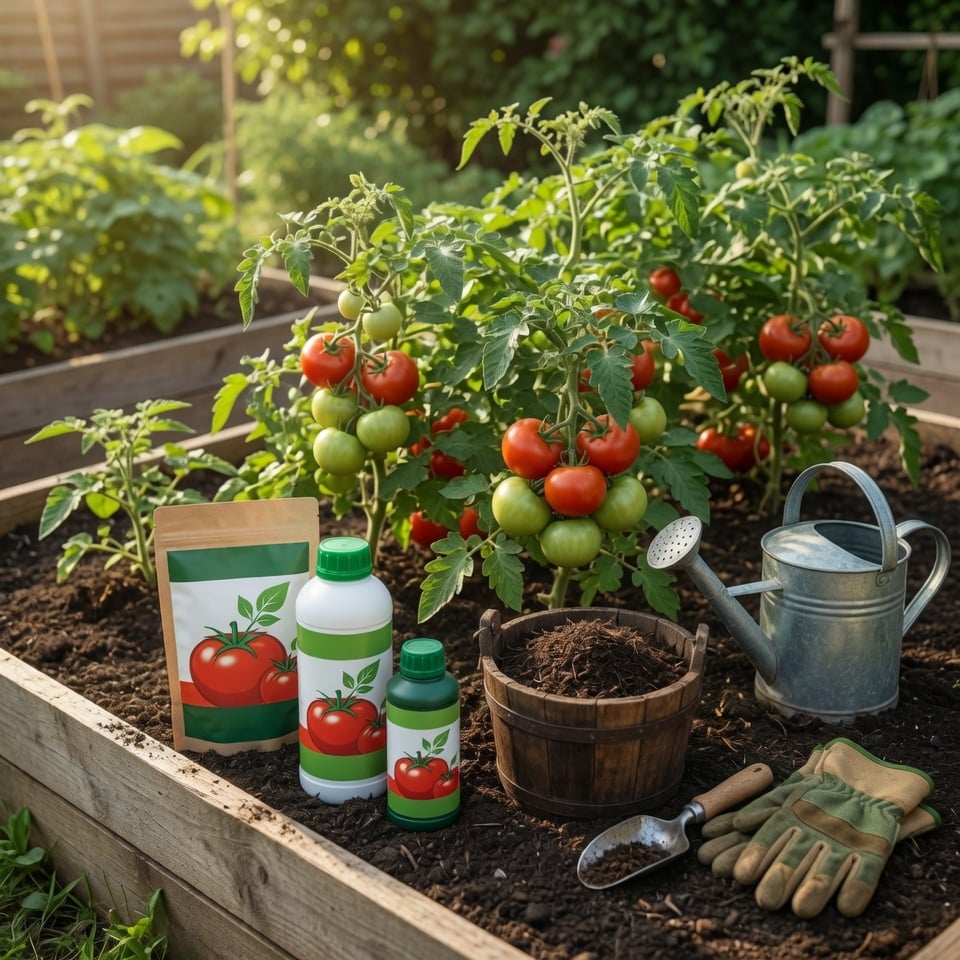
Before choosing a fertilizer, it helps to understand what your tomato plants actually need.
Tomatoes grow best in nearly neutral soil, with a pH around 6.5 to 7.0. Adding compost or other organic matter can also improve garden soil before planting.
A soil test is the best way to know whether your garden needs nitrogen, phosphorus, potassium, or lime. Without testing, it is easy to add too much of something your soil already has.
That said, many home gardeners still use tomato fertilizer during the growing season because tomatoes are heavy-feeding plants.
What to Look for in Tomato Fertilizer
A good tomato fertilizer should support strong roots, healthy foliage, flowering, and fruit production.
Look for:
- Balanced nutrients
- Potassium for fruit development
- Phosphorus for roots and blooms
- Calcium if blossom end rot is a concern
- Slow-release feeding for garden beds
- Liquid feeding for containers
- Organic ingredients if you prefer natural gardening
- Clear instructions on the label
Avoid using lawn fertilizer or any “weed and feed” product around tomatoes. The University of Minnesota Extension warns not to use fertilizer containing weed killer because it can kill vegetable plants.
1. Espoma Tomato-tone Organic Fertilizer
Espoma Tomato-tone is one of the most popular tomato fertilizers for home gardeners who want an organic option.
It is designed specifically for tomatoes and vegetables, which makes it a good all-around choice if you do not want to overthink the feeding schedule.
This type of granular organic fertilizer is usually worked into the soil around the plant. It feeds gradually and is especially useful for garden beds, raised beds, and grow bags.
Why It Works Well
Tomato-tone is a good choice if you want steady feeding without applying liquid fertilizer every few days. It is also a strong option for gardeners growing tomatoes in raised beds with compost-rich soil.
Best For
- Raised bed tomatoes
- In-ground tomatoes
- Organic gardening
- Beginner gardeners
- Steady season-long feeding
How to Use It
Mix it into the soil at planting time, then reapply according to the package directions during the growing season.
Water well after applying so nutrients begin moving into the root zone.
2. Dr. Earth Home Grown Tomato, Vegetable & Herb Fertilizer
Dr. Earth Home Grown is another strong organic tomato fertilizer option.
It is often used for tomatoes, peppers, herbs, and vegetable gardens. If you grow more than just tomatoes, this can be a useful fertilizer to keep on hand.
It is especially appealing if you like organic gardening and want a product made for edible plants.
Why It Works Well
This fertilizer is a good choice for gardeners who want to feed tomatoes naturally while improving the overall soil environment.
It works well in garden beds, containers, and raised beds when used according to the label.
Best For
- Organic tomato gardens
- Vegetable beds
- Herb gardens
- Raised beds
- Gardeners who want one fertilizer for several edible plants
How to Use It
Apply it around the root zone and gently work it into the top layer of soil.
Water deeply after feeding.
3. Miracle-Gro Water Soluble Tomato Plant Food
If you want fast feeding, a water-soluble tomato fertilizer is one of the easiest choices.
Miracle-Gro Tomato Plant Food is designed to be mixed with water and applied directly to the soil around tomato plants.
This is helpful when tomato plants need a quick boost, especially in containers where nutrients wash out faster.
Why It Works Well
Liquid and water-soluble fertilizers are convenient because the nutrients become available quickly.
This type of fertilizer is useful when plants are actively growing, flowering, and producing fruit.
For container tomatoes, regular feeding is especially important because frequent watering can leach nutrients from the potting mix.
Best For
- Container tomatoes
- Grow bags
- Patio tomatoes
- Fast feeding
- Beginner gardeners
- Plants that need a quick nutrient boost
How to Use It
Mix with water according to the package directions.
Do not guess or make the mixture stronger than recommended. Too much fertilizer can burn plants.
4. Jobe’s Organics Tomato Fertilizer Spikes
Fertilizer spikes are convenient because they are simple to use.
Instead of measuring powder or mixing liquid feed, you push the spikes into the soil near the tomato plant.
Jobe’s Organics Tomato Fertilizer Spikes are a good option for gardeners who want an easy, low-mess feeding method.
Why It Works Well
Spikes release nutrients gradually near the root zone.
They are especially useful for patio tomatoes, container tomatoes, and gardeners who do not want to measure fertilizer often.
Best For
- Busy gardeners
- Container tomatoes
- Patio gardens
- Grow bags
- Simple feeding
- Low-mess fertilizing
How to Use It
Push the spikes into moist soil around the tomato plant, following the spacing instructions on the package.
Do not place fertilizer spikes directly against the stem.
5. Neptune’s Harvest Tomato & Veg Fertilizer
Neptune’s Harvest Tomato & Veg Fertilizer is a liquid fertilizer often used by gardeners who prefer natural or fish-based plant food.
It is useful when you want a liquid tomato fertilizer but still prefer an organic-style option.
Liquid fertilizers can be especially helpful once tomatoes are flowering and forming fruit because they are easy to apply during the active growing season.
Why It Works Well
This is a good choice if your tomatoes need regular liquid feeding.
It can work well for tomatoes in containers, raised beds, and garden beds.
Best For
- Organic-style liquid feeding
- Container tomatoes
- Raised beds
- Flowering and fruiting tomatoes
- Gardeners who like fish-based fertilizers
How to Use It
Dilute according to the label and apply around the base of the plant.
The smell can be strong, so store the bottle carefully.
6. Down to Earth Organic Tomato Vegetable Garden Fertilizer
Down to Earth Tomato Vegetable Garden Fertilizer is another excellent organic granular option.
It is a good pick if you are feeding tomatoes, peppers, eggplants, and other fruiting vegetables.
This type of fertilizer works best when mixed into the soil or applied around the base of plants as a side dressing.
Why It Works Well
It is useful for gardeners who want a slow, steady feed rather than quick liquid feeding.
It also works nicely in vegetable beds where you want to support several crops at the same time.
Best For
- Tomatoes and peppers
- Vegetable gardens
- Raised beds
- Organic gardening
- Slow-release feeding
How to Use It
Apply around the plant’s root zone and gently mix into the top inch of soil.
Water after applying.
7. Burpee Organic Tomato & Vegetable Granular Plant Food
Burpee Organic Tomato & Vegetable Plant Food is a good choice for gardeners who want a simple tomato and vegetable fertilizer from a familiar garden brand.
It works for tomatoes as well as other vegetables, making it helpful if you are feeding a mixed edible garden.
Why It Works Well
This fertilizer is beginner-friendly and useful for tomatoes grown in garden beds, raised beds, or large containers.
It is a good option if you want one product for several vegetable plants.
Best For
- Beginner gardeners
- Vegetable beds
- Tomato plants
- Raised beds
- Mixed summer gardens
How to Use It
Use it at planting time and reapply based on the product directions.
Water well after feeding.
8. FoxFarm Happy Frog Tomato & Vegetable Fertilizer
FoxFarm Happy Frog Tomato & Vegetable Fertilizer is a popular choice among gardeners who want a higher-quality organic-style fertilizer for vegetables.
It is often used for tomatoes, peppers, cucumbers, herbs, and other edible plants.
Why It Works Well
This fertilizer is a good option for gardeners who want a richer feeding product for raised beds and containers.
It works well when you want to support both plant growth and fruit production.
Best For
- Raised beds
- Container gardens
- Tomato plants
- Vegetable gardens
- Gardeners who want a premium organic-style option
How to Use It
Mix into the soil according to the package directions or apply as a side dressing.
Water thoroughly after feeding.
Best Tomato Fertilizer by Growing Situation
Best Overall Tomato Fertilizer
Espoma Tomato-tone
This is a strong all-around choice for most home tomato gardeners.
Best Liquid Tomato Fertilizer
Neptune’s Harvest Tomato & Veg Fertilizer
This is a good pick when you want liquid feeding, especially during flowering and fruiting.
Best Tomato Fertilizer for Containers
Miracle-Gro Water Soluble Tomato Plant Food
Container tomatoes need frequent feeding because nutrients wash out faster with watering.
Best Easy Tomato Fertilizer
Jobe’s Organics Tomato Fertilizer Spikes
Great for gardeners who want something simple and low-mess.
Best Organic Tomato Fertilizer
Dr. Earth Home Grown Tomato, Vegetable & Herb Fertilizer
A strong option for organic vegetable gardens.
When to Fertilize Tomato Plants
Tomatoes usually need nutrients at several stages.
At Planting Time
Mix compost into the soil and use a starter fertilizer if needed.
This helps support root development and early growth.
When Plants Start Growing Strongly
Once tomatoes are established and putting on new growth, they may need additional feeding.
When First Fruits Start to Enlarge
This is an important time to feed. The University of Minnesota Extension recommends applying fertilizer alongside tomato rows when the first fruits begin to enlarge. (University of Minnesota Extension)
Throughout the Fruiting Season
Container tomatoes may need more frequent feeding than in-ground plants.
Always follow the product label so you do not overfeed.
How Often Should You Fertilize Tomatoes?
This depends on the fertilizer type.
Granular organic fertilizers may be applied every few weeks according to the label.
Liquid fertilizers may be used more often, especially for container tomatoes.
Fertilizer spikes release gradually and do not need to be applied as often.
The safest rule is this:
Follow the package instructions and watch the plant.
If the plant is pale, slow-growing, or producing poorly, it may need nutrients.
If it has huge green leaves but very few flowers or tomatoes, it may be getting too much nitrogen.
Signs Your Tomato Plants Need Fertilizer
Your tomatoes may need feeding if you notice:
- Pale green leaves
- Yellowing older leaves
- Slow growth
- Small fruit
- Weak stems
- Poor flowering
- Low harvest
- Plants that look tired during fruiting
But not every tomato problem is caused by lack of fertilizer.
Poor watering, heat stress, disease, compacted soil, wrong pH, and lack of sunlight can also cause problems.
Signs You Are Over-Fertilizing Tomatoes
Too much fertilizer can hurt tomato plants.
Common signs include:
- Lots of leaves but few tomatoes
- Burned leaf edges
- Wilting after feeding
- White crust on soil
- Weak, fast growth
- Flower drop
- Poor fruit set
More fertilizer does not always mean more tomatoes.
The goal is steady, balanced growth.
Organic vs Synthetic Tomato Fertilizer
Both can work.
Organic Fertilizer
Organic fertilizers are often slower and gentler. They usually feed gradually and can support soil health over time.
Good organic options include:
- Espoma Tomato-tone
- Dr. Earth Home Grown
- Down to Earth Tomato Vegetable
- FoxFarm Happy Frog
- Compost
- Worm castings
- Fish emulsion
Synthetic Fertilizer
Synthetic fertilizers usually work faster and provide nutrients in a more immediately available form.
Good options include water-soluble tomato foods and balanced vegetable fertilizers.
These can be useful for container tomatoes or plants that need a quick boost.
Best Fertilizer Numbers for Tomatoes
There is no single perfect NPK number for every garden because soil conditions vary.
However, many tomato gardeners look for fertilizers that are not extremely high in nitrogen.
Examples of tomato-friendly formulas often include:
- Balanced fertilizer for early growth
- Higher phosphorus for roots and flowers
- Higher potassium for fruiting
- Calcium support if blossom end rot is a concern
A soil test is still the best guide.
If your soil already has plenty of phosphorus, adding more may not help.
Tomato Fertilizer Mistakes to Avoid
Using Lawn Fertilizer
Lawn fertilizers are usually high in nitrogen and may contain weed killers.
Do not use weed-and-feed products around tomatoes.
Feeding Dry Soil
Water the plant first if the soil is very dry.
Fertilizing dry, stressed plants can increase the risk of fertilizer burn.
Adding Too Much Nitrogen
Too much nitrogen can lead to large leafy plants with fewer tomatoes.
Ignoring Soil pH
If the pH is wrong, plants may struggle to absorb nutrients properly.
Fertilizing Without Watering
Most fertilizers need moisture to move into the soil.
Water after applying granular fertilizer unless the label says otherwise.
Forgetting Containers Need More Feeding
Tomatoes in pots rely completely on the nutrients you provide.
They often need more consistent feeding than tomatoes planted in the ground.
Best Helpful Products for Feeding Tomatoes
Soil Test Kit
A soil test helps you understand what your tomato plants actually need before adding fertilizer.
Watering Can
A watering can makes it easier to apply diluted liquid fertilizer around the base of plants.
Garden Gloves
Gloves help protect your hands when applying granular fertilizer, compost, or soil amendments.
Tomato Cages
Strong cages help support heavy fruiting plants.
Healthy tomato plants can become large and heavy once fruit starts forming.
Grow Bags
Grow bags are useful for patio tomatoes and small-space gardens.
Choose large grow bags so roots have enough room.
Frequently Asked Questions
What is the best fertilizer for tomato plants?
Espoma Tomato-tone, Dr. Earth Home Grown, and Down to Earth Tomato Vegetable Fertilizer are strong organic choices. Miracle-Gro Water Soluble Tomato Plant Food is a good option if you want a fast, water-soluble feed.
What fertilizer makes tomatoes bigger?
A fertilizer with balanced nutrients and enough potassium can support fruit development. Consistent watering, full sun, healthy soil, and strong plant support also matter.
Is Miracle-Gro good for tomatoes?
Yes, Miracle-Gro Water Soluble Tomato Plant Food can be useful, especially for container tomatoes. Use it according to the label and avoid overfeeding.
Is Epsom salt good for tomatoes?
Epsom salt contains magnesium and sulfur, but it should only be used when your soil actually needs magnesium. It is not a complete tomato fertilizer.
Are coffee grounds good for tomato plants?
Coffee grounds can be composted, but they are not a balanced tomato fertilizer by themselves. Use them carefully as part of compost rather than relying on them to feed tomatoes.
When should I start fertilizing tomatoes?
Many gardeners add fertilizer at planting time, then feed again once plants are established and especially when the first fruits begin to enlarge.
Should I fertilize tomatoes when they are flowering?
Yes, flowering and fruiting tomatoes often need steady nutrition. Avoid overdoing nitrogen at this stage.
Can too much fertilizer hurt tomatoes?
Yes. Too much fertilizer can burn roots, cause excessive leafy growth, reduce fruiting, and damage the plant.
What is the best organic tomato fertilizer?
Espoma Tomato-tone, Dr. Earth Home Grown, Down to Earth Tomato Vegetable, and FoxFarm Happy Frog are all good organic-style tomato fertilizer options.
Final Thoughts
The best tomato fertilizer depends on how you grow your plants.
For raised beds and garden beds, a slow-release organic fertilizer like Espoma Tomato-tone or Dr. Earth Home Grown is a strong choice.
For container tomatoes, a water-soluble fertilizer like Miracle-Gro Tomato Plant Food can be convenient because nutrients wash out of pots faster.
For gardeners who want easy feeding, fertilizer spikes are simple and low-mess.
The main thing is to avoid overfeeding, especially with nitrogen. Give tomatoes steady nutrition, enough sun, consistent water, and good support, and you will have a much better chance of growing strong plants with a bigger harvest.