
Soaking your feet in hydrogen peroxide is one of the simplest, most effective foot care routines you can add to your week, and it costs less than a dollar per session.
Whether you’re dealing with foot odor, cracked heels, calluses, or toenail fungus, a hydrogen peroxide foot soak delivers results that most expensive foot creams don’t come close to matching.
This guide covers everything: the right recipe, the correct concentration, how long to soak, how often to do it, and what to expect. No filler — just exactly what you need to know.
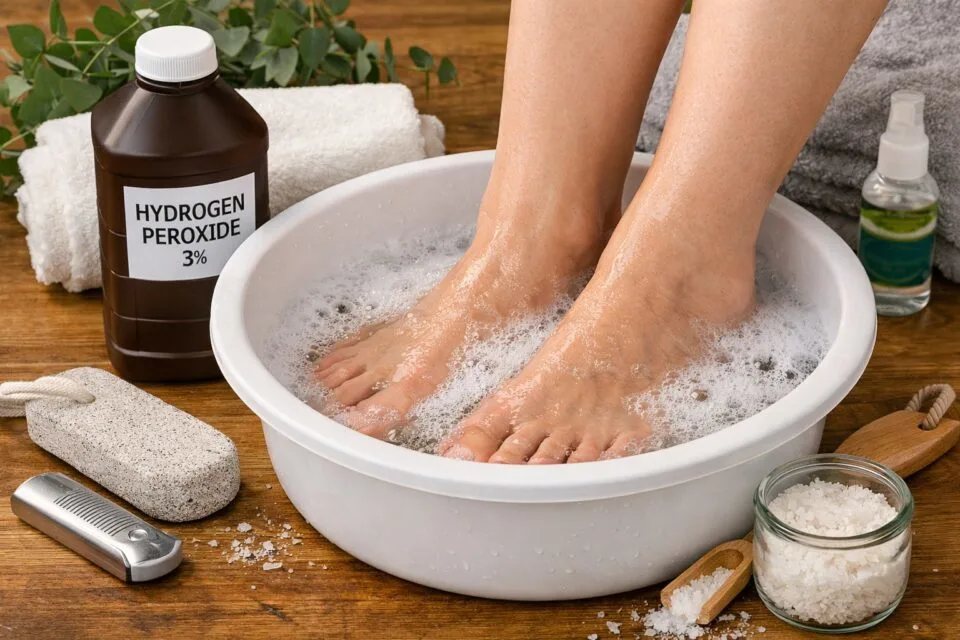
What Is a Hydrogen Peroxide Foot Soak?
A hydrogen peroxide foot soak is exactly what it sounds like a warm water foot bath with diluted hydrogen peroxide added to it.
The peroxide acts as an antiseptic and mild oxidizing agent, killing bacteria and fungi on contact while softening dead skin and calluses in the process.
The version you want is 3% hydrogen peroxide the standard brown-bottle concentration sold at every pharmacy and grocery store.
At 3%, it’s strong enough to be effective and gentle enough to use on skin without causing damage. Never use higher concentrations on your feet.
Hydrogen Peroxide Foot Soak Recipe
This is the base recipe. Everything else in this guide builds on it.
You will need:
- 1 cup 3% hydrogen peroxide
- 3 cups warm water
- A basin or foot tub large enough to fit both feet
Instructions:
- Fill your foot basin with 3 cups of warm water — not hot, warm. Hot water strips the skin more aggressively and can irritate the areas the peroxide is treating.
- Add 1 cup of 3% hydrogen peroxide and stir gently.
- Submerge both feet completely.
- Soak for 15 to 20 minutes.
- Pat feet dry with a clean towel.
- Apply a thick moisturizer immediately while skin is still slightly damp.
That’s the complete peroxide foot soak recipe. Simple, inexpensive, and effective.
Hydrogen Peroxide Foot Soak with Salt
Adding salt to your peroxide foot bath increases the antibacterial effect and draws out moisture from swollen, tired feet.
This variation works especially well for foot odor and post-workout foot care.
Recipe — Peroxide and Salt Foot Soak:
- 1 cup 3% hydrogen peroxide
- 2 cups warm water
- ½ cup Epsom salt or sea salt
Dissolve the salt in the warm water first, then add the peroxide. Soak for 15–20 minutes. The salt and peroxide combination is particularly effective for people who are on their feet all day, as it reduces bacterial buildup more aggressively than peroxide alone.
Hydrogen Peroxide and Baking Soda Foot Soak
Baking soda raises the pH of the soak, which creates a less hospitable environment for fungus and odor-causing bacteria. Combined with hydrogen peroxide, this is one of the most effective home remedies for athlete’s foot and persistent foot odor.
Recipe — Peroxide and Baking Soda Foot Soak:
- 1 cup 3% hydrogen peroxide
- 3 cups warm water
- 2 tablespoons baking soda
Dissolve the baking soda in the water before adding peroxide. Soak for 15–20 minutes. You may notice slightly more fizzing than usual that is normal and is the peroxide and baking soda reacting with each other and with bacteria on your skin.
Benefits of Soaking Feet in Hydrogen Peroxide
There are several reasons a hydrogen peroxide foot bath consistently outperforms plain soap-and-water foot washing. Here is what it actually does and why each benefit matters.
Kills Fungus and Bacteria
Hydrogen peroxide is a clinically proven antiseptic. When you soak your feet in a diluted peroxide solution, it attacks the bacteria and fungi living on your skin’s surface — including the organisms responsible for athlete’s foot and toenail fungus.
The fizzing you see during a soak is visible proof of this: that bubbling is oxygen being released as the peroxide breaks down harmful microorganisms on contact.
For people who deal with recurring foot infections, regular peroxide soaks can significantly reduce reinfection rates between treatments and prevent new infections from taking hold.
Softens Calluses and Dead Skin
The same oxidizing action that kills bacteria also breaks down the bonds in hardened, dead skin.
After two or three hydrogen peroxide foot soaks, calluses on the heels and balls of your feet become noticeably softer and far easier to remove with a pumice stone or foot file.
This makes a peroxide foot bath an excellent pre-step before any pedicure or foot exfoliation routine. You get dramatically better results with far less scrubbing when the dead skin has been pre-treated with peroxide first.
Reduces Foot Odor
Foot odor is caused almost entirely by bacteria feeding on sweat. Hydrogen peroxide eliminates those bacteria at the source, which means odor does not return as quickly as it does after a plain soap-and-water wash.
Regular peroxide foot soaks — two to three times per week — produce a noticeable and lasting reduction in foot odor, even for people who have struggled with it chronically.
The effect compounds over time as the overall bacterial load on your feet decreases with each session.
Safe for Cracked Heels
Cracked heels are often worsened by harsh chemical foot treatments. Diluted 3% hydrogen peroxide is gentle enough to use on cracked skin without causing further damage, while still cleaning and sanitizing the affected area.
It helps prevent infection in minor heel cracks — a common problem that can escalate into painful fissures if bacteria enter through broken skin.
After soaking, apply a thick moisturizer immediately while skin is still slightly damp to lock in hydration and support the healing of cracks.
Soaking Feet in Hydrogen Peroxide Benefits for Toenails
Toenails accumulate bacteria and fungi underneath and around the nail bed in ways that regular washing cannot reach. A peroxide foot soak allows the diluted solution to penetrate around the nail edges and begin breaking down fungal growth.
For mild toenail discoloration and early fungal infections, consistent peroxide soaks — daily for two weeks, then three times per week for maintenance — can visibly improve nail appearance.
For severe or deeply embedded toenail fungus, consult a doctor, as peroxide alone may not fully penetrate a thickened infected nail.
Hydrogen Peroxide Foot Soak for Detox — Does It Work?
You have probably seen “detox foot soak” recipes all over Pinterest, and hydrogen peroxide shows up in almost every one. But does it actually detox your feet, or is that just marketing language?
Here is the honest answer: hydrogen peroxide does not pull toxins out of your body through your skin. That is not how detoxification works physiologically.
What it does do is act as a powerful antiseptic that eliminates bacteria, fungi, and dead skin cells sitting on the surface of your feet. For most people, that is more practically useful than any detox claim.
The fizzing reaction you see during a hydrogen peroxide foot soak is the peroxide reacting with organic matter — bacteria, dead skin, and debris — on your skin’s surface.
The result is cleaner, fresher-feeling feet with noticeably reduced odor and less microbial buildup. If that counts as a detox for your feet, then yes — it works exceptionally well.
How Often Should You Soak Your Feet in Hydrogen Peroxide?
This is one of the most common questions, and most guides skip it entirely.
For general foot hygiene and odor control: 2 to 3 times per week is the ideal frequency. This is enough to stay on top of bacteria buildup without over-drying the skin.
For athlete’s foot or active fungal issues: Once daily for the first week, then every other day as symptoms improve. Always moisturize after each soak — hydrogen peroxide is drying, and cracked heels worsen if you skip this step.
For maintenance after treatment: 1 to 2 times per week is sufficient once the initial issue has cleared up.
People with sensitive skin, diabetes, or open wounds should limit soaks to once per week at most, and should consult a doctor before making peroxide foot soaks a regular habit.
Broken or compromised skin reacts differently to peroxide than healthy skin, and the risk of irritation increases significantly.
How Long Should You Soak Your Feet in Peroxide?
Soak for 15 to 20 minutes per session. This is long enough for the peroxide to do its work on bacteria, dead skin, and fungi, but short enough to avoid over-drying the skin.
Soaking longer than 20 minutes does not increase the benefits — it only increases the drying effect, which can leave skin tight, flaky, and more prone to cracking. Set a timer and stick to it.
Soaking Feet in Hydrogen Peroxide: What to Expect
During the soak: You will see bubbling and fizzing, especially in areas with more dead skin, bacteria, or around the toenails.
This is normal and is the peroxide reacting with organic matter on your skin. The water may turn slightly cloudy.
Immediately after: Your feet will feel noticeably cleaner and slightly tighter than usual. This is the drying effect of the peroxide — apply moisturizer immediately.
After 1 week of regular soaking: Reduced foot odor, softer calluses, and visibly cleaner toenails. If you were treating athlete’s foot, itching and redness should begin to subside.
After 2 to 3 weeks: Calluses are significantly easier to remove, foot odor is dramatically reduced, and any mild fungal issues should show clear improvement.
Water and Peroxide Foot Bath: Safety Rules
A hydrogen peroxide foot soak is safe for most adults when used correctly. Follow these rules every time:
- Always use 3% concentration. Higher concentrations cause chemical burns on skin. The 3% brown bottle from the pharmacy is correct.
- Always dilute. Never apply undiluted hydrogen peroxide directly to your feet.
- Never soak open wounds. If you have cuts, open blisters, or wounds on your feet, skip the peroxide soak until they heal.
- Diabetes warning. People with diabetes have reduced sensation in their feet and are at higher risk for skin complications. Consult a doctor before starting peroxide foot soaks.
- Moisturize every time. Peroxide is drying. Skipping moisturizer after soaking leads to cracked, flaky skin — the opposite of what you’re trying to achieve.
Frequently Asked Questions
How long should you soak your feet in hydrogen peroxide? Soak your feet for 15 to 20 minutes. Any longer than 20 minutes can over-dry the skin and cause irritation. Use diluted 3% hydrogen peroxide mixed with warm water at a 1:3 ratio for safe, effective results every time.
What does hydrogen peroxide do for your feet? Hydrogen peroxide kills bacteria and fungi on the surface of your feet, reduces foot odor, softens calluses and dead skin, and helps treat minor fungal infections like athlete’s foot.
The fizzing reaction during a soak is the peroxide breaking down bacteria and dead skin cells on contact.
Can you soak your feet in peroxide every day? Daily soaking is not recommended for most people. Hydrogen peroxide is drying, and daily use can lead to cracked, irritated skin. For general hygiene, 2 to 3 times per week is ideal. If treating a fungal infection, daily soaking for one week is acceptable — but moisturize thoroughly after every session.
What concentration of hydrogen peroxide should you use for a foot soak? Use standard 3% hydrogen peroxide, which is the concentration sold at most pharmacies. Mix one part peroxide with three parts warm water. Never use concentrations above 3% on your skin — higher concentrations cause chemical burns and serious skin damage.
Is a hydrogen peroxide foot soak safe? Yes, a hydrogen peroxide foot soak is safe for most healthy adults when properly diluted with 3% concentration. It is not recommended for people with open wounds, diabetes, or very sensitive skin without medical advice. Always dilute before use and moisturize thoroughly after every soak.
Does soaking feet in hydrogen peroxide help with toenail fungus? Hydrogen peroxide has antifungal properties that can help with mild toenail fungus when used consistently. Soak affected feet for 15 to 20 minutes daily for two to three weeks. For severe or persistent toenail fungus, consult a doctor — peroxide soaks may not fully penetrate a thickened, heavily infected nail bed.
Can you add salt to a hydrogen peroxide foot soak? Yes. Adding half a cup of Epsom salt or sea salt to your peroxide foot bath increases the antibacterial effect and helps draw excess moisture from swollen feet. Dissolve the salt in warm water first, then add the hydrogen peroxide.
Final Thoughts
A hydrogen peroxide foot soak is one of the most effective, affordable foot care habits you can build. The recipe takes 30 seconds to prepare, costs almost nothing, and consistently outperforms expensive foot creams and specialty treatments for odor, calluses, and fungal issues.
Stick to 3% hydrogen peroxide, diluted 1:3 with warm water, for 15 to 20 minutes per session, two to three times per week — and always moisturize after. That is the entire system. Simple, proven, and worth making a permanent part of your routine.