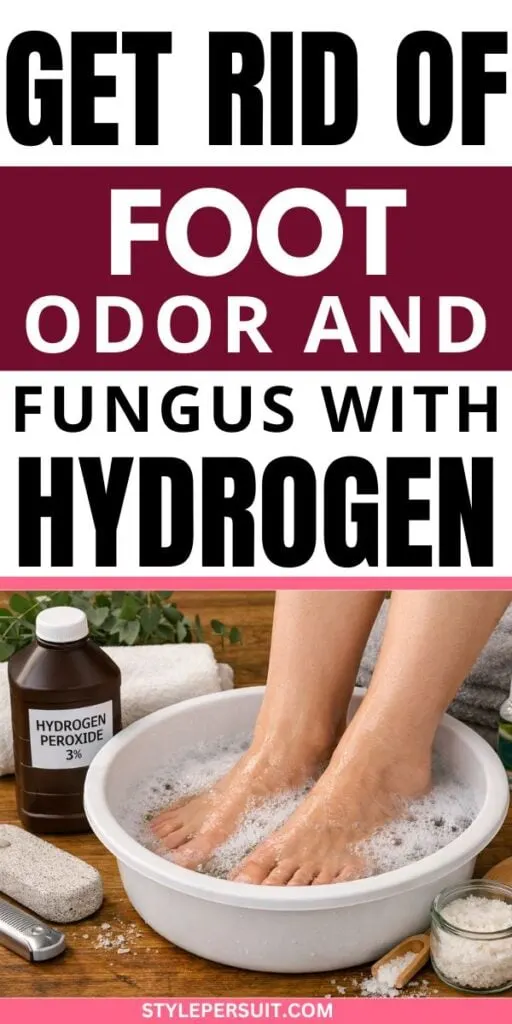
Every few years, some home remedy resurfaces like it never left. Hydrogen peroxide foot soaks are exactly that kind of thing.
Not flashy. Not trendy in a TikTok sense. Just… persistent.
You hear about it from a nurse aunt, a gym locker room conversation, or a random Pinterest pin saved at 1 a.m. when your feet smell weird and you’re tired of pretending it’s fine.
And honestly? There’s a reason people keep talking about it.
Hydrogen peroxide has been sitting in bathroom cabinets forever. It’s cheap. It bubbles. It feels like it’s doing something.
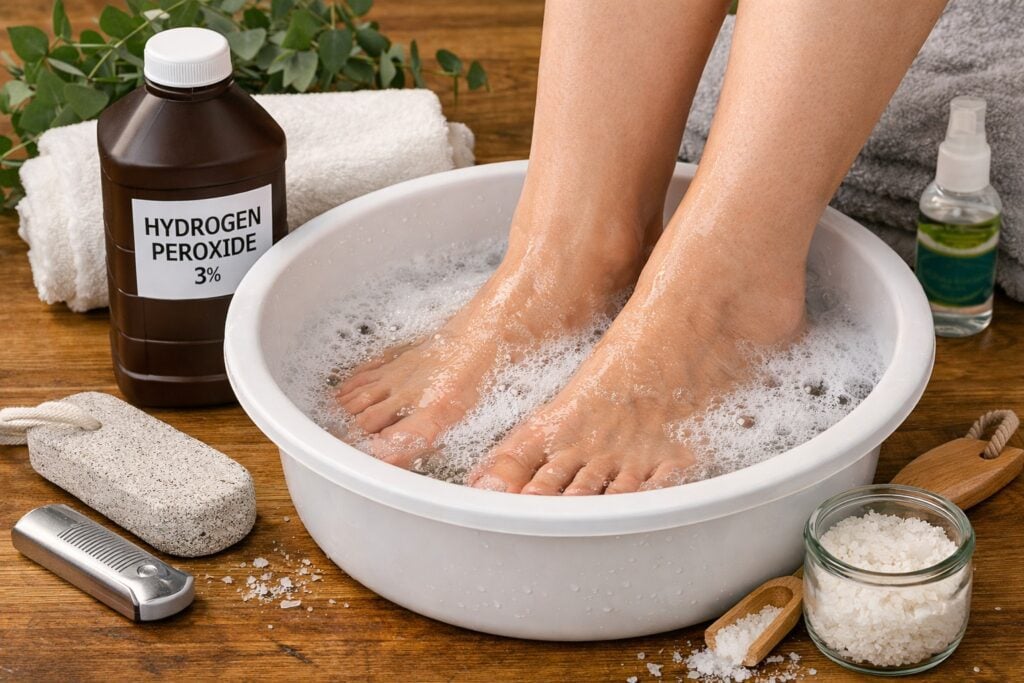
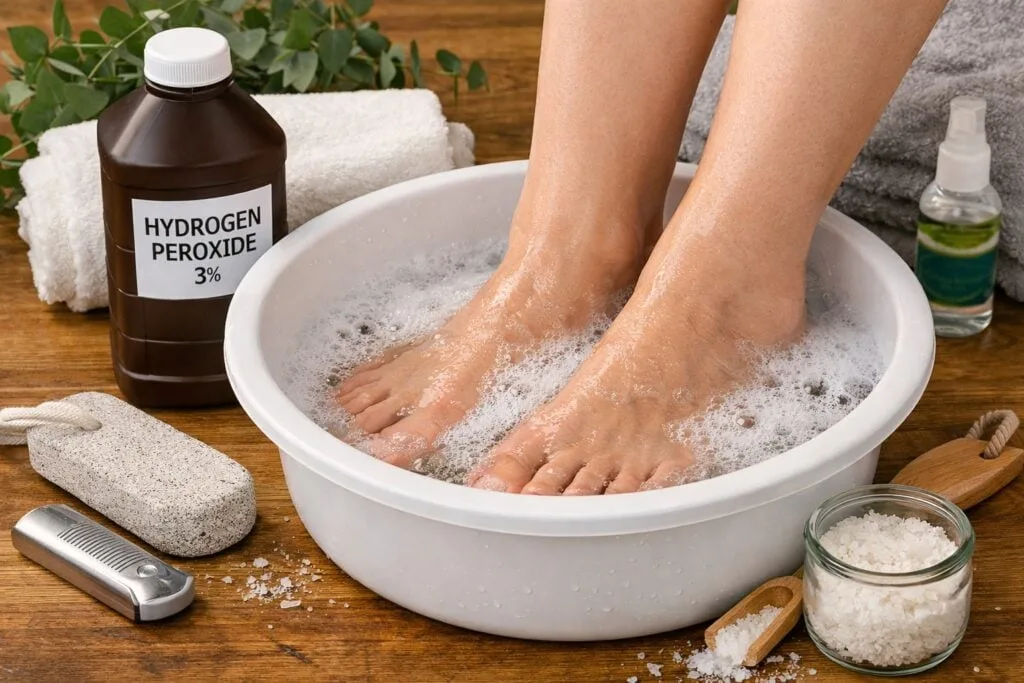
When you pour it into warm water and soak your feet, you see that faint fizz and think, Okay, something is happening here.
But what’s actually going on, and what’s just hopeful thinking?
Let me explain.
What hydrogen peroxide actually does (no lab coat required)
Hydrogen peroxide (the common 3% brown-bottle kind) is an oxidizer. That sounds intense, but in normal-human terms, it means this:
It releases oxygen when it contacts organic material.
That’s why it bubbles on cuts. That bubbling isn’t healing magic, it’s oxygen being released as it reacts with bacteria, debris, and dead tissue.
On feet, that same reaction can:
- Reduce odor-causing bacteria
- Lightly break down surface grime
- Create an environment that’s less friendly to certain fungi
It’s not “killing everything instantly.” It’s more like disrupting the party bacteria and fungi want to throw on warm, sweaty skin.
That distinction matters.
Why people use hydrogen peroxide foot soaks in the first place
Most people don’t wake up thinking, Today I will soak my feet in peroxide.
They get there because of something specific.
Usually one (or more) of these:
- Persistent foot odor that soap isn’t fixing
- Early signs of athlete’s foot
- Thick, rough, or yellowish skin buildup
- Feet that feel grimy even after showering
- Post-gym or post-work boots funk
- A general “my feet feel off” situation
There’s also the mental side of it. A foot soak feels like self-care without needing a spa appointment. Warm water. A chair.
Ten minutes where no one asks you for anything.
That alone is half the appeal.
Let’s be real about the benefits (and the limits)
Here’s where I’ll be slightly contradictory on purpose.
Hydrogen peroxide foot soaks can help—but they are not miracle cures.
They tend to work best for:
- Odor control, especially when bacteria is the main issue
- Surface-level fungus in early stages
- General hygiene reset after sweaty days
They are not great for:
- Deep, established nail fungus
- Cracked heels that are already inflamed
- Chronic skin conditions like eczema or psoriasis
Think of hydrogen peroxide like a reset button, not a repair shop.
It clears the surface. It doesn’t rebuild the foundation.
Who usually gets the best results from this soak?
You’ll notice something if you read enough real-world stories (not marketing fluff).
This soak tends to help people who:
- Wear closed shoes for long hours
- Sweat heavily from the feet
- Shower daily but still struggle with odor
- Catch fungal issues early
It’s less helpful if:
- The skin barrier is already damaged
- There are open cracks or sores
- The problem has been ignored for years
Timing matters more than people realize.
How to do a hydrogen peroxide foot soak safely
This is the part people mess up, not because it’s complicated, but because they assume “more” equals “better.”
It doesn’t.
What you’ll need
- Warm (not hot) water
- 3% hydrogen peroxide (standard drugstore kind)
- A basin or tub large enough for both feet
- A towel you don’t mind getting damp
Basic ratio that actually makes sense
A commonly tolerated mix is:
- 1 part hydrogen peroxide
- 2 parts warm water
You don’t need to measure like a chemist. Eyeballing is fine. Just don’t pour half a bottle straight onto your feet. That’s where irritation starts.
How long to soak
- 10–15 minutes is plenty
- Once per day at most
- 2–3 times per week is usually enough
Longer doesn’t mean better. It usually just means drier skin later.
What it should feel like—and what it shouldn’t
During the soak, mild fizzing or tingling is normal.
A slight clean smell? Normal.
Warmth and relaxation? Ideal.
What’s not normal:
- Burning
- Sharp stinging
- Redness spreading quickly
- White, overly soft skin afterward
If you notice those, stop. Rinse. Dry. Don’t push through it.
Your feet aren’t a science experiment.
Foot odor: where hydrogen peroxide shines
This is where the soak really earns its reputation.
Foot odor is usually bacterial. Bacteria love moisture, warmth, and trapped air. Hydrogen peroxide disrupts that environment just enough to make a difference.
People often notice:
- Less odor after one or two soaks
- Shoes smelling better over time
- Socks staying fresher longer
That said, here’s the thing, if you don’t change socks daily, rotate shoes, or let footwear dry fully, the smell comes back. The soak helps, but habits matter more.
Athlete’s foot and mild fungus: early help, not a cure-all
For mild itching, peeling, or redness between toes, hydrogen peroxide can help reduce surface fungi. It’s most useful early, before thick skin or nails get involved.
If the skin is already cracked or raw, peroxide can make it worse. In those cases, gentler options are usually smarter.
A lot of people combine the soak with:
- Thorough drying between toes
- Breathable socks
- Antifungal powders or sprays
That combination works better than peroxide alone.
Rough skin and calluses: yes… but carefully
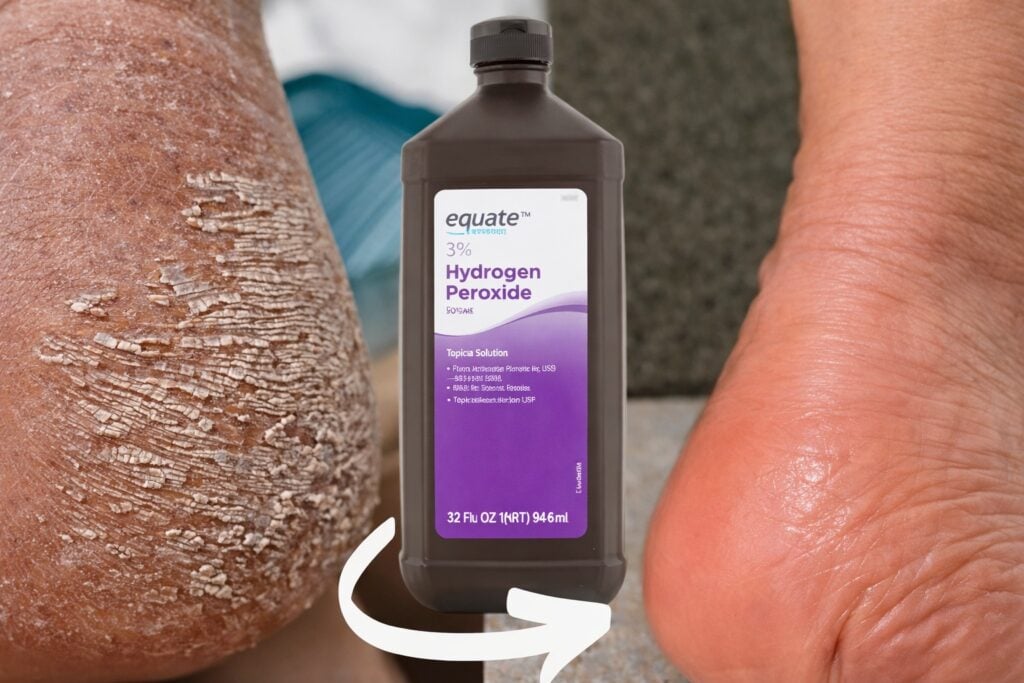
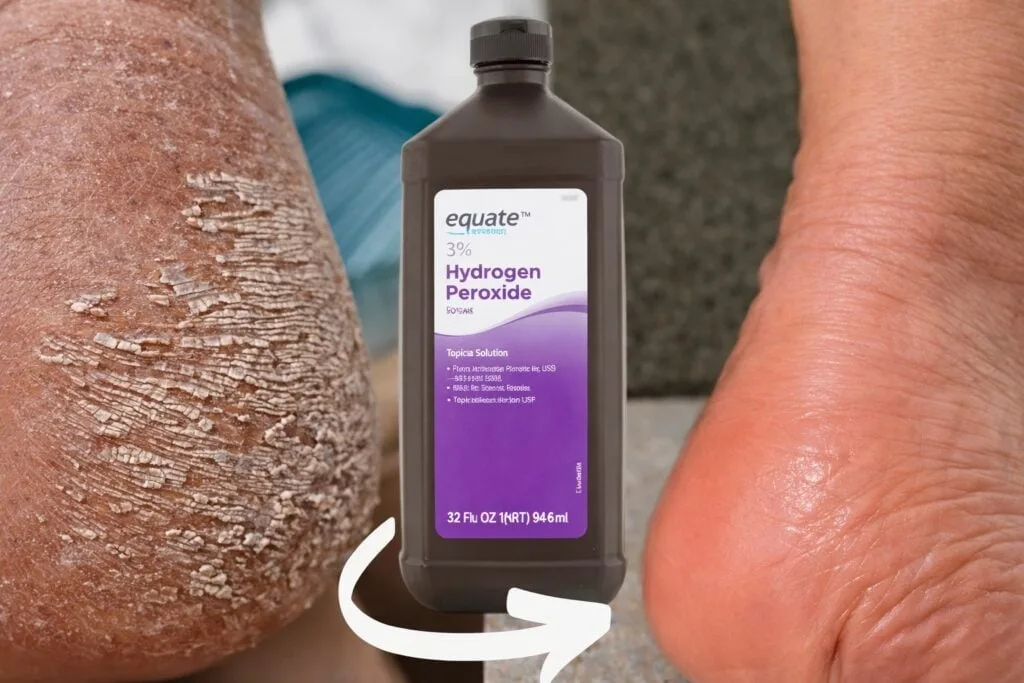
Hydrogen peroxide can soften surface buildup slightly, mostly because soaking itself hydrates skin.
But peroxide also dries skin if overused.
If your goal is smoother feet:
- Use peroxide sparingly
- Follow with a thick moisturizer
- Wear cotton socks afterward
Skipping the moisturizing step is why people say, “It made my feet worse.”
Common mistakes people make (and regret)
These show up again and again:
- Using undiluted peroxide
- Soaking too often
- Ignoring post-soak care
- Using it on broken skin
- Expecting nail fungus to vanish
Most negative experiences come from overdoing it.
More aggressive doesn’t mean more effective. It just means irritated skin.
When you should skip hydrogen peroxide altogether
This matters, so don’t skim it.
Avoid peroxide foot soaks if you have:
- Deep cracks or open wounds
- Diabetes-related foot issues (unless a professional says it’s okay)
- Severe dryness or eczema on feet
- Known sensitivity to peroxide
If you’re unsure, err on the cautious side. Feet heal slowly when irritated.
How it compares to other popular foot soaks
People often ask how peroxide stacks up against other options.
Here’s the plain truth:
- Epsom salt: Better for soreness and relaxation
- Vinegar: Stronger against fungus, harsher on skin
- Baking soda: Mild deodorizing, less antimicrobial
- Hydrogen peroxide: Best for odor and surface hygiene
They’re tools, not rivals. Different jobs, different strengths.
Some people even rotate them instead of sticking to one.
After-soak care most people forget (but shouldn’t)
This is where results are made or lost.
After soaking:
- Rinse feet with plain water
- Dry thoroughly, especially between toes
- Apply a moisturizer if skin feels tight
- Let feet air-dry before socks
That drying step sounds boring, but it’s crucial.
Moisture left behind invites the same problems you’re trying to fix.
A grounded final take on hydrogen peroxide foot soaks
Here’s the honest bottom line.
Hydrogen peroxide foot soaks aren’t hype, but they’re not magic either. They’re a simple, affordable reset for foot hygiene issues when used thoughtfully.
They work best when:
- The problem is mild or early
- You don’t overdo it
- You follow up with basic foot care
Used that way, they earn their quiet reputation.
Not dramatic. Not flashy. Just… helpful.
And honestly? Sometimes that’s exactly what your feet need.