If you’ve noticed intermittent fasting popping up everywhere, it’s not because it’s the newest shiny thing. It’s because a lot of people are tired.
Not just physically tired, but mentally worn down by food rules, constant tracking, and the quiet guilt that seems to come with eating “wrong.”
Here’s the thing: most of us didn’t start looking into intermittent fasting because we love discipline.
We started because eating all day, every day, wasn’t working anymore. The snacking. The energy crashes.
The feeling that food was running the schedule instead of the other way around.
Intermittent fasting entered the conversation as something… simpler. Not easier, exactly, but quieter. Fewer decisions. Fewer moments of “Should I eat this?” It offered a structure that didn’t demand perfection, just a bit of rhythm.
And that’s why it caught on.
For beginners especially, intermittent fasting often feels less like a diet and more like a reset.
No special products. No long lists of forbidden foods. Just a different way of organizing the day. You eat. Then you don’t. Then you eat again. That’s it.
Of course, the internet has a way of turning simple ideas into extremes. You’ll see people fasting for days, measuring ketones, treating hunger like a moral test.
That’s not what this guide is about. This is about understanding intermittent fasting as a practical tool, one that fits into real life, not a highlight reel.
If you’re here because you want clarity without pressure, you’re in the right place.

So… What Is Intermittent Fasting, Really? (No Jargon, Promise)
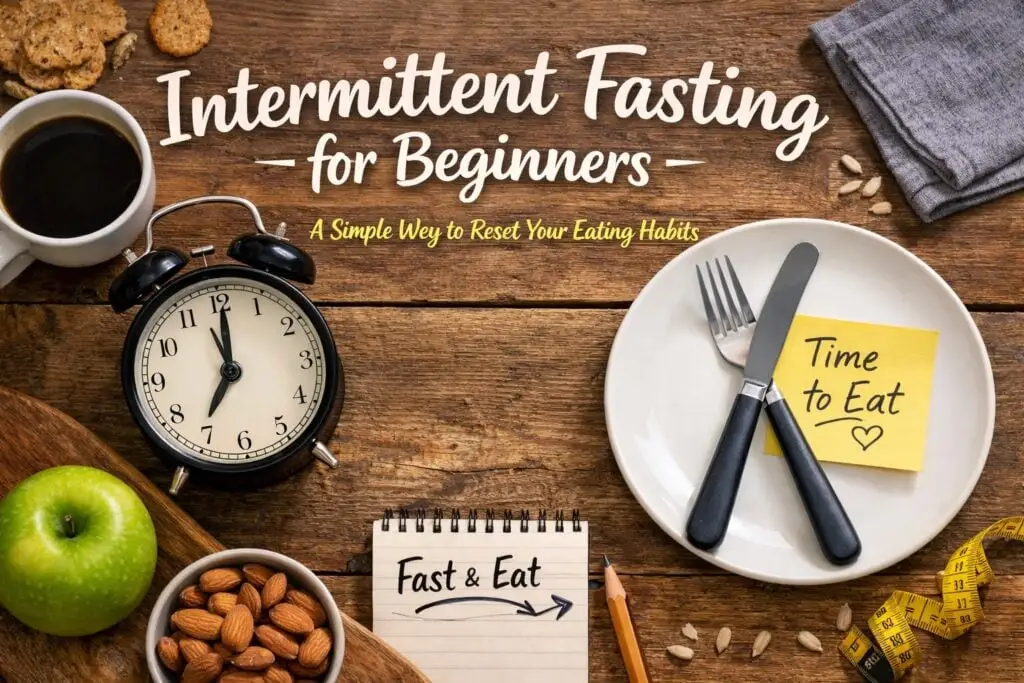
At its core, intermittent fasting is not about what you eat. It’s about when you eat.
That’s it.
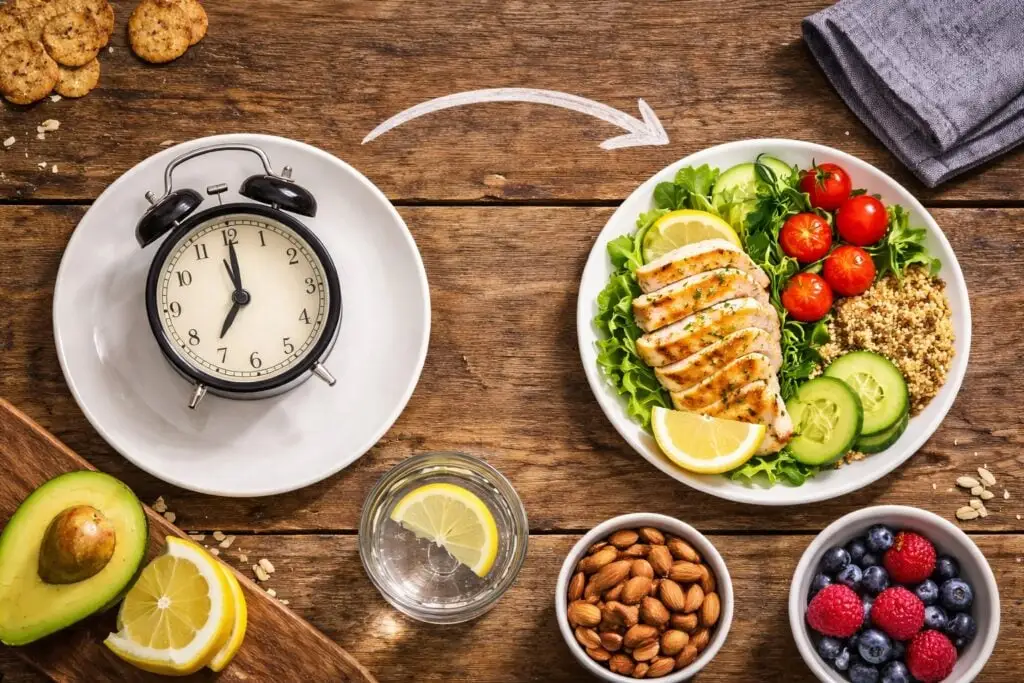
Instead of spreading meals and snacks across the entire day, intermittent fasting creates a set window where you eat your meals, followed by a longer window where you don’t.
During that fasting window, your body isn’t digesting food. It’s doing other things, maintenance work, energy regulation, hormone balancing, the behind-the-scenes stuff that doesn’t get much attention.
This is where people often get nervous. “Isn’t that just starving?”
No. And that distinction matters.
Starvation is uncontrolled, forced, and associated with nutrient deficiency. Intermittent fasting is structured and intentional.
You’re still eating enough food. You’re just giving your body a break from constant digestion.
Think of it less like deprivation and more like closing the kitchen for the night.
Most beginners start with something like a 12- or 14-hour fast, which often includes sleep anyway.
Dinner at 7 p.m., breakfast at 9 a.m. That already counts. You may have been doing a version of this without realizing it.
What makes intermittent fasting different from traditional dieting is that it doesn’t demand constant restraint.
You’re not trying to eat less all the time. You’re simply eating during a smaller part of the day. That shift alone changes how hunger feels—and how manageable it is.
Another thing that often gets misunderstood: fasting isn’t about suffering through hunger. Hunger comes in waves.
It rises, peaks, and falls. Once you experience that a few times, the fear around it fades. You realize you’re not fragile. You’re adaptable.
That realization is powerful, especially for beginners.
Why Intermittent Fasting Works for Some People (And Not Everyone)

Intermittent fasting works because it changes the environment your body operates in. Not through force, but through timing.
When you eat frequently, especially high-carb or sugary foods, your body produces insulin over and over again.
Insulin helps move glucose into cells, but chronically high insulin levels make fat loss harder and hunger louder.
Fasting periods allow insulin levels to drop, which gives your body access to stored energy. That’s one reason many people notice fat loss without obsessing over calories.
But weight loss isn’t the whole story, and honestly, it’s not even the most interesting part.
Many beginners report fewer cravings after a few weeks. Not because they’re stronger, but because their hunger hormones settle down.
Ghrelin, the hormone that signals hunger, starts following a more predictable rhythm. You get hungry at certain times instead of all the time. That alone can feel like relief.
There’s also the mental side. Fewer meals often mean fewer decisions. Fewer decisions mean less fatigue.
It sounds small, but not having to constantly think about food frees up attention for everything else, work, movement, rest, even enjoyment.
Now, here’s the mild contradiction: intermittent fasting works best when it’s not treated like a rigid rulebook.
Some people thrive on structure. Others feel stressed by it. If fasting becomes another source of pressure, the benefits shrink.
Stress hormones rise. Sleep suffers. Progress stalls. That’s why intermittent fasting isn’t universal. It’s effective, but only when it fits the person doing it.
And that’s the part that often gets left out online.
Intermittent fasting isn’t about willpower. It’s about alignment between your body, your schedule, and your energy. When those line up, things feel smoother. When they don’t, forcing it rarely ends well.
The goal isn’t to fast longer. It’s to fast smarter.
The Most Popular Intermittent Fasting Schedules (Beginner-Friendly Breakdown)
One of the first things people ask is, “Which intermittent fasting schedule is best?”
The honest answer? The best one is the one you can live with.
Schedules sound technical on paper, but in real life they’re just ways of arranging meals around your day.
Some feel natural. Others feel like you’re swimming upstream. Let’s walk through the common ones—without hype.
The 16:8 Method (The Most Talked-About Option)
This is the version most people hear about first. You fast for 16 hours and eat within an 8-hour window. A typical setup might look like eating from noon to 8 p.m.
Why it works for many beginners is simple: sleep does a lot of the fasting for you. If you finish dinner at 8 p.m. and eat again at noon, you’ve already fasted most of the way there without effort.
That said, 16:8 isn’t magic. Some people feel great on it. Others feel drained, especially early on.
Morning-focused workers, people who train early, or anyone with high stress levels sometimes find that skipping breakfast creates more tension than benefit.
If you try this schedule, give it a couple of weeks before judging it. The first few days can feel louder than they actually are.
The 14:10 Method (Quietly Excellent for Beginners)
This one doesn’t get enough attention, and that’s a shame.
With a 14-hour fast and a 10-hour eating window, you still get many of the metabolic benefits of fasting, but with more breathing room. Breakfast might be at 9 a.m. instead of noon. Dinner still ends at a reasonable hour.
For beginners, especially women or anyone coming from years of dieting, this approach often feels calmer. Less strain. Less white-knuckling. More sustainability.
And here’s something people don’t love to hear: consistency with a shorter fast often beats inconsistency with a longer one.
The 12:12 Method (Yes, It Still Counts)
This is where some people roll their eyes. Twelve hours doesn’t sound impressive. But it’s a solid starting point, especially if your eating has been spread across long evenings or late-night snacking.
Twelve hours creates a boundary. That boundary matters.
If you stop eating after dinner and wait until morning to eat again, you’re already creating a fasting rhythm. For many people, this alone improves digestion, sleep quality, and appetite awareness.
If 12:12 feels easy, you can always extend later. There’s no rush.
Alternate-Day Fasting and OMAD (Why Beginners Should Pause)
These methods get a lot of attention online because they sound efficient. Eat one meal a day. Fast every other day. Results, fast.
The problem? They demand a level of stress tolerance and metabolic flexibility most beginners don’t have yet.
Jumping into extreme schedules often leads to fatigue, binge patterns, or quitting altogether. Not because people are weak, but because the body needs time to adapt.
If you’re new to intermittent fasting, these approaches are better saved for later, or skipped entirely.
What You Can (and Can’t) Have During a Fast
This is where people tend to overthink everything.
Let’s simplify.
During a fast, the goal is to avoid triggering digestion and insulin spikes. That’s it. You’re not chasing perfection. You’re creating a low-insulin, low-digestion window.
Generally fine during a fast:
- Water (still or sparkling)
- Black coffee
- Plain tea (herbal, green, black)
- Electrolytes without sugar
Coffee and tea deserve a quick note. They don’t “ruin” a fast for most people, but they can affect appetite and stress hormones.
If coffee makes you shaky or irritable while fasting, that’s feedback—not failure.
Now, the gray area.
A splash of milk. A bit of cream. Artificial sweeteners. Gum.
Technically, these can break a fast. Practically, the impact depends on the person. For beginners, stressing over a teaspoon of cream often causes more harm than the cream itself.
Here’s a useful question instead of rigid rules:
Does this make fasting easier or harder for me?
If a small adjustment helps you stay consistent without triggering cravings, it might be worth it. If it opens the door to constant nibbling, it’s probably not.
Fasting is not a purity test. It’s a tool.
What to Eat When You’re Not Fasting (This Matters More Than You Think)
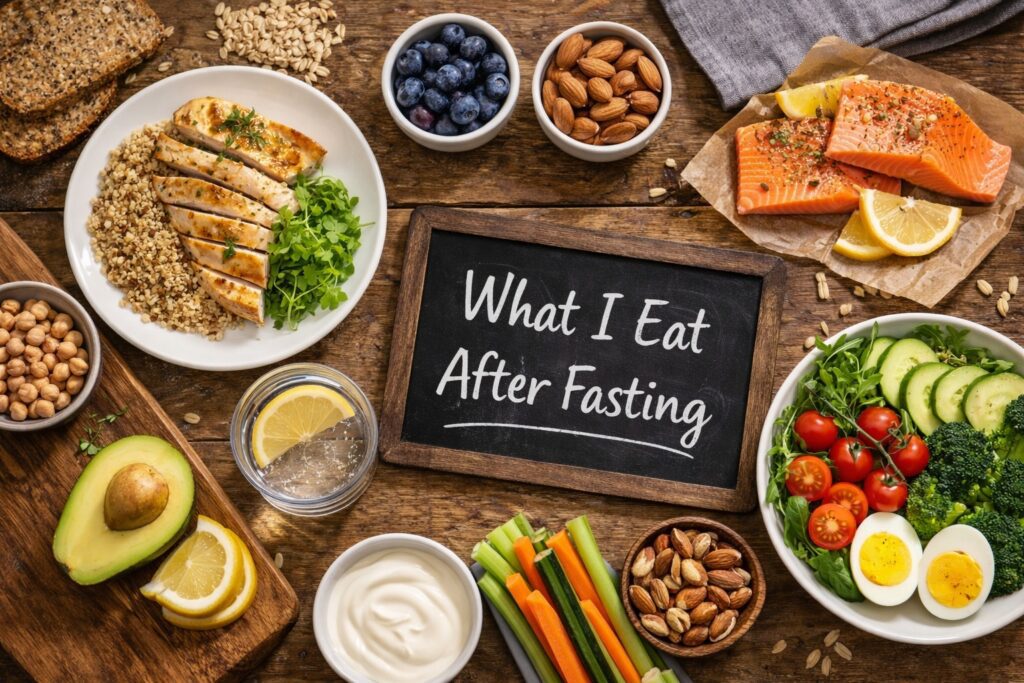
Intermittent fasting doesn’t erase food quality. It highlights it.
What you eat during your eating window shapes how you feel during the fast. This is where many beginners accidentally sabotage themselves, by under-eating nutrients and overdoing quick carbs.
Start with protein. Not in a rigid, bodybuilder way, just enough to feel steady. Protein supports muscle, stabilizes blood sugar, and keeps hunger quieter later on.
Add fiber from vegetables, fruit, or whole foods. Fiber slows digestion and supports gut health, which plays a bigger role in appetite regulation than most people realize.
Fats matter too. Not excessive amounts, but enough to add satisfaction. Meals that feel complete reduce the urge to snack later.
Carbs deserve nuance. They’re not the villain, but timing and type matter. Refined carbs on an empty stomach can spike hunger quickly. Whole-food carbs paired with protein and fat tend to behave better.
One thing Pinterest content gets right: people want to know what meals actually look like. Not theory. Real plates. Simple combinations. Food that fits into normal life.
And one more quiet truth: eating well during your eating window makes fasting feel easier the next day. Not dramatic. Just smoother.
Intermittent Fasting for Weight Loss (Let’s Be Honest About It)
Let’s talk about weight loss without pretending it’s mysterious or magical.
Intermittent fasting can support weight loss, but not because it flips some secret metabolic switch overnight.
It works because it quietly changes how often, and how mindlessly, you eat. Fewer eating hours usually mean fewer chances to snack, fewer insulin spikes, and more time for your body to tap into stored energy.
That’s the boring truth. And boring is good here.
What intermittent fasting does not do is cancel out everything else. You can still overeat during your eating window.
You can still choose foods that leave you hungry an hour later. When that happens, fasting starts to feel pointless.
Here’s where beginners often get tripped up: they assume longer fasts mean faster fat loss. Sometimes the opposite happens.
Hunger rebounds. Stress hormones rise. Sleep gets lighter. And suddenly weight loss stalls or reverses.
Weight loss responds better to steadiness than aggression.
Another quiet factor is energy. When fasting is done sensibly, people often move more without thinking about it, walking more, fidgeting less, feeling lighter.
That adds up. When fasting is too strict, energy drops and movement shrinks. That cancels progress.
If your goal is fat loss, intermittent fasting works best as a container, not a weapon. A way to eat with intention, not a way to punish your body into compliance.
And yes, calories still matter. But they matter less when hunger is calm and eating feels deliberate instead of reactive.
Intermittent Fasting for Women: A Slower, Smarter Approach
This section matters, and it often gets rushed or brushed aside.
Women’s bodies are more sensitive to energy availability and stress signals. Hormones like cortisol, estrogen, and progesterone interact with fasting in ways that aren’t always obvious at first.
Some women feel fantastic with intermittent fasting. Clear-headed. Energized. Balanced. Others feel wired, anxious, or depleted. Same method. Different response.
That doesn’t mean fasting “doesn’t work” for women. It means the margin for error is smaller.
Aggressive fasting, long fasts, skipped meals layered on top of intense exercise or poor sleep, can push the nervous system into a stress response.
When that happens, hunger increases, cycles get disrupted, and weight loss becomes harder, not easier.
A slower approach often works better:
- Shorter fasting windows
- Eating enough protein and overall calories
- Paying attention to sleep quality and mood
- Being flexible around cycle changes or high-stress weeks
There’s also permission here. Permission to adjust. Permission to pause. Permission to stop if something feels off.
Intermittent fasting is a tool, not a test of toughness. If your body asks for more food at certain times, listening is not weakness, it’s literacy.
The goal is balance, not endurance.
Common Side Effects Beginners Experience (And How to Handle Them)


Most beginner side effects aren’t signs that fasting is harmful. They’re signs that your body is adjusting.
That adjustment period can feel uncomfortable, but it’s usually temporary.
Hunger is the obvious one. Early hunger often shows up at habitual eating times. It passes faster than people expect.
Drinking water, staying busy, or shifting meal timing slightly can help.
Headaches are often linked to dehydration or electrolyte imbalance. When insulin drops, the body releases more sodium.
Adding a pinch of salt to water or using unsweetened electrolytes can make a noticeable difference.
Fatigue or brain fog can happen if you’re undereating overall, especially protein. Fasting reduces eating opportunities, which means nutrient-dense meals matter more.
Irritability is feedback. Sometimes it fades. Sometimes it’s a sign the fasting window is too long. Both outcomes are useful information.
What’s not normal is persistent dizziness, intense weakness, or feeling unwell day after day. That’s a cue to stop and reassess, not push harder.
The adjustment phase usually lasts one to two weeks. If things feel smoother after that—great. If they don’t, modifying the approach is smarter than forcing it.
Fasting should make life quieter, not louder.
How Long Before You See Results? (The Realistic Timeline)
This is where expectations quietly make or break the experience.
Most people want to know how fast intermittent fasting “works.” The better question is what kind of results show up first. Because the earliest changes are often invisible.
During the first week, the body is mostly adjusting. Insulin patterns shift. Hunger hormones start reorganizing.
Digestion gets a break. You may feel lighter, or you may feel off. Both are normal. Scale changes during this phase are usually water-related and not especially meaningful.
Weeks two to four are where things start to settle. Hunger becomes more predictable. Energy evens out.
Meals feel more intentional. Some people notice their clothes fitting differently before the scale moves. Others notice better sleep or fewer cravings long before weight loss shows up.
After a month or two, the benefits compound, if the approach is sustainable. Fat loss, when it happens, tends to be gradual.
That’s not a flaw. Slower progress often sticks because it’s built on habit, not pressure.
If nothing changes after several weeks, it doesn’t automatically mean fasting “isn’t working.”
It often means something small needs adjusting, meal composition, sleep, stress, or the length of the fasting window.
Progress in fasting is rarely dramatic. It’s subtle. Quiet. And that’s usually a good sign.
Mistakes Almost Everyone Makes at the Beginning
Most beginner mistakes come from enthusiasm, not ignorance.
One common misstep is starting too aggressively. Jumping straight into long fasting windows sounds efficient, but it often leads to burnout or rebound eating.
Gradual changes give your body room to adapt.
Another issue is under-eating during the eating window. Skipping meals doesn’t automatically mean your body needs less fuel.
When meals are too small or unbalanced, hunger comes back harder later.
Protein is often overlooked. Not intentionally, just accidentally. Without enough of it, energy drops and fasting feels much harder than it needs to be.
There’s also the trap of “earning” food. Treating fasting like something that must be compensated for can create a tense relationship with eating.
That tension usually backfires.
And finally, there’s comparison. Watching someone else fast longer, lose weight faster, or “do it better” creates unnecessary pressure. Bodies don’t respond identically. They never have.
Mistakes are part of the process. They’re not proof of failure. They’re feedback.
Intermittent Fasting vs Dieting: Why This Feels Easier (Emotionally)
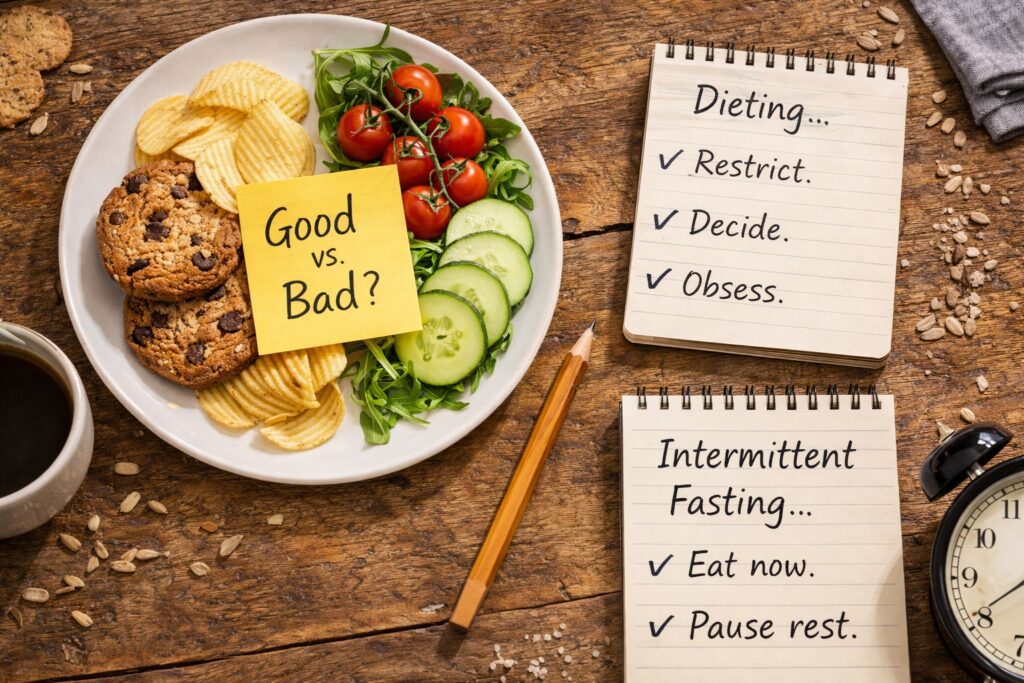
Traditional dieting asks for constant restraint. Every meal is a test. Every snack is a decision. That wears people down faster than they expect.
Intermittent fasting shifts that mental load. Instead of deciding what and how much all day long, you’re mostly deciding when to eat.
Once that decision is made, the rest feels simpler.
There’s also less moral weight attached to food. You’re not “good” or “bad” for eating. You’re just inside or outside your eating window. That neutrality matters more than it sounds.
Many people notice that food obsession softens over time. Not because they’re controlling themselves harder, but because structure removes constant temptation. When eating has a place, it stops bleeding into everything else.
This doesn’t mean intermittent fasting is effortless. It means the effort is more focused. More contained. Less draining.
That emotional ease is why many people stick with fasting longer than traditional diets—even when results are modest.
Who Should Not Try Intermittent Fasting (This Part Matters)
Intermittent fasting gets a lot of positive attention, but it’s not something everyone should experiment with. And saying that doesn’t weaken the idea, it strengthens it.
If you have a history of eating disorders, fasting can quietly bring back patterns that are better left alone.
Even when intentions are good, the structure of fasting can blur into restriction. In those cases, a more flexible, meal-based approach is usually safer.
Pregnancy and breastfeeding are also times when fasting doesn’t make sense. Energy demands are higher, nutrient needs are non-negotiable, and regular intake supports both physical and hormonal health. This isn’t a season for food boundaries.
People managing medical conditions like diabetes, hypoglycemia, or those taking medications that require food should approach fasting carefully and with professional guidance. Timing matters when blood sugar or medication absorption is involved.
There’s also a quieter category worth mentioning: anyone already running on empty. Chronic stress, poor sleep, emotional burnout.
Fasting adds another variable, and sometimes the body’s first need is stability, not structure.
Choosing not to fast isn’t missing out. It’s responding appropriately.
How to Start Intermittent Fasting Without Overthinking It
If you’re still interested after everything you’ve read, starting doesn’t need to be dramatic.
Begin by noticing your current rhythm. When do you usually eat your last meal? When do you feel genuinely ready for food the next day? Often, a natural fasting window is already there.
Start small. Twelve hours is enough to establish a boundary. Stay there for a week. See how your energy, hunger, and mood respond.
From there, you can gently extend the fasting window if it feels right. Not because you “should,” but because it fits. Fourteen hours is a common sweet spot. Sixteen is optional, not mandatory.
During the first week, expect a little noise. Hunger signals may feel louder before they settle. Hydration helps. So does patience.
The goal at the beginning isn’t optimization. It’s familiarity. Let fasting become boring before you try to make it impressive.
Making Intermittent Fasting a Lifestyle (Not a Phase)
The people who stick with intermittent fasting long term don’t treat it like a rulebook. They treat it like a framework.
Some days, the window shifts. Social events happen. Travel happens. Late dinners happen. None of that ruins anything.
Flexibility is what keeps fasting sustainable. A weekday rhythm with weekend looseness works well for many.
Seasonal changes matter too, appetite and energy naturally fluctuate throughout the year.
There may be times when fasting no longer feels supportive. That doesn’t mean it failed. It means your needs changed.
Stepping back, adjusting, or even letting it go for a while is part of a healthy relationship with food. The structure should serve you, not the other way around.
When fasting becomes background, not something you constantly think about—that’s usually when it’s working best.
Final Thoughts: If You Take One Thing Away From This…
Intermittent fasting isn’t a shortcut. It’s a way of creating space—between meals, between impulses, between constant food noise.
For beginners, the biggest benefit often isn’t weight loss. It’s clarity. Knowing when to eat. Knowing when you don’t need to. Trusting that hunger isn’t an emergency and food doesn’t have to be constant to be nourishing.
You don’t need to be strict. You don’t need to fast longer. You don’t need to copy anyone else’s schedule.
You just need an approach that feels calm enough to repeat.
If intermittent fasting gives you that, great. If it doesn’t, that’s information—not failure.
Either way, listening to your body is the real skill here. And that’s something no schedule can replace.