Most of us think we’d know exactly what to do if we got lost in the woods or if the power grid decided to take a permanent vacation. We’ve all watched the shows.
You see a guy tackle a wild boar or build a log cabin with nothing but a pocket knife, and you think, “Yeah, I could handle that.”
But here’s the thing: reality is messy. It’s cold, wet, and incredibly unforgiving.
Survival isn’t about looking cool in tactical gear or fighting off zombies; it’s about regulating your body temperature, keeping your head straight when panic sets in, and making it through the night.
Whether you’re an avid hiker, a camping enthusiast, or just someone who wants to be ready if the car breaks down on a lonely road, understanding the basics, the real basics, is non-negotiable.
So, let’s strip away the Hollywood fluff. We’re going to talk about techniques that actually work, the gear that matters, and the mindset that keeps you breathing.
The Psychology of “Oh No”
Before we even touch gear, we have to talk about your brain. The biggest killer in a survival situation isn’t starvation or even dehydration; it’s panic.
When you realize you’re lost, your adrenaline spikes. You make bad decisions. You run when you should sit.
You ditch your heavy pack because you’re tired, losing all your supplies.
There is a simple acronym used by scouts and military personnel alike: S.T.O.P.
- Sit: Just sit down. Take a breath. Drink a sip of water.
- Think: Where were you last? What resources do you have?
- Observe: Look at the weather. Look at the terrain. Is it getting dark?
- Plan: Don’t move until you have a reason to move.
It sounds basic, right? But honestly, fighting the urge to run is the hardest part. If you can master your own fear, you’re already halfway home.
The Rule of Threes
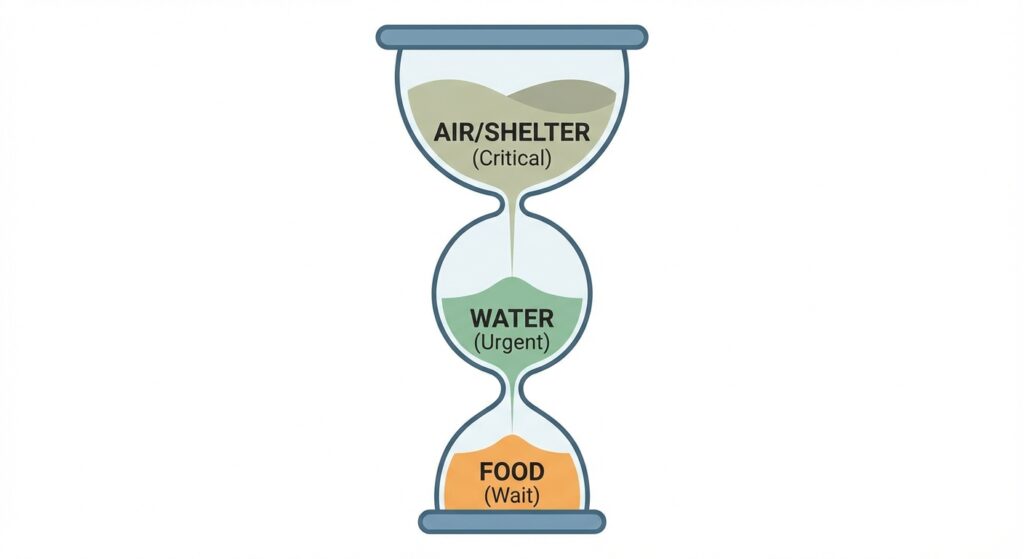
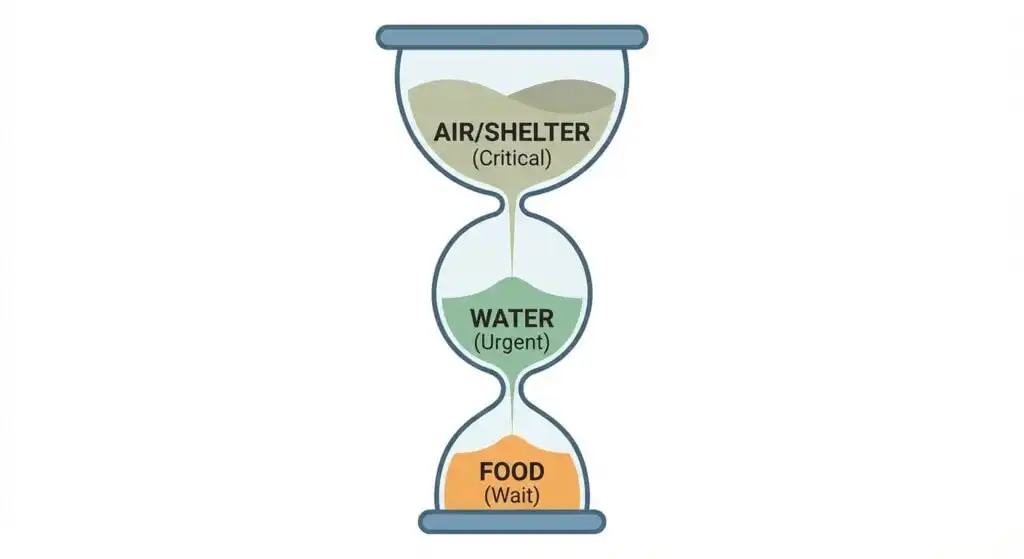
You might have heard this before, but it bears repeating because it sets your priorities straight. Humans are fragile. We can survive:
- 3 Minutes without air (or in icy water).
- 3 Hours without shelter in harsh conditions.
- 3 Days without water.
- 3 Weeks without food.
Notice that food is last? People always obsess over snares and hunting, but you can be hungry for a long time and still function.
You cannot freeze to death and function. You cannot act rationally if you are dehydrated.
Shelter: It’s Not Just a Roof
Let’s talk about keeping warm. If the sun is going down, your number one job is shelter. It doesn’t have to be pretty; it just has to work.
A common mistake is focusing only on the roof. But the ground? The ground is a heat vampire. It will suck the warmth right out of your body faster than the air will. You need insulation underneath you just as much as you need cover above you.
If you are in the woods, look for a “debris hut.” Pile up leaves, pine needles, or grass—make the pile at least two feet thick—and burrow into it. It’s like nature’s sleeping bag.
However, if you want to be proactive (and you should be), keeping a lightweight emergency bivvy or a high-quality tarp in your pack is a game-changer. They weigh nothing and save you hours of calorie-burning labor.
Survival Tarp and Shelter Options
Water: The Invisible Danger
You see a crystal-clear mountain stream. It looks delicious. Do not drink it.
Unless you are at the literal source of a spring coming out of a rock, that water likely contains protozoa like Giardia or Cryptosporidium.
And trust me, getting severe diarrhea in a survival situation is a death sentence because of how fast it dehydrates you.
Boiling is the gold standard. If you have a metal cup and fire, bring that water to a rolling boil for a minute (three minutes at high altitudes), and you’re safe. But starting a fire takes time and energy.
This is where modern technology saves the day. Personal water filters have come a long way.
They are small, cheap, and effective. You can literally stick some of them into a puddle and drink. It’s worth tossing one in your glove box or day pack.
Fire: The Morale Booster
Fire does three things: it keeps you warm, it signals for help, and it makes you feel like everything is going to be okay. That psychological boost, the “caveman TV”, is huge.
But starting a fire isn’t like the movies. Rubbing two sticks together (the bow drill method) is incredibly difficult, especially if the wood is damp or you’re tired.
You shouldn’t rely on friction fire unless you have absolutely no other choice.
Carry a lighter. In fact, carry two lighters. Wrap some duct tape around them so you have emergency repair tape, too.
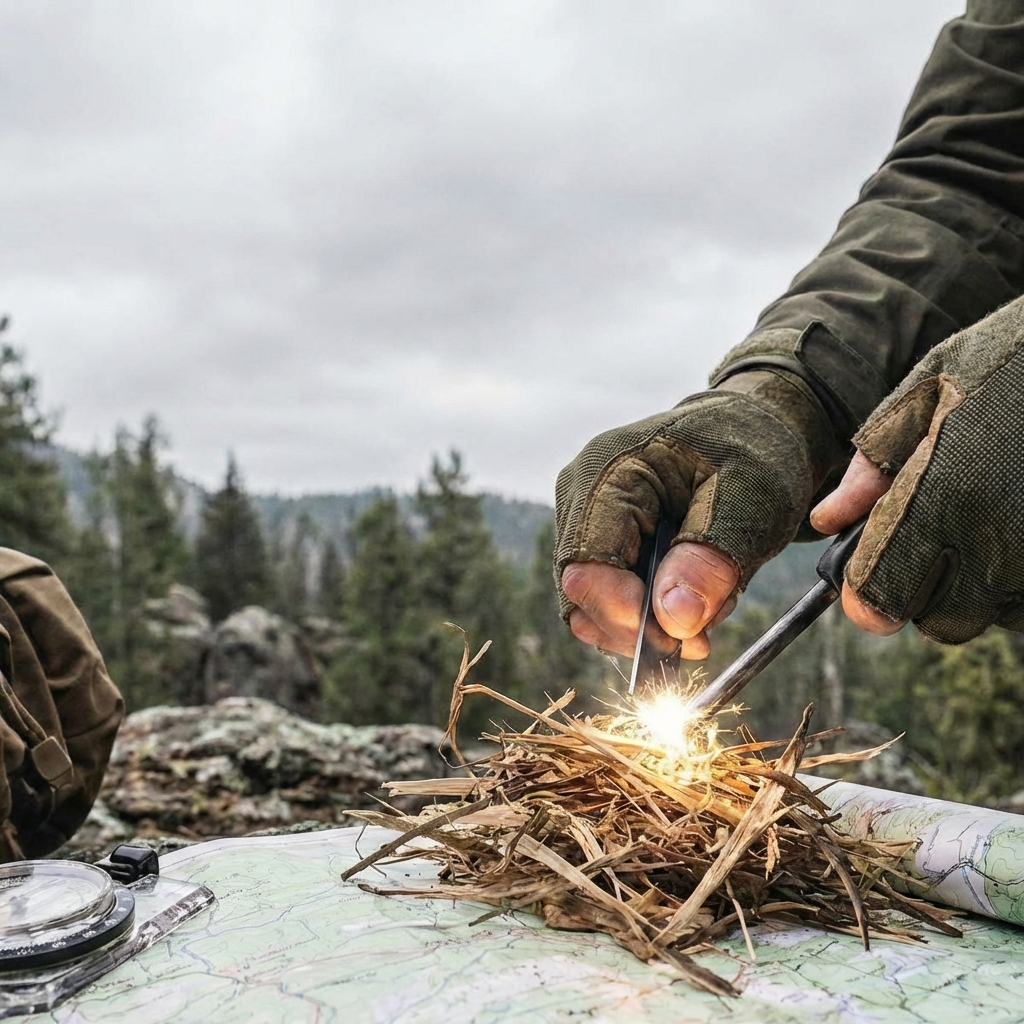
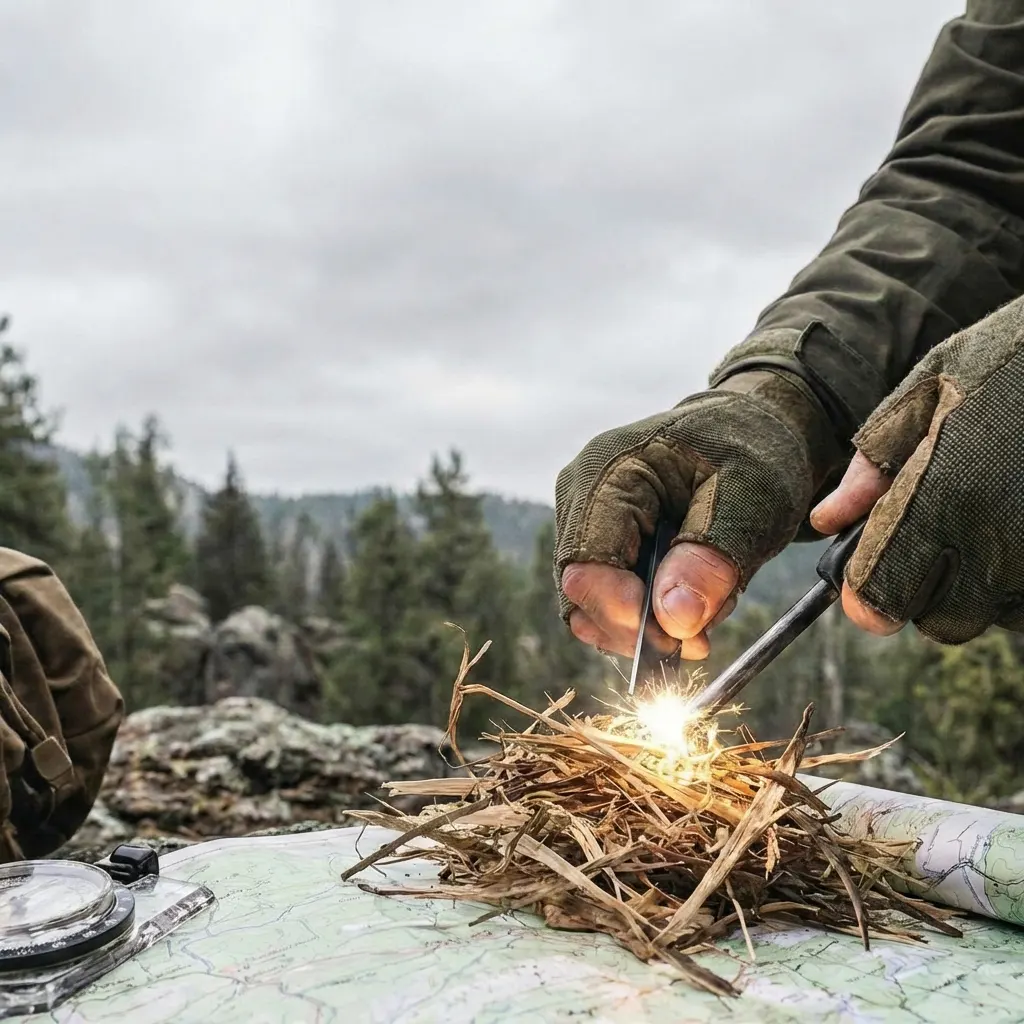
If the lighters fail (wet, cold, out of fuel), a Ferrocerium rod (ferro rod) is your best friend. It throws sparks at 3,000 degrees and works even when wet. But you need “tinder”—fluffy, dry stuff, to catch that spark.
Pro Tip: Soaking cotton balls in petroleum jelly (Vaseline) and stuffing them into an old pill bottle creates the ultimate fire starter.
One cotton ball will burn for about 5 minutes, giving you plenty of time to get damp twigs to catch.
Food: Don’t Waste Your Energy
Okay, let’s touch on food. If you are in a short-term survival scenario (under 72 hours), don’t even worry about hunting.
You will burn more calories trying to chase a squirrel or build a trap than you will get from eating the animal.
Foraging is safer, but only if you know your plants. Mushrooms? Forget it. Unless you are a mycologist, the risk isn’t worth it. Stick to the easy stuff like berries you recognize (blackberries, raspberries) or cattails.
Cattails are often called the “supermarket of the swamp.” You can eat the young shoots, the pollen, and the roots (rhizomes). They are easy to identify and usually grow near water.
If you absolutely must procure food, passive fishing is the way to go. Setting out lines with hooks and bait allows you to conserve energy while the line does the work.
Navigation: The Art of Knowing Where “There” Is
GPS is great until the batteries die or the satellites can’t see you through the canyon walls. Map and compass skills are a dying art, but they are vital.
If you don’t have a compass, you can use the sun. The sun rises in the East and sets in the West—roughly. In the Northern Hemisphere, if you face the sun at noon, south is in front of you, north is behind you.
Here is a little trick with a wristwatch (analog):
- Point the hour hand at the sun.
- Imagine a line halfway between the hour hand and the 12.
- That line points South (in the Northern Hemisphere).
It’s not perfect, but it keeps you from walking in circles. And speaking of walking in circles, humans naturally walk in circles when they don’t have visual landmarks because one leg is usually slightly stronger than the other.
Pick a tree or rock in the distance, walk to it, then pick another. connect the dots.
The “Gray Man”: Urban Survival
Sometimes survival isn’t about the woods. Sometimes it’s about getting home through a city during civil unrest or a natural disaster.
The concept of the “Gray Man” is simple: blend in. You don’t want to look like a tactical operator with camouflage pants and a giant military backpack.
That makes you a target. You want to look like everyone else, scared, average, and possessing nothing of value.
- Clothing: Wear neutral colors. Blue jeans, grey hoodie.
- Gear: Keep your supplies in a normal-looking backpack, like a Jansport or a messenger bag.
- Behavior: Avoid eye contact, but stay alert. Don’t run if everyone else is walking. Flow with the crowd until you can peel away to safety.
Essential Gear: The “Must-Haves”
We’ve talked about skills, but having the right tools makes those skills easier to apply.
You don’t need a 50-pound “Bug Out Bag” for a day hike, but a small “Everyday Carry” (EDC) or a specialized pouch can save your life.
Here is a quick checklist of things that offer high value for their weight:
- Fixed Blade Knife: Folders are great, but a fixed blade is stronger. You can use it to split wood (batoning). Morakniv Companion (Budget King)
- Cordage: Paracord (550 cord) has a million uses. Building shelters, fixing shoelaces, splinting a broken bone.
- Whistle: Your voice will give out long before a whistle does. A whistle cuts through wind and rain noise.
- Headlamp: Hands-free light is essential for setting up camp or gathering wood in the dark.
First Aid: Dealing with the Ouch
Cuts and scrapes in the city are annoyances. In the wild, they are infection vectors. If you get a deep cut, you need to clean it immediately.
But let’s talk about the scary stuff. Heavy bleeding. If you are hunting or using an axe and you slip, you could hit an artery.
A tourniquet is something you hope you never use, but if you need one, you need it right now.
You can’t improvise a good tourniquet easily with a belt (it doesn’t get tight enough). Carrying a legitimate CAT tourniquet weighs mere ounces and is a literal lifesaver.
Also, blister care. It sounds trivial, but if you can’t walk because your feet are raw, you can’t self-rescue.
Moleskin or simple duct tape works wonders on “hot spots” before they turn into blisters.
Knot Tying: Don’t Get Tied Up in Knots
You don’t need to know fifty knots. You need to know three, and you need to be able to tie them in the dark.
- The Bowline: It creates a fixed loop that won’t slip. Great for rescuing someone (tying a rope around them) or securing a tarp.
- The Taut-Line Hitch: An adjustable knot. This is crucial for tent guylines. You can slide it to tighten your shelter as the material sags overnight.
- The Square Knot: Good for joining two ropes of the same thickness.
Practice these while watching TV. Muscle memory is what counts when your hands are freezing.
The Mental Game: Attitude is Everything
You know what? I’ve read stories of people surviving weeks in the Amazon with nothing, and stories of people dying in their cars 10 miles from a gas station. The difference is almost always mindset.
There is a concept called “loss of will.” It’s when a person just gives up. They get cold, they get tired, and they just curl up and go to sleep.
You have to find a reason to keep going. Maybe it’s your kids, your dog, or just pure spite against the universe.
Whatever it is, hold onto it. Small victories help. You got the fire started? Celebrate that. You found a dry spot to sit? That’s a win.
Conclusion: Skills Weigh Nothing
At the end of the day, oops, I almost used a cliché there,let’s just say that when it comes down to it, the best survival tool is between your ears.
You can buy all the expensive gear on Amazon (and you should get the basics), but if you don’t know how to use it, it’s just expensive ballast.
Go outside. Practice lighting a fire in the rain in your backyard. Try sleeping in your living room with just your camping gear. Test your water filter.
The world is a beautiful, wild place. It demands respect. And the best way to show respect is to be prepared.