
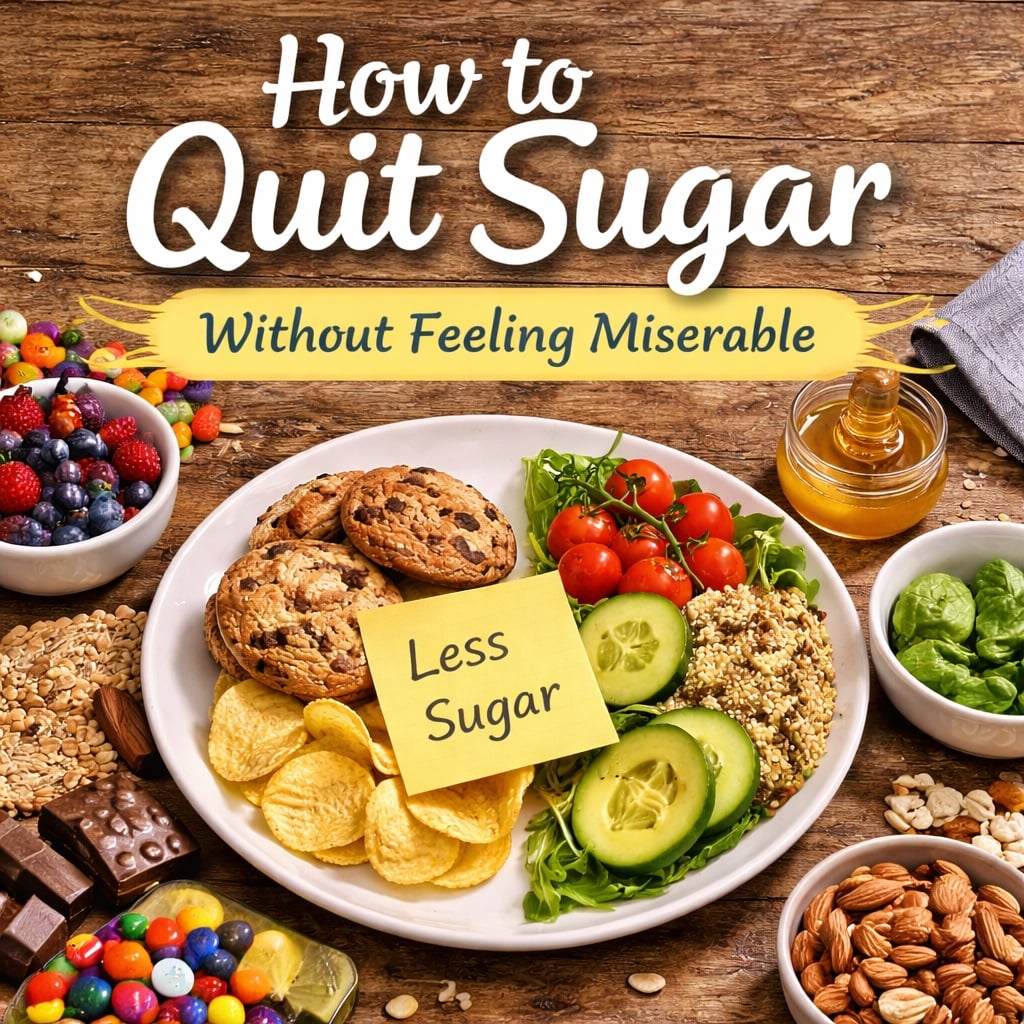
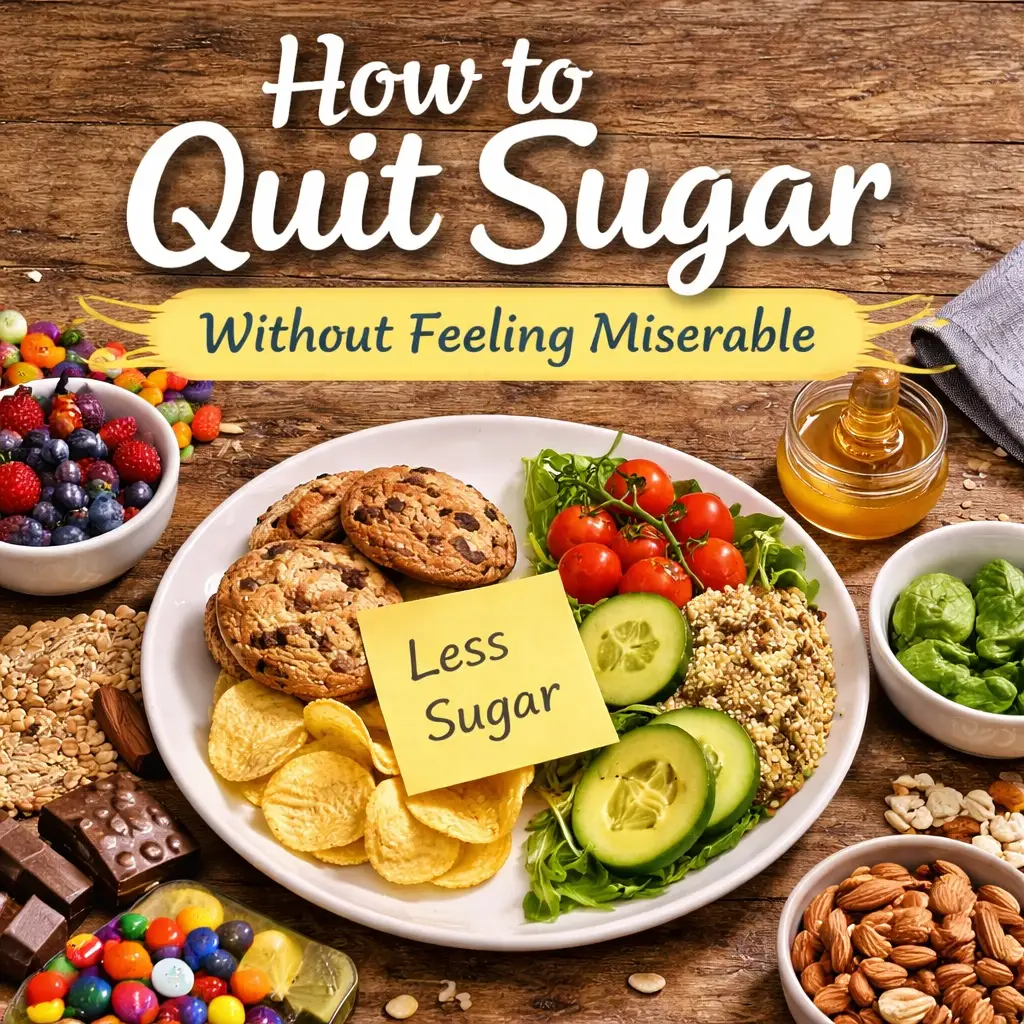
Quitting sugar sounds simple until you actually try it. Then suddenly your brain feels louder, your cravings feel urgent, and everything sweet starts calling your name like it’s personal.
If you’ve tried before and “failed,” this article is for you. Not because you lack discipline, but because sugar is doing more behind the scenes than most people realize.
This isn’t about perfection. It’s about learning how sugar works, why it’s hard to quit, and how to step away from it without turning food into a battle.
Why Quitting Sugar Feels So Hard (And Why It’s Not a Personal Failure)
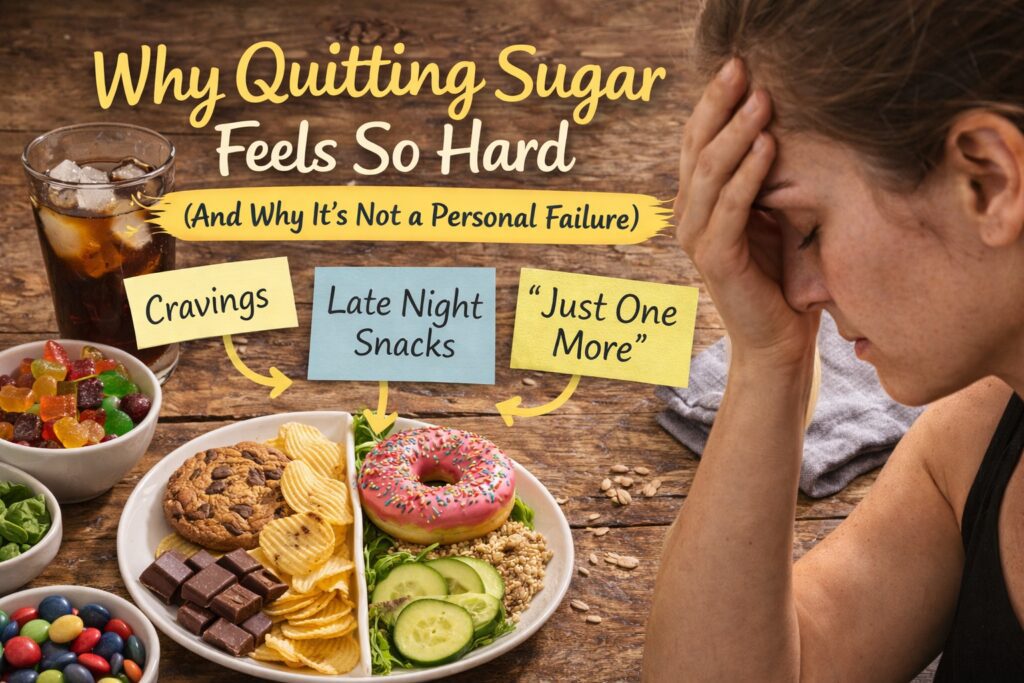
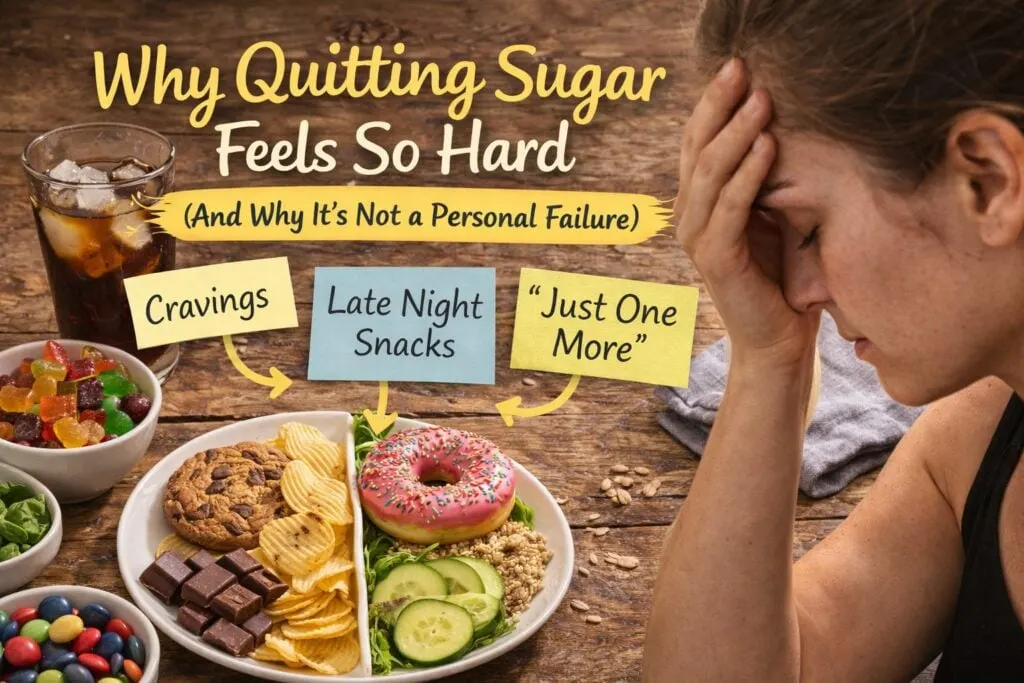
If quitting sugar feels harder than it “should,” you’re not imagining it. Sugar directly affects dopamine, the same brain chemical linked to pleasure, reward, and motivation. Every sweet hit reinforces a loop: eat sugar, feel good, want more.
But it’s not just chemistry. Sugar is emotional. It shows up when you’re stressed, tired, bored, or celebrating.
It’s tied to routines, comfort, childhood memories, and habits that feel automatic.
So when you try to quit sugar, you’re not just removing a food. You’re disrupting a pattern your brain relies on for quick relief.
That’s not weakness. That’s biology meeting behavior.
What Sugar Really Does to Your Body (Beyond Weight Gain)
Most people associate sugar with weight gain, but its effects go far beyond the scale.
When you eat sugar, your blood glucose rises quickly, triggering insulin to bring it back down. That rise-and-crash cycle can leave you tired, irritable, and hungry again soon after eating.
Over time, repeated spikes can affect energy levels, focus, and even mood stability. Some people notice brain fog or afternoon crashes without connecting them to sugar intake.
Sugar also plays a role in inflammation, which can affect joints, skin, and digestion. None of this means sugar is “evil,” but it does explain why constant exposure can quietly wear the body down.
Are You Actually Addicted to Sugar? (Common Signs)
Not everyone who eats sugar is addicted to it, but many people are more dependent than they realize.
One common sign is craving sugar even when you’re physically full. Another is feeling restless or irritable when sweets aren’t available.
If dessert feels mandatory rather than optional, or if stress immediately triggers sugar cravings, that’s information worth paying attention to.
Headaches, shakiness, or mood dips when cutting back can also point to dependence.
This doesn’t mean you’re broken. It means your brain learned a shortcut for comfort and energy. Shortcuts can be rewired.
Added Sugar vs Natural Sugar (This Confuses Everyone)
One of the biggest mistakes people make is treating all sugar the same. Added sugars, like those in soda, candy, pastries, and sweetened sauces, hit the bloodstream fast and offer little nutritional value.
Natural sugars in whole foods, like fruit, come packaged with fiber, water, and micronutrients.
That fiber slows digestion and softens blood sugar impact, which is why fruit behaves differently than candy.
Cutting out fruit often backfires. It removes a nutrient-dense option and increases the chance of rebound cravings later.
The problem usually isn’t fruit, it’s concentrated, added sugar without balance.
Why Cold Turkey Rarely Works (And What Works Better)
Quitting sugar overnight sounds decisive, but for many people it leads to intense cravings followed by binge cycles.
When the brain loses its main comfort source all at once, it panics, and panic isn’t sustainable.
A gradual approach works better for most beginners. Reducing sugar step by step allows hormones, taste buds, and habits to adjust without overwhelming the nervous system.
Progress that feels calm tends to last longer than progress fueled by restriction. Speed isn’t the goal here, stability is.
How to Quit Sugar Step by Step (Beginner Plan)
Week 1: Awareness Without Restriction
The first step is noticing, not banning. Pay attention to where sugar shows up naturally in your day.
Drinks, sauces, snacks, and coffee add-ins. No judgment, just information.
Week 2: Remove Liquid Sugar First
Sweetened drinks are one of the easiest places to reduce sugar without feeling deprived.
Soda, sweet tea, juice, and flavored coffee drinks deliver sugar fast with little satiety.
Week 3: Balance Meals to Reduce Cravings
Meals lacking protein or fiber often lead to sugar cravings later. Adding more balanced meals helps stabilize blood sugar and reduce urgency around sweets.
Week 4: Reduce Dessert Frequency (Not Joy)
Instead of daily desserts, shift toward planned treats. This removes impulse eating without eliminating enjoyment. Structure lowers stress around food.
What to Eat Instead When Sugar Cravings Hit
Sugar cravings often feel urgent, but they’re usually signals, not commands. Most cravings come from blood sugar dips, emotional stress, or under-eating earlier in the day.
When meals lack protein, fiber, or fat, the body looks for the fastest energy available—and sugar delivers that quickly.
Instead of trying to “ignore” cravings, respond with foods that satisfy without triggering another spike.
Protein-rich snacks like eggs, yogurt, or nuts help stabilize hunger. Pairing natural sweetness with fat or fiber—such as fruit with nut butter or dark chocolate with almonds, can calm the craving without sending you into a cycle.
Over time, this teaches your body that steady energy feels better than quick hits.
Sugar Withdrawal Symptoms (And How to Get Through Them)
Cutting back on sugar can come with temporary discomfort, especially if sugar has been a daily staple.
Headaches, fatigue, irritability, and low motivation are common during the first one to two weeks. These symptoms don’t mean something is wrong, they mean your body is recalibrating.
Hydration plays a major role here. When sugar intake drops, insulin levels shift, and the body may release more water and electrolytes.
Drinking enough fluids and adding sodium through food can ease headaches and fatigue. Rest also matters.
Trying to power through withdrawal with discipline alone often makes symptoms feel worse instead of better.
How Quitting Sugar Affects Energy, Mood, and Skin
One of the most noticeable changes after quitting sugar is steadier energy. Instead of dramatic highs followed by crashes, energy levels tend to smooth out across the day.
Many people describe feeling more “even” rather than wired or sluggish.
Mood often follows a similar pattern. Fewer blood sugar swings can mean less irritability and anxiety.
Skin changes may take longer, but reduced inflammation can lead to fewer breakouts or redness over time.
These benefits don’t usually appear overnight,they build gradually as the body adjusts to a more stable internal environment.
Quitting Sugar for Weight Loss (What Actually Changes)
When sugar intake drops, appetite regulation often improves. Meals feel more satisfying, and the urge to snack constantly tends to fade.
This can naturally reduce calorie intake without conscious restriction or tracking.
However, weight loss isn’t always immediate. Some people experience a short plateau as the body adjusts hormonally.
That doesn’t mean progress isn’t happening. Fat loss linked to sugar reduction tends to be slower but more sustainable because it’s rooted in appetite control, not forced restraint.
Emotional Eating and Sugar: The Missing Conversation
Sugar is rarely just about taste. It’s often about comfort, relief, or escape. Stressful days, loneliness, boredom, and even celebration can trigger sugar cravings because sugar has become a familiar emotional tool.
Quitting sugar means finding new ways to regulate emotions without food doing all the work.
That might include movement, journaling, rest, connection, or simply pausing instead of reacting. This process takes patience.
Emotional eating doesn’t disappear overnight, but awareness softens its grip and creates space for healthier coping strategies.
Common Mistakes People Make When Quitting Sugar
One common mistake is replacing sugar with highly processed “sugar-free” foods that keep cravings alive.
Artificial sweeteners can maintain the desire for sweetness rather than reduce it. Another mistake is under-eating overall, which makes sugar feel irresistible later.
Many people also expect perfection. One dessert becomes “failure,” which leads to giving up entirely. Progress isn’t erased by a single choice.
Treating setbacks as information instead of evidence of weakness makes long-term change possible.
How Long Does It Take to Stop Craving Sugar?
For most people, the first seven days are the hardest. Cravings may feel intense and frequent.
By weeks two to four, many notice cravings becoming less urgent and easier to ignore or redirect.
That said, cravings don’t vanish forever. They resurface during stress, fatigue, or routine changes.
The difference is that they stop feeling controlling. With time, sugar becomes an option instead of a reflex.
Can You Ever Eat Sugar Again?
Quitting sugar doesn’t have to mean permanent avoidance. For many people, the goal is changing the relationship with sugar, not banning it entirely.
Intentional, occasional treats can exist without spiraling into old patterns.
The key is awareness. Eating sugar deliberately, rather than impulsively, helps maintain balance.
When sugar stops being forbidden, it often loses its emotional power. That freedom is more sustainable than strict rules.
How to Make a Low-Sugar Lifestyle Stick
Consistency matters more than intensity. Keeping high-sugar foods out of immediate reach, planning balanced meals, and eating enough throughout the day all support long-term success.
Social situations and holidays don’t require perfection. Flexibility prevents burnout. A low-sugar lifestyle sticks when it adapts to real life instead of fighting it.
Habits that feel calm are the ones that last.
Final Thoughts: Quitting Sugar Is a Skill, Not a Test
Quitting sugar isn’t about discipline or moral strength. It’s about learning how your body responds and choosing patterns that feel better over time.
Progress doesn’t need to be dramatic to be meaningful.
Small, consistent changes reshape cravings, energy, and trust with food. Whether you reduce sugar a little or a lot, every step toward awareness is forward movement.
This is a skill you build—not a test you pass or fail.